Tag Archives: blockchain

logo

Dutch Central Bank to develop its DNBCoin Blockchain

According to a recent press release, the Dutch Central Bank planned to develop a new blockchain called “DNBCoin”.
On March 16th, De Nederlandsche Bank published the 2015 annual report where they explained this blockchain project.
For DNB the blockchain technology will be able to improve its business, but the report doesn’t give details on the project, not even a release date or the goals, yet.
DNB only describes the projects as a “prototype coin based on blockchain technology” that “aims for 2016”. 
On the report the blockchain is described as a possible cost-saver in the financial industry, even if the DNB commented that it’s early to say what possible applications it could have in the future.
The report explains:
“Blockchain technologies can affect the revenue models of banking systems, they can also benefit with new ways to generate revenue and reduce costs.”
Payments and banking consultant Simon Lelieveldt commented:
“So when we now see central banks moving forward in the electronic cash domain (now conveniently labelled: blockchain/FinTech) it might be to no longer spin it off to the market, but to create a permanent digital replacement of cash. Therefore, this time it might be different.”

Banks and blockchain: love or hate?

Recently lots of central banks from all around the world are suggesting that the blockchain can be useful to release more centralized digital currencies, even if central banks declared that it is impossible to predict the development of cryptocurrencies without a proper legalization and regulation. 
You can read more about central banks and blockchain by clicking on the titles below.
Also, here you can read the ISITC Survey Results about the the financial services progress which gives also a specific forecast on how the industry will be during the current year.

Open your free digital wallet here to store your cryptocurrencies in a safe place.

Amelia Tomasicchio
nike shoes 1425208

How the blockchain could help email security

BitMessage

Every day we send thousands of emails and such communication has become a daily routine and a MUST for any person and company.

But options to secure communications are not so common and strong. Also, the existing services are too difficult for people to use and they should use a trusted channel.

  
This is the reason why it has been opened the open source project called BitMessage, a service who helps to decentralize and encrypt messages and solves the problem of trusting a third party security authority. 
But BitMessage doesn’t use the bitcoin blockchain, but a distributed ledger created by the BitMessage Community itself. 

How it works

Thanks to BitMessage and its wallet, you will be able to create a private key and your contacts will receive a string that look like a bitcoin address. 
This way you will have a long alphanumeric string among your contact lists instead of email addresses, and you need a proof-of-work to send your message, even offline. 
In fact, BitMessage proposes a system where customer uses a hash of a public key that it is the same as the user’s address. “If the public key can be obtained by the underlying protocol, then it can easily be hashed to verify that it belongs to the intended recipient. The data exchanged by the user can also include a version number for forwards capability, a stream number and a checksum”, explained the whitepaper. 

Here you can read the full whitepaper, in which BitMessage is described as a “peer-to-peer message authentication and delivery system” platform.


The invention

BitMessage was opened in November 2012 by Jonhatan Warren, who also created PyBitmessage, or the official instant messaging client for BitMessage.

Technical details

Its source code use Python as a language and the Qt cross-platform application framework; OpenSSL allows its cryptographic functions. BitMessage is available for Microsoft Windows, Mac OS and Linux.
Unfortunately, it is not available for mobile devices.

Download the latest version here !

Open your free digital wallet here to store your cryptocurrencies in a safe place.

Amelia Tomasicchio
nike shoes 1425208 1

Chronicled will Blockchain-ize the sneakers market

One of the most interesting blockchain applications is the proof-of-ownership, and in this sector there is an always increasing number of new startups. 

One of the latest to stand out in this scenario is called Chronicled that works in the sneakers market for collectors of this kind of product. 
To do so, recently Chronicled raised $3.4 m in two rounds from seven investors on the Crunchbase platform. 
According to some estimates, the collectible shoes market has a value of $1.2 billion in the US, even if the most part of users is composed by teenager males. 
Ryan Orr CEO at Chronicled said to CoinDesk:

“The challenge with an authenticity platform lies in getting to scale. Clearly customers could scan collectible items, men’s fashion, women’s fashion, with their smartphone, and know they would be getting a legit item. But how do you build a niche? We reviewed about 30 different market verticals when we launched the company.”


How it works

Chronlicled provides a custom chip, which has a private key that provides a blockchain-based record.
“With the encrypted chips we put into the luxury items, we have an unhackable link between the blockchain and the physical item. Whereas as if you just have a digital record of an item without a unique ID, without encrypting a link between the item and the record, you really haven’t solved the problem,” explained Orr.
Chronicled’s goal is to sell the chips and also analytics about products and customers, that both producers and distributors sellers can use for their objectives. 
Chronicled can also be helpful during sneaker conventions, where the company will be able to have some authenticators that can identify counterfeited shoes and help customers to transfer their authentic sneakers through the Chronicled app.

What kind of Blockchain?

Ryan Orr commented that Chronicled has not yet chosen the blockchain platform it will use to support the service.
Orr said that Chronicled has done tests on the bitcoin and Ethereum blockchains, but they are still exploring other distributed ledgers.

Open your free digital wallet here to store your cryptocurrencies in a safe place.

Amelia Tomasicchio

Smart Contracts through Rootstock, Ethereum and Bitcoin thanks to RSK Labs

smart contracts bitcoin ethereum blockchain
Some days ago Rootstock received $1m in seed funding for its own blockchain startup called RSK Labs who provides smart contracts through the bitcoin distributed ledger and compatible with the Ethereum platform.
The funding came from the bitcoin mining company Bitmain Technology and from the bitcoin companies Coinsilium and Digital Currency Group (DCG).
During a recent interview, Diego Gutierrez Zaldivar, CEO at RSK Labs, commented they aim at building a blockchain platform for bitcoin miners and for developers.
Zaldivar said to CoinDesk:
“Our idea is to leverage everything that has been built by the community so far. Not only on the network effect of bitcoin, because the miners will have an additional revenue stream by merge-mining Rootstock, but by providing Ethereum developers a place to build their applications.”
Probably RSK Labs will launch its platform within the end of 2016. 


Smart contracts with the Blockchain

Even if the RSK Labs is very good news, the most important thing we can learn from this event is the interesting development of contracts managed through the blockchain. 
Smart contracts were originally proposed 20 years ago by the famous cryptographer Nick Szabo
A decentralized blockchain with smart contract applications can allow a global financial inclusion, new democratic political systems and the improve of the Internet of things. 
In fact, smart contracts are technology protocols that verify and ease the stipulation of a contract. 
This way smart contracts can provide a better security compared to a traditional contract and allow a significant reduction in transaction fees. Also, smart contracts can provide a service with less risks and without central counterparties. 
To know more about smart contracts and RSK, read this article.

Open your free digital wallet here to store your cryptocurrencies in a safe place.

Amelia Tomasicchio
Ray Ban RB2140 Original Wayfarer Sunglasses Leonardo

Hitachi is studying the Blockchain

Some days ago the Japanese company Hitachi announced that it will open a research laboratory in the US that will study the blockchain ledger and its possible applications.
The lab will partner with Hitachi technology innovation division and it will be opened next month in Santa Clara, California.Hitachi wants to use the research laboratory to work on some projects for its customer base.

In a press release, Hitachi explained:

“By establishing the Financial Innovation Laboratory in the Silicon Valley, Hitachi will accelerate research [and] development of blockchain technology, collaborative creation with customers, and development of solutions to support business innovation in financial institutions.”


Hitachi partners with Hyperledger

This statement follows a previous company’s news related to the blockchain: in fact, in February Hitachi joined the Hyperledger Project, an advaced blockchain technology that aims at “identifying and addressing important features for a cross-industry open standard for distributed ledgers that can transform the way business transactions are conducted globally.”

The Hyperledger Project is a Linux Foundation collaborative project that stars some of the most important companies in the world, including IBM, J.P. Morgan, Fujitsu and many more.

Open your free digital wallet here to store your cryptocurrencies in a safe place.

Amelia Tomasicchio
private property 1563209

Overstock to place its public shares on t0 blockchain platform

During the 41st Annual International Futures Industry Conference, the American online retailer Overstock decided to issue its public shares on a proof-of-ownership blockchian called t0.
Announced in August, t0 is “built upon decentralized, cryptographically protected ledgers, which anybody can access and inspect. This ensures fairness to the entire market, without regard for size or geographic location”, explained the official website.

SEC approves Overstock’s issue on the blockchain

To do so, Overstock had to obtain a specific authorization from the Securities and Exchange Commission (SEC), who approved the issue of public shares via Internet in December.


sec approves overstock blockchain t0 public shares

In fact, Overstock will be the first company in the world to do a Blockchain public offering.

“This is yet another historic event: the creation of a security that will trade and settle entirely on a distributed ledger. I’ve said from the beginning that blockchain technology is going to change the world of finance forever, and we’re leading that charge”, commented t0 CEO Patrick M. Byrne (and Overstock CEO and founder) in the official press release.
This way, the company stock will be issued in two versions: one available on traditional trading systems (such as Nasdaq) and another one on t0.


But it is limited to…

Only the Overstock shareholders will be able to benefit from this offering, provided that they are in the records as of a date yet to be decided; also it will be limited to 1,000,000 shares of blockchain and traditional Series A preferred stock.


Open your free digital wallet here to store your cryptocurrencies in a safe place.

Amelia Tomasicchio
bank of england6142011

Bank of England will create its own cryptocurrency

The Bank of England announced its decision to create its own digital currency.

The cryptocurrency will be called RSCoin and it will use the blockchain, the decentralized ledger where bitcoin transactions are written and executed.

More Centralized Control

RSCoin has been developed by researchers at the University College of London.

Of course, this new cryptocurrency will provide a more centralized control compared to bitcoin.“RSCoin introduces a degree of centralization into the two typically decentralized components of a blockchainbased ledger: the generation of the monetary supply and the constitution of the transaction ledger. In its simplest form, the RSCoin system assumes two structural entities: the central bank, a centralized entity that ultimately has complete control over the generation of the monetary supply, and a distributed set of mintettes that are responsible for the maintenance of the transaction ledger”, it is said in the RSCoin abstract.

How could this be positive?

Even if RSCoin is centralized and the opposite thing of Bitcoin, we could say that it is positive as it means that worldwide Central Banks are starting to give importance to cryptocurrencies.

However, RSCoin has its own benefits: for example no double spending, non-repudiable sealing, timed personal audits, universal audits and exposed inactivity.

Read the complete documentation

Univerisity College of London researches George Danezis and Sarah Meiklejohn published an abstract about RSCoin.

The full whitepaper is intitled “Centrally Banked Cryptocurrencies”.

The abstract begins from the bitcoin history, to explain everyone the impact of the digital currencies not only in the finance world:

Recently, major financial institutions such as JPMorgan Chase and Nasdaq have announced plans to develop blockchain technologies. The potential impacts of cryptocurrencies have now been acknowledged even by government institutions: the European Central Bank anticipates their “impact on monetary policy and price stability”.

People’s Bank of China and its own cryptocurrency

In January 2016, the People’s Bank of China commented about its plans to launch its own digital currency and create a new financial infrastructure for the country.

The project started in 2014, when researches began to study cryptocurrencies related to business operations.

People’s Bank of China commented:

“The issuance of digital currency can reduce the significant costs of issuing and circulating traditional currencies, improve the convenience and transparency of economic transactions, reduce money laundering, tax evasion and other criminal acts, enhance the central bank’s control of over the money supply and currency circulation, better support economic and social development and aid in extending financial services to under-served populations”.

Open your free digital wallet here to store your cryptocurrencies in a safe place.

Amelia Tomasicchio
Microsoft

Microsoft adds 5 blockchain partners to Azure and it still accepts Bitcoin

Last month we talked about the decision of Microsoft Corporation to start testing the blockchain technology and to create its own blockchain-as-a-service (BaaS) product.
In fact, Microsoft opened its Azure cloud computing platform, adding a growing number of partners to its BaaS solution including ConsenSys, Emercoin and MultiChain.
And now Microsoft has announced the addition of five new blockchain partners to its Azure platform, including prediction market Augur and Ethereum network Slock.
Some other partners previously announced include Lisk, BitShares, Syscoin, BitPay, Eris Industries and Factom.
microsoft bitcoin

Microsoft still accepts Bitcoin payments

According to CNBC, Microsoft continues to accept Bitcoin among its allowed methods of payment.
On Monday they accidentally announced that it would no longer accept bitcoin, but the company belies this announcement.
In fact, Microsoft Corportation still accepts Bitcoin for purchasing contents in the Windows and Xbox stores.


“We apologize for inaccurate information that was inadvertently posted to a Microsoft site, which is currently being corrected,” told a company spokesman to CNBC.


Open your free digital wallet here to store your cryptocurrencies in a safe place.
Amelia Tomasicchio

Ethereum and Arcade City could kill Uber

A few days ago Don Tapscott suggested the idea that the blockchain could cause the death of services like Uber and Airbnb.
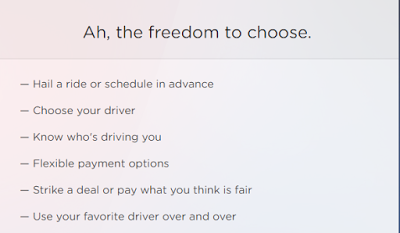
And it seems like this is truly happening, as a service called Arcade City has officially published a press release where they “declare war on Uber over fare cuts and plan to replace drivers with self-driving cars”.

Arcade City is an open marketplace where riders connect directly with drivers. It only works via a mobile app, available for both iOS and Android. 

How it works

Let the company speaks for itself:

It works through the Ethereum Blockchain

Most importantly, Arcade City integrates the Ethereum blockchain.
During a recent interview with CoinTelegraph, Christopher David, founder at Arcade City, commented: 

“the main deciding factor was that the vision of Ethereum aligns precisely with our own vision of peer-to-peer transportation and distributed logistics”.

Where can we move with Arcade City?

At the moment Arcade City is active in the US.
These are the states: Arizona, Arkansas, California, Colorado, Florida, Georgia, Illinois, Indiana, Kentucky, Louisiana, Maryland, Michigan, Minnesota, New Mexico, North Carolina, New Hampshire, New Jersey, Ohio, Oklahoma, Oregon, Pennsylvania, South Carolina, Texas, Virginia, Washington and Washington D.C.
Drivers are also available in Australia; while Mexico, Canada and Sweden will be launched next spring.

Open your free digital wallet here to store your cryptocurrencies in a safe place.
Amelia Tomasicchio
Screen Shot 2016 03 14 at 12.29.28 AM

Ethereum Launches Homestead

Blockchain project Ethereum has just launched Homestead, the first release of its software implemented at block 1,150,000.
ethereum launches homestead, homestead release
This new implementation comes at a time when more and more financial institutions and startups are revealing their interest in Ethereum and in creating projects related to the blockchain.
Just a few days ago, in fact, we talked about how Ethereum now is bigger than ever.


Special advisor at Ethereum Foundation, William Mougayar, explained that Ethereum processes almost 25,000 transactions per day: about 10% of the number of Bitcoin.

“You need to look at the growth of the Ethereum network via the growth of its nodes, sitting at 5,100 versus bitcoin’s about 6,000 roughly. That’s quite significant and shows the stability and global nature of the Ethereum network,” commented Mougayar.

Homestead vs Frontier


Homested is preceded by Frontier, that was released in July 2015.
Co-founder of ConsenSys Enterprise, Andrew Key, commented that Homestead will help users to expand their possibility on Ethereum and the simplicity that will allow them to be able to build proof-of-concept products.
Keys said to CoinDesk:

“Homestead’s arrival will begin to demonstrate the next generation of blockchain technology, whereby anything we can dream of, can be accomplished in a decentralized manner using Ethereum.”


“We’ve seen Microsoft and IBM doing projects on Ethereum. There’s a lot of coders. It’s exciting to see something you were in on in the early stages growing and bearing fruit,” said Ethereum co-founder Anthony Di Iorio.


Ethereum helps Car Charging

In Germany the startup called Slock is working with RWE on a project to use Ethereum for car charging uses.

This project debuted at the Lift 2016 conference in Geneva, Switzerland and it will play out within 2017.
According to the RWE, customers will use charging stations by accepting a smart contract programmed on the Ethereum blockchain.


Open your free digital wallet here to store your cryptocurrencies in a safe place.

Amelia Tomasicchio