
Infographic: Bitcoin in Politics
Open your free digital wallet here to store your cryptocurrencies in a safe place.
Chainthon – The Bitcoin and Blockchain Hackathon in Athens, Greece
Athens, Greece is about to have its first Bitcoin and Blockchain Hackathon, aptly named the Chainthon, on October 17th. The hackathon is a direct response to growing support for Bitcoin as well as growing pressures on the local financial system. The Hellenic Bitcoin community explained their situation in a press release:
“This year, we are witnessing an economic crisis escalate into a humanitarian crisis. Hundreds of thousands are fleeing the war in the Middle East in search of a better life, only to find different obstacles in Europe. Many of the countries they travel through are facing a severe economic crisis, making it difficult to transfer money or receive donations.”
The refugee issue facing much of Europe has reignited age-old tensions between ethnic groups that have been at odds for centuries. The growing amount of forcefully or willfully unbanked refugees and ex-pats is an immediate use case for Bitcoin technology. However, it is almost certainly the latter group of ex-pats, not refugees, that are currently taking advantage of Bitcoin. George Papageorgiou, the organizer of the event, laid out the main goal of the event:
Open your free digital wallet here to store your cryptocurrencies in a safe place.
The 7 Best Bitcoin Youtube Video
Open your free digital wallet here to store your cryptocurrencies in a safe place.
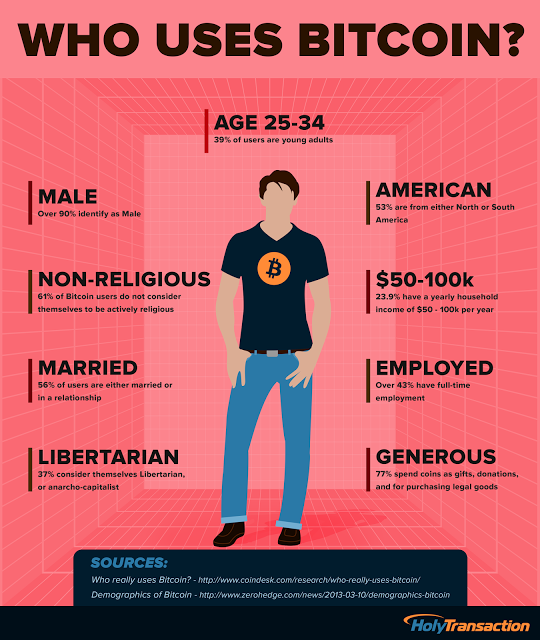
Infographic: Who Uses Bitcoin?
Open your free digital wallet here to store your cryptocurrencies in a safe place.
New North Carolina Money Transmitter Bill Could Push Out Bitcoin Companies
The Politician Forgot to Take Off his Banker Hat
Coinbase Supports This Bill
Proposed Changes May Harm Some Bitcoin Companies
About the author: Caleb Chen is a cryptocurrency advocate and is a research assistant at the Chamber of Digital Commerce.
Open your free digital wallet here to store your cryptocurrencies in a safe place.
Bitcoin’s Monthly Recap of September 2015
Open your free digital wallet here to store your cryptocurrencies in a safe place.
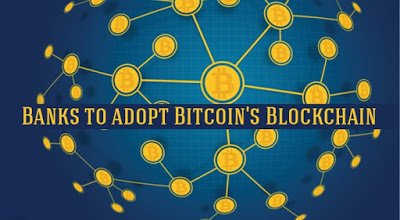
Deutsche Bank Is Bringing Bitcoin-Inspired Blockchain Technology to Germany
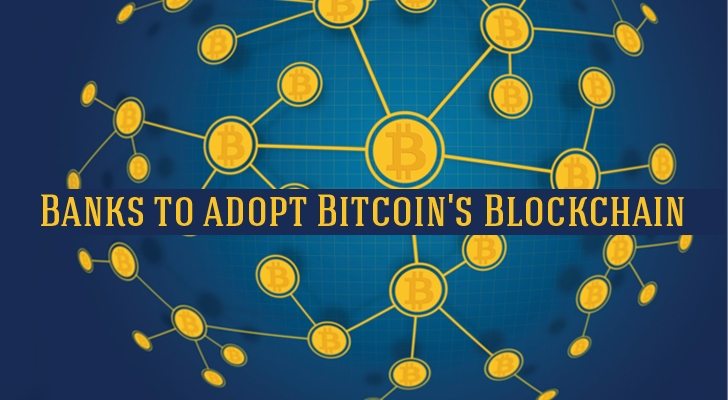 In a recently translated piece by the Deutsche bank, originally written by Thomas F. Dapp and Alexander Karollus, the German bank discussed how banks in general might be able to benefit from p2p networks like Bitcoin. The authors specifically mention a hypothetical future scenario where banks might assume new tasks that still play on banks’ perceived trustworthiness – “e.g. as custodians of cryptographic keys.” Other existing centralized services might have to adapt to serve other roles in the coming decentralized world. Don’t be surprised if someday soon Bloomberg to self-proclaim themselves as an oracle? They went on to note that the politics of Bitcoin would eventually lead to a head with regulators, law enforcement, etc. However, in the face of this new technology and potential regulatory backlash, Deutsche bank still wants to push forward… Because the concept of a blockchain really is that compelling, and the banks are finally starting to get it. Dapp and Karollus wrote:“Traditional banks should not rely on the regulator now, though, but instead actively experiment with the new technologies in their labs and collaborate without prejudice in order to create their own digital ecosystem in the medium run.”
Open your free digital wallet here to store your cryptocurrencies in a safe place.
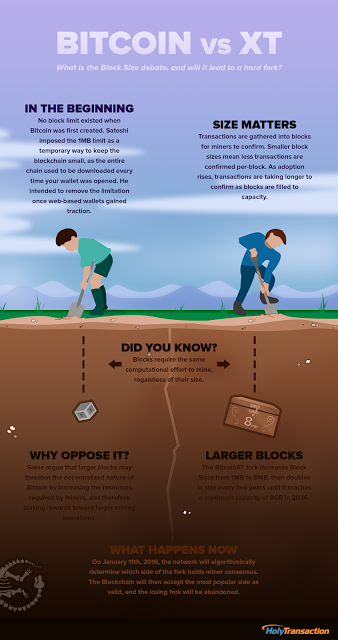
Infographic: What is the Block Size debate, and will it lead to a hard fork?
Open your free digital wallet here to store your cryptocurrencies in a safe place.
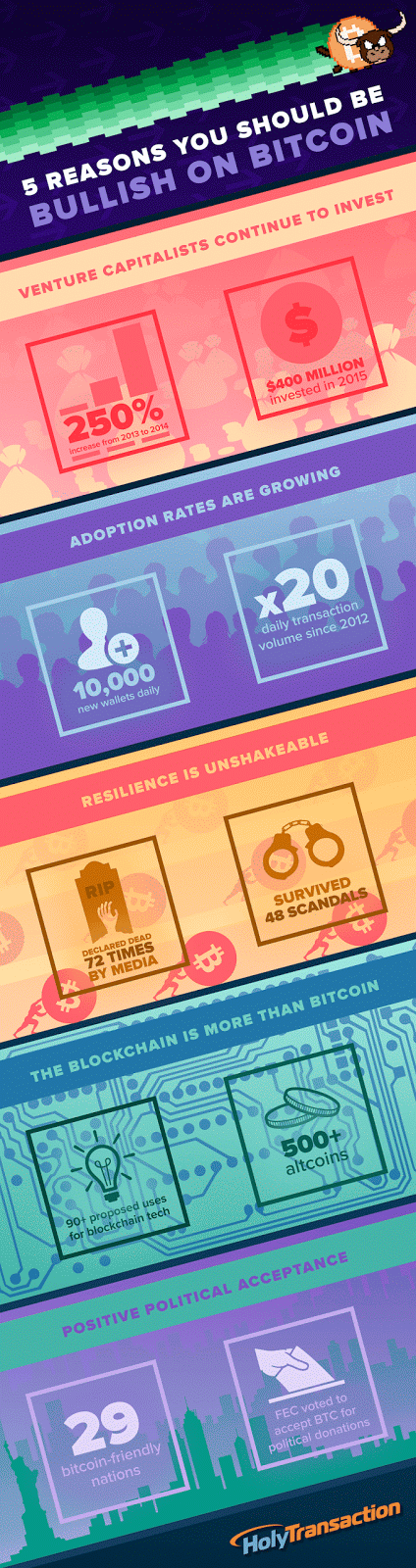
Infographic: 5 reasons you should be bullish on Bitcoin!
Open your free digital wallet here to store your cryptocurrencies in a safe place.
HolyTransaction Telegram Bot for Crypto Conversion

/exchange
- ● Conduct a trade between any of our supported currencies on the HolyTransaction
platform.
/getnews - ● View the most recent cryptocurrency news.
/rate - ● Receive details on the current price of any of our supported currencies.
/currencies - ● List currencies available on the platform.
/help● List of BOT commands
Open your free digital wallet here to store your cryptocurrencies in a safe place.