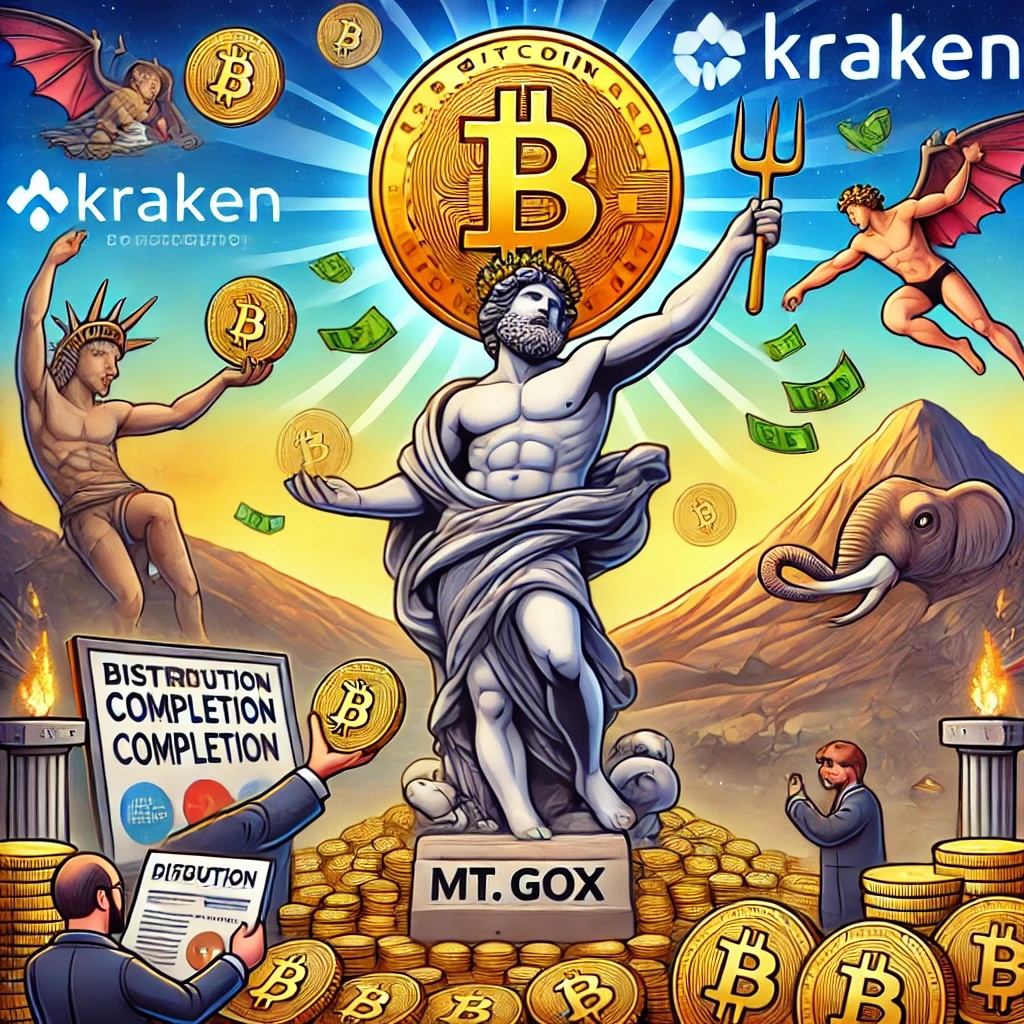
Mt. Gox Bitcoin Distribution: Implications for BTC in the Short Term
The recent completion of Bitcoin and Bitcoin Cash repayments by Kraken for Mt. Gox creditors marks a significant event in the cryptocurrency world. With over $9 billion worth of Bitcoin being redistributed, the market is keenly observing the potential impacts on Bitcoin’s price and overall sentiment. This article delves into what this could mean for Bitcoin in the short term and the broader market sentiment.
Background of Mt. Gox
Mt. Gox was one of the earliest and largest Bitcoin exchanges, handling over 70% of global Bitcoin transactions at its peak. However, in 2014, it collapsed after a series of hacks resulted in the loss of approximately 850,000 BTC. Following its bankruptcy, a long and complex rehabilitation process began, aimed at repaying creditors who lost their funds during the collapse.
Short-Term Impact on Bitcoin Price
The distribution of a substantial amount of Bitcoin to creditors naturally raises concerns about potential sell-offs and the consequent impact on Bitcoin’s price. Some analysts predict that around half of the total Bitcoin being repaid—approximately 70,000 BTC—might hit the market soon, potentially leading to a significant increase in selling pressure.
Despite these concerns, some experts believe that the market has already priced in the impact of these repayments. Given that the repayments have been anticipated for a long time, much of the speculative pressure may already be reflected in current prices. Tony Sycamore from IG Markets suggests that the recent market sell-off may have been partly driven by these expectations, thereby reducing the likelihood of further drastic price drops.
Market Sentiment and Behavior of Creditors
The sentiment surrounding the Mt. Gox repayments is mixed. On one hand, there is concern about the potential flood of Bitcoin into the market, which could lead to short-term volatility. On the other hand, there is optimism that the repayments will finally bring closure to a long-standing issue in the crypto community, potentially restoring confidence.
Interestingly, many Mt. Gox creditors are long-term Bitcoin holders, often referred to as “diamond hands.” These individuals have resisted numerous offers to cash out their claims in fiat currency, indicating a strong preference to hold onto their Bitcoin. This behavior suggests that not all repaid Bitcoin will be immediately sold off, potentially mitigating some of the expected selling pressure.
Technical and Market Support
From a technical perspective, Bitcoin’s price has shown resilience, with strong support levels being identified. The 200-day moving average, for instance, has provided a critical support level that could help stabilize prices in the near term. Analysts believe that the current market conditions, coupled with the expected behavior of long-term holders, could offer a good entry point for new investors looking to buy Bitcoin at relatively lower levels.
Broader Market Dynamics
The Mt. Gox repayments come at a time when the cryptocurrency market is experiencing various other pressures, including regulatory developments and changes in investor behavior. The recent interest shift towards mega-cap stocks like Nvidia and Apple indicates that speculative capital may have moved away from cryptocurrencies temporarily. This shift could mean that the immediate impact of the Mt. Gox repayments might be less pronounced than initially feared.
Furthermore, the repayments are taking place in a structured manner, with the Rehabilitation Trustee coordinating closely with designated crypto exchanges to ensure a smooth process. This orderly distribution is likely to help manage the market impact, preventing a sudden influx of Bitcoin that could destabilize prices.
Conclusion
The completion of Bitcoin and Bitcoin Cash repayments by Mt. Gox represents a significant development for the cryptocurrency market. While there are valid concerns about short-term volatility due to potential sell-offs, several factors suggest that the market impact might be less severe than anticipated. The behavior of long-term holders, the market’s prior adjustments to expected repayments, and strong technical support levels all point towards a more stable outlook.
As the crypto community watches these repayments unfold, the overall sentiment remains cautiously optimistic. The resolution of the Mt. Gox saga could ultimately contribute to a more mature and resilient market, paving the way for further growth and adoption in the long run.
Open your free digital wallet here to store your cryptocurrencies in a safe place.

Ether ETF Launch Sees Explosive Trading Volume on First Day
The much-anticipated launch of the first Ether (ETH) Exchange-Traded Fund (ETF) took the financial markets by storm, recording over $1 billion in trading volume on its inaugural day. This milestone marks a significant moment for both the cryptocurrency market and the broader financial industry, highlighting the growing institutional interest and confidence in digital assets.
Record-Breaking First Day
The debut of the Ether ETF was met with unprecedented enthusiasm from investors, leading to a trading volume that surpassed $1 billion within the first 24 hours. This remarkable performance underscores the increasing demand for regulated investment vehicles that provide exposure to cryptocurrencies without the complexities of direct ownership and custody.
The Ether ETF’s success mirrors the launch of Bitcoin ETFs, which have also seen substantial inflows and trading volumes. For instance, when ProShares launched its Bitcoin futures ETF (BITO) in October 2021, it similarly recorded around $1 billion in trading volume on the first day.
Implications for the Cryptocurrency Market
The successful launch of the Ether ETF is expected to have far-reaching implications for the cryptocurrency market. Firstly, it provides a new avenue for institutional investors to gain exposure to Ether, thereby increasing liquidity and potentially reducing volatility. The ETF structure offers a regulated and familiar framework for investment, which can attract capital from institutional investors who may have been hesitant to invest directly in cryptocurrencies.
Moreover, the strong trading volumes observed suggest a high level of confidence in the future prospects of Ether. This could drive further price appreciation, as seen with Bitcoin, which experienced significant price increases following the introduction of its ETFs.
Regulatory Considerations
The introduction of the Ether ETF also signifies progress in the regulatory landscape surrounding cryptocurrencies. The approval and launch of this ETF involved extensive consultations and approvals from regulatory bodies, reflecting a more mature and accommodating stance towards digital assets. This is a positive sign for the industry, as it indicates a move towards greater regulatory clarity and acceptance.
However, it’s important to note that the regulatory environment remains dynamic. Ongoing discussions and potential changes in regulations could impact the operation and success of crypto ETFs in the future. The SEC’s recent calls for comments on spot Ether ETFs highlight the ongoing scrutiny and regulatory oversight in this space.
Market Reaction and Future Outlook
The immediate market reaction to the Ether ETF launch was overwhelmingly positive. Ether’s price saw a notable uptick, reflecting investor optimism and the anticipated influx of institutional capital. Analysts predict that if the Ether ETF’s performance continues on this trajectory, it could lead to sustained price growth and further mainstream adoption of Ethereum-based products and services.
In the broader context, the success of the Ether ETF could pave the way for more innovative financial products linked to cryptocurrencies. It sets a precedent for other asset managers and financial institutions to explore similar offerings, potentially leading to a more diverse and mature market for digital assets.
Conclusion
The launch of the Ether ETF marks a pivotal moment in the evolution of the cryptocurrency market. With over $1 billion in trading volume on its first day, the ETF has demonstrated strong investor demand and set the stage for further institutional involvement in digital assets. As the market continues to develop and regulatory frameworks evolve, the success of the Ether ETF could herald a new era of growth and innovation in the world of cryptocurrencies.
The continued interest and participation from both retail and institutional investors will be crucial in shaping the future trajectory of the Ether ETF and the broader cryptocurrency market. As we move forward, the lessons learned from this launch will likely inform the development of new financial products and regulatory approaches, contributing to the maturation and mainstream acceptance of digital assets.
Open your free digital wallet here to store your cryptocurrencies in a safe place.
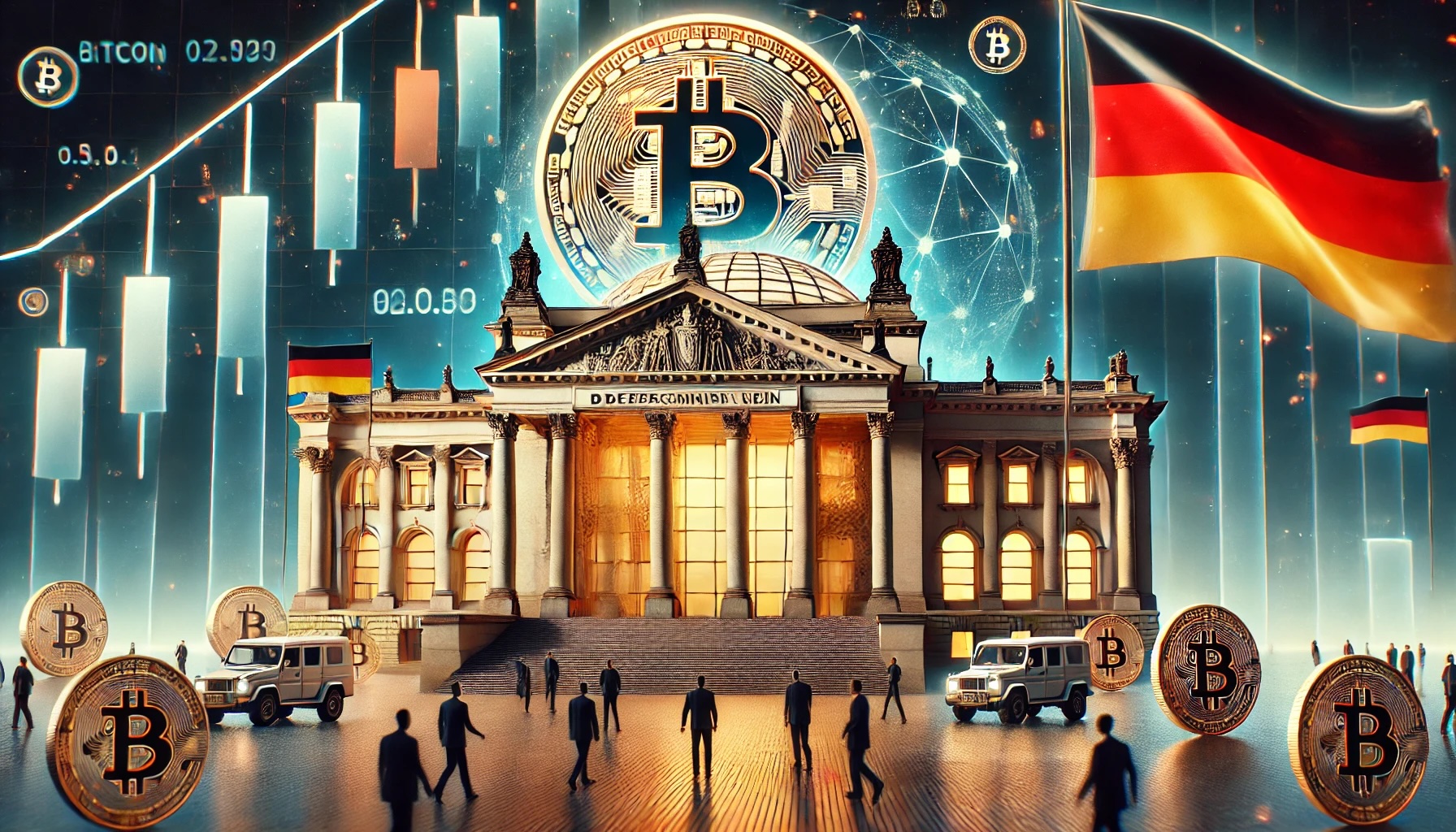
Germany’s Bitcoin Sell-Off: A Deep Dive into Recent Developments and Implications
In a surprising turn of events, the German government has been offloading substantial amounts of Bitcoin (BTC), leading to significant market reactions and investor concerns. The sell-off involves Bitcoin that was seized during a criminal investigation, specifically related to the Movie2K.to piracy case. This article delves into the background of the seizure, the current state of the sell-off, its market impact, and the ensuing political and financial debate.
Background: The Movie2K.to Case
The origins of Germany’s Bitcoin stash trace back to the Movie2K.to investigation. The site, which operated between 2008 and 2013, was a major hub for pirated movies, amassing significant profits. German authorities seized nearly 50,000 BTC, valued at $2.17 billion at the time, from the site’s operators who had converted their illicit earnings into cryptocurrency.
The Sell-Off Begins
Starting in mid-June 2024, the German government initiated the sale of its seized Bitcoin. Reports indicate that over $390 million worth of Bitcoin has been sold across various exchanges including Coinbase, Kraken, and Bitstamp. The transactions, involving thousands of BTC, have been conducted in multiple tranches, each causing ripples in the cryptocurrency market.
Market Reactions and Investor Concerns
The substantial volume of Bitcoin entering the market from Germany has not gone unnoticed. Bitcoin’s price has experienced volatility, with fears of further declines as additional BTC are sold off. On July 4, 2024, a transfer of $75 million worth of Bitcoin to exchanges triggered a market dip, pushing BTC below the $58,000 mark.
Investors are particularly wary because large-scale sell-offs can exert downward pressure on prices, potentially leading to market instability. The concerns are exacerbated by the fact that Germany still holds a significant amount of Bitcoin, estimated at over $2.4 billion worth.
Political and Economic Debates
The sell-off has sparked a political debate within Germany. Joana Cotar, a German MP and Bitcoin advocate, has publicly urged the government to halt the hasty liquidation of its Bitcoin holdings. She argues that instead of selling, Germany should consider adopting Bitcoin as a strategic reserve currency. According to Cotar, this move could help hedge against inflation, promote financial innovation, and enhance economic independence.
Cotar’s stance is shared by some in the crypto community who believe that retaining Bitcoin could offer long-term benefits, particularly in an era where traditional financial systems face increasing challenges.
The Larger Implications
Germany’s Bitcoin sell-off is not an isolated event. Similar actions have been observed globally, with other governments also liquidating seized cryptocurrencies. For instance, the U.S. government has been known to auction off Bitcoin seized from criminal enterprises. These activities highlight the growing intersection between law enforcement and cryptocurrency markets.
The timing of Germany’s sell-off coincides with other significant market events, such as the impending Mt. Gox creditor repayments. The potential influx of Bitcoin from these sources adds to the existing selling pressure, further complicating market dynamics.
Final thoughts
Germany’s decision to liquidate its Bitcoin holdings has introduced a new layer of complexity to the cryptocurrency market. While the government’s actions are rooted in legal precedents and financial prudence, the broader implications for market stability and economic policy are profound. As the sell-off continues, stakeholders across the financial spectrum will be closely monitoring the developments, balancing immediate financial gains against long-term strategic interests.
Open your free digital wallet here to store your cryptocurrencies in a safe place.

Decentralized Science: A Paradigm Shift in Funding and Fostering Breakthrough Ideas
As we navigate the complexities of the 21st century, the confluence of technology and science continues to redefine the boundaries of innovation. One such intersection is the advent of decentralized science (DeSci), an emerging paradigm that promises to revolutionize the way we fund and develop breakthrough ideas. By leveraging blockchain technology, DeSci aims to democratize scientific research, enhance transparency, and foster a more inclusive ecosystem for innovation.
The Traditional Model of Scientific Funding: Limitations and Challenges
The traditional model of scientific funding, predominantly driven by government grants, private foundations, and corporate sponsorships, has long been fraught with challenges. These include bureaucratic red tape, limited funding pools, and potential conflicts of interest. The competitive nature of grant acquisition often leads to a focus on safe, incremental research rather than bold, groundbreaking ideas. Moreover, the centralization of funding decisions can result in a lack of diversity in the types of research that receive support.
Enter Decentralized Science (DeSci)
Decentralized Science, or DeSci, seeks to address these limitations by utilizing blockchain technology to create a more equitable and transparent system for funding and conducting scientific research. At its core, DeSci leverages the principles of decentralization, open access, and community governance to empower researchers and innovators.
Key Features of DeSci:
1. Blockchain-Based Funding Mechanisms: By using blockchain technology, DeSci can facilitate peer-to-peer funding models. Researchers can directly connect with donors, bypassing traditional gatekeepers. This not only democratizes access to funding but also ensures that contributions are traceable and transparent.
2. Tokenization of Research Contributions: In a DeSci ecosystem, contributions to scientific research can be tokenized. Researchers, peer reviewers, and contributors can be rewarded with tokens that represent their stake in the project. This creates a decentralized incentive structure, encouraging collaboration and ensuring that credit is fairly distributed.
3. Decentralized Autonomous Organizations (DAOs): DAOs play a crucial role in DeSci by enabling community governance of scientific projects. Members of a DAO can vote on funding proposals, research directions, and other critical decisions, ensuring that the community has a direct say in the advancement of science.
Advantages of DeSci
1. Enhanced Transparency and Accountability:
Blockchain’s immutable ledger ensures that all transactions and contributions are publicly recorded. This enhances transparency and accountability, reducing the potential for fraud and ensuring that funds are used as intended.
2. Democratization of Funding:
DeSci opens up funding opportunities to a broader range of researchers, including those from underrepresented and marginalized communities. By removing traditional barriers, DeSci fosters a more inclusive and diverse scientific community.
3. Incentivized Collaboration:
The tokenization of research contributions encourages collaboration and the sharing of knowledge. Researchers are incentivized to work together, pooling their expertise to tackle complex problems.
4. Accelerated Innovation:
By reducing bureaucratic hurdles and fostering a collaborative environment, DeSci can accelerate the pace of innovation. Researchers can pursue bold, high-risk projects that might not receive funding through traditional channels.
Real-World Applications and Case Studies
Several projects and platforms are already pioneering the DeSci movement, showcasing its potential to transform scientific research.
VitaDAO: VitaDAO is a decentralized autonomous organization focused on funding longevity research. By leveraging blockchain technology, VitaDAO enables a global community of researchers, investors, and enthusiasts to collaboratively fund and develop anti-aging therapies. This model not only democratizes access to funding but also ensures that research outcomes are shared openly with the community.
Molecule: Molecule is another prominent DeSci platform that connects researchers with funding sources through blockchain technology. Molecule’s marketplace allows researchers to tokenize their projects, creating a liquid market for intellectual property. This enables investors to support innovative research projects and share in their success.
Challenges and Considerations
While DeSci holds immense promise, it is not without challenges. Key considerations include:
Regulatory Uncertainty: The regulatory landscape for blockchain and cryptocurrencies remains uncertain in many jurisdictions. Navigating these complexities will be crucial for the widespread adoption of DeSci.
Technical Barriers: Implementing blockchain technology and ensuring its seamless integration with existing research infrastructure requires significant technical expertise. Overcoming these barriers will be essential for the scalability of DeSci platforms.
Community Engagement: Building and maintaining an engaged and active community is critical for the success of DeSci. This requires continuous efforts in outreach, education, and collaboration.
Decentralized Science represents a transformative approach to funding and growing breakthrough ideas. By leveraging the principles of blockchain technology, DeSci promises to democratize access to funding, enhance transparency, and foster a more inclusive and collaborative scientific community. As we continue to explore the potential of DeSci, it is imperative to address the challenges and harness its capabilities to drive innovation and progress in scientific research.
Open your free digital wallet here to store your cryptocurrencies in a safe place.

Solana: A Brief History and Current State
Solana, a high-performance blockchain, has made significant strides since its inception, positioning itself as one of the leading platforms in the cryptocurrency space. Here’s a comprehensive look at Solana’s journey and its current standing, particularly in light of recent developments such as the VanEck Solana ETF filing.
Early days of Solana
Solana was conceptualized in 2017 by Anatoly Yakovenko, a former engineer at Qualcomm. Yakovenko envisioned a blockchain that could solve the scalability issues plaguing other platforms like Ethereum. Alongside Greg Fitzgerald, Eric Williams, and Raj Gokal, Yakovenko founded Solana Labs. The team set out to create a blockchain capable of handling thousands of transactions per second (TPS) without compromising decentralization or security.
Solana’s innovative approach is built on a novel consensus mechanism known as Proof of History (PoH). This mechanism allows for the efficient and rapid ordering of transactions, significantly boosting throughput and enabling the blockchain to handle a large volume of transactions. By April 2020, Solana had launched its mainnet beta, demonstrating its capability to process transactions at unprecedented speeds.
Advancement on the Solana Ecosystem
The success of Solana can be attributed to several key technological innovations:
- Proof of History (PoH): This time-keeping technique ensures the blockchain can order transactions without the need for a conventional consensus protocol, vastly increasing transaction speed and efficiency.
- Sealevel: Solana’s parallel smart contracts runtime that allows for concurrent transactions, further enhancing throughput.
- Tower BFT: A variation of the Practical Byzantine Fault Tolerance (PBFT) consensus mechanism optimized for PoH, ensuring network security and fast transaction confirmation times.
- Gulf Stream: Solana’s mempool-less transaction forwarding protocol that pushes transactions to validators before the previous block is finalized, reducing confirmation times.
These innovations collectively empower Solana to achieve high throughput, low transaction costs, and enhanced scalability, positioning it as a formidable competitor to established blockchains like Ethereum.
Growth
Solana has witnessed explosive growth in its ecosystem, with numerous projects spanning decentralized finance (DeFi), non-fungible tokens (NFTs), and Web3 applications. The Solana Foundation has played a crucial role in fostering this growth by providing grants and support to developers building on the platform.
Prominent projects in the Solana ecosystem include Serum, a decentralized exchange (DEX) that leverages Solana’s high-speed capabilities; Mango Markets, a decentralized trading platform; and Metaplex, a protocol for creating and managing NFTs. These projects, among many others, have attracted substantial user bases and contributed to Solana’s increasing adoption.
Etf filing
A significant recent development for Solana is the filing for a Solana exchange-traded fund (ETF) by VanEck, a major player in the ETF market. On June 27, 2024, VanEck announced its application with the U.S. Securities and Exchange Commission (SEC) to launch the VanEck Solana Trust. This ETF aims to provide investors with exposure to the Solana cryptocurrency (SOL) by reflecting its price performance minus the operational expenses of the trust.
The proposed ETF would be listed on the Cboe BZX Exchange, pending SEC approval. VanEck’s head of digital assets research, Matthew Sigel, highlighted that SOL functions similarly to other digital commodities like Bitcoin and Ether, being used to pay for transaction fees and computational services on the blockchain.
The filing of the Solana ETF follows the recent approval of spot Ether ETFs in the United States, signaling growing acceptance and regulatory clarity for cryptocurrencies. If approved, the Solana ETF could further legitimize SOL as a digital asset and potentially drive increased investment and interest in the Solana ecosystem.
Currrent standing
As of now, Solana continues to solidify its position as a leading blockchain platform. Its native cryptocurrency, SOL, has become one of the top cryptocurrencies by market capitalization. The platform’s high throughput and low transaction fees make it an attractive option for developers and users alike.
However, Solana has faced challenges, including network outages and centralization concerns. The development team is actively working on addressing these issues to enhance network stability and decentralization.
Looking ahead, Solana’s focus remains on scaling its ecosystem, improving network robustness, and fostering broader adoption. The potential approval of the VanEck Solana ETF could serve as a catalyst for further growth, bringing more institutional investment into the Solana ecosystem.
In conclusion, Solana’s journey from its inception to its current state reflects a remarkable trajectory of innovation and growth. With ongoing technological advancements and increasing mainstream recognition, Solana is well-positioned to play a significant role in the future of blockchain technology and decentralized applications.
Open your free digital wallet here to store your cryptocurrencies in a safe place.

The Resurrection of Mt. Gox: A Tale of Bitcoin, Betrayal, and Belated Justice
The Rise and Fall of Mt. Gox
In the early days of cryptocurrency, Mt. Gox was a colossus. Founded in 2010 by Jed McCaleb and later sold to Mark Karpelès, the Tokyo-based exchange handled over 70% of the world’s Bitcoin transactions at its peak. However, in February 2014, the unthinkable happened: Mt. Gox declared bankruptcy, revealing that it had lost approximately 850,000 Bitcoins, then valued at around $450 million, due to a hack. This monumental loss sent shockwaves through the crypto community and left thousands of investors reeling.
The Aftermath and Legal Battles
The collapse of Mt. Gox led to a protracted legal saga. Creditors demanded compensation, and Nobuaki Kobayashi, the court-appointed trustee, embarked on a painstaking process to recover the lost assets. Over time, he managed to reclaim about 200,000 Bitcoins, providing a glimmer of hope for the defrauded investors.
The Long Road to Repayment
Fast forward to 2024, and the long-awaited moment for Mt. Gox creditors has finally arrived. The exchange is set to distribute nearly $9 billion worth of Bitcoin and Bitcoin Cash starting in July. This includes around 141,000 Bitcoins, currently valued at approximately $8.5 billion. This repayment marks a significant milestone in one of the most infamous chapters in cryptocurrency history.
Will Bitcoin Feel the Impact?
Market analysts have been closely monitoring the potential impact of this substantial Bitcoin release. Surprisingly, experts suggest that the effect on the Bitcoin market might be less severe than anticipated. Tony Sycamore from IG Markets notes that much of the anticipated sell pressure has already been absorbed by the market. Similarly, Alex Thorn of Galaxy Digital believes that many creditors will likely hold onto their Bitcoin rather than sell it immediately, a sentiment echoed by the observed behavior of creditors holding out for Bitcoin rather than cash settlements.
The Diamond Hands of Mt. Gox Creditors
Thorn’s analysis indicates that a significant portion of Mt. Gox creditors have evolved into long-term Bitcoin believers. Many of them have resisted offers to settle their claims in fiat currency, opting instead to reclaim their Bitcoin holdings. This “diamond hands” mentality suggests that the actual market impact of the repayments could be muted, with fewer Bitcoins hitting the open market than initially feared.
Bitcoin Cash: The Underestimated Victim
While Bitcoin may escape relatively unscathed, Bitcoin Cash (BCH), the result of a 2017 Bitcoin hard fork, could face more significant sell pressure. Many creditors who will receive BCH as part of their repayment did not originally invest in it and might be more inclined to sell it off, potentially leading to a price drop for BCH.
A New Chapter for Crypto
The Mt. Gox repayment saga is more than a story of financial restitution; it is a testament to the resilience and maturation of the cryptocurrency market. The lessons learned from the Mt. Gox debacle have spurred better security practices, increased regulatory scrutiny, and a more informed investor base. As repayments commence, the crypto community will watch closely, not just for price movements but for broader implications on market stability and investor confidence.
In conclusion, the Mt. Gox saga, from its meteoric rise to its catastrophic fall and eventual partial redemption, serves as a powerful reminder of the volatility and potential of the cryptocurrency world. As creditors finally see the light at the end of a very long tunnel, the market braces itself, hoping that the lessons learned will pave the way for a more secure and robust crypto future.
Open your free digital wallet here to store your cryptocurrencies in a safe place.

The Rise of DOG Coin: A Bitcoin-Based Meme Coin Soaring Toward $1B Market Cap
In a remarkable turn of events, the Bitcoin-based meme coin DOG has taken the cryptocurrency world by storm, with its market cap rocketing toward the $1 billion mark. Launched on the Runes protocol, DOG coin’s recent performance has made it the largest meme coin on the Bitcoin blockchain and the seventh largest overall. As of now, DOG coin is trading at $0.006304, reflecting its substantial growth and increasing market interest.
What is DOG coin?
DOG coin is a unique digital asset that combines the playful and often whimsical nature of meme coins with the robust security and decentralization of the Bitcoin blockchain. Leveraging the Runes protocol, DOG coin offers a novel approach to digital assets, capturing the imagination of investors and enthusiasts alike.
Behind DOG’s surge
- Community Engagement:
- Meme coins thrive on community support, and DOG coin is no exception. The coin has garnered a strong and active community, whose promotional efforts and enthusiasm have significantly boosted its market cap.
- Bitcoin’s Security:
- Being built on the Bitcoin blockchain, DOG coin benefits from unparalleled security and decentralization, providing investors with confidence in its long-term viability.
- Meme Coin Appeal:
- DOG coin taps into the growing trend of meme coins, leveraging humor and community engagement to drive interest and investment.
- Market Conditions:
- The favorable market environment, characterized by bullish trends and increasing mainstream adoption, has created a fertile ground for DOG coin’s rapid rise.
Rune environment
The success of DOG coin highlights the growing potential of the Bitcoin Runes environment. Here are some broader implications:
- Increased Interest in Bitcoin-Based Assets:
- DOG coin’s rise demonstrates the viability of creating and trading digital assets on the Bitcoin blockchain, likely attracting more developers and projects to the Runes protocol.
- Enhanced Security and Decentralization:
- The Runes protocol enhances the security and decentralization of digital assets by leveraging Bitcoin’s robust infrastructure, offering a compelling alternative to assets built on other blockchains.
- Market Dynamics and Volatility:
- DOG coin’s rapid rise underscores the volatile nature of the cryptocurrency market, highlighting the importance of understanding market dynamics and conducting thorough research before investing.
- Potential for Future Innovations:
- The success of DOG coin and the capabilities of the Runes protocol pave the way for future innovations, from decentralized finance (DeFi) applications to non-fungible tokens (NFTs).
Challenges and Consideration
Despite its impressive rise, DOG coin faces a challenge
Sustainability of Growth:
-
- Maintaining the current growth trajectory can be challenging, with value highly dependent on community support and market conditions.
Conclusion
The rise of the Bitcoin-based meme coin DOG toward a $1 billion market cap is a testament to the power of community-driven projects and the potential of the Runes protocol. By leveraging Bitcoin’s security and decentralization, DOG coin has carved out a unique niche in the crypto landscape. As the broader Bitcoin Runes environment continues to evolve, we can expect more innovative projects and exciting developments.
For investors and enthusiasts, DOG coin represents both an opportunity and a challenge. Navigating the volatile and dynamic world of cryptocurrency requires diligence, research, and a keen understanding of market trends. As DOG coin continues its ascent, it will be fascinating to see how it shapes the future of Bitcoin-based digital assets and the broader cryptocurrency ecosystem.
Open your free digital wallet here to store your cryptocurrencies in a safe place.

The $1 Trillion Bitcoin DeFi Opportunity: Unleashing the Potential of Decentralized Finance on the Bitcoin Network
In recent years, decentralised finance (DeFi) has been largely synonymous with Ethereum, which has hosted a plethora of DeFi projects and applications. However, a new frontier is emerging that could revolutionise the landscape of digital finance: DeFi on the Bitcoin network. This opportunity, estimated to be worth over $1 trillion, is poised to bring significant innovation and value to Bitcoin, the world’s first and most recognized cryptocurrency.
The Genesis of Bitcoin DeFi
Bitcoin, originally conceived as a peer-to-peer electronic cash system, has seen its primary use case evolve into a store of value often likened to digital gold. Despite its robust security and decentralization, Bitcoin has not traditionally been associated with the flexible and programmable features that Ethereum offers, which are crucial for DeFi applications. This is changing with the advent of technologies and protocols that enable smart contract functionalities on Bitcoin.
One of the pioneering projects in this space is Rootstock (RSK), a sidechain that brings smart contract capabilities to Bitcoin. By anchoring its security to the Bitcoin blockchain, RSK allows for the creation of decentralized applications (dApps) and DeFi services while leveraging Bitcoin’s robust network security.
The Catalysts for Growth
The potential for DeFi on Bitcoin is immense, driven by several key factors:
1. Security and Trust: Bitcoin’s unparalleled security and decentralization make it an attractive foundation for DeFi applications. Users can trust that their assets and transactions are secured by the world’s most battle-tested blockchain.
2. Large Market Capitalization: With a market capitalization that often exceeds $1 trillion, Bitcoin represents a vast pool of liquidity. Tapping into this liquidity can unlock significant value and bring new financial services to Bitcoin holders.
3. Interoperability Solutions: Cross-chain interoperability is crucial for the seamless operation of DeFi across different blockchains. Protocols such as Polkadot and Cosmos are working towards enabling these interactions, thereby expanding the potential use cases for Bitcoin in the DeFi ecosystem.
Use Cases and Opportunities
The integration of DeFi on Bitcoin opens up numerous opportunities, including but not limited to:
– Lending and Borrowing: Bitcoin holders can use their BTC as collateral to access loans in other cryptocurrencies or fiat, providing liquidity without the need to sell their Bitcoin holdings.
– Decentralized Exchanges (DEXs): By leveraging Bitcoin’s liquidity, DEXs can offer trading pairs with lower slippage and higher liquidity. This can enhance the trading experience and attract more users to the platform.
– Stablecoins: Issuing stablecoins on Bitcoin can provide a stable store of value and medium of exchange within the Bitcoin ecosystem, facilitating everyday transactions and financial planning.
– Yield Farming and Staking: Bitcoin can be utilized in yield farming and staking protocols, enabling users to earn returns on their holdings. This can attract more users to participate in the Bitcoin network, increasing its utility and adoption.
Challenges and Considerations
Despite its potential, the path to realizing a $1 trillion DeFi ecosystem on Bitcoin is fraught with challenges. These include:
– Technical Hurdles: Integrating smart contracts with Bitcoin’s UTXO model is complex and requires innovative solutions. Projects like RSK and Stacks are making strides, but there is still much work to be done.
– Regulatory Environment: DeFi operates in a regulatory gray area, and the introduction of DeFi on Bitcoin will likely attract scrutiny from regulators. Ensuring compliance while maintaining decentralization will be a delicate balance.
– User Experience: For DeFi on Bitcoin to gain widespread adoption, the user experience must be seamless. This includes intuitive interfaces, fast transaction times, and low fees. Achieving this will require significant development and innovation.
The Future of Bitcoin DeFi
The future of DeFi on Bitcoin looks promising, with the potential to bring unprecedented value and functionality to the Bitcoin network. As more developers and projects focus on this space, we can expect to see a proliferation of innovative solutions that leverage Bitcoin’s unique strengths. The collaboration between different blockchain ecosystems will be crucial in realizing the full potential of DeFi on Bitcoin, creating a more interconnected and robust financial system.
In conclusion, the $1 trillion DeFi opportunity on the Bitcoin network represents a transformative phase for the cryptocurrency industry. By bringing DeFi to Bitcoin, we can unlock new financial services, enhance liquidity, and drive further adoption of blockchain technology. As this space evolves, it will be fascinating to see how Bitcoin’s role in the digital economy expands and adapts to meet the needs of a decentralized future.
Open your free digital wallet here to store your cryptocurrencies in a safe place.

The Impact of BlackRock’s Bitcoin ETF on BTC Price: A Comprehensive Analysis
The cryptocurrency market has always been a dynamic and often unpredictable space, marked by volatility and rapid shifts in value. Recently, BlackRock’s entry into the Bitcoin market, with its Bitcoin Exchange Traded Fund (ETF), has garnered significant attention. With over 290,000 bitcoins held and a market value exceeding $20 billion, BlackRock’s involvement is poised to potentially reshape the landscape of Bitcoin trading and investment. This article explores the possible outcomes for Bitcoin’s price if the ETF flow continues, analyzing the factors that could drive its future trajectory.
The Role of BlackRock in the Bitcoin Market
BlackRock, as one of the world’s largest asset managers, brings a level of credibility and institutional backing to Bitcoin that few other entities can match. Its decision to launch a Bitcoin ETF signals a growing acceptance of cryptocurrencies among traditional financial institutions. The sheer scale of BlackRock’s holdings—over 290,000 bitcoins—represents a significant portion of the total Bitcoin supply, highlighting the potential for substantial market influence.
Increased Institutional Adoption
One of the primary outcomes of BlackRock’s continued ETF flow could be a surge in institutional adoption of Bitcoin. Institutional investors, such as pension funds, insurance companies, and other large-scale entities, often seek the stability and legitimacy provided by established financial institutions. BlackRock’s involvement could serve as a catalyst, encouraging more institutional investors to allocate a portion of their portfolios to Bitcoin.
This influx of institutional capital could drive up demand for Bitcoin, leading to a sustained increase in its price. Historically, increased demand from institutional investors has resulted in upward price pressure for assets, and Bitcoin is likely to follow this trend. As more institutions invest in Bitcoin, the market could experience reduced volatility and increased stability, further attracting additional investment.
Impact on Bitcoin Liquidity
Another significant outcome of BlackRock’s ETF flow is the potential impact on Bitcoin liquidity. With over 290,000 bitcoins held by BlackRock, a considerable portion of the total Bitcoin supply is effectively removed from circulation. This reduction in available supply could lead to liquidity constraints, especially during periods of high demand.
Reduced liquidity can exacerbate price movements, leading to sharper increases during bull markets and more pronounced declines during bear markets. If BlackRock continues to accumulate bitcoins, this could result in a tighter supply market, contributing to more significant price swings in response to changes in demand.
Influence on Market Sentiment
Market sentiment plays a crucial role in determining the price movements of Bitcoin. BlackRock’s ongoing involvement in the Bitcoin market is likely to have a profound impact on investor sentiment. The presence of a reputable and influential financial institution can instill confidence among investors, both retail and institutional, reinforcing the perception of Bitcoin as a legitimate and valuable asset.
Positive market sentiment can drive increased investment and speculation, further pushing up the price of Bitcoin. Conversely, any negative developments related to BlackRock’s Bitcoin holdings or ETF performance could lead to heightened uncertainty and potential price declines. Therefore, the continued flow of BlackRock’s ETF could serve as a barometer for market sentiment, influencing Bitcoin’s price direction.
Regulatory Considerations
The regulatory environment surrounding Bitcoin and cryptocurrencies is a critical factor that could influence the outcome of BlackRock’s ETF flow. Increased regulatory scrutiny and potential changes in legislation could impact the attractiveness of Bitcoin as an investment. However, BlackRock’s involvement could also have a positive effect by encouraging clearer and more favorable regulatory frameworks.
As regulators observe the involvement of major financial institutions like BlackRock, they may be more inclined to develop policies that support the growth and stability of the cryptocurrency market. Positive regulatory developments could enhance investor confidence, leading to increased adoption and higher Bitcoin prices.
Potential for Market Manipulation
The concentration of a significant number of bitcoins within a single entity, such as BlackRock, raises concerns about potential market manipulation. With over 290,000 bitcoins, BlackRock holds substantial market power that could be used to influence price movements. While large institutional investors typically operate within regulatory frameworks that aim to prevent market manipulation, the potential risks cannot be entirely dismissed.
Transparency and regulatory oversight will be crucial in mitigating these risks. Ensuring that BlackRock’s ETF operations are conducted in a transparent and compliant manner will be essential to maintaining market integrity and preventing any adverse effects on Bitcoin’s price.
BlackRock’s entry into the Bitcoin market with its Bitcoin ETF represents a significant development with the potential to influence Bitcoin’s price in multiple ways. Increased institutional adoption, changes in liquidity dynamics, shifts in market sentiment, regulatory considerations, and the potential for market manipulation are all factors that could drive Bitcoin’s future price trajectory.
If BlackRock’s ETF flow continues, we can expect a combination of heightened demand, reduced supply, and increased investor confidence to push Bitcoin prices higher. However, the market will also need to navigate potential challenges related to liquidity constraints and regulatory developments. Overall, BlackRock’s involvement marks a new era for Bitcoin, one that could see it achieve greater acceptance and valuation in the global financial landscape.
Open your free digital wallet here to store your cryptocurrencies in a safe place.

The Emergence of Government-Issued Digital Currencies: Benefits and Challenges
As the world becomes increasingly digital, many governments are exploring the development of Central Bank Digital Currencies (CBDCs). The recent announcement by Israel to start a digital shekel challenge is a significant example of this trend. CBDCs represent a major shift in how money is conceptualized and used, aiming to modernize payment systems, enhance financial inclusion, and reduce reliance on cash. However, the journey towards digital currencies is fraught with both opportunities and challenges.
The Global Landscape of CBDCs
Governments worldwide are at various stages of CBDC development. Countries like China and the Bahamas have already launched their digital currencies, while others, including Israel, are in the exploratory or pilot phases. The Bank of Israel, for instance, has been researching the potential issuance of a digital shekel and recently outlined scenarios that could lead to its implementation. Similarly, the Bank of England and the European Central Bank are actively exploring their versions of digital currencies, motivated by the need to keep up with technological advancements and to offer a state-backed alternative to private cryptocurrencies and stablecoins.
Benefits of CBDCs
Enhanced Payment Efficiency: One of the primary benefits of CBDCs is the potential to enhance the efficiency of payment systems. Digital currencies can facilitate faster and cheaper cross-border transactions, reduce transaction costs, and provide a more secure and resilient payment infrastructure.
Financial Inclusion: CBDCs can play a significant role in promoting financial inclusion by providing access to digital financial services for unbanked and underbanked populations. This is particularly relevant in regions where traditional banking infrastructure is lacking but mobile phone penetration is high.
Reduced Cash Dependency: With the decline in cash usage, CBDCs offer a state-backed alternative that ensures the public retains access to central bank money in digital form. This can help maintain trust in the financial system and ensure that people have access to secure and reliable means of payment.
Monetary Policy Implementation: CBDCs can provide central banks with new tools for monetary policy implementation. For example, interest-bearing digital currencies could offer more precise control over money supply and interest rates, potentially enhancing economic stability.
Challenges and Disadvantages
Impact on Commercial Banks: One of the significant concerns surrounding CBDCs is their potential impact on the commercial banking system. If individuals and businesses shift their deposits from commercial banks to digital currencies, banks could face liquidity challenges, reduced profitability, and a need to alter their business models. The Bank of Israel’s analysis suggests that while the impact might not be significant, it could erode bank liquidity ratios and net profits.
Privacy and Security: Ensuring the privacy and security of digital currencies is a major challenge. CBDCs must balance the need for user privacy with the requirements of regulatory compliance and anti-money laundering measures. Technological solutions must be robust enough to prevent cyber attacks and fraud.
Technological and Infrastructure Requirements: Implementing a CBDC requires significant technological infrastructure and expertise. Countries must invest in secure digital systems, update regulatory frameworks, and ensure interoperability with existing payment systems. This can be a costly and complex process, particularly for developing nations.
Economic and Social Implications: The transition to digital currencies could have broader economic and social implications. There are concerns about the potential for increased government surveillance and control over financial transactions, as well as the need to ensure that vulnerable populations are not excluded from the financial system during the transition.
Final Thoughts
The creation of digital currencies by governments represents a transformative step in the evolution of money. While CBDCs offer numerous benefits, including improved payment efficiency, financial inclusion, and enhanced monetary policy tools, they also pose significant challenges. Governments must carefully consider the implications for commercial banks, privacy, security, and the broader economic landscape. As more countries like Israel embark on this journey, the lessons learned will be crucial in shaping the future of digital finance.
The ongoing experiments and research will determine the feasibility and desirability of widespread CBDC adoption, potentially redefining the global financial system in the process. As the digital revolution continues, the role of central bank digital currencies will undoubtedly be a critical area of focus for policymakers, financial institutions, and the public.
Open your free digital wallet here to store your cryptocurrencies in a safe place.