Author Archives: Satoshi

With Bitcoin time is not more money

(Sole24Ore) Money is a social convention with which communities facilitate economic exchanges, usually to the extent of the technology currently available. In this way, we have progressed from barters and swaps to currency with intrinsic value, be they anything from banknotes to wire transfers to gold coins.
 
We have experienced all of the positives and negatives of fiat money; we now have the freedom to decide together whether to accept the new technology or not.
The use of bitcoins makes the time a neutral factor: never in favor or against any party.
Time, related to fiat currencies as a result of inflation, is now an independent variable which reverses the most important financial concept that we have used for millennia.
If time is no longer the master, then the people are no longer directly subject to the phenomena caused by it, such as:
 
Currency also usually has the function of “store of value” which, by its inflationary nature, means that said currency keeps losing value over time. All this contributes incentives for spending and circulation. From the point of view of trade, this is a good thing. With an inflationary currency, holding the money is a sure loss.
With the traditional currencies, such as the euro or dollar, and because no one wants to lose value, you feel obliged to spend it or invest it, triggering the avalanche of compound interest and cross (not just monetary) between all actors involved.
It is the free decisions of economic agents to enter the time in the transactions to create artificial debts and credits to be paid by a certain date, but that is not inherently linked to the nature of Bitcoin. It remains a voluntary choice, not imposed by the monetary system’s infrastructure.
From a theoretical point of view, a peer can really be defined as a peer if there is no asymmetry of resources; i.e., if none of the parties is favored or disadvantaged by some factor, such as the time.
The Bitcoin system provides that the money supply is predetermined, not subject to discretionary decisions, therefore, betting on variable time does not make sense. (It’s not a deflationary currency, because the supply grows a lot at the beginning to power the system and then remains stable and predetermined for a long time).
For this reason even a millionth of a bitcoin has value, and above all it no longer has an expiration date as fiat currencies do. It’s important to note that bitcoin is not the only possible future; the open-source community continues to generate hundreds of other models with alternative incentive structures.
Are we going to lose the flexibility in regulating the money supply during a crisis with Bitcoin? Yes, and it will be a problem. Some might not view the issue of not being able to create speculative bubbles printing and pumping more money than necessary in the system as a problem, though. For the first time in centuries, the decision to print money has been released from the control of the Government.
It’s time to take a step forward and disengage from people who run central banks? If the number of people who benefit increase or have positive expectations about the future value of bitcoin, then adoption will increase, and show an appreciation of the currency against other currencies; otherwise, we will experience other things, as the ancient history of the world has shown.
It is the currency market, beautiful in its simplicity and unforgiving nature.
Making money timeless allows freedom from the top-down approach. All of this Bitcoin stuff excites the experimenters, confuses the public, and scares those who have interests to protect.
If we free ourselves from the authorities, particularly by people, organizations – and time – you can choose your favorite model for a new social convention.
Author: Massimo Chiriatti, technologist and member of Assob.it

Open your free digital wallet here to store your cryptocurrencies in a safe place.
Satoshi

Bitcoin’s Monthly Recap of July 2015

Welcome to HolyTransaction’s seventh monthly recap for the year 2015. This past month of July has been marked by several long awaited news and events; during that time, the bitcoin price fell from a low of $272.50 on July 1st to a high of $280.19 on July 31st, according to Bitcoin exchange Bitstamp.
 
Ethereum Genesis Block Released and Mining Begins
Ethereum promises to do for contracts what Bitcoin has done for payments, and its release marks a new frontier in crypto/bitcoin 2.0. In fact, Ethereum’s launch product was called ‘Frontier’ and along with an ingenious open source method for generating the genesis block, Ethereum has started its decentralized app network. Many have complained that the bare-bones, command line interface of the release is unnecessarily elitist and keeps the network small and limited to those with extensive technical know-how. Ethereum notably raised $18 million USD in late 2014, and is now on its way.
 
Proposed California Bitcoin Regulation Moves Forward In Better Light Than BitLicense
AB 1326, which is making its way through the California legislative process currently, has gotten a vote of approval from Bitcoin regulatory lobbying firm Coin Center. After receiving constructive criticism from Coin Center, the bill was amended to specify exactly that only companies holding customers’ funds need a license. Coin Center has a set state digital currency framework that it hopes to promote in each state. They, and the Bitcoin community, believe that companies that don’t hold customers’ funds should be free to innovate with the blockchain or a blockchain.
 
Bitcoin Malware on the Decline According to Kaspersky Report
A quarterly security report by the noted Kaspersky Labs has noted a lessening in the amount of Bitcoin malware since 2015 began. Kaspersky Labs is a noted security firm that has informed the public on many hacks in the past. Recently, Bitcoin malware such as cryptolocker has been used by hackers and has stricken people, corporations, and even governments across the world. Overall, in the 2nd quarter of 2015, Kaspersky Lab determined that 379,972,834 instances of computer infection occurred.
 
Former Reddit Employee Creating a New Decentralized Media Platform
A former employee of Reddit, Ryan X. Charles, plans to create a new app featuring a blockchain that would function like Reddit but be truly decentralized, getting rid of as many third parties as possible. Charles was initially hired by Reddit in 2015 to work on some sort of Reddit token; however, in the upper management tumult that rocked Reddit recently, Charles was let go and his project scrapped. Charles commented: “I’ve collaborated with a lot of other people to produce some of the fundamental software necessary to make a decentralized reddit. […] It’s not done yet and there is no prototype, but I would love to find collaborators to build something concrete.”

Open your free digital wallet here to store your cryptocurrencies in a safe place.

Satoshi
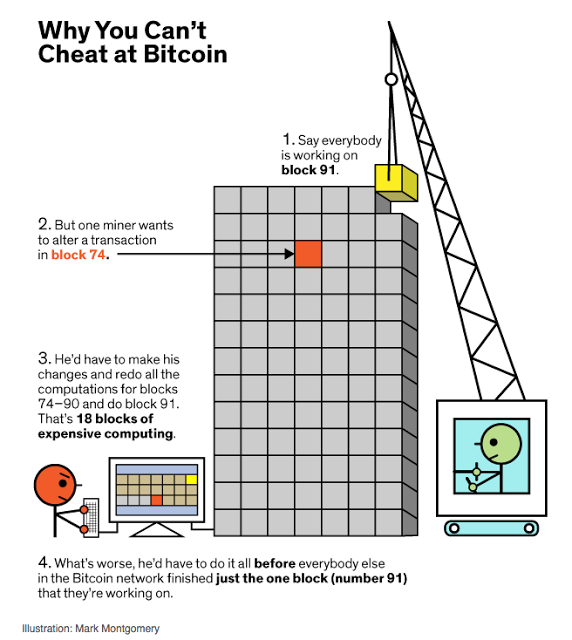
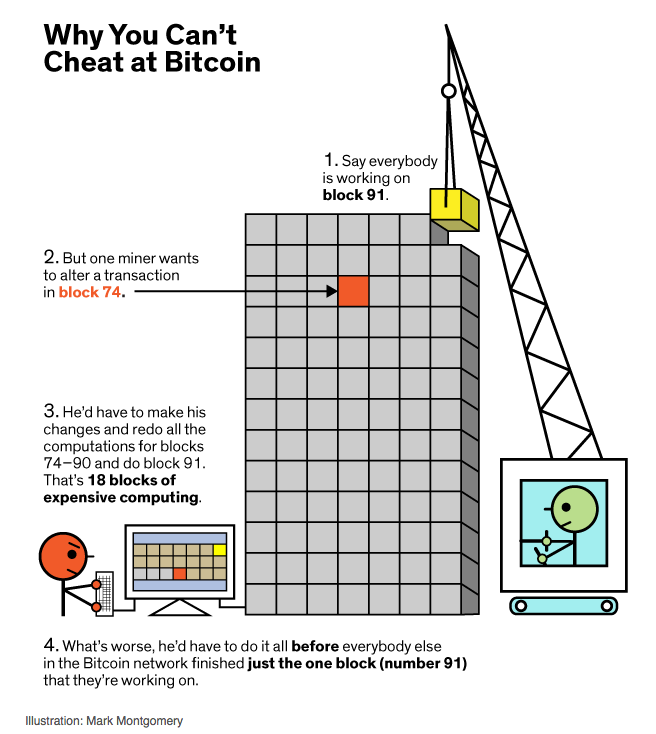
why you cant cheat at bitcoin

Economic problems Bitcoin solves and why it could change our lives

(Sole24Ore) What is going to happen in the future if the computer is always becoming smaller? Always less expensive, and always more mobile?
Soon, we’ll need to link these computers together in a way that is different from the past, with less centralization. Here, we explain the birth of distributed systems, that coexist alongside the traditional systems without replacing them.
The inherent problems in verifying access rights to information and their management has hindered the development of distributed networks until the publication of the famous Bitcoin whitepaper by Satoshi Nakamoto.
 
Nakamoto solved two economics problems:
 
  1. Make digital information (for example, a bitcoin) a “rival good;” and, preventing the owner to spend it a second time
 
  1. Achieving said result with a public register (the blockchain), where the access to information is “not-excludible”, because it is available without intermediaries – it is public and permanent.
 
The consequences of the adoption of the blockchain is twofold: on one hand it will lower transaction costs; on the other hand,  it creates a trust network with a group of people who do not know each other. All ensured thanks to the certainty guaranteed by asymmetric encryption.
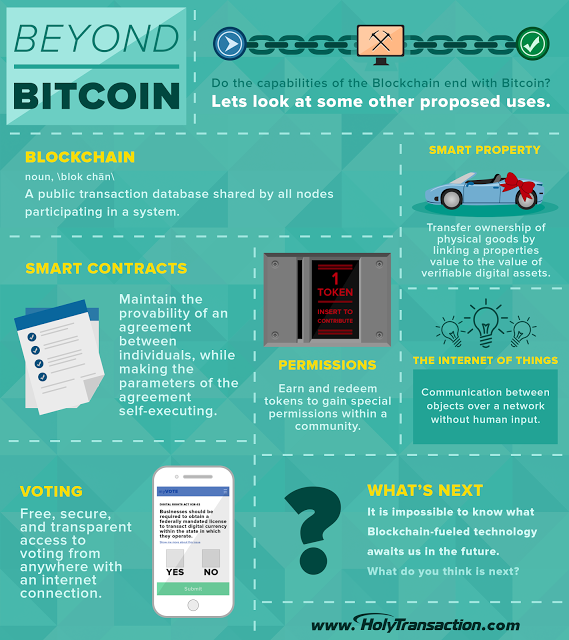
With the blockchain, we have found a means for automatically certifying our money transfers, in the case of mathematical coins.  In terms of property, with the smart contract first described by Nick Szabo, the blockchain can one day enable patent protection, trusted electronic voting remotely, and even more.
 
Decentralization has an important effect on transactions. Three areas that benefit are as follows:
  1. Anonymity – if no one knows the identity behind the lists of parties.
  2. Privacy – in the sense that no one knows what you purchased and at what price.
  3. Irreversible – which comes with a lack of monitoring and compensation body.
 
Now we are able to immortalize forever the information (amounts, documents, debts and credits, etc) and transfer them alone, without intermediaries such as notaries and lawyer. The work to certify these transactions are carried out by the “miners.” They are incentivized by receiving for a small fee (and with the prize of new bitcoins) to cover the fixed costs of specialized equipment and the variable costs of consumed energy.
However, not everything can be fully decentralized. The more mining power is distributed and fragmented, the less risk the network runs into. The power, thus decentralized, is inversely related to corruption.
On this issue, the known Bitcoin popularizer Andreas Antonopoulos, in an incredible article, describes the possible totalitarianism that could happen once someone has taken control of the valuable information that people exchange on the way they spend money.
“If there is control, there is power.”
 
What innovation can be achieved if you have to ask permission to exchange data?
It is decentralization that creates the conditions that can develop a competition in the offer of services conveyed by the network.
 
We probably can’t imagine what will happen after the mass adoption of this network for the exchange of information. Just like it was not imaginable what Google and Facebook would come to be before the advent of the Internet. Billions of interdependent people and machines give rise to new business; and when are grouped in federations, thanks to the standard, they create new and completely unexpected ecosystems.
 
The blockchain is, therefore, a public digital good.
 
In this field, there is new research in the universities; one of those carried out by an Italian scholar at Harvard known as Primavera De Filippi.
 
Now you can reverse incentives that led to the infamous “tragedy of the commons”. Because the use of policies based on a blockchain makes it possible to design new systems of incentives, which are certainly more transparent, you can therefore achieve a new form of consent for the self-government of public goods.
Power of intangibles: we now have a (info)structure that does not consume with its use and that we build together.

Author: Massimo Chiriatti, technologist and member of Assob.it
Bitcoin Blockchain Visualization

Source: The Future of the Web Looks a Lot Like Bitcoin (http://ow.ly/PqmJF)

Open your free digital wallet here to store your cryptocurrencies in a safe place.
Satoshi

Bitcoin’s Monthly Recap of June 2015

Welcome to HolyTransaction sixth monthly recap for the year 2015. This past month of June has has been eventful for Bitcoin due to events within the Bitcoin ecosystem and from the general economic world as well; during that time, the bitcoin price fell from a low of $223.51 to a high of $272.50, according to Bitcoin exchange Bitstamp.
Russia Reverses Stance on Bitcoin Ban, Open to P2P Transactions
According to Russian media Izvestia, the Russian government is expected to reverse its stance on Bitcoin in the coming months. Over the last year, different arms of the Russian government have come forward with different opinions on Bitcoin, with the Central Bank being notably open to the idea of cryptocurrencies. This news comes on the heels of a reversal on a website ban affecting several Russian Bitcoin sites. Around the world, an anti-Bitcoin stance is increasingly becoming more and more unpopular.
Decentralized Marketplace OpenBazaar Receives $1 Million USD Funding
The decentralized marketplace project, OpenBazaar, has raised $1 million USD in funding from names such as Andreessen Horowitz and Union Square Ventures. OpenBazaar has sometimes been called the spiritual successor to infamous marketplaces such as the Silk Road. Of course, that is not the purpose of the project; however, the applications of a secure and open marketplace software has obvious implications for the black market. The infusion of venture capital money into such a controversial area shows the promise of Bitcoin technology in the world of commerce.
Silk Road Investigator Pleads Guilty to Money Laundering
In the latest drama from the Silk Road drug market takedown, one of two federal agents working on the Silk Road case has plead guilty to money laundering, extortion, and other crimes. Carl Force infiltrated the Silk Road marketplace as the head of the Baltimore-based team that took down the infamous site; however, while leading the investigation, Force stole money from Silk Road and the now convicted Ross Ulbricht. Force even signed a movie deal with 20th Century Fox to detail his exploits. Another agent, Shaun Bridges, also plead guilty to similar crimes.
Nasdaq Private Market Works with Chain to use Bitcoin
In a continued show of interest in Bitcoin technology, the Nasdaq OMX Group Inc. has chosen Bitcoin startup Chain to test a new type of trading. Using Bitcoin technology, Nasdaq hopes to secure the trading of private company shares. The Nasdaq Private Market currently services pre-IPO trading of shares in private companies and blockchain technology will manifest here first. Nasdaq’s CEO Bob Greifeld explained: “As blockchain technology continues to redefine not only how the exchange sector operates, but the global financial economy as a whole, Nasdaq aims to be at the center of this watershed development.”
Greek Economic Crisis Raises Bitcoin Awareness
For the last month, the world has been eagerly watching Greece struggle with the European Union over its debt and a proposed deal to save the beleaguered country. In the meantime, banks, PayPal, and Western Union have all taken a much-felt hiatus from the country, leaving the Greek people to suffer financially. In this economic turmoil, many have started learning about Bitcoin. Bitcoin companies across Europe are reporting increased levels of usage and activity from the Greek area. In 2014, when Cyprus was having similar issues, interest in Bitcoin also experienced a noticeable jump.

Open your free digital wallet here to store your cryptocurrencies in a safe place.

Satoshi
Greece Bitcoin

HolyTransaction welcomes new users from Greece, Europe, and the World over

Everyone with a finger on the pulse of the world’s financial health has been keeping their eyes peeled for the latest on the potential “Grexit” (Greek Exit) from the European Union. With negotiations of a final deal once again bearing no fruit, the average citizen’s faith in the traditional financial system is eroding at an ever-increasing rate. A few years ago, it was Cyprus; now, it is Greece. Frankly, the rest of the fiat-using world is right to believe that they may be next. In times like these, interest in Bitcoin tends to spike. In just the last week, Greek Google searches for the keyword ‘Bitcoin’ have increased notably. Let’s not forget that historically we have always seen a trickling effect where new Bitcoin users find themselves researching altcoins in an attempt to get ahead of the next big thing. It is possible that the current economic turmoil in Greece is the next big thing that pushes interest in Bitcoin and other digital currencies.

We have seen fellow digital currency companies focus their attention and marketing on Greece and Europe, which is another indicator of the breadth of this event. The classical way to buy bitcoins is to use your bank. Unfortunately, with Greece’s banks closed for the next week and possibly more time after that, it is arguably too late for the Greek people to buy Bitcoin easily.

Since most Greeks have their money tied up in the banks that are currently shut down. The people on the ground can’t even buy Bitcoin through the banks. Bitcoin isn’t going to be accepted by Greece over night, but Bitcoin also isn’t going to be shut down by anyone over night. In the coming weeks, the contrast between digital currency and banks will sharpen for many onlookers. Observers the world over will be struck with a sort of enlightenment: their vision will clear. Bitcoin might not be able to help the Greeks buy a loaf of bread in their local economies tomorrow morning; however, Bitcoin and blockchain technology can and will be able to prevent similar economic disasters from happening ever again.

Author: Caleb Chen

Open your free digital wallet here to store your cryptocurrencies in a safe place.

Satoshi

Bitcoin’s Monthly Recap of May 2015

Welcome to HolyTransaction’s fifth monthly recap for the year 2015. This past month of May has reminded everyone in the Bitcoin world why we are here; during that time, the bitcoin price fell from a high of $231 to a low of $223.51, according to Bitcoin exchange Bitstamp.

Roger Ver and OKCoin Dispute Over Bitcoin.com
Since the news months ago that the highly-visible Bitcoin.com domain would be managed by Chinese Bitcoin exchange OKCoin, things have really changed. In a series of Reddit posts, Roger Ver, OKCoin, and former OKCoin employees aired out all of their dirty laundry. Amid accusations of forged contracts and blatant lies, the spat resulted in a huge blow to the reputation of OKCoin. Bitcoin.com currently redirects to Bitcoin.org, which is maintained by the Bitcoin Foundation.

Bitcoin Exchange BitFinex Hot Wallet Hacked
BitFinex, one of the leading Bitcoin exchanges, has been hacked for just over 1500 BTC earlier in May. According to the exchange, trading was not affected and 99.5% of users’ funds were never accessible to the hacker. The hack, while unfortunate, demonstrates the efficacy of cold and hot wallets, which may have been the downfall of Mt. Gox. Notably, another European Bitcoin exchange, BitStamp, also suffered a hot wallet hack earlier in 2015.

Ross Ulbricht Sentenced to Life In Prison
Ross Ulbricht, the founder of the Deep Web marketplace Silk Road, has been sentenced to life in prison. Many in the community feel that a life sentence is too harsh given the nature of Ulbricht’s crimes. An appeal is planned by Ulbricht’s defense lawyer, Joshua Dratel. Notably, the trial which convicted Ulbricht did not allow the introduction of key evidence that may tell a different story. The sentence was passed by Judge Katherine Forrest, who was appointed to her federal judgeship on the recommendation of Senator Schumner, the first politician to publicly call for the takedown of Silk Road.

North Carolina Passes Bitcoin Bill
The House of Representatives from North Carolina has passed a new bill to modify the Money Transmitters Act. The bill, HB 289, specifically includes and clarifies the state’s stance on virtual currencies such as Bitcoin. The bill was introduced by Republican Representative Stephen M. Ross, who is also a VP at Wells Fargo. The Bitcoin community has been receptive to North Carolina’s clarification, which contrasts with actions from states such as New York. Perianne Boring, the founder of the Chamber of Digital Commerce, commented: “I would be rather straight forward and say that the community favors regulatory clarity over ambiguity that can create ultimately greater exposure for companies, especially those that do not have the legal budgets necessary to evaluate the ambiguities. The legislation represents a lighter touch than the NY DFS proposal by protecting the interest of consumers but  not imposing any additional regulatory burdens or costs on business to business transactions.  It also has avoided some of the pitfalls of existing statutory schemes.  It may not be what a  segment of the community wants – no regulation. But NC is not a no regulation state and this is a useful step forward in making the law work for digital currency companies.”

Ripple Labs Receives $28 Million USD in Funding
Ripple Labs, the company behind the Ripple payment protocol and network, has recently closed a $28 million USD funding round. This round marks their Series A funding and saw many participants from around the world. Ripple has made waves in the digital currency space by sealing deals with several banks around the world. However, Ripple has also faced increasing scrutiny from users wary of centralized control as well as Stellar, an offshoot created by one of Ripple’s original founders which even used some of the same code. Chris Larsen, Ripple Labs’ CEO, commented: “With investors like CME Group and Seagate joining the fold, we’re well positioned to accelerate adoption amongst these key customers.”

Open your free digital wallet here to store your cryptocurrencies in a safe place.
Satoshi
Identit HT

Does Satoshi’s Identity Matter?

satoshi identity

We all love a good mystery.

There is something to be said for not knowing such a key aspect of a subject for which you otherwise retain a passionate foundation of knowledge.  Whether you’re a distinguished cryptographer, or a small business owner who has just begun to use this strange new currency, we each share a level playing field when considering just how little we know about the person or group who started everything; the cipher known only as Satoshi Nakamoto.
Every few months, some new article rehashes the question of Bitcoins cultural identity crisis. The most recent of these is a New York Times article, written by Nathaniel Popper, which you can read HERE. If you enjoy reflecting on Bitcoins mysterious origins, I would not dissuade you from reading it. Before you give yourself over to the call of Bitcoin’s greatest enigma however, lets take a moment to examine why the identity of its founder is inconsequential to its continued success and acceptance.

SATOSHI DID NOT WORK ON BITCOIN AS WE KNOW IT

In the 5 years since he last contributed to the Bitcoin project, Core Developers have rewritten the Bitcoin Source code so extensively, that almost nothing remains of Satoshi’s original work. Bitcoin has now been growing longer without Satoshi than with him. While he was surely a visionary, Mr. Nakamoto was not necessarily a master engineer.  He relied closely on the company of people who were active within an already existing group of hobbyists and practitioners. It is many of these same people, such as Wladimir J. van der Laan, and Gavin Andresen, who have worked on Bitcoin’s Core Development from it’s earliest days. Dear losses have been suffered, with respect to the late Hal Finney, but Bitcoin’s developmental continuity remains nearly the same now as it was at its advent in 2009.

THE IDEA FOR DIGITAL CURRENCY HAS BEEN AROUND FOR DECADES

Be mindful, when romanticizing the world of innovation, is that it rarely matters who thought of an idea first. Credit goes to the person who builds and creates; who acts on their profound intentions, bringing them forth into reality. Satoshi Nakamoto deserves credit for giving digital currency it’s substantive form, but not necessarily as its progenitor. He built heavily on the shoulders of giants, and his respect for those who came before him may be partially responsible for his decision to remain anonymous. Eight separate sources are referenced at the conclusion of the Bitcoin white paper. Most important among this list are Wei Dei and Adam Back, both forbearers to the concepts of a cryptographically secured currency ledger and the proof-of-work algorithm, respectively. Correspondence between Satoshi and several of the people who’s ideas are referenced in the paper are publicly available online. Satoshi treats each of them with reverence, as should anyone benefitting from modern blockchain technology.

IT IS BETTER THAT WE DON’T KNOW

Bitcoin’s popularity has soared with an unprecedented rapidity since 2009. This is due in part to the laser-like focus on the actual breakthrough of digital currency, rather than on its creators.  When the world talks about Tesla, or Apple, attention is duly paid to their beguiling leadership and business practices. When the world talks about Bitcoin however, it talks about the technology. There are no distractions from charismatic faces, humbly shrugging aside their praise and deflecting admonition. It is impossible to shy away from a broad technological discussion when debating the merits of Bitcoin, which has led to intense passion from those in the know, and a fervent education for the people within their circles. Bitcoin is succeeding because of its community. There is no company, there is no face. There is only technology and people. In this respect, anonymity may have been Satoshi’s greatest gift to the world.
Riddles are great fun. They give us something to talk about when there is nothing else to say. They supply the news media with an excuse to write about us every couple of months, and reignite the worlds still-cautious fascination with our intriguing little society. Satoshi Nakamoto is Bitcoins own personal D.B. Cooper. He is often what people gravitate towards first in conversation, once they find out that you are a part of this world; a real life conspiracy theory, ripe for speculation. It’s exciting, and thrilling, and scary to some. Most importantly though, it’s a sublime tool by which we can embolden fresh minds to deeper conversation and understanding about this revolutionary technology that will continue to change the world for decades to come. For that, we say Thank you, Satoshi. Thank you for the sacrifice of your anonymity. Where ever you are now, be happy.

Open your free digital wallet here to store your cryptocurrencies in a safe place.
Satoshi
futuresize

Bitcoin listed on NYSE – Reminiscing

Bitcoin listed on New York Stock Exchange

Look at how far we’ve come.

Four years ago, the world of Bitcoin found me. By most peoples account, this was still very early days. The USD price, seen on a pre-Karpeles Mt.GOX, had recently surpassed it’s All-Time High of One-Dollar. I watched it climb up and kiss $31 over the next two months, before crashing back down to $2. Then $7. Then leveling off at $5. “Well, that’s it.” Said the forums and chat rooms ”Bitcoin is dead. We’ll never see $30 again.”  I was not convinced. Alternative currencies were already a fascination of mine, long before the idea became digital, and something about Bitcoin struck a chord.
I’d spend hours running numbers in my head and on paper, speculating about the possibilities. I made charts predicting price against difficulty, and theorizing just how high we might go after the first Block halving in the far distant future of 2012. You think people look at you like you’re crazy now…imagine what this looked like before anyone outside of a message board had heard the name Bitcoin. Friends politely listened to me exalt the virtues of cryptocurrency, sometimes for hours at a time, before hesitantly urging that I might be involved in a Ponzi scheme. “You don’t understand.” I’d say, “You’re looking at the future. This isn’t going away. It could go as high as $50, or even $100 per coin. It’s only a matter of time. Someday, Bitcoin could even have its own listing on the New York stock exchange.”


Fast forward to May 19th, 2015: The New York Stock Exchange has just launched an index for tracking Bitcoin. The feeling is surreal for me, and I’m sure for many of you too. We’ve gone from Alpaca Socks and Servers to an open world of goods and services. We’ve grown from a hand full of passionate nerds into a community of millions. We’ve seen phenomenal highs and crashing lows, but never a slowing of adoption. The resilience of our community is taking hold. It’s not about the price, or volatility. Bitcoin’s success has always been tied to the passion of its community, and it’s only getting bigger. So don’t be afraid to be a little frivolous with your coins sometimes. Go out and buy a street taco or a latte somewhere. Give some coins to your friends. Speculate. Tell everyone. And most importantly, enjoy the moment we’re in right now. The future is bright, and it’s a lot closer than you think.

Open your free digital wallet here to store your cryptocurrencies in a safe place.

Satoshi

Bitcoin’s Monthly Recap of April 2015

Welcome to HolyTransaction’s fourth monthly recap for the year 2015. This past month of April has tested the Bitcoin community’s resolve; during that time, the bitcoin price fell from a high of $244.24 to a low of $231, according to Bitcoin exchange Bitstamp.
Rand Paul is the First Presidential Candidate to Accept Bitcoin Donations


United States Senator Rand Paul announced that he would accept Bitcoin donations to fund his 2016 presidential bid. Paul believes that his use of bitcoins and his progressive stance on technology will win over the younger generation in the presidential election. Rand Paul and his supporters believe that the government should have a more hands-off approach to money, and Bitcoin promotes just that. Federal campaigns are allowed to accept Bitcoin donations thanks to an FEC decision released earlier.


Bitcoin Summit to Be Held on Richard Branson’s Private Island


Bitcoin supporter and founder of the Virgin Galactic corporation, Richard Branson, has been associated with a new Bitcoin Summit that average Bitcoin users are considering high-brow. Back in February, Bruce Fenton, the current executive director of the Bitcoin Foundation, hosted something called the Satoshi Roundtable on a Caribbean island. Though this Bitcoin Summit uses Richard Branson’s island, the event is hosted by a company, not him. The Summit will take place on Necker Island and will feature lots of people.


Ross Ulbricht Denied Retrial Despite New Charges Against Corrupt Agents


In March, Ross Ulbricht was convicted of running the underground marketplace Silk Road in court. However, weeks after his trial, new charges against agents instrumental in bringing down Ross Ulbricht and the Silk Road came to light. Two federal agents stole money from the investigation, and evidence in that case even supports the theory that the FBI illegally hacked the location of the Silk Road servers. Despite the obvious corruption and potential for subterfuge in the investigation, the sentence from before still stands.


Bitcoin Core Development Funding Moves from Bitcoin Foundation to MIT


Since the hectic reshuffling of the Bitcoin Foundation and its functions, the responsibility of Bitcoin core development funding has passed to the MIT Media Lab. The MIT Media Lab supports various other open source projects in the crypto and tech space. Gavin Andresen, Wladimir Van Der Laan and Cory Fields will now take salaries from the MIT Media Lab. Andresen explained how Bitcoin development will remain un-controlled: “The Bitcoin Foundation was never the center of development; the Bitcoin core open-source software project has been the center, and like most open-source software projects, the developers who work on Bitcoin core are supported in many different ways. Some work for companies that want to see Bitcoin succeed, some for nonprofits, and many are self-funded and self-motivated.”


Bitcoin is Value Added Tax (VAT) Exempt in Spain


The General Directorate of Taxes in Spain has responded to a request for clarification regarding virtual currencies. In their decision, the DGT stated that virtual currencies work as a means of payment and can be labeled as a financial service, and not subject to a VAT. Other countries in Europe have also taken similar stances on the taxation of Bitcoin. Bitcoin startups in these countries are using the clarified regulations to move forward in innovation.

Open your free digital wallet here to store your cryptocurrencies in a safe place.

Satoshi
NetkiPartnerHT3

HolyTransaction partners with Netki for human-readable address

Wallet addresses are one of the most aggressive barriers to the mass adoption of digital currency. Trying to explain these lengthy, case sensitive, intimidating strings of numbers and letters to the uninitiated is a daunting task. Much of the general population values simplicity over function, and in this regard wallet addresses seem scary and overly complex.

It is with this in mind that we are very excited to announce our partnership with Netki!
Netki makes digital money approachable and intuitive for new and veteran users alike, by transforming long and unwieldy Bitcoin addresses into human-readable wallet names. Additionally, your Netki name separates your identity from public blockchain data, providing you multiple layers of privacy, as well as multiple validations to keep you secure.
When paired with your existing HolyTransaction account, Netki will allow you to use one single Name for all of your wallet addresses. This means that you will be able to send multiple currencies, all to one domain name-like address! As of this writing Changetip is integrated with Netki. Storing your funds, tipping online, building/implementing blockchain applications, and buying, selling, and accepting your desired currency, have all just become as simple as remembering a single name, when used with supported vendors!
Your account will be automatically updated as soon as it’s ready, and the integration will be seamless from your perspective. Once implemented, your wallet name will correspond to your HT username.
Bitcoin, Litecoin, and Dogecoin will be the first coins supported, with more of your favorites coming soon after.
Netki’s solution utilizes both the decentralized Namecoin blockchain at its core and distributed DNSSEC at its edges. This combination allows users to have both control and ownership of the blockchain, while still maintaining their financial privacy. This architecture allows users to easily share their Wallet Name with anyone without having to publish it to the world via a public ledger.
Together, HolyTransaction and Netki aim to transform cumbersome wallet addresses into one shareable, easy to remember name, that will be usable by all your digital currencies. We look forward to working together to continue making the bitcoin experience both friendly and intuitive for all.

Open your free digital wallet here to store your cryptocurrencies in a safe place.

Satoshi