The great unknown Bitcoin killer app

Open your free digital wallet here to store your cryptocurrencies in a safe place.
A cashless society, in three years ATMs in all majot cities will accepting cryptocurrencies
The consumer financial services company based in North Palm Beach, Florida, Bankrate, predicts that within three years, ATMs in all major cities will accepting digital currencies such as bitcoin.
The report, which assesses the future functionalities likely to be provided by the ATMs of tomorrow, focuses on how mobile payment solutions will play a significant role in terms of the next generation of banking.
With ATMs becoming increasingly flexible when its comes to meeting the needs of customers, Senior Vice President Tom Ormseth of the Chicago-based bank holding company Wintrust Financial says that “banks now need to think like Google, they’ve got to quit being slow adopters.”
The ATMs of today now let you talk to a teller on video, make cash withdrawals via your smartphone, and in many cases let you withdrawal as littles a $1. In essence, the need for physically located banks are becoming less necessary with time, which is why many are saying that the ATMs of tomorrow could replace banks all together. A threat that the advent of bitcoin has only made greater.According to Jay Weber, vice president of debit and ATM product solutions at the Jacksonville, Fla ATMs have long been viewed as nothing more than a tool for withdrawing cash on the fly; however, he says that now, the technology is being driven by a younger, more tech-savvy demographic.
The emergence of cardless ATMs, for instance, which are starting to pop-up in major cities throughout the world thanks to the Chicago-based Wintrust Financial group, allow customers to withdrawal cash through your phone without the need for a physical debit card.
Working much like the emerging bitcoin ATMs, you simply request a withdrawal, then within eight seconds, your money is there waiting for you at your local ATM.
THE DIGITAL DIVIDE
According to Frank Natoli, chief innovation officer at Diebold, the banking industry, once seen as a conservative sector is quickly moving ahead. He further predicts, that thanks to the emergence of mobile banking alternatives, using your smartphone to transact will become even more seamless.
Acording to Natoli:
“Within three years, ATMs in major cities also will accept alternative currencies like bitcoin […] a digital currency that exists only in cyberspace, [that] already is starting to get its own ATMs worldwide. And mobile transactions are more appealing to bitcoin users.”
As the senior analyst at Aite Group, David Albertazzi explains, “it’s about rethinking and redefining the branch network.”
As Wintrust’s Ormseth explains:
“These futuristic ATMs are destined to become bank must-haves. Better security measures such as voice recognition or even biometrics, where you can use your fingerprint to prove your identity, will become commonplace at ATMs too.”As for whats at stake, echoing Ormseth’s predictions, Maclyn Clouse, professor of finance at the University of Denver also believes that given the separation between new technology and old, banks, especially smaller local banks, could soon be left behind. “A lot of transactions will be done on the ATM, which big banks can roll out more profitably than smaller banks,” he told Bankrate.
What will the ATMs of tomorrow look like? According to Clouse — cashless.
Open your free digital wallet here to store your cryptocurrencies in a safe place.
How the Bitcoin landscape is evolving in 2014
(CoinDesk) Like any new industry, there are so many areas to explore in the bitcoin space that sometimes make a week’s worth of developmentsit feel like a month or two have gone by.
1. Big-name retailers jumping on board
2. A warming regulatory climate
3. VC firms keep betting big

4. Building on the block chain
5. New emphasis on transparency
Open your free digital wallet here to store your cryptocurrencies in a safe place.
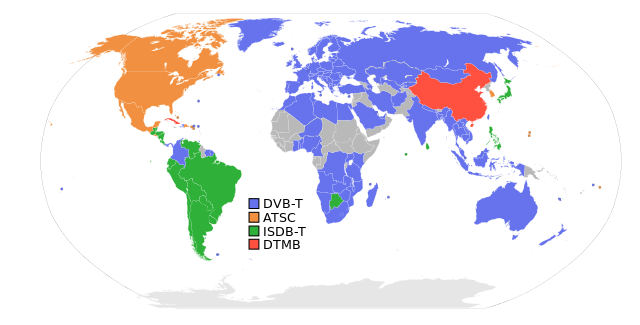
Kryptoradio: Connect to the bitcoin network from anywhere – even without the Internet!
What is Kryptoradio?
- transmits bitcoin transactions, blocks, and currency exchange data,
- does all this in real-time,
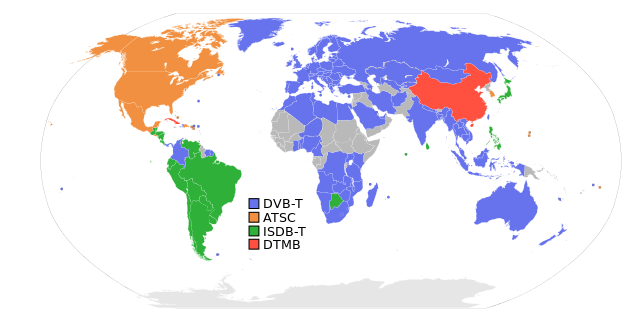
- uses terrestrial television (DVB-T) transmitters around the world.
- Bitcoins in the air, literally speaking.

Why?

- creating unprecedented devices and applications,
- making the bitcoin network more resistant to attacks,
- promoting bitcoin as a viable payment platform, and of course
- because they can!
“Alternative blockchain transports are critical to the success and survivability of the Bitcoin system.”
Bitcoin core developer – Greg Maxwell
What happens next?

2014 and last for 2 months. The broadcast area covers 95% of Finnish population, approximately 5 million
people. More information in the press release.
including maintenance costs is about € 2000 per month (VAT included). They are currently looking for partners to that stage.
technologically or by the number of users. If someone has ideas how to collect funds for this project, please contact us!
How to contribute
without compensation. However, in this case the compensation is the radio broadcast.

Open your free digital wallet here to store your cryptocurrencies in a safe place.
Analysts: Winklevoss Bitcoin ETF to pass SEC approval
Open your free digital wallet here to store your cryptocurrencies in a safe place.
Cryptocurrency: Fundraising Evolved
Open your free digital wallet here to store your cryptocurrencies in a safe place.
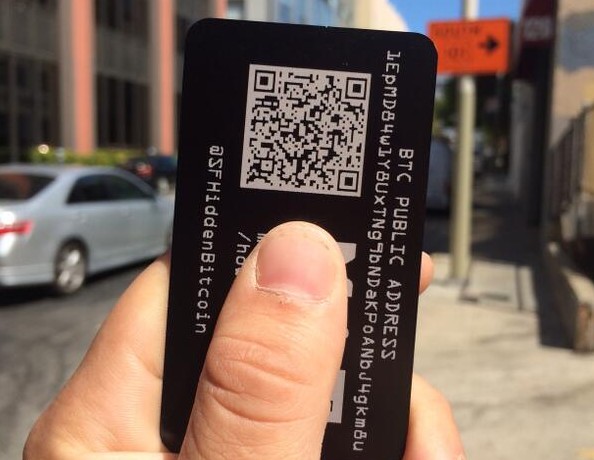
Someone is giving away Bitcoin in San Francisco
 |
| Image: CoinDesk |
You don’t pay $10m for a house without making a few enemies #Bitcoinpic.twitter.com/WSN2snj3XQ
— SF Hidden Bitcoin (@sfhiddenbitcoin) July 3, 2014
1KeKnYh4hX6LR12AHetbQVjknXdti8TusZ #bitcoin right here – you can virtually poke it.#hiddenbitcoin #hiddencash pic.twitter.com/WqcukMmcmm
— SF Hidden Bitcoin (@sfhiddenbitcoin) July 4, 2014
Open your free digital wallet here to store your cryptocurrencies in a safe place.

Does Dogecoin have the most active community?


Open your free digital wallet here to store your cryptocurrencies in a safe place.
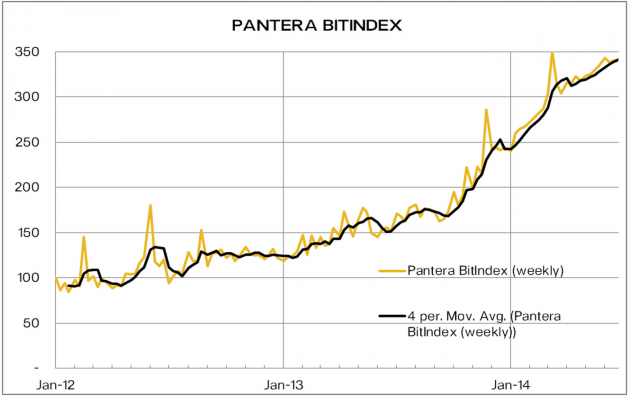
Pantera Launches BitIndex to Track Bitcoin
Components of index
- Developer interest on GitHub.
- Merchant adoption as a measure of consumer adoption.
- Wikipedia views measuring bitcoin education.
- Hashrate by logarithmic scale corresponding to orders of magnitude.
- Google searches captured by the number of times “bitcoin” appears.
- User adoption as measured by wallets.
- Transaction volume on the bitcoin network.
Always about price
Focus on investing
Open your free digital wallet here to store your cryptocurrencies in a safe place.
Cryptocoins for good: Cryptocurrencies Empowering Citizens Against Oppressive Governments
How cryptocurrencies can change the balance of power between dictators and citizens
the “control by the ruble” of the Soviet Gosbank, to the dual currency
system in Cuba, China’s overvaluation of the Yuan, or the exchange
controls in countries like Venezuela and Iran, regimes of all types have
relied on these kind of controls to rein, or at least try to rein,
capital flights, inevitable when -sooner or later- markets try to
correct the excesses committed by money-hungry “revolutions”.
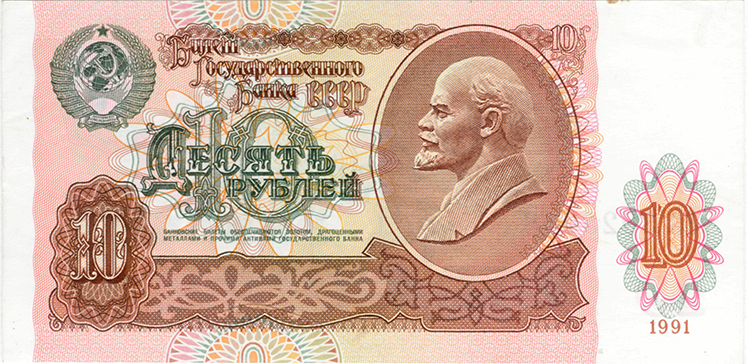 |
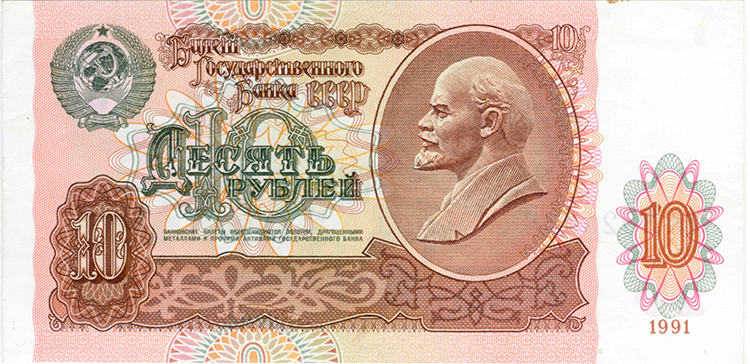
| The Gosbank controlled the currency markets using what it came to be known as the “control by the ruble” |
citizens are usually the most affected by such currency controls: as a
pseudo-monopoly is established, a black-market is instantly created and
exchange rates climb inexorably, specially in left-leaning regimes where
the government aims for greater control of all aspects of the economy,
affecting the efficiency of the production system and pushing the
trade-balance the wrong way, increasing in consequence the amount of
foreign currency required to cover internal demand. In short, more
expensive currency is required to buy each time more stuff, the result?
Rampant inflation and even more poverty.
Marxist theory says that the structure of society must be based in
keeping people in poverty, ruled by an upper class with certain rules,
norms and such in order so they can keep people like that. This
old-proven-wrong-policy is still used by many governments today, in
February 2014, for example, some education minister of a Latin American
country said that the government “wasn’t going to take people out of
poverty so they can become political opponents”. This proves that
currency controls are not a consequence of failed economic policies, but
tools for the governments to exert repressing power over its citizens.
what would happen to oppressive regimes if they were to lose control of
the currency exchange, so the people is free to manage their wealth
beyond the power of government currency controls? Currency
decentralization is not new, 20th century economist and Nobel Prize
Winner, Friedrich August Von Hayek (F.A. Hayek), theorized extensively
on this subject, and though polemic, his writings provided an important
part of the theoretical framework for modern economics, specially in
areas such as theory of money and economic fluctuations.In his book Theory of Liberty he wrote:
“The
experience of the last fifty years has taught most people the
importance of a stable monetary system. Compared with the preceding
century, this period has been one of great monetary disturbances.
Governments have assumed a much more active part in controlling money,
and this has been as much a cause as a consequence of instability. It is
only natural, therefore, that some people should feel it would be
better if governments were deprived of their control over monetary
policy. Why, it is sometimes asked, should we not rely on the
spontaneous forces of the market to supply whatever is needed for a
satisfactory medium of exchange as we do in most other respects?It
is important to be clear at the outset that this is not only
politically impracticable today but would probably be undesirable if it
were possible. Perhaps, if governments had never interfered, a kind of
monetary arrangement might have evolved which would not have required
deliberate control; in particular, if men had not come extensively to
use credit instruments as money or close substitutes for money, we might
have been able to rely on a self-regulating mechanism. This choice,
however, is now closed to us. We know of no substantially different
alternatives to the credit institutions on which the organization of
modern business has come largely to rely; and historical developments
have created conditions in which the existence of these institutions
makes necessary some degree of deliberate control of the interacting
money and credit systems (my emphasis). Moreover, other circumstances
which we certainly could not hope to change by merely altering our
monetary arrangements make it, for the time being, inevitable that this
control should be largely exercised by governments”
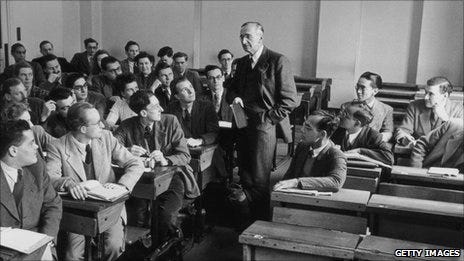 |
| Governments have assumed a much more active part in controlling money, and this has been as much a cause as a consequence of instability F.A. Hayek |
what if it was no longer inevitable? During the 20th century creating
and managing currencies was only possible for governments, so it was in
essence exclusively a political matter, but technology is changing that,
money issuing is not only government turf anymore, they now must
compete with cryptocurrencies. In governments with an effective rule of
law, this can be fair competition, for example, currencies can be
somehow regulated -as the IRS recently did in the US- and a legal
framework can be established so everyone can play by the rules. But,
there are many countries where the line between state and nation is
blurred, these countries may also take two additional paths, they can
prevent financial institutions or businesses from transact with
cryptocurrencies (e.g. Colombia and China) or they can declare an
outright ban (as it is rumored about China every single day). In both
scenarios cryptocoins could have a very important role, in the former
-while remaining legal- they can create a new channel for the flow of
foreign currencies, in the latter they can work as a relief valve, as an
alternative for the black market. In any case, by increasing the supply
of foreign currency, these coins can effectively push prices down, with
all the benefits that comes with it.
once, the development model that could arise from an efficient
cryptocoins market presents a development plan that is not based on
plain charity, in giving away something with the hope that the recipient
will make a good use of it and luckily return it back in future
productivity. People cannot only mine their own coins but they can rest
assure that the value of such money will be subject to fair rules of
supply and demand, not to devaluation-based political planning; and most
important, they may not be held hostage in poverty by exchange
controls, giving back to them a little of that sovereignty that
dictators keep claiming or themselves.
Open your free digital wallet here to store your cryptocurrencies in a safe place.