
Staking GRC: Staking Gridcoin on HolyTransaction Wallet
Staking Coins: Staking Gridcoin
Gridcoin is a cryptocurrency with ambitions of advancing scientific research. It was originally a simple hybrid of proof of work and proof of stake but now has developed its own custom mechanism blending elements of the two. New coins are created using Proof of Stake, but the number of new coins created depends on how much processing power was used for BOINC.
Stake Gridcoin on HolyTransaction Wallet
HolyTransaction Wallet is excited to present to you the launch of our new staking service. You can now leverage Proof of Stake (POS) holdings to safeguard crypto networks while earning financial rewards. Staking GRC has become much easier with HolyTransaction!
Rewarding citizen science on top of Proof of Stake
According to the PoR mechanism, If a node contributing its hash power to a project that has been whitelisted on the Berkeley Open Infrastructure of Network Computing (BOINC), that node will receive GRC coins corresponding proportionally with the amount of the work done by the node. The BOINC list contains projects of scientific importance that require a supercomputer but don’t have access to one. Of these projects, Gridcoin users vote on a subset of them to be whitelisted for contributions of computing power. Gridcoin, therefore, gives people all over the world the ability to contribute computing power to any of these projects and contribute to scientific research. You can also generate income by running Gridcoin in what the Gridcoin project calls “investor-only mode.”
Investor-Only Mode
Investor-only mode is what the Gridcoin project calls it when you setup earns proof of stake interest as opposed to the DPOR (proof of research) payments that “crunchers”—those who contribute computing power receive. You will only need to install the Gridcoin client and will not need the BOINC client.
Setting up the Client for PoS Rewards
The first step to setting up a Gridcoin client for investor-only mode is to install the Gridcoin Research client. The client is available for Windows, macOS, and several flavors of Linux including Debian, Arch Linux, OpenSUSE, and Fedora. Once the client has been installed, you will want to sync with the Gridcoin blockchain. This can take between several hours to a couple of days, depending on your internet speed. A green check on the connection bar indicates that the synchronization is complete. At that point, you can unlock your wallet for “staking only.” It can take up to 16 hours for the staking to begin. Running the Gridcoin client at all times maximizes your potential for income. Anytime the client is offline, you could miss an opportunity to mint a block.
The higher the balance you have, the higher the chances that you will get to “stake” a block. This is only a result of the fact that a higher balance gives you more chance to mint Pos blocks and thus you get a payout more often. While you can theoretically stake with any number of coins, you can only reliably stake with at least 2000 coins and the Gridcoin project itself recommends at least 5,000. The miners who contribute computing power to these projects come in two varieties—solo and pool. Pool miners earn research rewards whether they stake or not, but solo miners must stake in order to get paid.
Conclusion
Gridcoin provides a way to contribute to important scientific research and earn passive income while doing so. Even those who only stake coins and don’t provide actual computing power to these projects contribute by securing the network and helping the Gridcoin ecosystem. All you need to start staking Gridcoin is to deposit GRC in your HolyTransaction account.
Open your free digital wallet here to store your cryptocurrencies in a safe place.

Staking BLK: Staking Blackcoin on HolyTransaction Wallet
Staking Coins: Staking Blackcoin
Introduction
Blackcoin is a proof of stake-based coin. Blackcoin actually started out in life as a proof of work cryptocurrency but became a proof of stake coin after the 10,000th block was mined. Blackcoin claims in its whitepaper that it was the first cryptocurrency to use a pure proof-of-stake-based protocol on Bitcoin code. Blackcoin provides many of the same features as other cryptocurrencies, including decentralization and a high degree of transparency. It also offers great opportunities for passive income for staking your coins.
Stake Blackcoin on HolyTransaction Wallet
HolyTransaction Wallet is excited to present to you the launch of our new staking service. You can now leverage Proof of Stake (POS) holdings to safeguard crypto networks while earning financial rewards. Staking BLK has become much easier with HolyTransaction!
How to Stake Blackcoin
The process of staking is initiated by not moving your BLK for at least a period of 8 hours while keeping your node syncronized with the Blackcoin network. Your earnings are proportional to the number of coins that you have—the more coins you have, the more you earn. The amount of time you keep your wallet open for staking also has an effect on your block rewards.
Risks and Benefits of Staking Blackcoin
Blackcoin has improved its block time from 60 to 64 seconds. Blackcoin had previously used the scrypt protocol for its hashing algorithm, but this was changed to SHA256d. Blackcoin’s reliance on proof of stake gives it an edge in performance over many proof of work cryptocurrencies. When it comes to retail applications, where transactions cannot take an hour to fully confirm as with Bitcoin, proof of stake cryptocurrencies like Blackcoin are better suited for this role.
Conclusion
Staking your Blackcoin will earn you a reward of between 1% and 8% of the total amount of coins held in your wallet for one year. You just need to deposit BLK in your HolyTransaction account. Wait for 24h to start staking Blackcoin and visit History -> Distributions to see your POS rewards.
Open your free digital wallet here to store your cryptocurrencies in a safe place.
Staking PPC: Staking Peercoin on HolyTransaction Wallet
Staking Coins: Staking Peercoin
Bitcoin and many other early cryptocurrencies use a consensus model known as proof of work. This requires powerful computers to perform cryptographic problems that verify transactions on a blockchain. Peercoin originated an alternative to this that is used in many cryptocurrencies.
Proof of Stake Originator
Peercoin introduced the concept of proof of stake, an alternative to the proof of work consensus model. In its initial stages, proof of work played a large part in the consensus model since it was a fork of Bitcoin. But the original proof of work-dominated model has almost fully given way to proof of stake. This is more environmentally friendly, removes the need for purchasing expensive mining equipment and allows transactions to be performed a lot more quickly than on proof of work blockchains.
Stake Peercoin on HolyTransaction Wallet
HolyTransaction Wallet is excited to present to you the launch of our new staking service. You can now leverage Proof of Stake (POS) holdings to safeguard crypto networks while earning financial rewards. Staking PPC has become much easier with HolyTransaction!
How Does Coin Staking in Peercoin Work?
This act of generating a new block is called minting, however staking is a more popular term today. In Peercoin’s implementation of proof of stake, each node tries to find a new block each second. If the block is valid and backed by sufficient coinage (coins*days), it is accepted by the network. Nodes are only eligible to find new blocks when their coins have been in a wallet for 30 days. Their odds of finding valid blocks go up with the age of the coin until it reaches 90 days, at which point the probability is maxed out. Once a node finds a new block, new PPC are then minted and, for each new block, that node gets a block minting reward. After a new block has been minted, the age of the coins in the node’s address that are involved in the minting is reset. The address will then not be eligible to be chosen based on those particular coins until 30 days have passed. Staking your Peercoin assets does lock them up from being spent or moved. However, you can sell or spend the PPC at any time—you will just lose the opportunity to mint new blocks.
Advantages of Staking Coins with Peercoin
Why stake Peercoin and not other cryptocurrencies? The return on staking is lower with Peercoin than with most other proof of stake cryptocurrencies. Vast majority of economic studies shows that ideal inflation is 2-3%. However, Peercoin is serious about keeping inflation low, currently at 3.33%. Peercoin’s reliance on proof of stake means that it should not suffer from the same scalability problems that have plagued proof of work platforms like Bitcoin. This means quicker transaction times and an overall better experience for retail and vending applications—which means great potential for the coin’s success in the future. You can learn more about its ecosystem in the Peercoin Primer video series.
Conclusion
Peercoin was the originator of proof of stake in its whitepaper, even though it took some time for proof of stake to actually make its way into widespread use on the blockchain. Staking Peercoin and its minting process presents a great opportunity to earn coin that will, in turn, earn you more coin. All you need is just to deposit PPC to start staking on your HolyTransaction wallet.
Open your free digital wallet here to store your cryptocurrencies in a safe place.
Staking Coins with HolyTransaction Wallet: Earn Passive Income with Crypto
Staking Coins: Earn Passive Income with Crypto
You might be familiar with mining in cryptocurrencies like Bitcoin, where expensive energy-intensive equipment works to generate blocks. However, there is an alternative to this model that doesn’t require the massive energy costs of mining or equipment. Staking coins can generate passive income without such headaches. Some examples of coins which rely on proof of stake include Peercoin, Blackcoin, Gridcoin and Pivx.
Stake Peercoin, Blackcoin, Gridcoin, and PIVX in HolyTransaction Wallet
HolyTransaction is excited to present to you the launch of our new staking service. You can now leverage Proof of Stake (POS) holdings to safeguard crypto networks while earning financial rewards. Staking PPC, BLK, GRC, and PIVX has become much easier with HolyTransaction! Starting the 1st of September 2020 customers with balances in those cryptocurrencies will begin to receive their rewards distributions.
Key Advantages to Staking with HolyTransaction:
- Start obtaining distributions instantly, you just need to deposit
- Payouts every 24h
- Exit easily from your staking position by transferring your coins out of your HolyTransaction Wallet
HolyTransaction Staking Wallet lets you not only stake coins, but also trade them, buy new ones, or sell the ones you have for fiat.
This makes it rather easy to exchange your rewards earned through staking, withdraw the money, and use it in the real world.
Of course, you can always just keep it and increase the amount you have for staking, which will help you earn more in the long-term.
How does Staking Coins Work?
In contrast to the proof-of-work consensus mechanism that Bitcoin uses, some cryptocurrencies use an alternative model for consensus called proof-of-stake. So instead of miners creating new coins and verifying transactions as in the proof-of-work model, you have what are called forgers creating new coins and performing verification of transactions in the proof-of-stake model. These forgers are chosen in a variety of ways from a pool of coin holders who have staked their coins. The selection criteria vary depending on the cryptocurrency, but the most typical ways are a random selection or how long the coin holder has held the coin. When a forger gets chosen, they can then create new blocks and verify transactions.
Risks and Benefits of Staking Coins
The most immediate benefit of staking coins is that you earn income for doing so. In comparison with proof of work schemes, proof of stake removes the need for expensive equipment to perform all the proofs of work that validate transactions. Such equipment that is used to mine coins on a proof of work blockchain would often soon depreciate as more advanced hardware came out. Staking your coins does not come with this problem. Blockchains which used proof of stake for consensus are greener as they do not require the massive amounts of electrical resources to perform the calculations needed by proof of work schemes. Finally, it is simply just fairer for users who have invested in the cryptocurrency to reap the benefits of verifying transactions on its network.
The only real drawback to staking coins is that the coins can be unavailable while they are staked. This isn’t an issue when the coin is gaining value, but if the coin loses value you can be locked in for the ride. Some cryptocurrencies allow you to stake your coins even if they are in a cold (or offline) wallet. This means that the coins are not connected to the internet at all times. This is more secure, however, some coins require that your coins must be in a hot wallet, which is a wallet that is always connected to the Internet.
Conclusion
Staking coins is a great way to earn passive income, avoiding the exorbitant cost of the hardware required for mining, which quickly becomes obsolete. Staking coins is more environmentally friendly as it does not rely on the massive amounts of electricity needed to power mining rigs. Instead of rewarding those who invest in the expensive hardware needed to verify transactions, cryptocurrency projects which rely on proof of stake reward those who invest in the coins themselves. This results in a fairer system where anyone can earn passive income. HolyTransaction is a very user-friendly wallet all you need is just to deposit for staking to commence.
Open your free digital wallet here to store your cryptocurrencies in a safe place.

HolyTransaction Successfully Completes Cardano’s Shelley Upgrade
Sending and receiving ADA with Cardano‘s Byron and Shelley-era addresses is available on HolyTransaction now.
Open your free digital wallet here to store your cryptocurrencies in a safe place.

HolyTransaction supports five new crypto assets
HolyTransaction has added five new crypto assets to the platform: USDC, MANA, ENG, ANT, and LINK.
USD Coin (USDC) is a fully collateralized US dollar stablecoin. It is an Ethereum powered coin and is the brainchild of CENTRE,
Decentraland (MANA) defines itself as a virtual reality platform powered by the Ethereum blockchain. In this virtual world, users purchase plots of land that they can later navigate, build upon, and monetize. Decentraland uses two tokens: MANA and LAND.
Enigma (ENG) is a crypto platform that’s trying to solve the problem of privacy on the blockchain by giving access to data storage and privacy while remaining scalable. Enigma aims to extend Ethereum Smart Contracts by introducing secret contracts.
Aragon (ANT) is a decentralized platform built on the Ethereum network that offers a modularized way to create and manage dApps, cryptoprotocols, and decentralized autonomous organizations (DAO). The ANT ERC-20 token will enable its holders to govern the Aragon Network.
Chainlink (LINK) connects decentralized peer-to-peer networks and smart contracts to real-world data, events, and payments. Since blockchains cannot access data outside their network, oracles (a defi instrument) are needed to function as data feeds in smart contracts.
To create your web wallet you don’t need to have a bank account, so you can set it up in just one minute.
Open your free digital wallet here to store your cryptocurrencies in a safe place.

HolyTransaction supports GAME Token Swap
GAME has been upgraded from a Proof-of-Work blockchain to an ERC20 Ethereum token.
Game Credits users will retain the balance of their GAME addresses, which have been migrated to an Ethereum ERC20 token with the GAME ticker symbol. Balance totals for HolyTransaction GAME users will reflect the same GAME total that they had prior to the GAME Token Swap.
Open your free digital wallet here to store your cryptocurrencies in a safe place.

95% of Cryptocurrency Volumes is Fake
If you have been trading on a cryptocurrency exchange, you might have noticed how these platforms work. Buyers and sellers come together to exchange their favourite coins, in hopes of making a profit. The total volume of those transactions determines the popularity of an exchange, as well as the liquidity of cryptocurrencies.
For the longest time, the public used reported daily volumes of exchanges to determine the quality of an exchange and, as an extension of that, the best option to exchange cryptos quickly.
However, one strange thing started to happen as cryptocurrencies became more popular. The exchanges with the highest volumes were relatively unheard of and, in some cases, completely unknown.
This confused many market participants. How can an exchange with only 2000 Facebook fans and a quiet Telegram group have 3x more volume than Bitfinex?
And how can those same exchanges not create any liquidity for new coins, even though they report such massive numbers?
Long and behold, Bitwise launched an investigation to explore the causes of this issue. A short while later, in a 104-pager, they shared their findings with the world.
Most reported volumes are fake
According to the research performed, many cryptocurrency exchanges were artificially inflating their reported volumes. In fact, the numbers were so highly inflated that it is assumed that about 95% of the total volume is actually non-existent.
Why does this happen? Well, according to the same paper, it happens in order to increase the exchanges’ market position and make more profit on new coin listings. This, of course, makes it hard for new market participants to trust exchanges.
The logical thing to do then, is find platforms that you can actually trust. Exchanges that report real volumes, coherent with the activity of their users.
Paybis has created a helpful infographic to help you understand which platforms you can actually trust. Check the following infographic to better understand the findings of Bitwise.

As you may have imagined, the news was unpleasant for most crypto-enthusiasts. In fact, the community demanded answers from CoinMarketCap. The company that got recently acquired by Binance tackled this issue by introducing a Liquidity metric. Based on this, users are better able to distinguish between honest and “scammy” exchange platforms.
After its acquisition by Binance, the Reported Volumes metric also got a pleasant refresh. Volumes now look a lot more realistic and in line with the actual volumes being made on a daily basis.
Where do we go from here?
Cryptocurrencies, as a market, are still in their infancy. Thankfully, as the space keeps improving, so do the metrics of data collection. As such, it is expected the following year will completely eliminate irrelevant platforms that offer now value to the space.
Moreover, many new FIAT on-ramps for different countries are appearing on the market. We expect that this effort will continue and, eventually, increase the standard of requirements for the proper operation of exchange platforms.
By all means, the cryptocurrency space looks massively different than what it did two years ago. And with companies like Bitwise analyzing the market and helping its growth, we are more than confident about the next 2-5 years.
Open your free digital wallet here to store your cryptocurrencies in a safe place.
9 Reasons Cryptocurrencies Are So Important
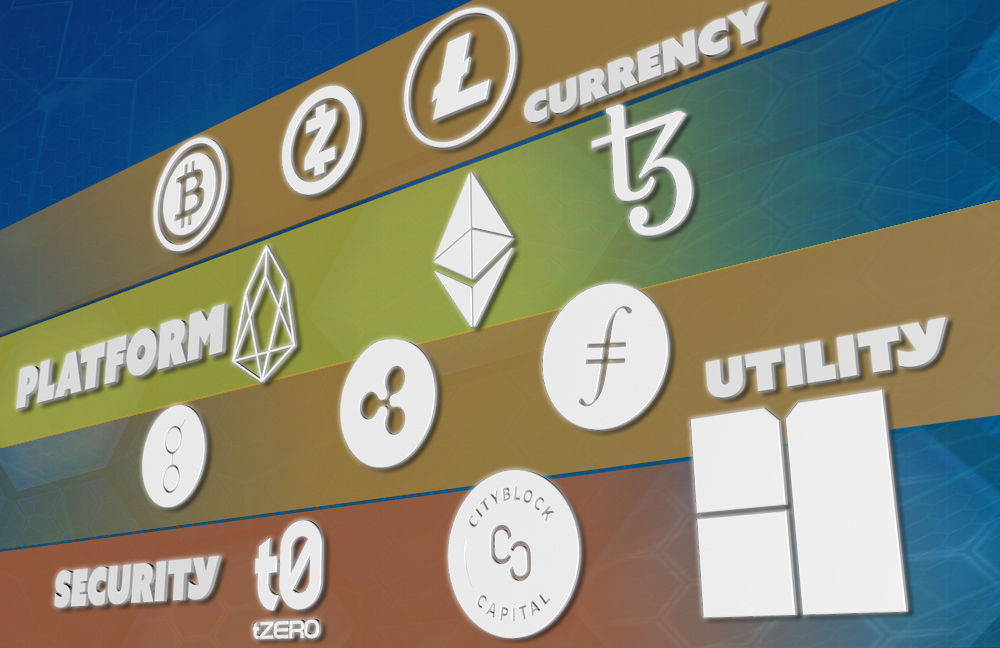
Image courtesy of GammaLaw
Digital currencies have created a buzz since the sudden rise of the Bitcoin price. They have, over time, become a new trend in the global money market due to their incredible benefits. Here are some of the aspects that tend to make cryptocurrencies so important.
Safety
Bitcoin and Litecoin are arguably the most trusted and safest digital currencies in the world. In a world where looters and cons are everywhere, virtually everyone wants to trade safely. Cryptocurrencies give online traders that assurance, and that’s why people consider them as a reliable means of exchange.
Policies
The recent increase in the demand for Litecoin and Bitcoin can be attributed to policies that govern cryptocurrency networks. Cryptocurrencies are a digital currency, which means traders rarely need a third-party to complete a transaction. That often gives online traders a sense of security and reassurance. Cryptocurrencies tend to allow online retailers to transact anytime and anywhere.
Cost
Bitcoin and Litecoin are considered a low-cost means of transaction. The cost of transacting with cryptocurrencies can be far less than other currencies. The fact that the cryptocurrency network is responsible for compensating miners tends to eliminate transaction fees. Low-cost transactions could mean that cryptocurrency users won’t shell out money in exchange for Bitcoin and Litecoin. All a cryptocurrency user may need to transact is knowledge of cryptocurrencies and a smart phone.
Storage
Cryptocurrencies can be stored in a safe e-wallet or USB drive. Storing your bitcoin or Litecoin in either an e-wallet or USB drive may not attract any fee.
Privacy
Privacy has been a concern for most people transacting over the internet. Cryptocurrency users can expect their financial transactions to be highly confidential. You can transact using bitcoin and still be anonymous. With digital currencies, the seller and buyer don’t transfer money directly. Instead, the cryptocurrency network often serves as an intermediary, which means that users may not share their credentials with anyone. Cryptocurrencies can be used as a new measure to curb identity theft, which has become a menace in the global money market. If something seems doubtful, you are at liberty to share any information you may want with your merchant. By accepting payment in digital currencies, online traders tend to accept and welcome clients who would wish to remain anonymous. Accepting payments in bitcoin can make a brand an industry leader and increase its awareness.
Investment
Cryptocurrencies can be bought in a fraction. That means you can invest any amount of money in cryptocurrencies. For example, if you can’t afford a full unit of bitcoin, you can split it and invest in a quarter or half of it. That can help reduce the cost of investing in cryptocurrencies and avoid overspending. With a crypto converter, an investor can find out the price of any digital currency in their country.
Autonomous
Using digital currencies can make you autonomous. Cryptocurrencies tend to eliminate third-parties, so you can be sure that no fees or commissions are involved. These currencies can also allow online traders to manage their accounts.
Decentralization
Decentralization is a feature that often makes cryptocurrencies lucrative for merchants and customers alike. It means that digital currencies can’t be subservient to any authority or agency. No one owns digital currencies, which means no individual can have control over it. Digital currencies can provide online retailers with the freedom to transact without worrying about geographical barriers.
Digital currencies are considered a game-changer in the global money market. Their incredible benefits are arguably the reason behind their recent popularity. Cryptocurrencies are considered the safest and most trusted currencies around the world. You can store Bitcoin and Litecoin in the cloud or USB drive and move with them anywhere around the world. By using bitcoin, online traders can expect their transactions to be confidential. Digital currencies are also a reliable medium of exchange that can give sellers and buyers control over their accounts. The fact that Bitcoin and Litecoin can be bought in a fraction can make digital currencies an affordable investment.
Open your free digital wallet here to store your cryptocurrencies in a safe place.

Universal Cryptocurrency Wallet HolyTransaction Adds Digibyte to Its Crypto Collection
Once again, we recently listed Digibyte and expanded our collection.
In case you are searching for a reliable and easy to use digital wallet, then HolyTransaction Cryptocurrency Wallet is perfect for you. A digital wallet is ideal for cryptocurrency traders who are looking to store, trade, and send, as well as access their cryptocurrencies through a single account. This way users can easily convert the supported cryptocurrencies without having to transfer their coins to other exchanges.
HolyTransaction Wallet for DGB
As a HolyTransaction customer, you can create a new address for DGB (Digibyte) and use the HolyTransaction Web Wallet to send as well as receive coins. You can also use the wallet to convert them into any other cryptocurrency conveniently. Thus, HolyTransaction users can send cryptocurrency, receive transactions, as well as exchange DGB with other supported cryptocurrencies, with Digibyte being one of the latest coins to be included.
What is Digibyte (DGB)?
Digibyte is a rapidly-growing, public, decentralized blockchain project, which features a cryptocurrency of the same name. The project has been around for a long time, with some of the fastest transaction speeds in the industry composed by an active development team which has been consistently working on it for over 5 years.
Digibyte has also always been transparent, with its team and founder never hiding their identities. DGB can be obtained through mining, purchased on HolyTransaction, or received as payment. In addition to that, the Digibyte team has been making an effort to reach out to merchants without waiting for them to come to cryptos, in an attempt to provide more options to its users as possible.
DigiByte has been active for over 5 years now with a market cap of $69.8 million, which makes it at least as old as Ethereum while DGB itself ranks as the 70th-largest crypto.
Open your free digital wallet here to store your cryptocurrencies in a safe place.