
Change Bitcoin Euro: how to sell crypto in Europe
People who decide to invest in crypto often have to change Bitcoin Euro, but the main problem is always the same: where? which platform should I use in order to have low fees and instant conversion?
We at HolyTransaction have found a solution for these issues and we have launched HolyTransaction Trade, an instant exchange that allows you to change Bitcoin Euro in a few steps.
Through our new service you can instantly convert Bitcoin into Euro and vice versa, buying and selling your cryptocurrencies at any time.
We have a few options to do so: Bitcoin to Virtual Credit Card, Bank Transfer, and Halcash ATM ( the latest one option is available in Poland and Spain).
Or Bitcoin to EasyPay, TeleIngreso and PayNet if you live in Greece, Mexico or Spain.
Change Bitcoin Euro: step-by-step guide
By clicking on the links below you can read step-by-step guides to change your Bitcoin into Euro:
Also, if you don’t know exactly how a Bitcoin Virtual Credit Card works and which benefits it has, you can read the insightful article below to understand why you might need a virtual credit card to do shopping online.
Open your free digital wallet here to store your cryptocurrencies in a safe place.

Virtual Credit Card Bitcoin and its benefits
What is a Virtual Credit Card Bitcoin? How to create yours? And what are its major benefits?
Read the following article to receive all the answers you need to use and open your new Virtual Credit Card Bitcoin.
Virtual Credit Card Bitcoin: definition
First of all, a Virtual Credit Card Bitcoin is a unique credit card number generated to settle a specific transaction.
Of course, it can be filled with Bitcoin, so you can convert your cryptocurrency into euro to buy everything you need online.
So, it is not physical, but just a credit card number generated electronically via web.
5 top Benefits
Virtual Credit Cards Bitcoin are available for years, but many continue to ask: why should I use them?
Here a list of Virtual Credit Card Bitcoin benefits:
- Security: Typically a virtual credit card number is issued for the exact amount of the transaction (the same system of a check), reducing the possibility of fraud. The specific credit card number generated becomes invalid after the transaction is complete.
- Control: You can easily check all spending parametres. Your Virtual Credit Card can only contain 250 EUR.
- Low Fees: when you create a virtual credit card the 2% from the total value will be designated to provider fees.
- Versatility: you can use your Virtual Credit Card on every single e-commerce, website and platform where VISA is accepted. Its is also a simple way to convert and spend your Bitcoins.
- Easier Creation: To create your own Virtual Credit Card Bitcoin you just need to have 18+ years and an account on EntroPay.
HolyTransaction Trade
On the web you might find several services that allow you to create your own Credit Card, but only a few of them are really effective and safe.
To receive instantly your new credit card number in minutes, to have a good support and low fees, we suggest you to test our new platform HolyTransaction Trade
HolyTransaction Trade allows you to create your Virtual Credit Card Bitcoin in a very short time with only 2% of fees.
Click here to read a simple step-by-step guide to create your not physical credit card.
Open your free digital wallet here to store your cryptocurrencies in a safe place.

Bitcoin Excel Support among Microsoft projects
Microsoft officially announced its plans to add a Bitcoin Excel support in the upcoming release of its new version of Excel 2017,
This Bitcoin Excel Support will allow users to calculate, format and analyze bitcoin on the program.
Account executive at Microsoft, Martin Butler posted on Twitter:
“In 2017, Excel will be able to recognize, format, calculate and analyze numbers expressed in Bitcoin currency. The new feature will be available for Excel running under Windows 10, Android, Mac OS and iOS, and will include Excel Mobile versions as well.”
Bitcoin expert Alistair Milne first expressed his enthusiasm for the Bitcoin integration. and also the whole Bitcoin community reacted positively for this the company’s effort as it can help a massive adoption for Bitcoin.
“Bitcoin is a currency” for Bitcoin Excel Support
During the past few years, a few government agencies and financial institutions avoided the word “currency” in describing Bitcoin.
The official recognition of Bitcoin worldwide by tax authorities is still a minefield, even if Russia recently declared its decision to recognize Bitcoin as a foreign value.
By the end of 2016, investors and traders were considering Bitcoin as a worldwide currency and the only safe haven asset for its capacity and ability to prevent financial issues and economic problems.
Bitcoin has been crucial in protecting the wealth of most households and businesses in the past 12 months. Maybe it is for this reason that Microsoft coined Bitcoin as a currency for its global users who utilize Microsoft Execel every day.
Microsoft loves cryptocurrencies
Microsoft is heavily involved in the development and deployment of various Blockchain-based platforms, including Azure Blockchain-as-a-service (BaaS) platform, where businesses can use the distributed ledger to simplify the settlement of financial data.
The company also supported meetups about Ethereum and other blockchain-related companies, demonstrating their love for the cryptocurrencies industry development.
To read more about Microsoft and Bitcoin, click here.
Open your free digital wallet here to store your cryptocurrencies in a safe place.

Cryptocurrencies 2016: Bitcoin Alternative charts
Today we want to talk about Cryptocurrencies 2016, as the just ended year has been very exciting for several digital currencies and not only for Bitcoin.
A lot of major open-source currencies, in fact, showed a good growth during 2016 and we hope to see significant expansion in 2017.
Below you’ll read charts of the excited cryptocurrencies 2016, during a period between December 27, 2015 to December 26, 2016.
Source: Coindesk.com
Bitcoin
Market Capitalization (Beginning of Year): $6,161,215,794
Market Capitalization (End of Year): $14,590,356,108
Price (Beginning of Year): $411.99
Price (End of Year): $908.17
Price (Annual High): $909.94
For sure Bitcoin is the king of cryptocurrencies 2016, if we talk about value.
It is the oldest blockchain-based asset as today (January 3rd) it celebrates its 8th anniversary: the genesis block was generated on January 3rd 2009.
While I’m writing of this article, Bitcoin price is still growing, surpassing the value of $1,000 for 1 BTC.
Bitcoin price and trading volume were supported by several global circumstances, including the Chinese yuan devaluation, the UK’s Brexit, and the election of a Donald Trump.
Ethereum
Market Capitalization (Beginning of Year): $80,339,474
Market Capitalization (End of Year): $638,041,577
Price (Beginning of Year): $2.83
Price (End of Year): $7.31
Price (Annual High): $19.59
2016 saw Ether, or the digital currencies that powers the Ethereum blockchain – become the best-performing currencies, with a more than 2,000% increase over the first six months of 2016.
The major reason for its instability was the DAO hack, the subsequent failure of the decentralized project, and the creation of ethereum classic. These factors led to a fall of nearly 50% of this altcoin value.
Anyway, Ethereum is the favorite network for possible FinTech permissioned distributed ledgers, enterprise software and Internet of Things applications, so 2017 could will probably show a capitalization increase for ether.
Litecoin
Market Capitalization (Beginning of Year): $149,142,004
Market Capitalization (End of Year): $212,469,870
Price (Beginning of Year): $3.41
Price (End of Year): $4.34
Price (Annual High): $5.55
One of the oldest bitcoin alternative, litecoin showed a stable valuation during 2016, closing $2 above its starting price for the year.
Dash
Market Capitalization (Beginning of Year): $16,081.586
Market Capitalization (End of Year): $70,675,107
Price (Beginning of Year): $2.64
Price (End of Year): $9.67
Price (Annual High): $14.42
In 2015, darkcoin decided to end its association with shadow businesses and the DarkNet by changing its name to Dash.
This re-branding seemed to work and Dash ended 2016 with pricing nearly three times, and a market capitalization close to four times.
Cryptocurrencies 2016 and their future
As we enter 2017, the future for cryptocurrencies seems bright, as the digital currency market will continue to progress and prove its worth as one of the top-performing commodities available today.
We at HolyTransaction are very happy to work with this top-rated cryptocurrencies, as our wallet can store Litecoin, Dash, Ethereum and Bitcoin within a unique login.
Needless to say, we are proud to have chosen the best and the most profitable cryptocurrencies for our multicurrency wallet you can open here for free.
Open your free digital wallet here to store your cryptocurrencies in a safe place.

Bitcoin in 2016: top news about the Blockchain
As the New Year’s Eve is coming, we decided to share with you the best moments of this year with an article about Bitcoin in 2016.
Involved in the best news about the distributed ledger technology, there are not only financial institutions and bank, but specially well-known companies related to countless sectors.
And his proves how the blockchain could be useful for a lots of use cases.
Microsoft and Bitcoin
For example, in 2016 Microsoft announced its involvement in blockchain projects related to security, identity management, and a tool for developers called Microsoft BaaS.
Also, the worldwide company decided to accept Bitcoin among its available methods of payment on its online shop.
IBM and Watson
IBM was another company who dedicated much effort in blockchain research and projects.
Earlier this year, IBM revealed its new blockchain cloud service for helping companies in developing and testing the distributed ledger.
Also, it announced its revolutionary project called Watson, that together with the distributed ledger are “two technologies that will rapidly change the way we live and work, and our clients in Asia Pacific are eager to lead the way in envisioning and creating that future,” explained Randy Walker, CEO at IBM for the Asian area.
Bitcoin in 2016: annual price high
Bitcoin in 2016 also reached its annual high; and as the year comes to the end, its price continues to test the $1,000 mark and it seeks to set a new three-year high.
HolyTransaction in News
You might now that our company had to face some issues earlier this year, but now we are strong than ever and we’re very happy to having developed a new virtual exchange platform called HolyTransaction Funding.
Thanks to this exchange you can buy and sell bitcoin worldwide with no registration required. This means you can instantly convert your digital currency into fiat currencies and vice versa, without sharing your personal data.
On HolyTransaction Trade you can also create a Bitcoin Virtual Credit Card to buy everything you want online.
Open your free digital wallet here to store your cryptocurrencies in a safe place.
BNP Paribas Blockchain used for live transactions
A well-known worldwide seller and another important firm partecipated to the first live transactions using the BNP Paribas Blockchain service, as revealed today by the bank itself.
According to BNP Paribas, in fact, payments were processed between the Italian sports collectible firms Panini Group and the Australian packaging firm called Amcor.
The payment transactions were managed in a few minutes – the bank explained in the official press release – using different currencies to make transactions easier between bank accounts located in Germany, Netherlands and England.
Panini Group treasurer Fabrizio Masinelli commented in a statement:
“This proof-of-concept shows how powerful such technology can be and how it can be utilised as an effective and efficient response to the main issues that treasurers face on a daily basis.”
BNP Paribas Blockchain Proof of Concept
The transactions were managed by using the proof of concept called Cash Without Borders launched earlier this year after its incubation during a blockchain hackathon.
More Details about the size of the transactions will be revealed in the next future.
Also, the BNP Paribas blockchain service tested the so-called “mini-bonds” for small investments, as well as blockchain crowdfunding prototypes that might see the light next year.
According to the Panini Group’s official website, the company earned 751m euros in 2014 and employs 1,000 people worldwide.
Also, during the same year, Amcor earned $10b in sales and employs 29,000 employees.
To read more about the BNP Paribas Blockchain service click here.
Open your free digital wallet here to store your cryptocurrencies in a safe place.

France Bitcoin Tests by the Central Bank
France Bitcoin tests have been revealed by the French Central Bank last week.
The Banque de France published a press release on Friday where it talks about its technology tests for use in the management of SEPA Credit Identifiers.
According to the French central bank, one of the key participants in this project is the Caisse des Dépôts et Consignations, and the Paris-based startup called Labo Blockchain.
The project began in July 2016 and culminated in October with the creation of prototypes for creating and managing SEPA Credit Identifiers.
The central bank also explained how meetings were held with stakeholders as the project moved forward, indicating that more details about the project will be revealed in 2017.
France Bitcoin project and more central bank efforts
This is not the first time a central bank test the distributed ledger.
A few months ago, in fact, central banks in Japan, Sweden and Singapore launched similar projects.
Also, earlier this month, the US Federal Reserve published its first major research paper on the ledger you can read here.
Credits: Coindesk.com
Open your free digital wallet here to store your cryptocurrencies in a safe place.

Japanese Blockchain Consortium is growing fast
A Japanese blockchain consortium grew very fast and now it includes more than 1 hundred members.
Membership of this Blockchain Collaborative Consortium (BCCC) grew since its creation back in April 2016.
BCCC memberhip includes Japan Microsoft, Infoteria, Mitsui Sumotomo Insurance, PwC, Bitbank, ConsenSys and more.
Also, the Japanese Blockchain Consortium announced that the 100th student from its Blockchain University program had successfully graduated – signal that the BCC’s plan to improve knowledge about the distributed ledger is succeeding.
In a blog post revealed today, the founder and CEO of Infoteria, Pina Hirano, explained that the Japanese Blockchain University is the only one of its kind within the country. He said:
“While the world related to FinTech and block chains is moving at a rapid pace, BCCC will add new members’ power and make activities more active so that domestic movements will not be delayed.”
Hirano suggested the total Japanese Blockchain consortium members are 109, but at the moment the BCCC website only lists 101, so maybe more members will be announced in the near future.
Japanese blockchain growth
During the last few months Japan has been characterized by its interest and study of the blockchain.
In November Ripple launched its own blockchain consortium with more than 40 banks with the goal of building a network to conduct cross-border payments.
Also, in December the Mizuho Financial Group, Inc., Sumitomo Mitsui Banking Corporation and other banks helped Deloitte Japan for a blockchain test and research about inter-bank payments.
Despite the test, Japan faced a shortage of blockchain developers, as reported by Reuters.
To solve this problem within the country, the BCCC graduated two classes of students with 8 courses each, including “practical training”, “foundation of blockchain technology” with lessons about the bitcoin blockchain. More classes will be added next month, but unfortunately this consotium blockchain class is only conducted in Japanese language.
To read more about Japan plans related to the blockchain, click here.
Open your free digital wallet here to store your cryptocurrencies in a safe place.
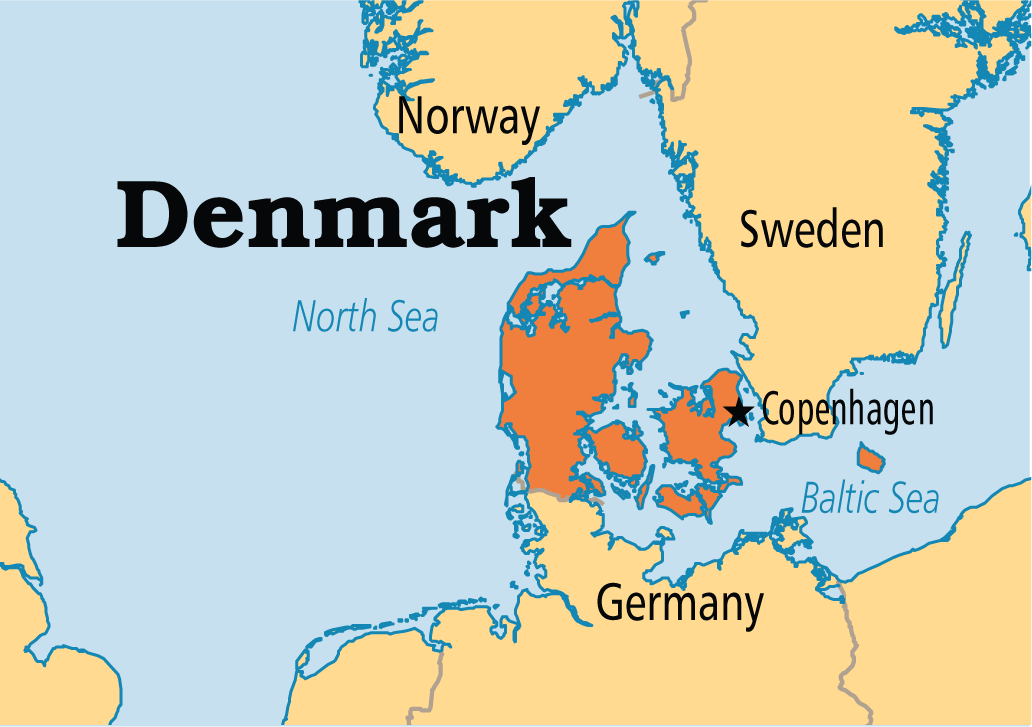
Denmark Bitcoin: Digitalizing National Currency
Today I want to talk about the Denmark Bitcoin position and regulation.
Denmark is a place where its citizens relie on cash less than most other European countries, so it is thinking about digitalizing its national currency.
To do so, the Danish central bank wants to release its own digital currency based on a blockchain and it will be called e-krone.
Governor of the Danish central bank, Lars Rohde. commented that the government doesn’t want to print its own fiat currency in the future.
So Rohde is looking for outsourcing the production of Danish krone and wants to replace it with its independent financial system based on the distributed ledger technology: the e-krone.
In an interview conducted by Bloomberg, Rohde explained that the Danish central bank effort is not related to the blockchain technology or alternative fintech technologies:
“We’re not preoccupied with the technology because we know that issue well. Cash and notes are not an alternative to electronic payments. We went beyond that many years ago.”
Also, the most important problem the central bank is worried about is the anonymity of the e-krone.
At the moment, the Danish bank believes that the e-krone will have a serial number embedded onto its Blockchain, so the government will be able to track the currency thanks to a transparent ledger.
However, another issue about the anonymity of a currency are the predictable complaints by the Danish citizens who expect to be provided with financial freedom and privacy.
“All money held by Danes will eventually end up in the central bank in the event of a financial crisis, and we will indirectly end up doing a bailout because we become a creditor to all the banks.”
But the distributed ledger tech is not applicable to the concept of the Danish central bank, as structurally it cannot be established for the central bank as network moderator.
To read more news about Denmark Bitcoin position, click here.
Open your free digital wallet here to store your cryptocurrencies in a safe place.

Japan Bitcoin Regulation for 2017
Japan Bitcoin Regulation
Japan Bitcoin Regulation will take place in 2017 and it wants to drop an 8% sales tax on Bitcoin purchases.
This move will take effect in July 2017, according to a document published by CoinDesk.
Although the proposal has yet to be approved by senior Japanese government, an annual tax document written by the ruling Liberal Democratic Party and the Komeito party was revealed today. Thanks to this document now we know more details on the proposal suggested back in October by the Ministry of Finance and the Financial Services Agency.
The tax remains in place today.
If approved by the Cabinet, the plan will institute a period of grace in June 2017, with the tax exemption becoming official the following month.
The document just released is the result of discussions among government stakeholders first reported by the regional news service called Nikkei.
Local startups have already responded positively to this Japan Bitcoin regulation.
CEO of exchange service Quoine, Mike Kayamori, commented that the plan to drop the sales tax was expected, but it represents a good message to the cryptocurrency community.
Kayamori explained to CoinDesk:
“It’s a huge relief for us. Customers don’t have to pay tax for each transaction. Hope this becomes standard practice.”
This move follows a very busy year for Japan on the exchange front, as the government decided to request registration for all the companies that handle bitcoin sales within the Japanese country.
Discussions around exchange regulation began last year when government ministers tried to obtain information from exchange services.
Also, a deliberations took place last year because of the collapse of Mt Gox, a bitcoin exchange imploded in 2014, causing hundreds of millions of dollars lost by the exchange users.
Document originally shared by CoinDesk.com on Scribd. Unfortunately it is available only in Japanese language.
Open your free digital wallet here to store your cryptocurrencies in a safe place.