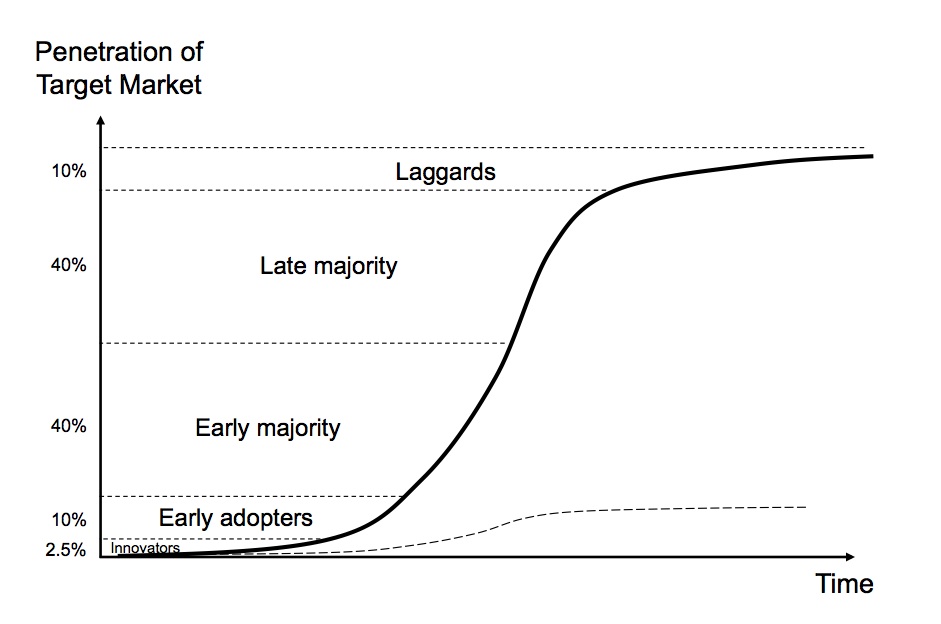
Bitcoin has passed the tipping point
Products and services that are first-to-market often take such a battering that they lose out to competitors with copycat products. Business history is littered with wildly successful products with ultimately spectacular collapses because they lost out to competitors that found a better way of doing things – things they learned at the trailblazer’s expense.
The Sony Betamax is the poster child for products that created a market and lost out to a rival – in this case VHS. Sony created a market for recording TV, but because the tapes where an hour long VHS grabbed the movie rental market.
More recently, Friendster was the first social network to explode, with millions of users in the first 3 months. But it couldn’t manage its growth and lost out to MySpace and of course Facebook.
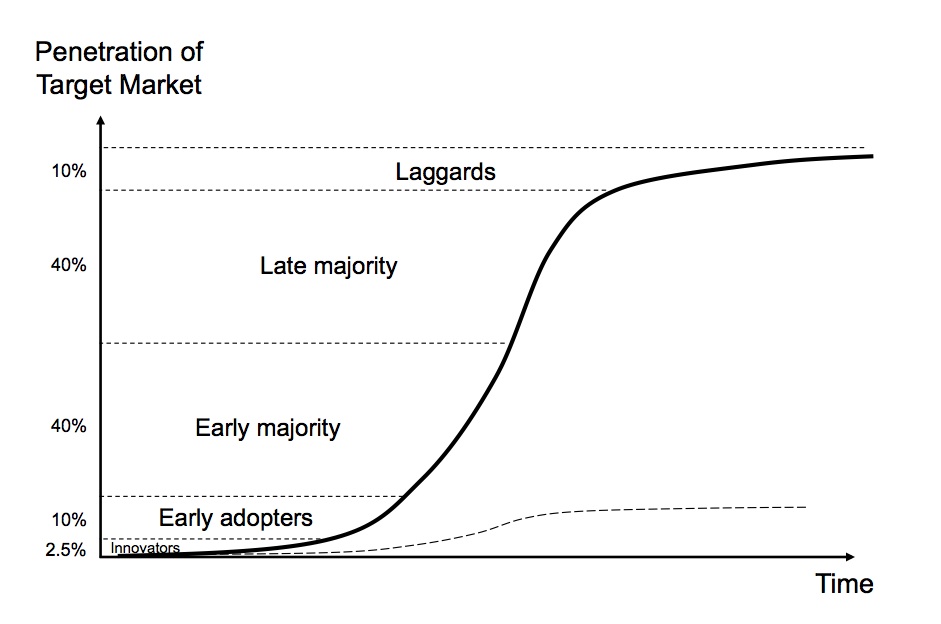
There are many more examples. Some lost slowly, like the Atari 2600 game console, and some crashed spectacularly like Rio MP3 player. Palm lost to Apple, Netscape to Internet Explorer, WebCrawler to Google, Tivo to the cable companies, and on and on.
So far Bitcoin is an exception to this model. And though it’s been battered by ruinous headlines, including one just this week where the World Bank is calling it a naturally occurring Ponzi scheme, Bitcoin remains resilient.
Kaushik Basu, World Bank economist and author of ‘Ponzis: The Science and Mystique of a Class of Financial Frauds’ argues that most Ponzis today are not always obvious and that today’s Ponzi schemes often don’t have a puppet-master pulling the strings. Bitcoin, he says, is just such a Ponzi. The speculation on the currency raises the demand for Bitcoin making it a bubble.
Bitcoin has hundreds of competitors all built on the Bitcoin model. A handful are gaining some success, like Litecoin which is currently trading at $9, and Darkcoin (I’m not kidding) which is trading now trading at $7.50.
Darkcoin was built to cover perceived flaws in Bitcoin’s anonymity. One reason for the early success of Bitcoin was that it was as anonymous as passing dollars on the street. And while there is a far greater level of anonymity with this electronic transaction than making a purchase with a credit card or PayPal, Bitcoin is not anonymous to those forces who really want to know.
Unlike Bitcoin, Dash mixes up users’ transactions so that it’s nearly impossible to trace a payment to a person. But the promise of Dash’s privacy features solves a problem for only a small subset of Bitcoin users.
Few have heard of other crypto-currencies. If people barely understand Bitcoin, then any competitor has the impossible task of differentiating itself.
In his paper Basu mentioned Bitcoin by name, so did the IRS when it said it was a taxable asset. And this week Benjamin M. Lawsky, the superintendent of financial services for the State of New York, proposed regulations to create a “BitLicense” to include rules on consumer protection, the prevention of money laundering and cybersecurity. That’s akin to Apple successfully rebranding the MP3 to a podcast.
Just search “20 USD in BTC” on Google and you’ll get the exchange rate. It works for any fiat currency. You can’t do that with any other crypto-currency.
Bitcoin is currently trading at $600. Not bad for a five year old Ponzi scheme.
Open your free digital wallet here to store your cryptocurrencies in a safe place.

Crowdfunding campaign aims to promote Bitcoin at NASCAR
Open your free digital wallet here to store your cryptocurrencies in a safe place.
European Central Bank hacked, personal data stolen
Open your free digital wallet here to store your cryptocurrencies in a safe place.
Think the Internet’s disruptive? Hold tight for blockchain!
This matters because, as Sparkes sets out under his provocative headline of The coming digital anarchy,
this is a system that can be applied not just to money but to any kind of transaction, from domain name registration to legal arbitration or public elections. In between those two extremes, it could completely overturn the way enterprises organize themselves and tout for business.
Where’s the distributed, anonymous, permission-less system for chatty machines to allocate their scarce resources? Where is the ‘virtual money’ to create this ‘virtual economy?’ …
Someday, they will be used by the machines in our network, on our desk, in our garage, and in our pocket to exchange value and achieve consensus at blinding speeds, anonymously, and at minimal cost.
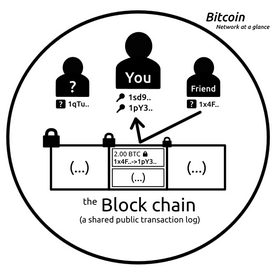
What Ravikant is really describing here is not Bitcoin per se but the work of the blockchain, providing a trusted, shared transaction record that allows machines to own and exchange value without human intervention. Although in strict engineering terms it’s not really a protocol, its impact is potentially as huge as any of these other building blocks of the Internet.
Effectively, Ravikant is arguing the blockchain is how the Internet of Things will exchange value — not just monetary value, but also many of those other components of business transactions that we currently find much harder to quantify, such as trust and reputation.
Autonomous things
Now back to Sparkes, who recounts a scenario imagined by Mike Hearn, an ex-Googler who now works on Bitcoin:
Far-fetched it may be, but this is the kind of scenario that is getting venture investors excited about blockchain right now — and you can understand why.
Open your free digital wallet here to store your cryptocurrencies in a safe place.
Bitcoin like the Internet In 1995
is receiving more venture capital investment than early stage Internet
companies were in 1995. Remember what the Internet was like in 1995?
looked like. If not, the piece discusses how hard it was to stream
video, how there was no safe way to process credit cards, how ugly the
websites looked and how slow the Internet was.
anyone uses it, it isn’t safe, and it is hard to use. However digital
currencies are so much cheaper, more convenient and more powerful than
their analog counterparts that, like the Internet, their widespread
adoption seems assured.
competing digital currencies have entered the market. So far none has a
clear shot at overtaking bitcoin. Bitcoin’s network effect is growing at
a fast rate, making its dominance even more likely.
Open your free digital wallet here to store your cryptocurrencies in a safe place.
A little altcoin sanity: Peercoin
Open your free digital wallet here to store your cryptocurrencies in a safe place.

Under the microscope: conclusions on the costs of Bitcoin
Open your free digital wallet here to store your cryptocurrencies in a safe place.
Bitcoin: Education can make a difference
Open your free digital wallet here to store your cryptocurrencies in a safe place.
Bitcoin: the future of payments
Payments networks revisioned with bitcoin
Why bitcoin is held back
Open your free digital wallet here to store your cryptocurrencies in a safe place.
Google update now supports Bitcoin price in search results!
“You can also ask Google to do conversions – if you have the Google Search app on your smartphone, for example, ask it, ‘How many bitcoin are in 500 U.S. dollars?’ and you’ll get the answer in a handy conversion tool.”
Open your free digital wallet here to store your cryptocurrencies in a safe place.