Five things to do with those Christmas Bitcoins
1. Store them securely
(CoinDesk) Which brings us to the first thing that you’re going to want to do with your
new bitcoins: keep them safe. If you’ve never received bitcoins before,
the chances are that you’ve been given them by someone who created a
bitcoin address for you, sent some coins to it, and then gave you the
address somehow. It may have come as a long number pasted into an email,
or potentially on a piece of paper.
How you store the bitcoins will depend on what you want to do with them. If you’re going to spend
them immediately, then you’ll want to put them into what’s called a ‘hot
wallet’. This is a wallet either on your smartphone, your desktop
computer, or a website, and it allows you to spend your coins straight
away.
But you may also be planning on keeping the bitcoins for longer. The currency’s price is pretty volatile, and some analysts think
that it will bounce far higher than it has already. If you want to keep
your bitcoins for a while, then consider putting them in cold storage.
This is a bitcoin wallet that doesn’t connect to the Internet. No one on
the Internet can steal it because it isn’t stored on your computer, or
on a remote website. The easiest way to do this is with a paper wallet.
If the bitcoin address isn’t on a piece of paper, or the gift giver has
promised you some coins but hasn’t sent them yet, then you can create a
paper wallet at various websites. One site that you can use to produce
excellent paper wallets is Bitcoin Paper Wallet. Another example is BitAddress.org.
Sites like these will generate a bitcoin address for you. The address has two
components: a public key (which you show to everyone else when you want
to receive bitcoins to that address), and a private key (which you use
to send the coins). The bitcoin address will be printed out onto a paper
wallet for you to keep. Show the public key to the person sending the
bitcoins. They will scan the address and send the coins along using
their own wallet. It is important that you then keep that piece of paper
safe – because if you lose it or show it to someone malicious (like
Johnson did), then your bitcoins will be gone.
When you wish to spend these bitcoins, you can import your private key to a hot wallet of
your choice. There are many to choose from, each with their own
strengths and weaknesses. Some, like blockchain.info, store your bitcoin private keys both online, and on a mobile app. Others, like Kryptokit,
restrict storage to your desktop computer only. The wallet will have a
way for you to input or scan your paper wallet’s private key,
transferring it into hot storage so that it is ready to spend. At this
point, it effectively has an Internet-connected copy of that paper
wallet, meaning that the paper wallet can’t be considered as cold
storage anymore.
Check out our handy guide to bitcoin storage.
2. Give them away
So, now you’ve secured your coins. What next? In the spirit of Christmas,
we thought we list the most obvious option near the top: giving them
away. There are several organizations that take bitcoin donations listed
here, one of which is Connie Gallippi’s BitGive Foundation.
It is a respected organization, with members of the Bitcoin Foundation
on its board, which takes bitcoin donations to build up a charitable
investment fund. It makes financial contributions to charities that
focus on public health and the environment. Most recently, it raised
$4,850 for Save the Children.
3. Gamble them
Giving bitcoins to charity might be the right thing to do, but if there is a
devil sitting on your shoulder, he may advise you to gamble it away
instead. If you fancy a flutter and don’t fancy making the trip to
Vegas, then you can do it from the comfort of your armchair, in between
Turkey-induced catatonia and rounds of rum and eggnog.
There is no shortage of gambling-related sites. SatoshiDice
is perhaps one of the most famous. Akin to a large, Internet-based
penny slot machine, it works by publishing a variety of bitcoin
addresses. Players their bitcoins to one of them, and the site’s
computers evaluate them to see if you won or lost, sending back your
original bet multiplied by a prize multiplier if you are successful.
‘Dice’ sites like these allow you to verify the payout either by using the
bitcoin block chain, or by using pre-defined numbers which can help you
to check that your payout was fair. But for those wanting a more
conventional game, there are several bitcoin poker sites up and running,
including Satoshi Poker, and Bits Poker. Players do so at their own risk, however. Another poker site, Seals with Clubs, just lost 42,000 hashed passwords in a hacking attack.
4. Spend them
If you are just itching to spend your new virtual currency, there are many
places where you can buy goods and services online. We’re still not at
the point where you can hand them over the counter at your local boxing
day sale, but you can spend them online, and at selected physical
merchants. There is a big list of individual merchants organized by
category here, but you can also find bitcoin-based vendors on some online marketplace sites like Etsy.
Bitdazzle is an online marketplace for vendors of all kinds that accept bitcoin,
which will enable you to magically turn your satoshis into that bar of
lavender and oatmeal goat milk soap you always wanted.
Alternatively, use a service that will enable you to purchase pretty much anything with bitcoins. All4BTC will
take your bitcoins and use them to pay pretty much any e-commerce
vendor on your behalf. Or, you can buy a gift card from over 200 popular
high street retailers, by sending your newly-gifted coins to Gyft.
For more details on your spending options, check out our in-depth guide here.
5. Sell them
Still have no idea what to do with those precious coins? Then flog them. If
there is a bitcoin ATM near you, you may be able to sell them there. You
can sometimes find bitcoin-related Meetup groups in your area, where people will lurk looking for bitcoins to buy, or items to sell in exchange for them.
You can also take advantage of direct person-to-person sales via sites such as LocalBitcoins.com,
where you can find people to trade with online, or in person (be
sensible and safe when doing the latter). Or, if you’re in the mood to
organize a whole bunch of paperwork over the holiday, you can register
yourself on one of the many bitcoin exchanges (there will probably be a
local one for your country) and then deposit your bitcoins there. This
will enable you to sell the bitcoins to a buyer offering a given asking
price.
Whatever you decide to do with your new bitcoins, call the person that gave them
to you, and give them a happy New Year’s greeting from us at CoinDesk.
We like people that think outside the box. And aren’t bitcoins a much
more interesting present than a pair of socks?
Open your free digital wallet here to store your cryptocurrencies in a safe place.

How to create a Bitcoin Paper Wallet
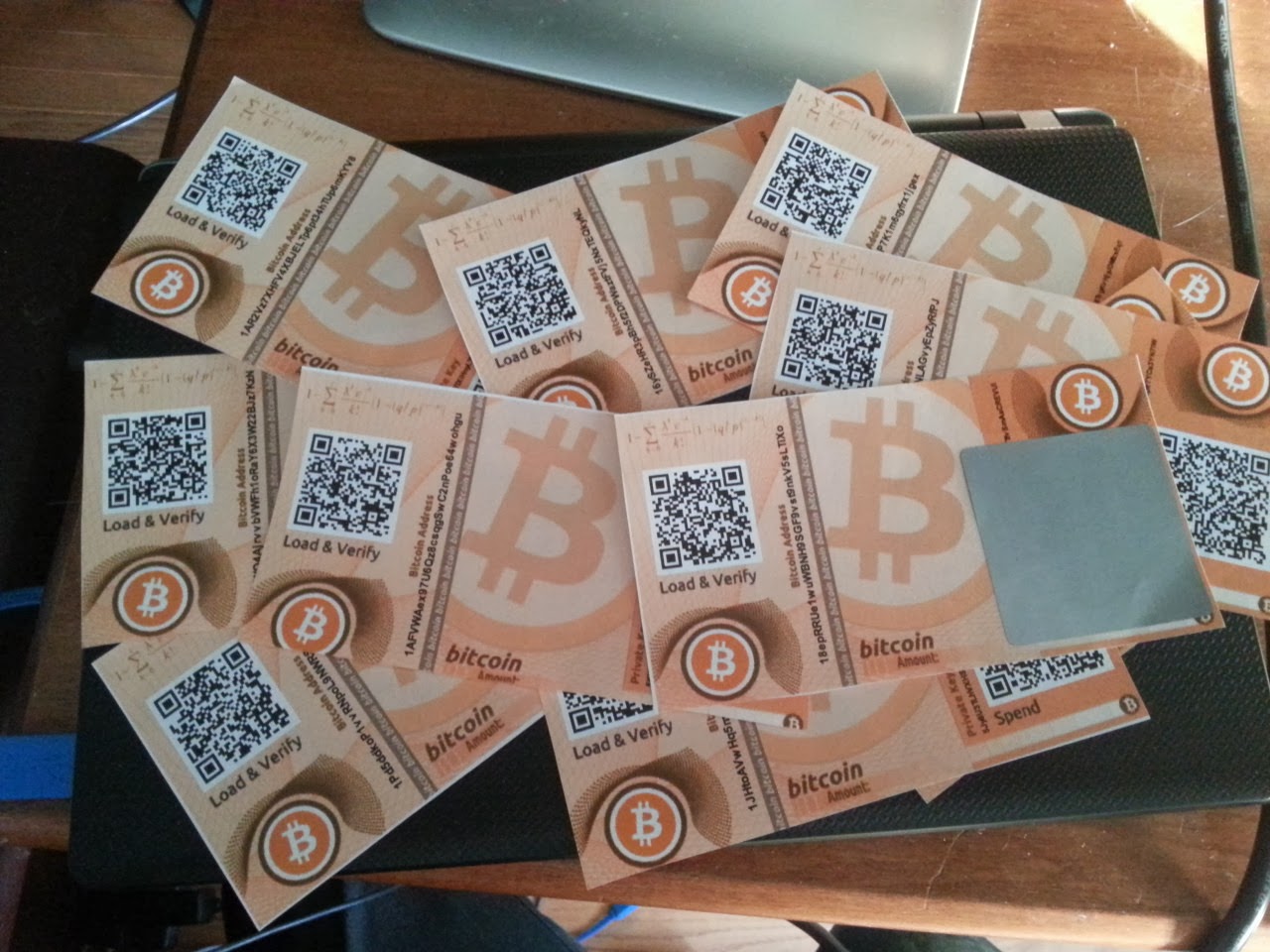
What you need?
- Computer
- Printer
- DVD with latest version of Ubuntu
- USB Pen Drive
- Papers
- Smartphone
- Download .zip of bitaddress: https://github.com/pointbiz/bitaddress.org and move it in your USB pen drive.
- Download Ubuntu at http://www.ubuntu-it.org/download and burn it on dvd
- Boot your computer with Ubuntu’s dvd and choose to run “Live”, without installing. Now that Ubuntu is ready to use, disable internet connection.
- Insert your USB pen drive. Open the file bitcoinaddress.org.html and click on Paper Wallet tab. Remove your USB pen drive.
- Connect your printer.
- Go back to bitaddress and generate the address.
– Addresses per page: 1
– Print!
– Turn off your computer and printer. - On your smartphone you need a QRcode scanner.
- Scan your Bitcoin Address (or public key).
- Send the public key to your email.
- Boot your computer without Ubuntu’s dvd inside. Check your email and double-check if the Bitcoin Address is correct. To finish copy-paste the address and in your wallet and send the desired amount to the paper wallet!
Open your free digital wallet here to store your cryptocurrencies in a safe place.
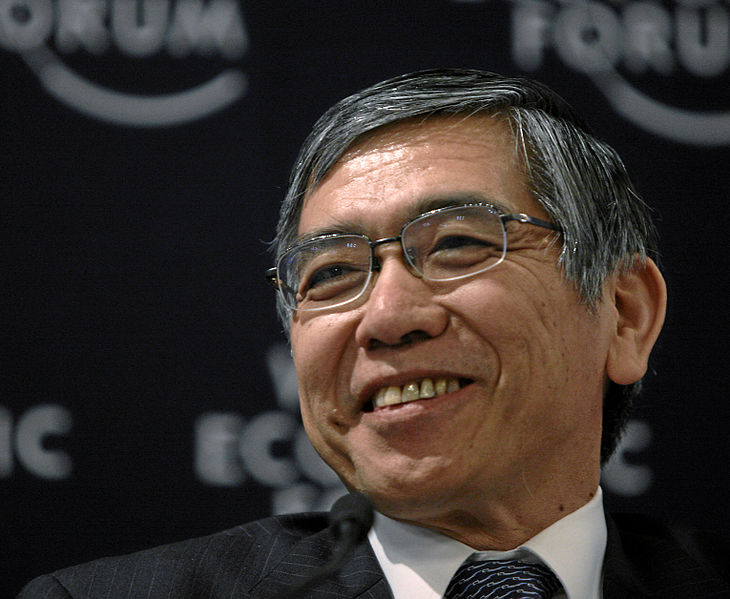
Governor says Bank of Japan is “very interested” in cryptocurrency
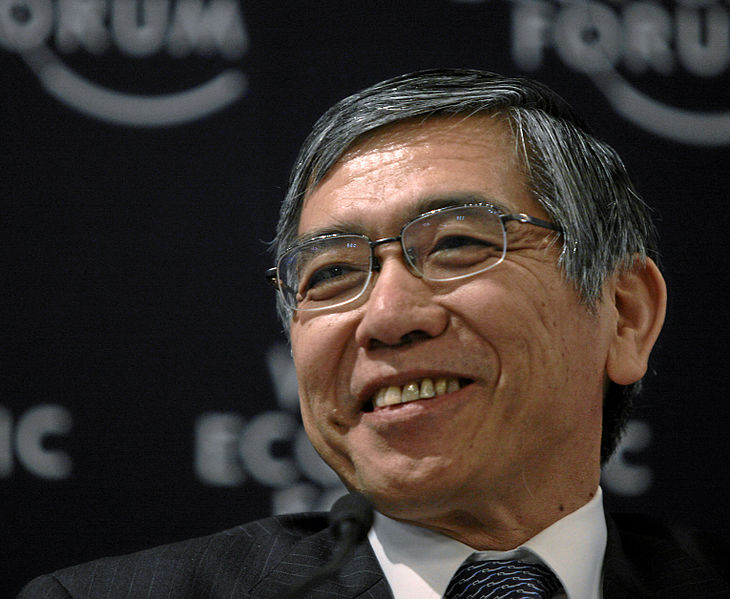 (BitcoinExaminer) The governor of the Bank of Japan recently said that the institution is “very interested” in Bitcoin. Haruhiko Kuroda talked about cryptocurrency during a news conference, according to the site Jiji Press.
Open your free digital wallet here to store your cryptocurrencies in a safe place.
A deep dive into the regulatory requirements for Bitcoin companies
(OnBitcoin) Marco Santori is a senior associate at New York-based Nesenoff & Miltenberg, LLP,
and very familiar with the nuances of Bitcoin regulation. In a
presentation at the Inside Bitcoins conference in Las Vegas, Mr. Santori
provided a thorough overview of money transmission regulation on the
federal and state levels.
Money services businesses (MSBs) are regulated by FinCEN, whose goal is to prevent money laundering.
MSBs are required to register with FinCEN on a federal level. While
it’s a free, online process to register, there are an assortment of
requirements, such as:
- Collect, verify, record report customer information
- Check identities against watch lists (terrorists, criminal, enemies of the state)
- Deny service for some customers
- Sometimes secretly report transaction activitiy to fincen and continue servicing the customer
- Undergo yearly audits


In March 2013 FinCEN published regulatory guidance surrounding
Bitcoin. While this guidance left some confused, the overall takeaway
was that Bitcoin is not inherently illegal and Bitcoin companies are
fine to operate as long as they comply with applicable laws.
Santori provided examples of businesses that would be under the veil of regulation:
- Hosted wallets that permit exporting private keys
- Paper wallets
- Exchange digital currency for government currency
- Exchange one digital currency for another
- Mine digital currency and convert to government currency
- Accept value from person A and give to person B
- Accept value from person A and give to person A at another time or place
While it’s easy to register on the federal level, it’s another story
on the state level. There are 48 states that provide licenses for money
transmission. The states regulate money transmitters separately from the
federal government. So, for a company to operate in the United States,
they need to separately attain 48 licenses, which is a timely and costly
endeavor.
While it’s more complex to apply for licenses in 48 states, the scope
of regulation appears to be slightly less cumbersome. The states have
not adopted all of FinCEN’s categories of money transmitter.
Specifically, only these two categories are relevant:
- Accept value from person A and give to person B
- Accept value from person A and give to person A at another time or place
Given the ambiguity and cost of regulation, what should a startup do?
Circle Internet Financial, a company formed by serial entrepreneur
Jeremy Allaire, publicly stated that they will be seeking licenses in
all states and raised $9 million in venture capital to fund that
initiative.
However, there are a plethora of startups that don’t have the funds
or capabilities to attain licenses. Here are some other options.
First, a company could send a “no action” or “request for ruling”
letter, which explains the nature of the business and why it should not
require a license. Drafting this letter can be costly due to legal fees
but can also result in certainty if authorities respond.
There are also avoidance strategies. You can incorporate overseas and
geofilter IP addresses to block US customers. By documenting this
process and having appropriate policies in place, a company can protect
themselves from regulatory backlash if some US customers get through.
For example, a company should check if the customer registers a US bank
account, makes transfers to US accounts or subsequently accesses the
company’s service from US IP addresses.
Santori said that most companies restructure their companies to
either fit into an exception in the regulation. Exceptions include:
- Providing network services to a money transmitter
- White label exchange
- Physically transporting value that substitutes for currency
- Operating a settlement business between MSBs
- Performing payment processing services
If a company wants to get a state license, how long does it take to
get approved? For a regular business, just a few weeks. But for a
Bitcoin business, it’s not clear.
Open your free digital wallet here to store your cryptocurrencies in a safe place.
Winklevoss twin says Bitcoin valuation will top $40k
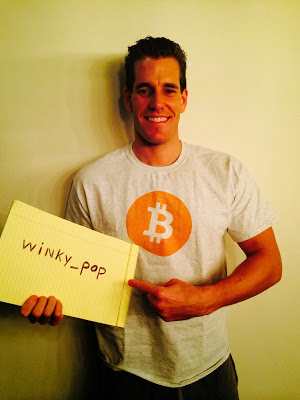
(TheNextWeb) Cameron Winklevoss, one half of the notorious twin brothers who once
battled Mark Zuckerberg over the origin of Facebook, took to Reddit to host an AMA this weekend to discuss the duo’s big interest: Bitcoin.
The Winklevoss twins were early Bitcoin advocates but have never revealed their total holding — though it was said to be worth
$11 million in April, when the crypto-currency peaked at $266. Given
today’s price ($875 average on Mt. Gox, at the timing of writing) and
Cameron’s admission that he is yet to sell a single Bitcoin, it could
now be worth as much as $35 million.
The twins are in the process of setting up the Winklevoss
Bitcoin Trust, a listed fund to manage their Bitcoin wealth and bring
greater legitimacy to the virtual currency. Papers for the initial
public offering were filed in July, but the final decision is still
pending. Due to regulations, Cameron was unable to discuss the trust in
the AMA.
The brothers are unsurprisingly bullish on Bitcoin. Cameron’s conservative
bet is that its US dollar valuation will surpass $40,000 per coin — a
potentially colossal figure — as he explained in a response to one
Reddit user:
dollar market cap, so 40,000 USD a coin, but I believe it could be much
larger. When this will happen, if it happens, I don’t know, but if it
happens, it will probably happen much faster than anyone imagines.

In another answer, Cameron played down the significance of the closure of The Silk Road
— the underground market place for illicit goods that many saw as a key
outlet for Bitcoin — instead arguing it is positive for the virtual
currency:
The Silk Road closure, and resulting price gains
demonstrate how the demand for BTC has little to do with illicit
transactions. If anything, Silk Road was holding Bitcoin back by
disproportionately dominating its narrative in a negative way.
It is estimated that the volume of bitcoin transacted on Silk Road
only represented ~4% of the total volume of bitcoins transacted on the
Block chain over the same period of time.
Bitcoin’s growth has seen interest in other alternate currencies — such as Litecoin and Quarkcoin – but Cameron says he and his brother have no interest in anything other than Bitcoin:
Do you see BTC ‘replacing’ currencies we have today, or being used alongside them?
Have you invested in any altcoins, if so, which and why?
I view BTC more as an alternative to fiat currencies than a replacement.
I have not invested in any altcoins because I don’t believe that any
of the “problems” or issues that they address can’t be addressed by
Bitcoin itself.
You can see the full range of answers — which include mentions of
rowing (the brothers represented the US at the Olympic Games) and the
Simpsons — at the thread here.
Given their background and early adoption of Bitcoin, the twins’
opinions and predictions for the future are interesting. They have both
predicted that there will be some form of regulation for the currency in
the future. They see it as an ‘answer’ to many fiscal problems and are
keen to help take it more mainstream.
Open your free digital wallet here to store your cryptocurrencies in a safe place.
What is the true value of Bitcoin?
Open your free digital wallet here to store your cryptocurrencies in a safe place.
BTC China in discussion with regulators over Bitcoin recognition
(CoinDesk) The world’s busiest bitcoin exchange, BTC China, has been in talks with regulators to approve bitcoin as an official currency, according to Bloomberg Businessweek.
While there have been some ‘lower-level’ discussions, the company has not yet had any success arranging high-level meetings, said BTC China CEO, Bobby Lee.
This isn’t surprising, given the reluctance of governments worldwide to make official statements about the currency’s legal status.
To grant official approval would likely cause a spike in activity, with many fearing activity on such a grand scale could undermine one of government’s key economic powers: overseeing fiat currencies. This hasn’t stopped a recent flurry of interest from high-level government officials, as bitcoin’s value soars too high to ignore. At the time of writing, the bitcoin price on BTC China was 6,267 CNY, or $1,027. Mt. Gox’s price was $1,050, and it was around $990 on the Coindesk BPI. The upper echelons of government feature many opinions on bitcoin, including some that have shifted over the years. Senator Chuck Schumer, who in 2011 described bitcoin as “an online form of money laundering,” and called for a crackdown, recently tweeted that the cryptocurrency had “significant potential”. Deputy governor of China’s People’s Bank, Yi Gang, hinted at a personal (unofficial) approval of bitcoin exchanges and people’s ability to trade in and out of digital currencies, but also said it would be impossible for the central bank to recognise bitcoin “in the near future”.
BTC China has taken Gang’s comments on board, and Lee has continued to hold discussions with local regulators. He has also answered questions about how bitcoin should be regulated, remaining optimistic about the long-term, describing bitcoin’s current status as:
“Not on the black list and not on the white list. It’s in the grey area.”
In the bitcoin universe, anything short of a call for blacklisting can be taken as progress. But while its “grey area” status allows exchanges and payment processors to function reasonably well at the moment, many think some form of recognition and subsequent regulation is necessary for bitcoin to gain widespread acceptance.
Open your free digital wallet here to store your cryptocurrencies in a safe place.
Bitcoin-Litecoin ratio returns to historic norm, Peercoin climbs 200%
to record highs, reaching as high as $1,141 on Bitstamp, it is joined in
growth by a number of alternative digital currencies. The most visible
has been litecoin, which has returned to what might be considered a
normal trading range relative to bitcoin. Litecoin is not alone in its
gains, with others like Peercoin and Namecoin making similar gains.
over the past week, surprising many with its meteoric gains and
crossing of one billion dollars of market capitalization. Yet, the
dynamics in which it is actually traded are often overlooked,
particularly its relationship to bitcoin. On BTC-e, the leading litecoin
exchange by volume, the bitcoin-litecoin currency pair is traded with
as much or more volume as litecoin-dollar. It also regularly dictates
movement as visible through a series of technical factors.
litecoin and bitcoin are beginning to show signs of trading in a manner
similar to gold and silver. In particular, maintenance of a banded
price ratio is a dynamic well known to the precious metals and once
again proving its potential applicability to digital currencies. While
the original research on the matter explains in more detail, those
watching the ratio may well consider the latest litecoin-dollar gains to
be an expected correction. Having fallen out of range amid bitcoin’s
800% climb in the past month, it has since normalized.
alternative mining implementation based not only on bitcoin’s
proof-of-work scheme, but also a proof-of-stake. The proof-of-stake
system distributes new coins based on holdings rather than just finding
correct hashes. While PPC / BTC remains the dominant currency pair for
the altcoin so far, PPC / USD was recently added on BTC-e, leading to a
massive jump in its exchange rate.
Open your free digital wallet here to store your cryptocurrencies in a safe place.

British Island wants to make physical Bitcoins with UK Royal Mint deal
(CoinDesk) A tiny island in the English Channel, Alderney, wants to mint physical bitcoins as part of a larger campaign to become one of the world’s first financial services centers devoted to digital currency.
The Financial Times reported
that Alderney, just three miles long with a population of 1,900, wants
to become known as an international center for bitcoin transactions.
Intended to be fully compliant with anti money-laundering and other
financial regulations, it would offer merchant payment services,
exchanges, and a bitcoin storage vault of some kind.
The physical
bitcoins, like other such tokens, would be collectors’ items rather than
circulated, and would likely have a gold content (apparently around
£500 worth) to further their appeal and allow them to retain value
should bitcoin’s price crash.

They would also serve as promotional
tokens for the more ‘serious’ bitcoin payment and exchange services.
Alderney’s
coins would hopefully be minted in a collaboration with the UK’s Royal
Mint as part of a commemorative collection. Rather than having a private
key sealed inside, like the popular Casascius physical bitcoins
and their contemporaries, the Alderney bitcoins would be exchangeable
for the more useful digital kind by its holder paying a visit to the
island. They would not be official legal tender otherwise.
Production
would be overseen by an independent company, who would also take the
hit if bitcoin’s value vanished. The same company would also hold the
coins’ keys in an escrow service. If the deal goes ahead, The Royal Mint
would handle orders and take some of the money from sales.
With current bitcoin values hovering around $1,100 on CoinDesk’s BPI
(over $1,200 on Mt. Gox) and seeming to jump higher with each passing
day, more daring segments of the financial world are sensing an
opportunity to create a whole new industry. The high values, including
not only bitcoin’s but those of other digital currencies
as well, are wrenching the concept out of the hands of tech-savvy
entrepreneurs and delivering it to people more accustomed to
billion-dollar movements.
Bitcoin and digital currencies, despite
occasional murmurings and investigations by authorities, still have no
legal recognition as currencies in any major jurisdiction. No
legislation has been tabled specifically for digital currencies, though
exchanges and payment processors generally fall under the same
know-your-customer (KYC) and anti-money laundering (AML) regulations as other ‘money transmitters’.
The
Channel Islands, just off the coast of France, are ‘Crown Dependencies’
and not officially part of the UK. This special legal status has
traditionally made them a hub for offshore financial services, with most
of the activity happening on larger Guernsey and Jersey.
Alderney falls under the jurisdiction of the Bailiwick of Guernsey
but has been looking for ways to gain more financial independence from
its neighbors. The island has long produced stamps and minted its own
coins, called the Alderney pound, pegged 1:1 to UK pound sterling. The
coins are produced in denominations of £1, £2 and £5 in ordinary
cupro-nickel as well as gold and silver versions, and are also aimed
primarily at collectors.
Open your free digital wallet here to store your cryptocurrencies in a safe place.
China’s third-largest mobile network now accepts Bitcoin!
(CoinDesk) Consumers in China can now purchase smartphones with bitcoin from a
major carrier, after a local division of China Telecom announced a
promotional offer for new Samsung phones this week.
China Telecom’s subsidiary Jiangsu Telecom, in Jiangsu province on the east coast of the country, posted the offer on its website. Translated details were scarce, but it appears customers have the chance to use bitcoin instead of yuan to pre-order Samsung’s 2014 clamshell form-factor Android phone.

Any business newly accepting bitcoin, even in a small way, is
guaranteed to gain disproportionate attention in these times. So on the
surface, many recent stories of bitcoin acceptance from China seem more
promotional than revolutionary. Indeed, this is a limited offer for one
model phone from a local provider and not a major announcement of
large-scale bitcoin adoption.
However, it’s also a sign large state owned enterprises in China, or at least
certain divisions of them, are more open to experimentation with bitcoin
than their overseas counterparts.As of this month, most bitcoin
acceptance in other parts of the world remains limited to owner-operated
small businesses and startups. A division of Chinese internet search
giant Baidu also announced recently it would accept bitcoin as payment.
Jiangsu
Telecom’s offer also strikes a more positive note than previous reports
from China earlier in 2013, which suggested China Telecom was trying to block
bitcoin-related traffic from its services. China Telecom is China’s
largest fixed-line provider and its third-largest mobile carrier.
If
bitcoin can be used as a promotional tool to attract younger and more
technology-aware consumers, it also indicates the Chinese market itself
is more ready for alternate forms of payment.
Open your free digital wallet here to store your cryptocurrencies in a safe place.