Bitcoin, Dogecoin, and the Blockchain
What is the Blockchain?
{
    "txid": <a unique transaction identifier>
    "inputs": <an array of inputs>
    "outputs": <an array of outputs>
    "tx_hex": <transaction content as a hexcode string>

    "blockhash": <a unique block identifier this transaction belongs to>
    "time": <the time this transaction's block was processed>
    "confirmations": <number of blocks that confirmed this transaction>
}
Open your free digital wallet here to store your cryptocurrencies in a safe place.
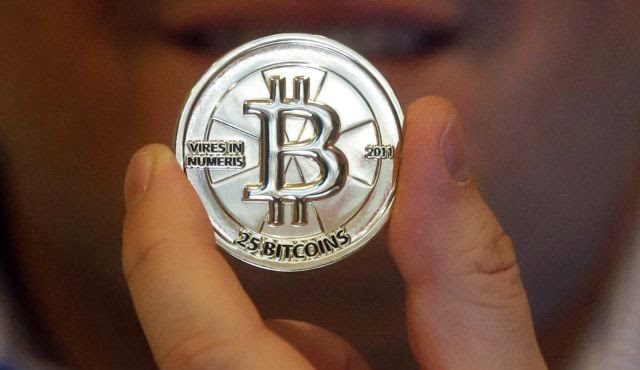
Tel Aviv to get first Bitcoin ATM in Middle East
launched in Tel Aviv on Wednesday. Bitcoin is a peer-to-peer virtual
currency that allows for transactions between users without any third
party or middle man.
“cash-out capable Bitcoin vending machine,” made by American company
Robocoin, has several security features built in to prevent theft and
fraud that are compliant with anti-money laundering regulations,
according to a press release.
launch of the first Bitcoin ATM in the Middle East will allow any
person with no previous knowledge of bitcoin and how it works to easily
buy and sell bitcoin 24/7 bypassing the bureaucracy of the banks,”
Bitbox CEO Nimrod Gruber said. Bitbox the company bringing the first
Bitcoin ATM in Israel.
to Gruber, many people are looking for an easy way to sell or buy their
bitcoin for local currency, and this ATM will allow them to do so.
workers, for example, can buy bitcoins in shekels and have their
families withdraw cash in local currency at a bitcoin ATM in their
country.
Open your free digital wallet here to store your cryptocurrencies in a safe place.
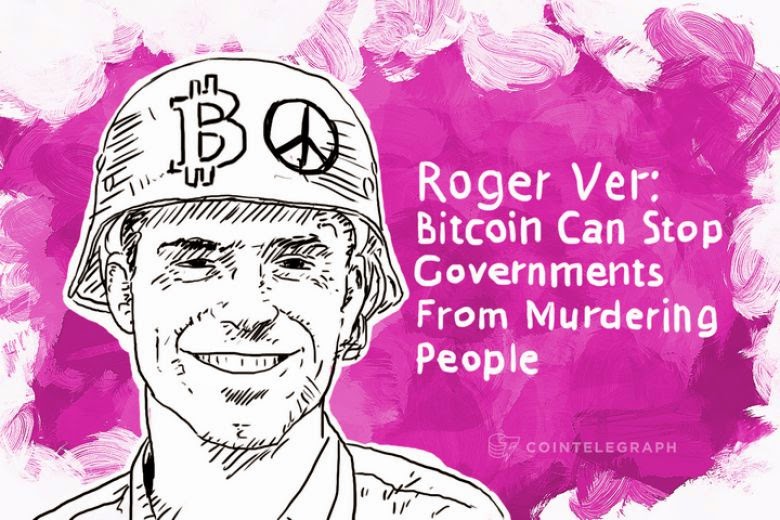
Why Bitcoin is important for the world: Bitcoin can stop governments from murdering people
Bitcoin’s limited growth can stop governments from raging wars across
the world.
Singapore back in May entitled “Why Bitcoin is Important for the World.”
It was a sort of quick introduction into the world of Bitcoin, until
Ver used the last few minutes in his speech to “rant about what has
[him] most excited about how Bitcoin is going to change the world for
the better.”
said that “Not only do they control [fiat], they can print as much of
it as they want at any time. . . I see the United States Government
printing money like crazy and then they use that money to buy all sorts
of tanks and bombs and airplanes and murder people all over the world. .
. all that is being paid for by printing money.”
Bitcoin,” Ver continued “because there is a limited supply, that sort
of thing can’t happen.” Ver hopes that Bitcoin’s inability to be printed
at will, will prevent governments from using printed money to fund
warfare.
possible effect on world peace is something we won’t know until if and
when it obtains true widespread adoption. But it is true that Bitcoin
can’t be printed out of thin air due to a limited supply. If a
government used it as legal tender then they would have to find a
different way to fund any war.
Open your free digital wallet here to store your cryptocurrencies in a safe place.
Which celebrities are getting into Bitcoin?
there are many celebrities in the outside world as well who have begun
embracing Bitcoin and cryptocurrency. Here are just a few of them:
Ashton Kutcher
simple-minded characters like Kelso from That 70’s Show or Jesse from
Dude Where’s My Car, but in reality he’s anything but.Through his fund, A-Grade Investments, he’s invested in companies like
BitPay, which allows merchants to accept Bitcoin payments. He’s also
invested in Skype, Airbnb, and Foursquare, among others.
Snoop Dogg
presence on Twitter with tens of thousands of tweets, and a Reddit
account with hundreds of thousands of karma points. In fact, on Reddit
he has even been made the moderator of the subreddit /r/trees, devoted
to, what else, pot.Last December, Snoop posted a tweet saying his new album
would be “available in bitcoin and delivered in a drone”. Coinbase
noticed the tweet and responded that “we could make the Bitcoin part a
reality for you.” While Snoop said he wanted “to make it happen,” it
never materialized.
Richard Sherman
football team, has an online store on his website. At the beginning of
January, he posted the following on his Facebook page:”For all you techies out there, I’m now accepting Bitcoins at my online
store http://store.richardsherman25.com. I hear it’s the currency of the
future.”
Peter Thiel
money for much longer than Bitcoin has been around, and has openly
admitted he thinks Bitcoin has the power to change the world.
Richard Branson
began accepting Bitcoin as payment for his Virgin Galactic service, a
space tourism company.He has also invested a significant amount of his personal wealth in
Bitcoin, which makes him one of the more high profile Bitcoin holders.
Open your free digital wallet here to store your cryptocurrencies in a safe place.
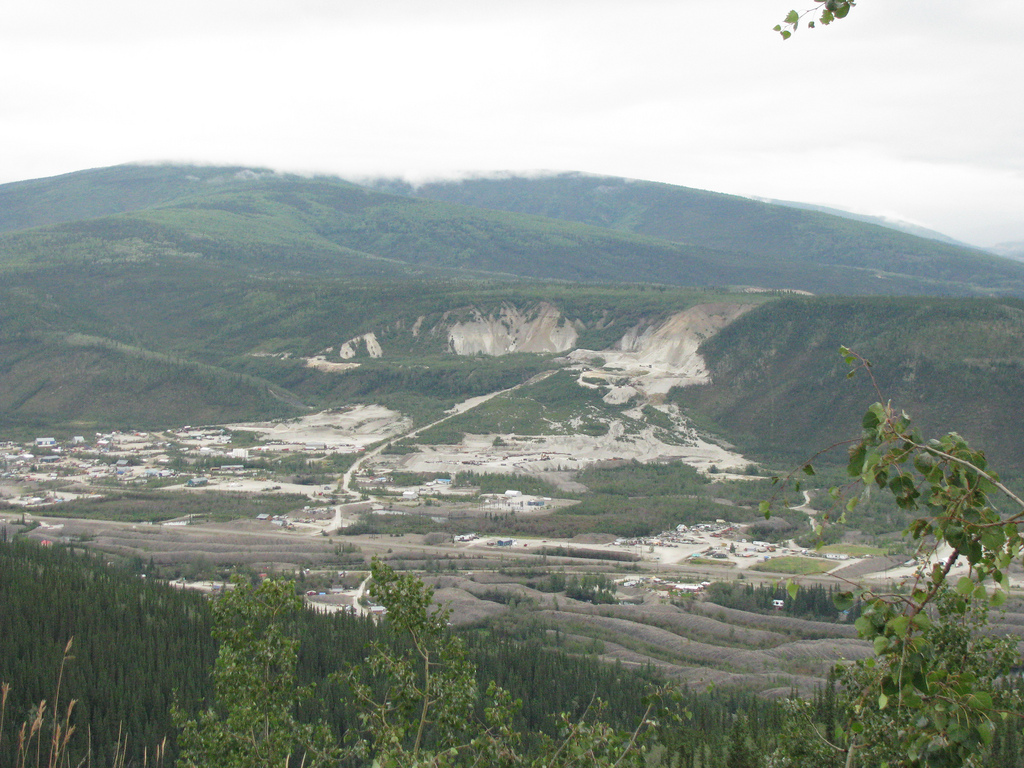
Seller seeks $2 Million in Bitcoin for real Yukon gold mine

(CoinDesk) The unnamed parent company of a Yukon, Canada, gold mine is now for
sale on high-end bitcoin-only marketplace BitPremier for an asking price
of $2 million in BTC.
price tag includes the gold mine itself and all its associated assets,
including $1 million worth of actual mining equipment, the rights to one
mining property and the lease agreement to another mining lot.
“Any new buyer could recoup their initial investment in as little as two mining seasons.”
listing indicates that the company earns $1m annually in sales and has
the potential to produce 3,000 to 4,000 ounces of gold per year.
a bid to encourage more novice bidders, the current owner further said
he is willing to stay on to manage the property for up to five years to
ensure the operation runs smoothly.
Record-setting sale
Bitcoin meets gold
for its size, the gold mine listing is also indicative of how bitcoin
has become more widely accepted in the precious metals community.
Open your free digital wallet here to store your cryptocurrencies in a safe place.
Bitcoin’s real value lies in the disruption it promises

The Bitcoin protocol, or any conceptually similar protocol, potentially simplify asset transfers. Most asset transfers require significant energy to execute. This is because of due diligence and compliance requirements, as well as vetting and validation by various parties. Purchasing cars, boats or houses from individual sellers often requires intermediaries performing due diligence and maintaining compliance with legal requirements.
Bitcoin protocols impact the structuring and implementation of contracts, bringing greater economic efficiency and legal transparency to otherwise opaque practices in specific markets. Lawyers draft contracts on a case-by-case basis, with significant energy devoted to the process: negotiation, development and enforcement.
One benefit is reducing legal fees, as these contracts could be standardised and distributed as open source templates. Financial markets would become transparent, as regulators and analysts could access the blockchain, without forcing the disclosure of specific positions.
There will be significant innovation and development centred around the Bitcoin ecosystem in the years to come. Much of this will initially revolve around payments, investments and financial systems. Its real value, though, lies in the decentralisation and disruption it promises.
Open your free digital wallet here to store your cryptocurrencies in a safe place.
Canada is second most popular country for bitcoin investment
(TorontoSun) Some $10.5 million of venture capital has been invested in bitcoin in
Canada, putting us behind the U.S. and just ahead of China, the
Montreal Economic Institute says.
government regulation puts its growth and development at risk in Canada,
the think-tank warned.
number of users, clear rules are required, along with some kind of
governmental acceptance,” study author David Descoteaux said in a
statement.
Montreal, alleges the Bank of Montreal shut down its account and those
of other businesses that trade in bitcoin.
of currency innovation — elsewhere to set up shop, the think-tank said.
be used as a currency, explain why the digital currency is popular in
Germany and why this country was one of the first bitcoin hubs,”
Descoteaux said.
its own regulatory framework, it should ensure that it remains so.”
Open your free digital wallet here to store your cryptocurrencies in a safe place.
You say Bitcoin has no intrinsic value? Twenty-two reasons to think again!
Intrinsic Value Defined:
we will use the common Wikipedia entry for the intrinsic theory of
value. This is found at: http://en.wikipedia.org/wiki/Intrinsic_theory_of_value
An intrinsic
theory of value (also called theory of objective value) is any theory
of value in economics which holds that the value of an object, good or
service, is intrinsic or contained in the item itself. Most such
theories look to the process of producing an item, and the costs
involved in that process, as a measure of the item’s intrinsic value.
the properties that make it valuable? Some pundits like Warren Buffett
seem to remain stuck in the belief that only things you can touch, feel,
and see can be intrinsically valuable.
are unique or ground-breaking. These properties did not exist before
bitcoin. Some people would rightly point out that many of these
properties can be duplicated. There is, however, one extremely important
factor that separates bitcoin from any other digital coins on the
horizon: the protective shell created by the network that prevents it
from being hacked or commandeered
Bitcoin intrinsic value properties:
- It transcends nations, politics, religions, cultures and regulations.
These vary from country to country in ways that may seem bizarre to
populations out of its own borders. While one may believe that
governments always have their best interests at heart, it may be wise to
see that knife cuts both ways. Some drugs are banned in certain states
or countries that are allowed in others. Bibles are banned from purchase
is some countries. Religion, custom, dogma, superstitions prevent
various purchases based on man-made borders that continually shift over
time. These policies tend to be created by limited segments of
populations that can be self-serving. If one happens to be included in
the “correct” political party, race, religion, items can be purchased or
outlawed. It’s all opinion.
Is this a moral decision? Many of the same governments think it morally
acceptable to hold their own state-lotteries. The lotteries hold
significantly worse odds and tends to target those in the community that
are the least educated and most susceptible to poverty, alcohol abuse,
and have a generally poor understanding of mathematical probability.
Many have gone on to say that lotteries are simply “a tax on people bad
at math”. Many argue that this is a double standard of governments
which prevents them from taking the moral high ground.
the short term). It can’t be counterfeit. There is a record of who owns
it (by wallet id) and its validity is publicly known. It requires no
central clearing house. With any other currency, one must trust the
government from which it is issued will continue to maintain its value
by not “overprinting” to pay for its own mismanagement. You can send it
globally without having to trust anybody. This is not true with any
state issued country, bank, credit card company, or anybody else.
Volatility and long-term trust is still building, but when one transacts
in bitcoin, nobody gets in-between sender and receiver unless agreed
beforehand. It’s permission-less.
By making wallet IDs public, one can track the flow of money through
other transparent wallets. You cannot do that with any other currency.
You can use this feature to do things like monitor your children’s use.
This can make obsolete entire industries that are built solely on the
fact that money can be hidden, disguised, cheated, etc. These can also
happen to bitcoin, but pressure can be applied by the people to make it
transparent and accountable when needed. Auditors may insist on it for
compliance. The list of possibilities of this intrinsically valuable
feature can scarcely be imagined.
Plans for product layers on top of bitcoin to further its use to become
spendable based on contracts that can be programmed to complete with
built in variables, or be valid to purchase only certain items. Insist
your college bound kid buys books and not beer for example. Or based on
GPS in a cell phone, you could send your kids off shopping and it could
be programmed to be spendable only in certain stores.
Wallets containing the currency can be set to only unlock with more
than one signing key. This will leave hackers and thieves frustrated.
Try doing that with your grandpa’s money. It is an intrinsic piece of
bitcoin technology.
Prepaid credit cards can do some of these functions, but only to
locations and countries that accept credit cards. This list of locations
in countries outside of the US is actually decreasing with the amount
of fraud in the networks. Technically, the only item limiting of bitcoin
is the merchant’s acceptance of it. Given the natural law of least
resistance, these limitations could erode as more merchants around the
world realize the potential savings. The network effect will continue to
work its magic.
Absolute clarity of events and their corresponding order is available
in the block chain. Proof of ownership and purchase can be established
without a third party. The trusted and reliable distributed ledger
cannot reasonably be altered (barring a massive scale network attack
which becomes less likely as the network grows).
is nobody’s debt. Paying with bitcoin isn’t a “promise to pay”. It is
payment in full. This could potentially reduces fraud related expenses
on massive scale. http://www.statisticbrain.com/credit-card-fraud-statistics/ There
is no need for a merchant to get bank information or any other kind of
personal information that can be later used in identity theft.
It can defeat government issued capital controls. The same governments
try to hold their own citizens “hostage” monetarily by outlawing
movement of money outside its own borders. Ask any citizen from any
country ravaged by hyperinflation if this is important. Could it be
possible that it might ever become important
in the USA? If you can foresee the day people will be clamoring to get
out of the US dollar, where do you think they are going to go? Ask
Argentina.
As the money exists on the global ledger, all you need is the key. This
can be memorized, or written on any piece of paper – even confined
inside a microdot
the size of the period that ends this sentence. Some old time gold bugs
say you can’t bribe the border guards with bitcoin like you can gold. In
the future, border guards will have cellphones and internet access too.
We aren’t living in the 1960s Vietnam or before any longer.
The people in the USA may think this unimportant in their bubble view
of the world, but is this also true of the 150 or so currencies and countries with terrible track records?
Which other currency enjoys this property? Will enough of the world
outside of the US believe it to be so? Is it hard to imagine the
properties of bitcoin being intrinsically valued by populations
subjected to terrible economic policies? It only takes a billion people
in India fed up with corruption to want an escape mechanism out of the
control of the system. At that point, they won’t give a hoot about what
some American pundit said on “bubble vision” about intrinsic value.
If the citizens stand up united and demand a transparent government,
they can use bitcoin to follow the money in the same way governments use
powers at their disposal for surveillance on their own populations. In
today’s world money corrupts. In tomorrow’s maybe it will become
vice-versa. Let’s see if 86% of the world agrees that any tool that makes less opportunity for corruption is valuable.
You can program it to settle contracts based on certain events such as
date, proof of ownership, death, or a host of other factors that can be
validated programmatically without a third party to validate if the
conditions were met. It can be used as a record keeping asset tag, and
proof of ownership. Ownership of the private key to the bitcoin is by
definition, the owner. In addition, it can be the source record of
ownership for property title, copyrights, and intellectual property that
transcends borders and locally interpreted laws. In effect, the
records become the de-facto “single source of truth”. The currency
itself is globally accessible proof of ownership. Can these functions
and properties be reasonably argued to be valuable beyond the currency
itself?
Paying for items in a global world requires bank accounts. Bank
accounts are legal properties that can only be established with those of
legal age (18 in most locations). There is no minimum age requirement
to pay for items globally using bitcoin. How many people under 18 have
cell phones, AND need to spend money with no credit card. Smart
businesses have started to recognize this intrinsically valuable
potential.
The main attributes of money are often quoted these days, but one
attribute is rarely mentioned. Money has become surveillance. As people
continue to learn of the horrors of the NSA and other government efforts
to spy on every aspect of their lives, it only takes one person drunk
with power to make all the well-intention sounding policies reverse into
shocking horror. One government required Jews to register themselves
for easy identification, which was then used to “dispose” of them.
national origin, political party, age, place of work, address, and much
more can be determined by how and where one spends their money. To those
who think they have nothing to worry about because they are not doing
anything wrong, might ask themselves, what did the Jews have to fear
during the time they were self-registering? They also were not
(generally) doing anything wrong. That’s only one example in a history
littered with them. Is the ability to obscure one’s spending habits
intrinsically valuable? Is it possible to imagine how much of the
population of the world would think it is?
If one were to transfer value between large companies or nations, much
of the world has discovered bitcoin to be a very efficient payment
network to do this. If bitcoin was thought of as envelopes to be stuffed
with dollars or other currencies for transport, only the size of the
envelope itself that contains the dollars inside would be the limiting
factor. To increase the ability and usefulness of this feature, the
envelopes represented in bitcoin price will have to inflate enormously
to take on that load. The Federal Reserve and former Vice Presidents have caught on. So has smart Venture Capitalist firms that have a knack for being one step ahead of everybody else.
are being built up around the new currency (in use, if not government
recognition). Gold towns sprang up into eco-systems but crashed when
the gold veins ran dry. We know exactly how deep the bitcoin well can go
and the rate at which it will be found. What other modern day
ecosystems are being built because of the intrinsic values of a
currency?
for centuries. Bitcoin has the possibility to change the paradigm
completely. These banks will likely find ways to maintain their power
and wealth and there is nothing preventing them from moving into digital
currencies to maintain it. However, which other currency has the
possibility to change the dynamic? Many in the world will likely place
much value in the paradigm shift that is possible. When was the last
time a monetary unit threatened to rewrite the rules from the ground up?
from a whistleblower from the World Bank reports that all networked
banking infrastructure throughout the entire world can be traced back to
12 people who make decisions at the privately controlled US Federal
Reserve bank. Consensus driven, public records, and democratization of
money made possible by bitcoin, might change the rules.
the poverty riddled villages with no access to banking were able to
lift themselves out of poverty with simple abilities to pay suppliers
and start businesses. With the cross border scale and usability of
bitcoin, imagine the same results x 1,000. Are there any national
currencies up to this task?
Muggers of the future will be at a loss for what to do with the bitcoin
they can’t take from your wallet or purse. That money will be no good
to them without the private keys to spend it. There likely will no
longer be credit cards there was well. Could robbery itself become
obsolete? Hackers will soon have a difficult time stealing money from
multi-signature wallets.
Because of all of the reasons stated above, it might as well be called
the currency of freedom. Dictators will hate it. Totalitarian
governments will hate it in proportion equal to the amount of corruption the government enjoys.
The worst countries for freedom believe that money exist primarily to
serve the country and personal ownership of it is just an illusion they
can confiscate at will. Banks technically own it as soon it’s deposited.
Through court order, government taxation, or inflation, they always get
it back. Bitcoin offers some protection. We become our own bank.
Others might be open to the suggestion that if just ONE of these
factors is agreeable to most reasonable people, the description used by
Wikipedia might also be applied to bitcoin. A year from now, there
might be another list compiled that is just as long as this one – of
things that can’t possibly be imagined today.
Open your free digital wallet here to store your cryptocurrencies in a safe place.
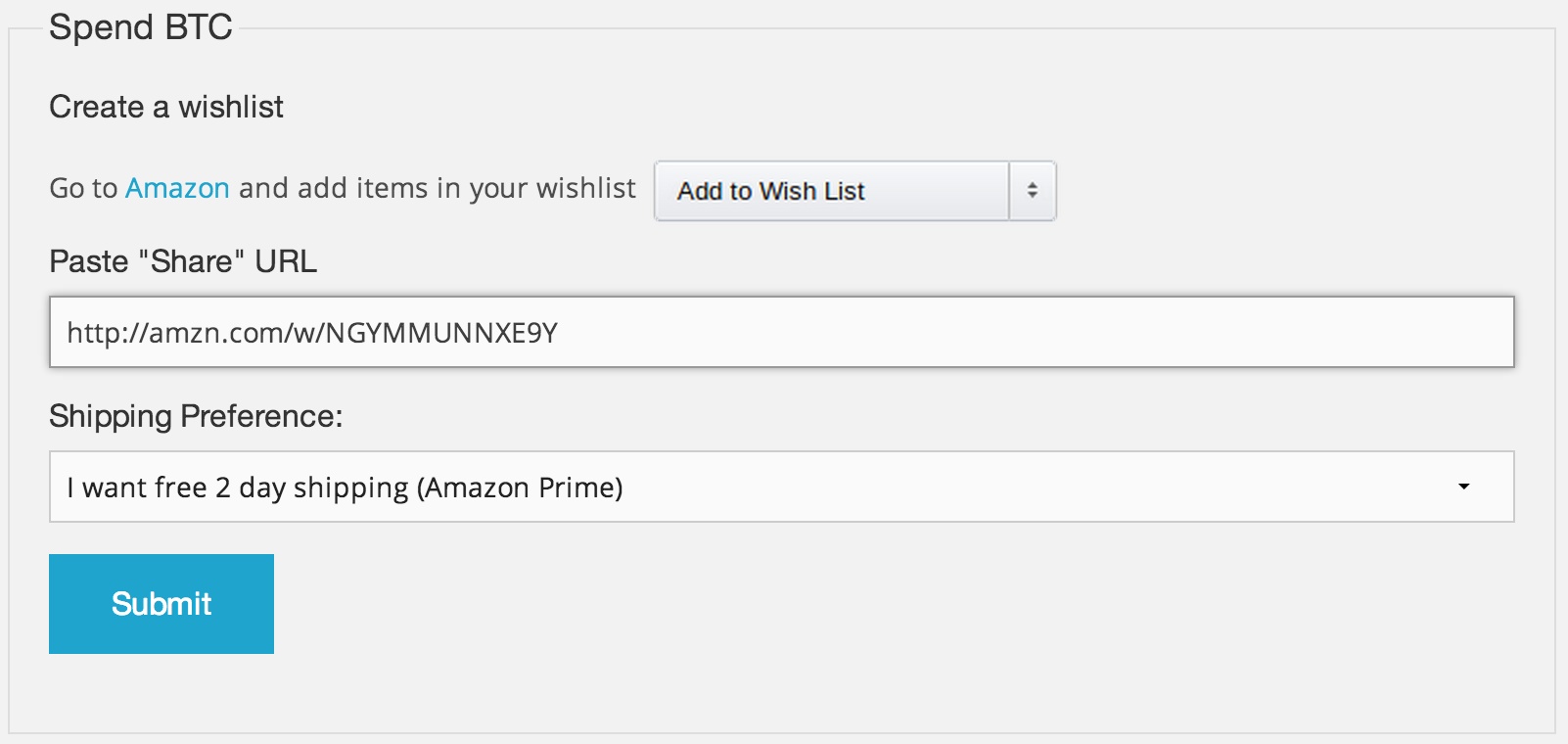
How Purse.io can shave 25% off Bitcoin buyers’ Amazon bills!
buyers’ discount to incentivise bitcoin owners to ‘sell’ their digital currency.
“I think people that try it and realize they just saved 25% on Amazon are excited about that possibility. For the first time, they’ve been able to do something useful with bitcoin [rather than just buy and hold].”
How it works
Then, using a ‘share’ URL, she imports her Amazon ‘wish list’ into Purse.io and indicates what level of discount she would like for the items.
list using a credit card. Soon after, the items are shipped to Alice. Once the items have been received, Alice notifies Purse.io, at which point her bitcoin is released from escrow and is sent to Bob (see the company’s explanatory video below).
“Anything below 15% at $500 [total price], […] will get taken.”
All about incentive
Easing bitcoin’s on-ramp
The top liquid markets for bitcoin are in USD, EUR, HKD and CNY. Source: Bitcoincharts
Spending credits
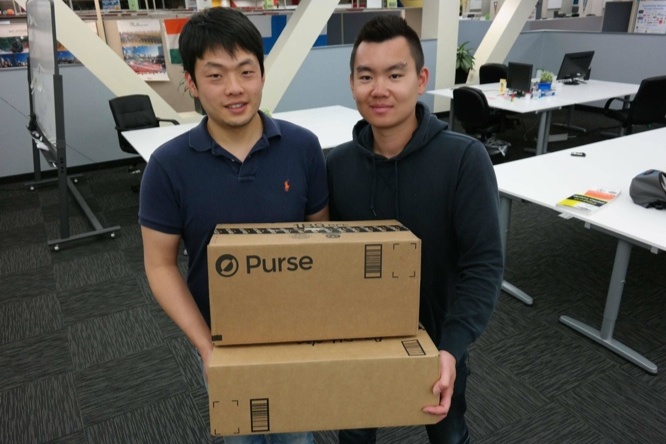
Purse.io founders Andrew Lee (left) and Kent Liu (right).
providing a service that is in demand. “We think we’re helping [Amazon],” said Lee. “They don’t want to take bitcoin now. They’re not ready for it.”
Furthermore, there is added complexity for the company compared with other retailers that currently accept the digital currency.
website are not sourced from Amazon itself, creating complexity that the likes of TigerDirect and Overstock don’t have to deal with.
Trustless escrow
“Right now, we are holding people’s money. But we don’t want to do that.”
Building a footprint
Lee and Liu have now brought in some extra hands as far as development goes and they hope to raise more funding, in addition to the seeding that Plug and Play provided.
“We’re generating that userbase as long as this Amazon window is open. At the same time, we’re continuing to develop new services we can offer to these users.”
Open your free digital wallet here to store your cryptocurrencies in a safe place.

Twenty mind-bending secrets about Bitcoin
(BitcoinMagazine) This article will introduce some of bitcoin’s Mind-Bending amazing
abilities only few people know. As you read this list, remember your
favorite so can impress your friends with your new
incredible bitcoin knowledge.
1. Fun with programmable money
- Bitcoin wallets are like personal debit cards that you can create
and assign yourself to store your bitcoin. Some new wallet versions can
be programmed with bizarre abilities. - You can program features like GPS coordinates on your phone that make the money unavailable off if your kid leaves the city.
- You can also create “treasure hunts” where coins will suddenly be
released for you to use if you find yourself in the right place at the
right time. - You may also release money by calendar dates – gifting bitcoin
money that can’t be used until their 18th birthday or Christmas. Or set
up a will that releases amounts in intervals long after your death. - Huge potential for ideas not yet imagined.
2. First purchase with bitcoin
- Bitcoin’s price wasn’t established by a committee, government, or special council.
- Florida resident Laszo Hanyez may go down in history for buying the
most expensive pizza ever recorded. He also makes history for making the
first significant purchase using bitcoin. - His 10,000 bitcoins used in June of 2010 bought two Papa John’s Pizzas worth about $30 at that time.
- Today’s equivalent price is about $5 million.
- For the first 18 months they were worthless. The pizza purchase was
the event that set the price of bitcoin at about a third of one penny
each. - Within weeks, they were being bought and sold for 8 cents, representing a price increase of over 1,000%.
3. Bitcoins to billions
- In 2013 the price of a single bitcoin went from $13 to over $1,000 for an increase over 7,000%.
- At that rate, the owner of one bitcoin today would be a millionaire in two years.
- And would become a billionaire only 18 months after that.
4. Bitcoin is not alone
- Thousands of other digital currencies have since been created once bitcoin became popular.
- Litecoin, Peercoin, Dogecoin and many more can be purchased on various online exchanges.
- Thousands of people buy altcoins, hoping the bitcoin lighting strikes twice.
5. World’s fastest supercomputer
- The current computing power protecting the Bitcoin network is over
6,000 times more powerful than the top 500 supercomputers of the world
combined. And still growing faster. - Computer power is measured in “petaflops”. One petaflop is equal to one thousand trillion calculations per second.
- Top 500 supercomputers combined can calculate 250 petaflops. (Indicated by the arrow on the graph below).
- By comparison, the bitcoin network can calculate 883,000 petaflops.
- It is roughly the equivalent in scale between eight sticks of butter verses the largest 15,000 pound African Elephant.
6. The amazing bitcoin wallet
- Before you buy bitcoin you can create your own personal bitcoin wallet before you fund it.
- The number of possible wallet IDs that can be created are roughly the same amount as atoms on the earth.
- You can create as many as you want. They are free.
- New wallets can be secured with two or more passwords.
- You can also print your wallet to make a “Paper Wallet” that allows you to store your bitcoin off-line.
7. Spend bitcoin with smart phones for everyone
- The $25 smartphone is on the way.
- It is estimated that in 2014 there will be more cellphones than people on earth.
- Many poor countries just skipped land-line telephones and went straight to cellphones.
- Where they don’t have electricity, they charge them daily using solar panels.
- Most developing countries do not have access to banking – but the bank can come to them with bitcoin and a smartphone.
- Sending digital cash has already proven to lift entire villages out of poverty.
- This opens up their entire world from which to buy and sell items rather than just a few neighbors with cash on hand.
8. Magic the Gathering and bitcoin
- The first big online bitcoin exchange was Mt. Gox. It got its start and name by trading playing cards for “Magic The Gathering Online EXchange.
- They once accounted for over 80% of all Bitcoin trades.
- They started trading bitcoins when they were worth less than a dollar.
- Unsurprisingly, when the world found out that bitcoins were worth a
lot more than playing cards, the tiny company was overwhelmed. - More than half of all first generation Bitcoin exchanges have closed down.
- Now big finance companies are creating their own exchanges in the US that are regulated and insured.
9. Say goodbye to “Bitcoin” and hello to “Bits”
- Currently, one full bitcoin is divisible down to eight decimal places.
- The Bitcoin community has started referring the the sixth decimal point from a full bitcoin where they will be called “bits.”
- Bits are part of bitcoins as pennies are to a dollar – except it would take a million of them to buy a full bitcoin.
- Calling them “nano-dimes” sounded dumb.
- Today one hundred dollars migh buy you .2 bitcoins. Or it can buy
you 200,000 bits. It’s the same amount, but which one makes you feel
richer? - At some point, we might be able to sing that song (commonly played with hand- drums). “Shave and a haircut.. 2 BITS”
10. Spy Vs Spy. Your bank in a microdot
- Future Bitcoin billionaires can include their entire banking Bitcoin
fortune – in a dot the size of a period. When you have access to any
computer or phone with Internet connection you can simply type in your
account number and password as needed. - Your account is all stored and available to you on the public ledger
available anywhere in the world with an Internet connection.
11. Forget money laundering. Your activity is recorded
- Every transaction is tracked the Bitcoin public ledger, recorded and
shared around the world. The ledger cannot be changed and it’s
continually reconciled, verified and protected by bitcoin’s world-wide
network. - Every time a bitcoin trades hands, a trail of digital breadcrumbs follows it forever.
- You may or may not allow people to know your personal wallet
information, so your bitcoin account is as secret as you want it to be. - Once bitcoin passes through widely known wallet addresses, it may be
traceable by super-secret organizations that may, or may not, rhyme
with Em- essay. - Relax, if you aren’t doing any really, really bad – it’s probably
not worth the trouble for anybody to track your every spend. Not one
bit.
12. Gambling once accounted for most transactions
- The web gambling site “Satoshidice” once accounted for about half of bitcoin transactions.
- Due to murky gambling laws in various jurisdictions, gaming on Satoshidice is currently not allowed from US-based IP addresses.
- Provably Fair (http://provablyfair.org/)
is a website that has risen to act as an independent probability odds
checker for people to validate the odds of customer bets being
mathematically fair for the computers running the gaming systems. - Many online casinos are having their computer programs independently and voluntarily certified.
- Today bitcoin use is spread over several industries in addition to gambling.
13. Watch people trade in their paper money
- The website Fiat Leak shows a world map which allows you to see which country is exchanging their native currency for bitcoin in real-time.
- The larger the coin floating up – the bigger the dollar amount.
- The amounts all accumulate over a 10 minute period, which is the
point that the ledger is reconciled and copied throughout the world for
verification. - Once you go digital, you don’t go back.
- Ask the tape recorder.
14. It might become currency for poorly run countries
- Total value of bitcoin measured in US Dollars has surpassed 100 national currencies out of 160.
- Some are
beginning to ask if it is possible to one day to scrap some smaller
national currencies that continue to fail – and use bitcoin instead.
15. Bitcoin may be more important than the internet
- Several hundred million dollars are projected to be invested into Bitcoin startups by large corporations in 2014.
- Comparisons of importance are made by experts and scientists daily,
who often talk about the importance of how this will change the world
and often compare it with the invention of the Internet itself. - Marc Andreessen, who invented Mosaic, the first web browser, is one of many technical professionals who talk about Bitcoin and
reminds him of how he and his friends changed the Internet and World
Wide Web back in 1993 when it was still considered a techie geek
technology. As a reference point, most of the US was using the internet regularly just seven years later.
16. Watch bitcoin network grow
- See the time-lapse representation of the bitcoin network build out as it assembles and grows together around the world.
- It’s not much different than watching the progress of the early internet grow.
17. Robbing money may become obsolete
- New digital wallets will require at least two signatures (passwords) or more to use.
- This might include government’s robbery of its own citizens as many countries help themselves to one’s banking funds when they want.
- One can require as many signature passwords as you like. Go nuts and
require 51 signatures… Imagine the Senate being compelled to reach
majority before spending your taxes locked in a public wallet.
18. It can stop identity theft
- As making payments with bitcoin is the equivalent of cash, there is no banking information required from a retailer.
- The hacker attack at Target, Neiman Marcus, and Michael’s (among a
host of others) that stole users banking credit card information
wouldn’t have happened if they had only accepted bitcoin payment. - Paying in bitcoin is not a promise to pay. It’s payment in full.
19. No permission required
- Over half of the world have no banking account. They can’t get
access to regular loans, credit or checking account. They can’t get
permission from the creditors. - Bitcoin doesn’t require a bank account or credit report, and you
don’t have to be of legal age for contracts. And they can buy and sell
in a world-wide market for once. They didn’t need permission from the
courts. - One doesn’t need to be a citizen, or have identification or forms to fill out to own it. It requires no government permission.
- You are your own bank. No permission required.
20. Bitcoin the currency is only the beginning
- The Bitcoin network and ledger has features that can also function
as a way to store records of ownership, titles, copyrights and
trademarks, home and car titles. - It can replace the function of a notary public.
- All records are shared and distributed in a central location shared
by the entire world copied on thousands of millions of computers. - As the Internet did to the publishing industry, Bitcoin could
similarly disrupt several other fields or even render them obsolete. - Anybody’s job it is to move funds from one account to another may
need to learn a job as those functions can now be programmed, automated
and transparent. - Bitcoin 2.0 technologies and new start-up companies have already begun.
This list is only the start. Look into the amazing bitcoin and report
back your own found mind-benders in the comments section. Then play
bitcoin trivia with your friends – they may not believe you.
Open your free digital wallet here to store your cryptocurrencies in a safe place.