10 things you should know about Bitcoin and digital currencies
cryptocurrencies, but not all of them are.
to reach a broader demographic than Bitcoin did. As of March, more than 65 billion Dogecoins have been mined, and the production schedule of this
cryptocurrency is in production faster than most.

regulations on digital currencies, but it often warns about investment schemes and fraud. The Financial Crimes Enforcement Network (FinCEN), an agency under the Department of Treasury, took initiative and published virtual currency guidelines in 2013. Many countries are still deciding how they will tax virtual currencies. The IRS is specifically concerned with virtual currencies being used for unreported income.
outline the pros and cons of Bitcoin. The hearing ended up providing a
financial boost for the currency, because US officials talked about it as a
legitimate source of money, as opposed to only discussing its role in illegal
activities.
Wallet for Android runs on your phone or tablet. To store the Bitcoins, you have three options:
doing your own backups.
are responsible for them. Mobile apps allow you to scan a QR code or tap to
pay.
anything happens on their side or it gets hacked, you run the risk of losing
the Bitcoins, so extra backups and secure passwords are suggested.
is, Bitcoins can be stolen in huge quantities, just like money, and with no
centralized bank, there’s no way to recoup the losses. There are several types of Bitcoin ATMs, which exchange Bitcoins for flat currencies. Most machines are expensive and rare, ranging from $5,000 to $2,000. Skyhook,
a Portland, Oregon-based company, demoed a $1,000, machine at a conference this month. It is the first portable, open source ATM.
specific software, which is free and open source. The most popular is GUIMiner, which searches for the special number combination to unlock a transaction. The more powerful your PC is, the faster you can mine. In the early days, it was easy to find Bitcoins, and some people found hundreds of thousands of dollars worth of the cryptocurrency using their computers. Now, though, more expensive hardware is required to find them. Each Bitcoin blockchain is 25 Bitcoin addresses, so it takes a lot of time to find them on your own. The exact amount of time ranges depending on the hardware power, but mining all day could drive your energy bill up and only mine a tiny fraction of a Bitcoin — it may take days to mine enough to purchase anything.
security issues remain, and that will continue to be a problem. In 2013, Mt. Gox, a Japanese exchange, handled 70% of all Bitcoin transactions, but they lost some 750,000 Bitcoins in February 2014 and filed for bankruptcy, and nothing has been proven in the case. Since it’s universal, it’s useful for international transactions, and could be helpful for transactions in developing countries.
Open your free digital wallet here to store your cryptocurrencies in a safe place.
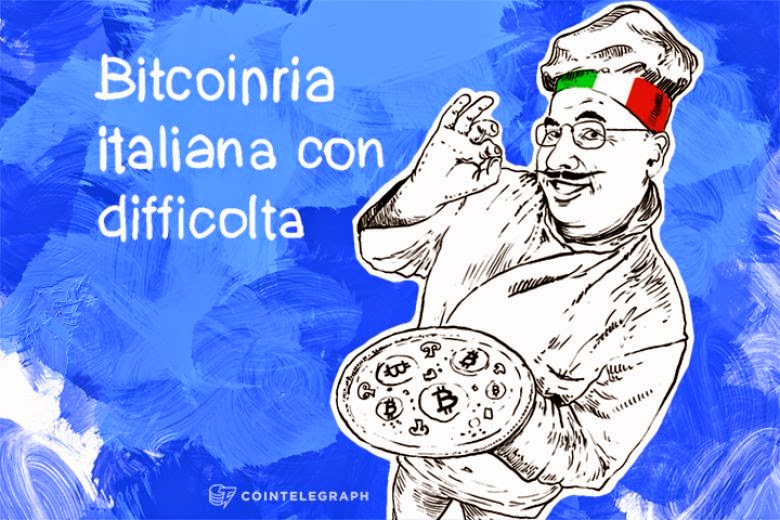
The difficulty of getting Bitcoin to catch on in Italy
first Bitcoin ATM was a Lamassu machine, installed in Udine,
a northeastern city nestled between the Alps and the Adriatic
Sea.
down the stuffed gnocchi.
anyone who needs help using the machine (it’s located in the hall of his family’s business).
He’s even had the interface translated into the local Friulian language, as
well as Italian.
his next step at this point is to install more machines around the country.
though.
Legal Obstacles
regarding Bitcoin, forcing him to operate in a grey area with which many
Bitcoin entrepreneurs are familiar.
pool of attorneys and legal experts advise him on what he could and could not
do. Italy,
they told him, does not regulate Bitcoin itself, nor are there any
know-your-customer regulations, but any transactions above 999.99 EUR need to
be reported.
“The use of electronic
currency is restricted to banks and electronic money institutions — that is,
private legal entities duly authorized and registered by the Central Bank of Italy.
Aside from these developments, Italy
does not regulate Bitcoin use by private individuals, and currently the
implementation of initiatives concerning the use of electronic currencies lies
with the EU.”
technology.
“Banca d’Italia is
studying the [Bitcoin] phenomenon, and perhaps — if they were fast — in 10-20
years we could have a law on it.”
local perception is something else entirely, Dordolo said.
“In Italy, we are at the beginning of
Bitcoin’s spreading among the population. There is an interesting Bitcoin
community [in Italy],
but it is still very hard to explain to Italian people the real value that
Bitcoin creates in the economy and the job opportunities it creates.This is because of
misinformation by the national media that actually regard it as a scam or worst
as associated with criminal deeds.Even the local Bitcoin
Foundation is not as active as it should be, so whatever can move this
situation is welcome.”
Open your free digital wallet here to store your cryptocurrencies in a safe place.
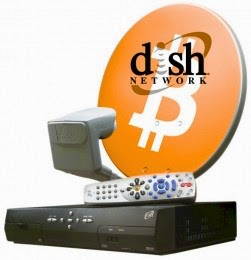
Satellite TV operator Dish Network to accept bitcoins!
Satellite TV operator Dish Network said it would accept bitcoin payments from customers from the third quarter, joining companies such as Overstock.com Inc and Zynga Inc in accepting the digital currency.
Dish said it selected Coinbase as the payment processor for bitcoin transactions with customers who choose to pay their bills online with the bitcoin wallet of their choice. Bitcoin is a digital currency that is not backed by any government or central bank and is bought and sold on a peer-to-peer network independent of central control.
In March, it launched its Instant Exchange feature, which will be used by Dish to convert bitcoins to U.S. dollars. Dish’s third quarter starts on July 1. While bitcoins may not be an alternative to established currencies, they can cut the cost of moving money around.
“We always want to deliver choice and convenience for our customers and that includes the method they use to pay their bills,” Bernie Han, Dish’s executive vice president and chief operating officer, said in a statement. “Bitcoin is becoming a preferred way for some people to transact and we want to accommodate those individuals.”
PricewaterhouseCoopers estimates that credit card companies charge around 3 percent in transaction fees and PayPal’s commission can go as high as 4 percent. The same transactions via bitcoin is likely to be free.
Open your free digital wallet here to store your cryptocurrencies in a safe place.

Bitcoin Society CEO: Why digital currency is a tool for global good
(CoinDesk) The weekend before last week’s Bitcoin2014 conference in Amsterdam, 22-year-old Matthew Kenahan had a choice to make – one that he said was “probably one of the most difficult decisions I’ve ever had to make”.
rewarded with not only winning the award for ‘Most Impactful Charity’, but also for ‘Bitcoin Champion’ after Andreas Antonopoulos was unable to accept the prize due to a conflict of interest.
My sincere thanks to anyone who voted for me in the blockchain awards. I apologize for not being able to accept due to conflict of interest
— AndreasMAntonopoulos (@aantonop) 16 Maggio 2014
Tool for charity
we’re trying to connect people,” Kenahan explained
“[Bitcoin] allows you to create a unique address, for a very specific cause […]
we see both the incoming and outgoing transactions, and we can see that
it’s used for a very specific cause.”
Image problem
Future plans
Open your free digital wallet here to store your cryptocurrencies in a safe place.
Bitcoin backers work to make it mainstream
geeks and enthusiasts had dreamed of: an international, decentralized,
anonymous, and transparent virtual currency that could potentially
replace inefficient traditional ones.
the Wall Street Journal, Bitcoin participation requires “a certain
faith in the benevolence of strangers.” But instead, the general public
is ambivalent at best about the virtual currency, while
many Bitcoin-related startups fight an uphill battle to convince the
world that it is at least comparable to its established counterparts, if
not better. Some retailers are pro-Bitcoin as well. Overstock.com and
TigerDirect now accept it as payment.
some time, are also bullish on the future of the digital currency and
believe there should be easier ways to invest in it. They established
their fund for people who are eager to invest in the currency, but who
don’t want to actually own bitcoins. Their first-of-its-kind
exchange-traded fund can be bought and sold on the public markets like a
stock or an index fund. Previously, people interested in trading
bitcoins as an asset class had to store the currency themselves and take
on the risk that goes with that. The brothers were recently quoted
saying their business will remove “the friction of buying…while offering
similar investment attributes to direct ownership”.
longstanding obstacles to its viability as a consumer product. It’s
likely that in the coming months new services will continue to emerge
that aim to make Bitcoin mainstream.
Open your free digital wallet here to store your cryptocurrencies in a safe place.
Andreessen sees bitcoin as the ‘big breakthrough’
Marc Andreessen, the tech entrepreneur who rose to fame as one of the founders of Netscape, takes the latter view, going as far as to say that in 20 years we will be talking about bitcoin the way we now talk about the Internet.
Andreessen argues that it has the potential to actually be a safer form of ecommerce than the credit card-based system that is currently in place.
Open your free digital wallet here to store your cryptocurrencies in a safe place.

Bitcoin transaction volume soon to surpass PayPal
Image Credit: screenmediadaily
CEO of Laureate Trust, Peter Tasca, explains:
“Whenever you have an instrument that trades over 300 million US dollars a day, it must be recognized; the digital currency works, bitcoin has greater volume transactions than Western Union and we anticipate it will overtake PayPal later this year.” According to Statistic Brain, PayPal processes just $315.3 million in transactions everyday, just slightly above the dollar amount of bitcoin’s daily transactions despite the digital currency still remaining at a relatively low percentage rate of consumer and merchant adoption.
The developer of the first biometrically protected bitcoin payment card, remains heavily leveraged in respect to bitcoin adoption; however, the company’s CEO, Chaya Hendrick, says that bitcoin’s sheer transaction volume will continue to rise at a staggering rate:
“In the next one or two years, Bitcoin can surpass the dollar transaction volumes of other established payment companies including Discover, and even American Express, MasterCard, and Visa.” While both Laureate and Hendrick see the number of bitcoin transactions climbing, Laureate, who currently manages a $5 billion hedge fund, predicts that along with increased volumes will come an increase in price, which he expects to be somewhere in the 50% range.
Increased Adoption
Meanwhile, SecondMarket CEO Barry Silbert, recently explained at the Core Club hosted forum in New York City that bitcoin currently remains in the “early majority” stage in which he refers to as the “venture capital stage”. However, the CEO and Bitcoin Investment Trust (BIT) founder says that “we’re probably just a few months away from Wall Street banks starting to trade bitcoin, starting to invest in bitcoin, and starting to create investment products for bitcoin.”
While bitcoin becomes an increasing threat to existing payment processors, in an interview with EcommerceBytes, CEO, John Donahoe, reffered to the digital currency as an exciting, new and emerging technology. “We think Bitcoin will play a very important role in the future. Exactly how that plays out, and how we can best take advantage of it and enable it with PayPal, that’s something we’re actively considering. It’s on our radar screen,” he said.
Open your free digital wallet here to store your cryptocurrencies in a safe place.

Former US Mint Chief: Bitcoin a serious challenge to government money

body responsible for producing the country’s physical coins, made waves
in the bitcoin community this week when he took to Twitter to voice his
enthusiasm for digital currencies.
$2.6B fine ‘won’t do much damage’: Credit Suisse CEO. It’s time banks got competition. Time for cryptocurrencies. http://t.co/OT3dBTDlrq
— Edmund Moy (@EdmundCMoy) May 22, 2014
However, Moy didn’t stop there. The former member of the Department of Homeland Security took to his blog on 23rd May to issue an entire post on how bitcoin is leading to “a revolution in payment systems”.
“Bitcoin,
and the ideas behind it, will be a disruptor to the traditional notions
of currency. In the end, currency will be better for it.”
full post lightheartedly addressed bitcoin and its strengths and
weaknesses, with Moy offering a perhaps surprisingly optimistic
assessment of how the technology will impact the global financial
marketplace.
Bitcoin removes government monopolies
most notably, Moy suggested that digital currencies can even help
prevent some of the more severe drawbacks associated with fiat
currencies. In particular, he predicts it will eliminate what he views
as the government monopoly on money, writing:
“It has a
low risk of collapse unlike a sovereign government’s currency (just ask
the Greeks or more broadly, the European Union).”
Bitcoin an innovative means of exchange
“As
a medium of exchange, bitcoin offers several unique innovations to
currency: global nature, infinite divisibility and easy to carry.”
today’s transaction systems “archaic”, he argued that bitcoin’s ability
to divide effortlessly would allow for new methods of monetization via
micropayments, and that it could eliminate existing barriers to global
markets.
Bitcoin will be a safe store of value
he took aim at critics of the idea who believe that government-backed
alternatives are perhaps more secure, saying that the US dollar is
driven mostly by market demand.
bitcoin could even allow governments the ability to dedicate more time
to monetary policy that could positively impact their economies should
it reach its full potential.
Open your free digital wallet here to store your cryptocurrencies in a safe place.
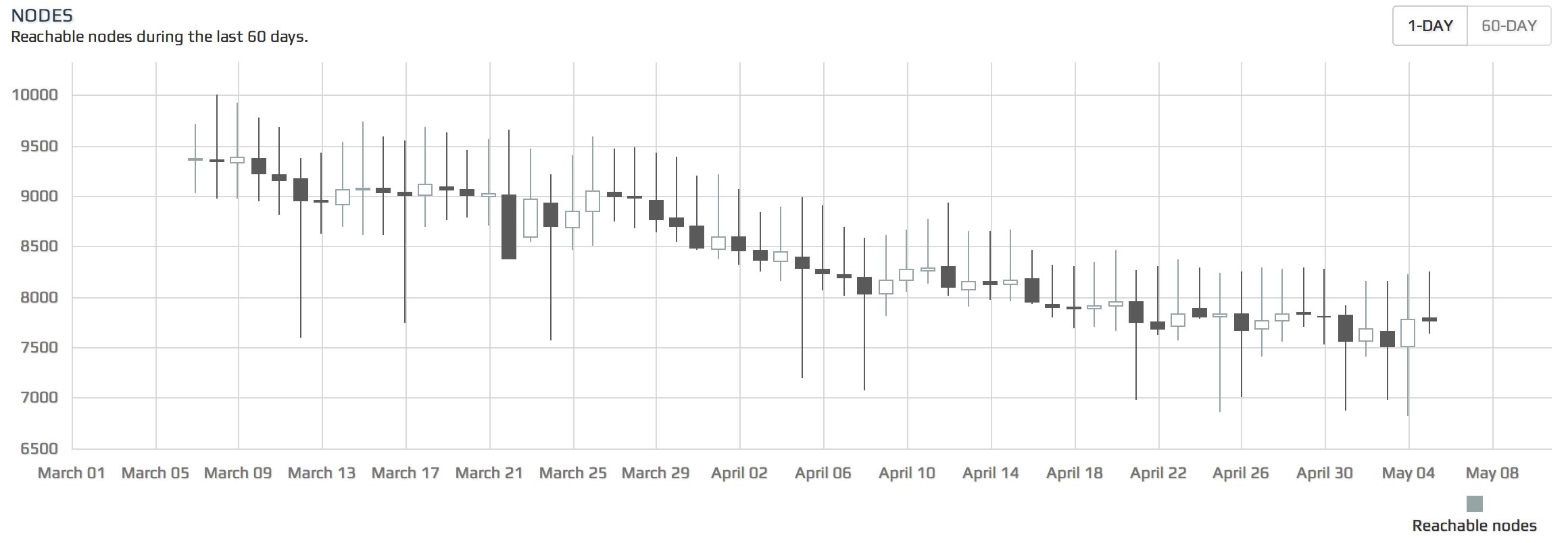
What are Bitcoin nodes and why do we need them?
peer-to-peer (P2P) network. However, what’s often lost in translation is
the sheer amount of machinery that is needed to maintain this global
infrastructure.
transactions, bitcoin requires more than a network of miners processing
transactions, it must broadcast messages across a network using ‘nodes’.
This is the first step in the transaction process that results in a
block confirmation.
network must not only provide an avenue for transactions, but also
remain secure. By using a number of randomly selected nodes, the network
can reduce the problem of double spending – when a user attempts to spend the same digital token twice.
bitcoin doesn’t just need nodes, it requires lots of fully functioning
nodes – nodes that have the bitcoin core client on a machine instance
with the complete block chain. The more nodes there are, the more secure
the network is.
Waning support
at a 60-day chart of bitcoin nodes shows that the number has gone down
significantly. It went from 10,000 reachable nodes in early March to
below 8,000 at the beginning of May.
 |
|
Source: Bitnodes |
interesting is that during a recent 24-hour period, the number of
reachable nodes went down from 8,200 to 7,600 and back to 8,200 again.
This suggests that a portion of users running nodes are turning off
their machines at night, meaning that this contingent of nodes are being
run on desktops or laptops.
 |
|
Source: Bitnodes |
 |
|
A map based on Bitnodes data. Source: Coinviz |
Lack of incentive
running a bitcoin node does not provide any incentive. The only benefit
for someone to run a node is to help protect the network, and based on
the Bitnodes data, the number of people interested in supporting the
network with a full node is waning.
Centralization of mining
terms of supporting the bitcoin network, it used to be a lot easier for
the average user to participate. However, the advent of massive ASIC
data centres has weakened the consensual nature of mining, and by
extension providing nodes, for many people.
“As
bitcoin grows, so does the network and the computing power behind the
scenes required to run it. The majority of bitcoiners won’t be able to
support their own nodes and will be taken over by companies like KnC.”
pushing bitcoin towards a more centralized future. McKelvie also
believes that major technology companies that take interest in bitcoin
will have to put their computing resources behind the digital currency:
“I
wouldn’t be surprised if we see large tech companies like Google and
Amazon throwing resources at bitcoin as they adopt the currency.”
Feedback from nodes
sees the issue of nodes dropping from 10,000 down to under 7,000 as a
significant problem. To Hearn, the core of the issue is disinterest in
both expending computing resources and electricity toward something that
may have diminishing value.
Hearn has proposed added functionality that would allow communications
between nodes and the developers to better understand why so many are
dropping out.
is because their number will continue to decline no matter what – and
they appear to only be working when users are awake during the day.
“It
makes [the bitcoin network] ‘seem’ bigger, more robust and more
decentralised, because there are more people uniting to run it. So
there’s a psychological benefit.”
Moving forward
believes that community attention to the lack of nodes supporting the
network is what the industry needs in order to boost numbers:
“I agree we need more full nodes. I’ve long been a proponent of such calls for more nodes.”
such calls for voluntary support might not be enough motivation for
people to do so, though, so, one logical idea that has been floated is
to give nodes some sort of incentive.
feasible right now: over the past six months, miners have been
averaging a daily reward of 15.98 BTC per day, according to Blockchain.
bitcoin prices would peg that value at around $7,040 per day for the
entire network – and the growth in transaction fees has been incredibly
flat over the past six months. As a result, miners would likely be
reluctant to concede any revenue to bitcoin nodes, which don’t require
pricey ASIC hardware to run.
 |
|
Transaction fees on the network for past six months. Source: Blockchain |
of the bitcoin community seem to be losing interest in hosting full
nodes. And it’s something to pay attention to, because over time it
might mean that the major companies in the industry may have to pick up
the slack.
the network as full nodes, though, it continues to lessen the amount of
decentralization the network has at an infrastructure level.
is all down to circumstances surrounding bitcoin sentiment – the rise of
ASICs, the selloffs in China and complete collapse of Mt. Gox – plus
little in the way of incentives for someone to run a node.
Open your free digital wallet here to store your cryptocurrencies in a safe place.

Marc Andreessen: In 20 years, we’ll talk about Bitcoin like we talk about the Internet today

(WashingtonPost) The investor and Web browser pioneer Marc Andreessen thinks we’ll
all look back in 20 years and conclude that Bitcoin was as influential a
platform for innovation as the Internet itself was. He says that tech
companies think their meetings with President Obama on privacy are a
waste of time. And he calls net neutrality a “lose-lose.” In a
wide-ranging interview with The Washington Post this week, Andreessen
painted a picture of a future that’s distributed, messy and fraught
with tension. Here’s an edited transcript of our conversation.
Is there anything that Washington has built a wall against in terms of progress?
Well, the big thing right now for the tech industry is the Snowden
revelations, and the consequences of that for the American tech
industry. Specifically, in two areas: One is that the level of trust
that customers have [in] American tech companies has been seriously
damaged. And that is especially — but not exclusively — true outside the
United States. Every time another revelation comes out, like the one
this weekend about hijacking the routers on their way out of the country, or the one about hacking into the Internet companies’ backbone networks — every time one of these shoes drops, and apparently there is just an unlimited
number of shoes — every time one of these things happens, it’s a
serious blow to the credibility of these companies, especially outside
the U.S. And so there’s a really big, I mean very, very, very high level
of concern in the Valley that the American tech industry is in trouble
outside the U.S.
And then, two is this balkanization of the Internet that’s happening
now. As more revelations happen, more and more countries are saying:
“Okay, if we can’t trust the Internet, if the NSA is going to watch
everybody on the Internet all the time, we’re going to have to break off
and have our own Internet. Have our own firewalls, do what the Chinese
do, have our own private Internet or whatever the hell it’s going to
be.” This issue is being used as political cover for what these countries want to do anyway.
That brings us to, “Okay, how is the American government getting in
front of this?” And the answer is, “Not even a little bit.” The view in
the Valley is that the White House has hung the NSA out to dry. Just
like, “You’re on your own.” And there’s basically no effective
communication right now that I’m aware of between the American
government, especially the administration and American tech companies,
on like, “Okay, what happens now?”
There isn’t?
No.
Those meetings that occurred, that’s just for show?
Yeah, people come back, and they’re like, “Nothing happened.” The
Obama administration does not seem to have any real — they don’t seem to
have a plan. They seem to be in the mode of they kinda hope that it
goes away. And they hope that if they get face time with the execs they
can just mollify everybody and over time, the issue will just dissipate.
But I’m not aware of any substance that’s come out of those meetings.
I’m not aware of anybody who’s come back from those meetings saying:
“Okay, now there’s a plan. Now we know what’s going to happen.” It’s
been the opposite. It’s been people saying, “I don’t even know why I
went.”
Is there anything tech companies can do, whether on the Snowden stuff, or culturally?
These technologies escalate the power of government, but they also
escalate the power of business, and they also escalate the power of
individuals. So everyone’s been upgraded. And it’s a recalibration of
who can do what, and everybody can do new things, so everybody’s uneasy
about it. Governments are very worried about what citizens are going to
be able to do with these new technologies. Citizens are very worried
about what governments are going to do, and everybody’s worried about
what businesses are going to do. It’s this three-way dynamic that’s
playing out. And so for any of these individual issues, it’s not just
“What is one leg of this triangle going to be doing?” It’s, “What are all three of them going to be doing, and how will the tension resolve itself?”
Any thoughts on all these mergers that are being announced?
Not specifically on the mergers.
Or net neutrality?
So, I think the net neutrality issue is very difficult. I think it’s a
lose-lose. It’s a good idea in theory because it basically appeals to
this very powerful idea of permissionless innovation. But at the same
time, I think that a pure net neutrality view is difficult to sustain if
you also want to have continued investment in broadband networks. If
you’re a large telco right now, you spend on the order of $20 billion a
year on capex. You need to know how you’re going to get a return on that
investment. If you have these pure net neutrality rules where you can
never charge a company like Netflix anything, you’re not ever going to
get a return on continued network investment — which means you’ll stop
investing in the network. And I would not want to be sitting here 10 or
20 years from now with the same broadband speeds we’re getting today. So
the challenge, I think, is to accommodate both of those goals, which is
a very difficult thing to do. And I don’t envy the FCC and the
complexity of what they’re trying to do.
The ultimate answer would be if you had three or four or five
broadband providers to every house. And I think you actually have the
potential for that depending on how things play out from here. You’ve
got the cable companies; you’ve got the telcos. Google Fiber is
expanding very fast, and I think it’s going to be a very serious
nationwide and maybe ultimately worldwide effort. I think that’s going
to be a much bigger scale in five years.
So, you can imagine a world in which there are five competitors to
every home for broadband: telcos, cable, Google Fiber, mobile carriers
and unlicensed spectrum. In that world, net neutrality is a much less
central issue, because if you’ve got competition, if one of your
providers started to screw with you, you’d just switch to another one of
your providers.
There’s more and more integration between Bitcoin and the
financial services sector. But a lot of people who support Bitcoin
supported it because it was sort of disconnected from the infrastructure represented by government and everything else.
So we sort of have a theory on this, on where really disruptive
technologies come from. So the really new disruptive technologies come
from the fringe. This was true of PCs. Steve Jobs was, like, a
hippie. Internet came from the fringe. No big technology company thought
the Internet was going to be important, right up until basically 1995
or 1996.
Bitcoin is the classic instance of that. Bitcoin didn’t come from
Citibank; it didn’t come from the Federal Reserve; it didn’t come from
Visa. It came from the fringe. And now Bitcoin is in the early stages of
mainstreaming today. And the signs that it’s in the early stages of
mainstreaming are mainstream venture capital firms funding mainstream
startups, employing mainstream engineers to build services that’ll be
used by mainstream people. You’ve got big companies that are not yet
doing a lot with it, but are looking very seriously at it. So every big
bank has people that are trying to figure out what to do with Bitcoin;
every big e-commerce company has people that are trying to figure out
Bitcoin. You have mainstream regulators figuring it out; you’ve got
people at the Federal Reserve, and the Treasury Department and IRS that
are figuring it out. At the state level, people are engaged on it. And
so, it’s in the early stages of mainstreaming.
It’s already happening.
Anybody who thinks Bitcoin makes it easier to do transactions that aren’t
tracked by the government is 100 percent wrong. The transactions all
happen in public view. Anybody can look at the entire ledger and verify
who owns what. So if you’re a law enforcement agency or an intelligence
agency, this is a much easier way to track the flow of money than cash.
So I think actually law enforcement and intelligence agencies are going
to wind up being pro-Bitcoin, and libertarians are going to wind up
being anti-Bitcoin.
For [journalists], the big challenge has been explaining what
Bitcoin is to people. And I think we’ve always explained it as a
currency, but does that — now that people know about it in terms of a
currency, does that prevent them from [grasping Bitcoin’s full
potential]?
I have a lot of friends who are programmers. The programmers have always gone like, “Those [Bitcoin] guys are crazy.”
And then, almost 100 percent of the time, they sit down, read the paper,
read the code — it takes them a couple weeks — and they come out the
other side. And they’re like: “Oh my god, this is it. This is the big
breakthrough. This is the thing we’ve been waiting for. He solved all
the problems. Whoever he is should get the Nobel prize — he’s a genius.
This is the thing! This is the distributed trust network that the
Internet always needed and never had.”
So, one of the challenges is you take people who aren’t
professional programmers or mathematicians and then you expect them to
understand it from a standing start. And it’s daunting. And so then it
gets a word attached to it, like “currency” or whatever you want to call
it, and then people think that it is something it isn’t. And you have a
sense of this, but it’s a much deeper concept than currency. It’s the
idea of distributed trust.
So the business opportunity posed by this “distributed trust
network” — as an investor, what do you see that you could potentially —
Hundreds or thousands of applications and companies that could get built on top.
Is this, like, a billions-of-dollars kind of industry?
Yeah.
Trillions…?
Yeah! (Laughs, steeples his fingers Mr. Burns-style). Yeeeah… (Laughs) I have the haircut, I can do it.
Digital stocks. Digital equities. Digital fundraising for companies.
Digital bonds. Digital contracts, digital keys, digital title, who owns
what — digital title to your house, to your car. Like for example, you
get a digital title on a car, attached to a digital key, where you own
your car on the Bitcoin blockchain and on your smartphone. The key for
opening your car and starting your car is tied to that title. And if I
sell you my car, automatically you get title, and you get the key that
lets you operate the car, and it’s all digital, and it’s all unique, and
it can’t be cracked. You’ve got digital voting, digital contracts,
digital signatures. You’ve got unique pieces of digital content. If you
guys wanted to know exactly who had every piece of content you ever
made, you can track that. It’s this long list. And then every aspect of
financial services: insurance contracts, insurance derivatives, currency
exchange, remittance — on and on and on. It gives you a chance to
basically go after this very broad category of online business in a new
way. And, by the way, if we had had this technology 20 years ago, we
would’ve built it into the browser.
E-commerce would’ve gotten built on top of this, instead of getting
built on top of the credit card network. We knew we were missing this;
we just didn’t know what it was. There is no reason on earth for anybody
to be on the Internet today to be typing in a credit card number to buy
something. It’s insane, because — which is why you have all these
security problems, the Target hack and all this crazy…. And these high
fees, this high fraud rate. It doesn’t make sense online to have a
payment mechanism that requires you to hand over your credentials to
make a payment. That’s just an invitation to fraud and identity theft.
It’s just stupid.
But we didn’t have the better way of doing it. So we didn’t know what
else to do, and now we have the better way of doing it. Now, it’s going
to take time. We’re quite confident that when we’re sitting here in 20
years, we’ll be talking about Bitcoin the way we talk about the Internet
today. We just need time for it to play out.
Open your free digital wallet here to store your cryptocurrencies in a safe place.