Category Archive: Regulation

Bitcoin’s Monthly Recap of June 2015

Welcome to HolyTransaction sixth monthly recap for the year 2015. This past month of June has has been eventful for Bitcoin due to events within the Bitcoin ecosystem and from the general economic world as well; during that time, the bitcoin price fell from a low of $223.51 to a high of $272.50, according to Bitcoin exchange Bitstamp.
Russia Reverses Stance on Bitcoin Ban, Open to P2P Transactions
According to Russian media Izvestia, the Russian government is expected to reverse its stance on Bitcoin in the coming months. Over the last year, different arms of the Russian government have come forward with different opinions on Bitcoin, with the Central Bank being notably open to the idea of cryptocurrencies. This news comes on the heels of a reversal on a website ban affecting several Russian Bitcoin sites. Around the world, an anti-Bitcoin stance is increasingly becoming more and more unpopular.
Decentralized Marketplace OpenBazaar Receives $1 Million USD Funding
The decentralized marketplace project, OpenBazaar, has raised $1 million USD in funding from names such as Andreessen Horowitz and Union Square Ventures. OpenBazaar has sometimes been called the spiritual successor to infamous marketplaces such as the Silk Road. Of course, that is not the purpose of the project; however, the applications of a secure and open marketplace software has obvious implications for the black market. The infusion of venture capital money into such a controversial area shows the promise of Bitcoin technology in the world of commerce.
Silk Road Investigator Pleads Guilty to Money Laundering
In the latest drama from the Silk Road drug market takedown, one of two federal agents working on the Silk Road case has plead guilty to money laundering, extortion, and other crimes. Carl Force infiltrated the Silk Road marketplace as the head of the Baltimore-based team that took down the infamous site; however, while leading the investigation, Force stole money from Silk Road and the now convicted Ross Ulbricht. Force even signed a movie deal with 20th Century Fox to detail his exploits. Another agent, Shaun Bridges, also plead guilty to similar crimes.
Nasdaq Private Market Works with Chain to use Bitcoin
In a continued show of interest in Bitcoin technology, the Nasdaq OMX Group Inc. has chosen Bitcoin startup Chain to test a new type of trading. Using Bitcoin technology, Nasdaq hopes to secure the trading of private company shares. The Nasdaq Private Market currently services pre-IPO trading of shares in private companies and blockchain technology will manifest here first. Nasdaq’s CEO Bob Greifeld explained: “As blockchain technology continues to redefine not only how the exchange sector operates, but the global financial economy as a whole, Nasdaq aims to be at the center of this watershed development.”
Greek Economic Crisis Raises Bitcoin Awareness
For the last month, the world has been eagerly watching Greece struggle with the European Union over its debt and a proposed deal to save the beleaguered country. In the meantime, banks, PayPal, and Western Union have all taken a much-felt hiatus from the country, leaving the Greek people to suffer financially. In this economic turmoil, many have started learning about Bitcoin. Bitcoin companies across Europe are reporting increased levels of usage and activity from the Greek area. In 2014, when Cyprus was having similar issues, interest in Bitcoin also experienced a noticeable jump.

Open your free digital wallet here to store your cryptocurrencies in a safe place.
Satoshi

Bitcoin’s Monthly Recap of May 2015

Welcome to HolyTransaction’s fifth monthly recap for the year 2015. This past month of May has reminded everyone in the Bitcoin world why we are here; during that time, the bitcoin price fell from a high of $231 to a low of $223.51, according to Bitcoin exchange Bitstamp.

Roger Ver and OKCoin Dispute Over Bitcoin.com
Since the news months ago that the highly-visible Bitcoin.com domain would be managed by Chinese Bitcoin exchange OKCoin, things have really changed. In a series of Reddit posts, Roger Ver, OKCoin, and former OKCoin employees aired out all of their dirty laundry. Amid accusations of forged contracts and blatant lies, the spat resulted in a huge blow to the reputation of OKCoin. Bitcoin.com currently redirects to Bitcoin.org, which is maintained by the Bitcoin Foundation.

Bitcoin Exchange BitFinex Hot Wallet Hacked
BitFinex, one of the leading Bitcoin exchanges, has been hacked for just over 1500 BTC earlier in May. According to the exchange, trading was not affected and 99.5% of users’ funds were never accessible to the hacker. The hack, while unfortunate, demonstrates the efficacy of cold and hot wallets, which may have been the downfall of Mt. Gox. Notably, another European Bitcoin exchange, BitStamp, also suffered a hot wallet hack earlier in 2015.

Ross Ulbricht Sentenced to Life In Prison
Ross Ulbricht, the founder of the Deep Web marketplace Silk Road, has been sentenced to life in prison. Many in the community feel that a life sentence is too harsh given the nature of Ulbricht’s crimes. An appeal is planned by Ulbricht’s defense lawyer, Joshua Dratel. Notably, the trial which convicted Ulbricht did not allow the introduction of key evidence that may tell a different story. The sentence was passed by Judge Katherine Forrest, who was appointed to her federal judgeship on the recommendation of Senator Schumner, the first politician to publicly call for the takedown of Silk Road.

North Carolina Passes Bitcoin Bill
The House of Representatives from North Carolina has passed a new bill to modify the Money Transmitters Act. The bill, HB 289, specifically includes and clarifies the state’s stance on virtual currencies such as Bitcoin. The bill was introduced by Republican Representative Stephen M. Ross, who is also a VP at Wells Fargo. The Bitcoin community has been receptive to North Carolina’s clarification, which contrasts with actions from states such as New York. Perianne Boring, the founder of the Chamber of Digital Commerce, commented: “I would be rather straight forward and say that the community favors regulatory clarity over ambiguity that can create ultimately greater exposure for companies, especially those that do not have the legal budgets necessary to evaluate the ambiguities. The legislation represents a lighter touch than the NY DFS proposal by protecting the interest of consumers but  not imposing any additional regulatory burdens or costs on business to business transactions.  It also has avoided some of the pitfalls of existing statutory schemes.  It may not be what a  segment of the community wants – no regulation. But NC is not a no regulation state and this is a useful step forward in making the law work for digital currency companies.”

Ripple Labs Receives $28 Million USD in Funding
Ripple Labs, the company behind the Ripple payment protocol and network, has recently closed a $28 million USD funding round. This round marks their Series A funding and saw many participants from around the world. Ripple has made waves in the digital currency space by sealing deals with several banks around the world. However, Ripple has also faced increasing scrutiny from users wary of centralized control as well as Stellar, an offshoot created by one of Ripple’s original founders which even used some of the same code. Chris Larsen, Ripple Labs’ CEO, commented: “With investors like CME Group and Seagate joining the fold, we’re well positioned to accelerate adoption amongst these key customers.”

Open your free digital wallet here to store your cryptocurrencies in a safe place.

Satoshi
bitcoin in russia

Russia reconsidering Bitcoin?

(CryptoCoinsNews) Could Bitcoin make it back into Russia? The latest news is that the draft law is in need of major revision as the Russian Ministry of Economic Development has not approved the draft in its current form. This is certainly not because of the desire to enhance freedom and liberty for Russian citizens, but because it may hurt Russian corporations ability to attract new business. The “quasi-money” designation includes things like gift cards and certificates that businesses use to bring in new customers. Banks, major retailers, and telecom companies would take a huge hit, and with the national GDP/economy is already having a terrible year, this bill does more harm than good overall.
“The proposed draft regulation act doesn’t solve any tasks assigned, but only serves to create legal barriers to the implementation of marketing programs of businesses and business development in general,” according to the Ministry of Economic Development.”
The issue with nation-states attacking Bitcoin out of defense of their currency is a complicated one. Many nations are in debt due to their debt-based fiat currency/central banking system. The current inherently flawed system is designed to leave nations indebted. Bitcoin and it’s potential growth leave open a way to build new businesses, generate new revenue streams by attracting investors, and ways for future taxation to help alleviate the nation’s indebtedness. Russia’s previous hard stance against Bitcoin was taken before many of their current economic issues and sanctions manifested.
Russia’s economic situation may continue to spiral downward, as they may soon suffer from restriction of access to the global financial system. In particular to the payment system SWIFT (Society for Worldwide Interbank Financial Telecommunication, which supplies secure messaging services and interface software to wholesale financial entities. An international banking computer partnership). Some critics say the government should pay more attention to financial innovations instead of trying to ban them.
Does this mean Bitcoin is in the clear? Not exactly. The bill most likely will be revised, but it may just benefit Russian corporations, but still restrict Russians ability to use electronic currency. The ban may just work around gift cards and bonus cards and remain for digital currency. The nature of the extent of the revisions remains unclear. What do you think Russia will do with Bitcoin?

Open your free digital wallet here to store your cryptocurrencies in a safe place.

Satoshi

Analysts: Winklevoss Bitcoin ETF to pass SEC approval

As the Winklevoss twin’s highly-anticipated, not to mention first of its kind bitcoin exchange traded fund, inches its way towards becoming a reality, ETF analysts are weighing on the likeliness of the fund securing the SEC’s approval. 
Chief Investment Officer of ETF.com, Dave Nadig, tells International Business Times
“I don’t see very much in the way of impediments to it at this point, “everything I see in the Bitcoin filing is by the book so it would be a surprise if they officially deny it. If they pocket veto it and kind of ignore it for a while… that’s a possibility.”
The Winklevoss twins, who have claimed to own as many as 1% of all bitcoins in circulation, recently revealed in their fourth filing since the ETF’s initial proposal that the fund will trade on the NASDAQ under the ‘COIN’ symbol.
The twins’ bitcoin ETF seeks to appeal to investors who want to get in on the digital currency under regulated conditions, which further opens the door to large institutional investors who cannot yet hold bitcoin directly on brokerage statements. Furthermore, the fund hopes to mitigate the risk often associated with storing the digital currency while providing a template for tax reporting. 
ETFtrends web editor, Todd Shriber explains: 
“If the Bitcoin ETF is classified as a commodity ETF, the rate of tax they’ll be paying will much higher than if they bought a currency ETF.”
ETFtrends.com editor and president of Global Trends Investments, Tom Lydon says that given the twins’ openness about the status of the ETF, which can only go so far due to SEC laws and procedures, the likeness of it securing approval is highly likely: 
“I would feel strongly it’s going to happen it may not be as soon as people would hope, I wouldn’t imagine they would continue talking about it and making progress if in fact it would not come to fruition.”
Lydon tells IBT that the largest impediment in terms of acquiring investors will lie in the education of those interested parties. However, thankfully, he adds, “they’re pretty good at explaining what Bitcoin is.”

Open your free digital wallet here to store your cryptocurrencies in a safe place.

Satoshi
polish flag3

Polish Finance Ministry says Bitcoin can be used as financial instrument

(CoinDesk) Poland’s deputy finance minister Wojciech Kowalczyk has released a
document confirming that under the country’s existing financial
regulations, bitcoin can be considered a financial instrument.
The statement follows a previous inquiry from Michal Pacholski, an
opposition member of Parliament for the liberal Twoj Ruch (Your
Movement) party. At the time, Pacholski asked Poland’s Ministry of
Finance to explain the legal status of bitcoin transactions.
Specifically, his query focused on whether or not “options and futures
contracts can be considered as a financial instrument” if they are
denominated in a digital currency.
The Finance Ministry replied that bitcoin fits within that legal framework, stating:

“Options or futures contracts which are based on
[bitcoin] as a base instrument can be considered as derivative
instruments, and as such, they can be considered as financial
instruments, according to the bill on financial instruments.”

Bitcoin’s legal status clarified

In the notice, Kowalczyk confirmed that bitcoin is not an officially
recognized currency in Poland. He said in the policy document:

“An analysis of national regulations allows to conclude
that bitcoin … is not a legally defined and universally accepted
currency, because it cannot be classified as either a national currency …
or a foreign currency.”

Previously, Pacholski had pressed the Finance Ministry on the
possibility of issuing options and futures contracts in the form of
derivatives based on bitcoin market indexes. These issuances, he said,
would be similar to the derivatives which are based on stock market
indexes.
Kowalczyk’s document confirms that these instruments may be made
available to Polish investors. This, the Finance Ministry said, is in
accordance with the country’s banking services regulations.

Regulators accept bitcoin usage

Ultimately, the Polish government statement on bitcoin’s use in
derivatives markets suggests the continued evolution of government
policy toward digital currencies in Poland. While bitcoin can be used as
a medium of exchange and financial tool, it remains unrecognized as a
legal currency by regulators.
This policy stance has been stated by Poland’s financial regulators in the past, including officials from the Finance Ministry.
Speaking at a seminar held at the Warsaw School of Economics (SGH) in December,
Szymon Wozniak, a Finance Ministry representative, said that the
ministry does not consider bitcoin to be illegal, but it does not
consider it to be a legal currency either. He remarked:

“What is not forbidden is permitted. However, we certainly cannot consider bitcoin to be a legal currency.”

Open your free digital wallet here to store your cryptocurrencies in a safe place.
Satoshi

Virtual and digital currencies can challenge the sovereignty of states

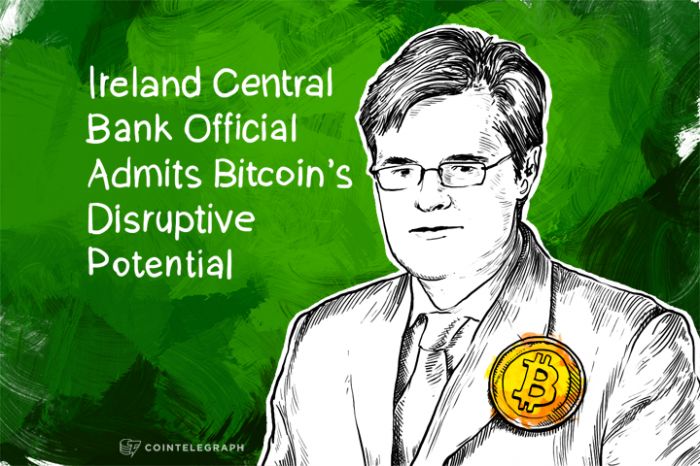
(CoinTelegraph) “Virtual and digital currencies can challenge the sovereignty of states,” says Gareth Murphy, senior Central Bank of Ireland
official. At a recent digital money conference in Dublin, he mentioned
that rivals are interfering with a bank’s ability to sway the price of
credit for the entire economy. Murphy warned that there might be
considerable threat to the finances of a country if increasingly more
transactions for services and goods fade away from the tax system due to
the use of crypto currencies such as Bitcoin. He added:


“Central banks, [out] of necessity, have monopolized the exercise
of these functions. Virtual currencies pose new challenges to central
banks’ control over these important functions.”

Bitfin 2014 is Ireland’s biggest
Bitcoin conference. It gathers the brightest minds in finance,
payments, banking, and business. The goal is to host fearless debates on
the risks and opportunities involved with decentralized currencies.
Bitfin (Bitcoin Finance) wants to shape
the future of corporate strategy, commerce, and economic policy in the
current industry of peer-to-peer digital money. “Bitcoin Finance is the
digital money conference you’ve been waiting for,” the official press
release reads.
Bitcoin Gaining ground in Ireland
Losing confidence in currencies may lead to uncertainty, which can
trigger significant drops in economic activity. The Central Bank has
constantly emphasized that it doesn’t recognize digital currencies such
as Bitcoin in Ireland. Nonetheless, those who choose to use Bitcoin anyway won’t have consumer protection.
As the Director of Markets Supervision at the Central Bank, Mr.
Murphy is well aware that virtual currencies could offer a great option
for people looking to buy and sell different services and goods. He
added that in these circumstances, the anti-money laundering rules will
be thoroughly tested.  Failure of settlement infrastructure and
payments, or any sort of “financial plumbing,” could have a great impact
on the country’s economic activity and consumer confidence. Murphy
said:


“In effect, economic activity is the aggregate of domestic
transactions in the ‘euro-denominated economy’ and the ‘virtual currency
economy.’”

Because digital currencies pervade economic activity, major financial
institutions and banks will most likely feel the effects. Other major
financial institutions don’t see Bitcoin as a threat to their
operations. However, in Murphy’s view, these institutions would be
foolish to have this kind of attitude towards the technology,
mentioning:


“This is likely to have a profound operational impact on these firms and their regulatory risk profile.”

Monetary and economic changes
In today’s hybrid economy, central banks will have to face a lot of
economic challenges. Digital currencies defy the way these institutions
calibrate exchange rates, monetary policy and set price of credit.
Supporting Bitcoin and encouraging its growth would have to be
attentively monitored. Gareth Murphy added:


 “The existence of a ‘euro-denominated economy’ and a ‘virtual
currency economy’ raises the prospect of an internal balance of payments
between two sub-economies where suppliers may prefer one currency over
another as a means of payment (for different goods and services).”

Virtual currencies – a bank’s worst enemy
Most economies function with many different currencies and the USD is
the most frequently used on a global scale. Bitcoin undermines a
central bank’s ability on matters such as economic analysis, data
collection, supervision, policy formation, enforcement and resolution,
so these sort of implications can’t be overlooked.
As far as regulation is concerned, Murphy suggests that Bitcoin
shouldn’t take things for granted and assume its actions will keep
falling under US and Switzerland regulations. He did mention that
Bitcoin should be used to support indefinite innovations that may come
from a wiser use of the technology:


 “We should not presume that current regulations are
future-proof. It is possible that further innovations will mean that
these regulations may no longer apply. This suggests that new
regulations may ultimately be needed which are based on new legal
concepts with a clear scope which must stand the test of time.”

Virtual currencies will soon become a bank’s worst enemy, and that’s
because they’re offering lower fees, commissions, greater convenience
etc. Bitcoin might gain control over the most important functions of
exchange rate and monetary policy. In spite of the currency’s relative
instability, more people are turning their attention to Bitcoin, and the
more publicity it receives the higher chances it has to become
ubiquitous in our everyday lives.

Open your free digital wallet here to store your cryptocurrencies in a safe place.

Satoshi

Winklevii Bitcoin ETF under the ‘COIN’ symbol

A recent filing with the SEC by none other than the Winklevii themselves, reveals some new developments in regards to the twins’  highly-anticipated and upcoming bitcoin exchange traded fund (ETF).
The Winklevoss twins recently filed an amended Form S-1 with the Secutiries and Exchange Commission. While the form acted as nothing more than an update to keep the SEC informed, the filing has revealed what many have been wondering since they first heard of the ETF — the ticker symbol.
The update acts as the fourth filing in total since the ETF’s initial proposal; the process as the twins have explained, is a daunting one that requires a grueling, yet meticulous process. The fund; however, has come a long way since its beginning, which was originally filed for on 1 July 2013.

As some have speculated, evident of the twins’ latest filing, the first of its kind bitcoin ETF will trade on the NASDAQ under the ‘COIN’ symbol.

According to the Wall Street Journal the filing has divulged some of the concerns shared by the twins when it comes to the risks associated with the up and coming ETF. Among those include government regulation, Bolivia’s recent central bank ban and Switzerland’s latest legislative ruling.
On top of the more regulatory risk factors, the filing has revealed what the twins feel to be the technological factors that could threaten the digital currency’s well-being. This including the much-raved about possibility of a 51% attack in addition to what others have voiced as a concern of what would happen if the core developers suddenly stopped sustaining the bitcoin protocol unless they are compensated.
The question everyone wants to know; however, remains a mystery. Which is when the ETF will launch. While the twins are diligently working to make sure the fund is indeed launched as soon as possible, it will for now remain a mystery as to when the ETF will be up and running, this is in part due to the strict laws surrounding these type of filings.
In a conversation with CoinDesk, Cameron Winklevoss reiterated that he cannot speak on a launch date but he did provide a brief statement in respect to the now-revealed ticker symbol:

“Identifying the ticker symbol and the exchange are two major events that further demonstrate that we are moving forward as expected.”

The overall vision of the twin’s bitcoin ETF is to make it simple for institutional investors to buy and sell bitcoin without having to endure the risk of owning bitcoin themselves. The ETF aims to make the digital currency easily accessible to investors of any size, while providing a liquid platform that makes it possible for investors to move in an out of their bitcoin positions with ease.
The Winklevoss twins currently own a reported 1% of all bitcoins in circulation, the twins are well known for their ambitious price targets throughout the bitcoin community of which they expect to see a $40,000 coin in the near future.

Open your free digital wallet here to store your cryptocurrencies in a safe place.
Satoshi
california

California lawmakers pass bill to update currency law

Image: GetToKnowBitcoin
Bitcoin is now a legal form of payment within the state of California thanks to a new bill signed into law yesterday by Governor Jerry Brown.“This bill is intended to fine-tune current law to address Californians’ payment habits in the mobile and digital fields,” said the bill’s author, Democratic Assemblyman Roger Dickinson in a press release.


He cited the popularity of Bitcoin, and said even gift cards and reward points from retailers could be considered illegal under the current law.
“In an era of evolving payment methods, from Amazon coins to Starbucks Stars, it is impractical to ignore the growing use of cash alternatives,” Dickinson said.
It may seem a little strange that Bitcoin wasn’t already legal within the state — considering how large a role Silicon Valley played in both legitimizing and showing the business potential of all crypto-currencies. Also, Bitcoin was already being used by a number of businesses in the state as well as Bitcoin ATMs.
The bill itself actually repealed an older state law that prohibited the use of any currency other than the U.S. dollar. With the repeal in place, Californians are now free to use Bitcoin, other crypto-currencies, and even rewards points from loyalty programs.

Open your free digital wallet here to store your cryptocurrencies in a safe place.
Satoshi
photo

Swiss government report: Bitcoin too ‘insignificant’ for legislation

(CoinDesk) Switzerland’s Federal Council has published a report stating that,
for the time being, it will not create legislation relating specifically
to bitcoin or other digital currencies.
The government report
claims the economic importance of these currencies is currently “fairly
insignificant” and the council doesn’t expect this to change in the
near future.
This report has been created following the submission
of postulates by National Councillors Jean-Christophe Schwaab and
Thomas Weibel last year, which asked the Federal Council to examine the risks and opportunities associated with bitcoin.

No ‘legal vacuum’

A
point the government is keen to stress in the report is that virtual
currencies are not in a “legal vacuum”, meaning that existing laws apply
to activities associated with these currencies. It states:

“Contracts
with virtual currencies are enforceable in principle and penalties can
be imposed for criminal offences associated with virtual currencies.
Certain business models based on virtual currencies are subject to
financial market laws and need to be subjected to financial market
supervision.
Professional trade in virtual currencies and the
operation of trading platforms in Switzerland generally come under the
scope of the Anti-Money Laundering Act. This includes compliance with
the obligation to verify the identity of the contracting party and
establish the identity of the beneficial owner.”

Some
of the laws that apply to certain uses of digital currency include the
Swiss Code of Obligations, the Federal Act on Combating Money Laundering
and the Financing of Terrorism in the Financial Sector, plus the
Federal Act on Banks and Savings Banks.

Legal certainty

Schwaab
told CoinDesk he was pleased the report had clarified the legal status
of bitcoin: “The report ensures legal certainty. That’s the most
important topic at this point. Now, people who trade bitcoin can know
which financial sector regulation applies or not.”
He went on to say he thinks the report underestimates the economic potential of bitcoin. He said:

The more I learn about bitcoin, the less I remain sceptical about it!

“That’s
a big mistake for a country like Switzerland with a strong financial
sector. I hope the banking sector will be cleverer than the Government
on that point, but I’m pessimistic.”
Schwaab even went as far as to suggest he is personally becoming increasingly bullish about digital currency.
“In
the last months, my personal views about bitcoin have evolved: the more
I learn about bitcoin, the less I remain sceptical about it!”
Alexis
Roussel, CEO of Swiss based cryptocurrency broker SBEX, said the report
represented good news for the Swiss bitcoin ecosystem.
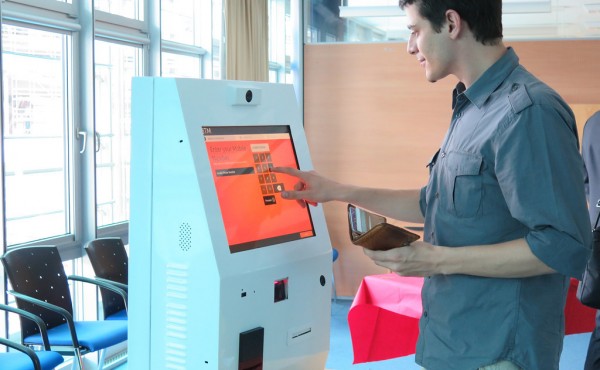
He was particularly interested in the parts of the report that are relevant to his company’s plans to deploy a bitcoin ATM network within Switzerland.
“Managing
an ATM would be considered directly as money transmitting service, with
tighter rules. This is starting to shape how bitcoins ATM will work,”
Roussel said.
He explained it means ATM operators would always
need to be licensed, unless they can ensure the user is in control of
the private key of the bitcoin wallet they are sending to.
“This
is imposing high standards in the bitcoin financial world, but this will
be beneficial for consumers in the end,” he added.

The risks

The
report gives examples of the risks associated with bitcoin, stating
that, while there is no risk of it damaging the country’s existing
financial sector, consumers are vulnerable to volatility and security
issues.
It concludes by advising consumer protection organisations within the country to urge people to use caution when using bitcoin.

Open your free digital wallet here to store your cryptocurrencies in a safe place.
Satoshi
Swiss ATM 600x370

Swiss regulators give green light for Bitcoin ATM Network

(CoinDesk) The Swiss financial regulator has given permission for bitcoin ATM operator SBEX to launch a network of machines in the country. The news comes in the wake of a report indicating that the authority had shut down a different operator just two weeks ago.

Jumping through regulatory hoops

SBEX, which currently operates one ATM in Geneva, can now deploy further machines because it has been accepted as a member of a non-profit organisation that is regulated by FINMA, the Swiss Financial Market Supervisory Authority. The non-profit is called ARIF, the Association Romande des Intermédiaires Financiers, and is considered a self-regulatory body (OAR) in Switzerland. Now, with membership in hand, SBEX has successfully applied for a money transmitter licence, fulfilling the regulatory requirements to operate an ATM network.
CoinDesk has seen a copy of a letter from ARIF to the operator, dated 17th June, that sets out the regulator’s stance on bitcoin ATM operators. According to the letter, operators must join an OAR, but do not require a banking licence. It also restated that bitcoin in Switzerland is treated as a means of payment, not a good or a service. SBEX co-founder Mathieu Buffenoir said:

“We finally got clearance from ARIF, who were asking FINMA many questions about how they should deal with us. [The clarification from ARIF] is what we were expecting.”

Cancelled ATM launch

Two weeks ago, a competing ATM operator called Bitcoin Suisse AG cancelled the launch of an ATM in Zurich, claiming that FINMA had requested a delay while the regulator clarified “legal questions”. This prompted speculation that Swiss authorities were clamping down on bitcoin ATMs.
However, according to Buffenoir, who has operated a machine in Geneva since February, running a single bitcoin ATM poses no special regulatory difficulties and is not regulated by FINMA.
This does come with the proviso that the business must stay within certain limits, such as completing fewer than two million transactions a year, Buffenoir said, adding:

“I don’t really know why [Bitcoin Suisse AG] made so much noise [about its ATM]. Maybe they wanted to get themselves known or they want things to move quicker.”

Bitcoin Association Switzerland president Luzius Meisser said the clarified rules were in line with the bitcoin community’s expectations, calling it “the most reasonable” interpretation of Swiss law. He explained the confusion over Bitcoin Suisse’s suspended launch:

“I think SBEX fulfilled all the regulatory requirements before Bitcoin Suisse did, so they got the approval first.”

Bitcoin Suisse chief executive Niklas Nikolasjen said his firm was working on obtaining the necessary regulatory approvals for their ATM. He said the media had overstated his firm’s cancelled ATM launch and that it had been consistently working to obtain regulatory approval.

“It is now clear to everyone in the industry that the regulatory authorities require certain steps to be undertaken by companies who professionally deal with digital finance. BTCS is naturally following these requests as well,” he said.

Expansion plans

Now that SBEX has cleared Swiss regulatory hurdles, Buffenoir says the company will carry out its plan to set up a web brokerage and install nine ATMs before the year is up. Buffenoir said SBEX has already placed orders for the machines with the manufacturer, Canadian startup BitAccess.
Additionally, SBEX has joined a new consortium currently lobbying the Swiss government to create an OAR dedicated to cryptocurrencies and to obtain a clearer regulatory framework from FINMA. The consortium already counts Bitcoin Suisse and Ethereum Switzerland among its members, Buffenoir said. Switzerland is being closely watched by the cryptocurrency community, as its executive body, the Federal Council, is due to release a comprehensive report on bitcoin’s impact on the country’s financial system later this year. Swiss lawmakers also moved, in December, to obtain recognition for bitcoin as a foreign currency.

Open your free digital wallet here to store your cryptocurrencies in a safe place.

Satoshi