Category Archive: bitcoin

20140619 180717

Italy house of parliament hosts bitcoin believers
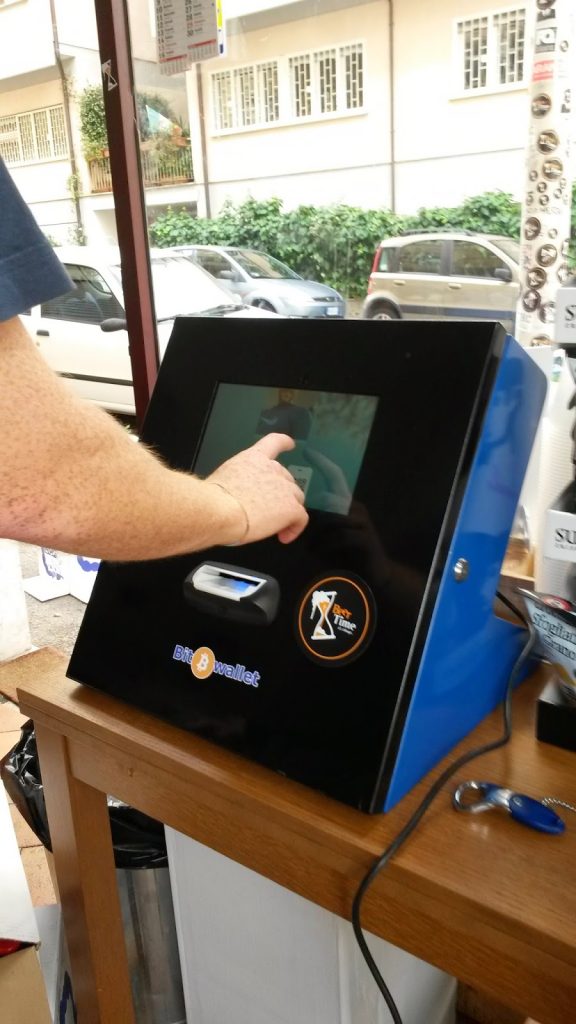
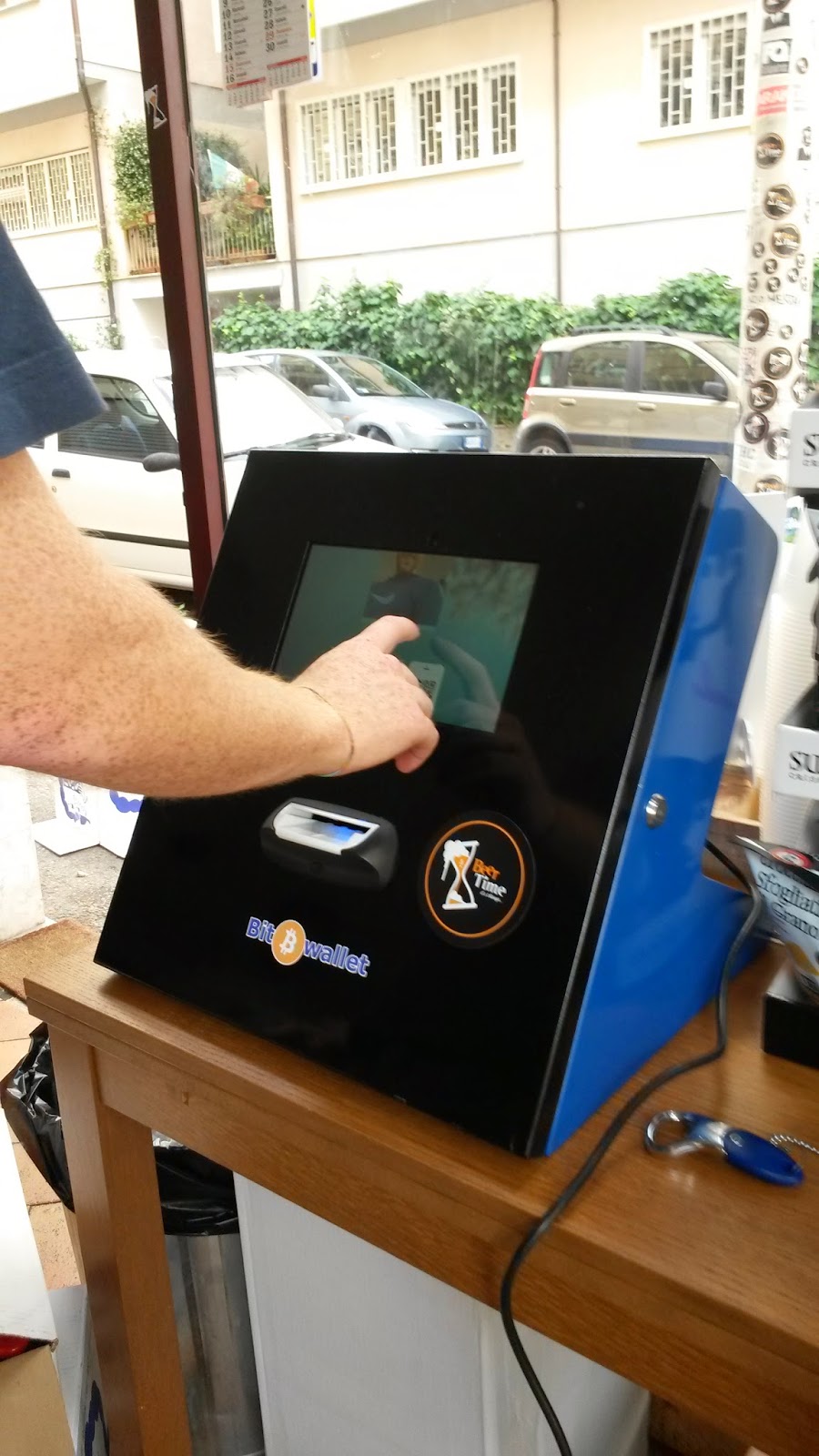
Bit-Wallet at Bitcoin Meetup in Rome
Photo by G. Baroncini Turricchia
(CoinDesk) Italian bitcoin enthusiasts gathered at the Chamber of Deputies, the
lower house of the Italian parliament, in Rome on Wednesday with the aim
of informing Italian lawmakers about the economic benefits of bitcoin.
The 11th June event, organised by bitcoin consultancy Coin Capital, featured participation from parliament member Stefano Quintarelli and Senate Vice President of the Treasury and Finance Committee Francesco Molinari, as well as representatives from Italy’s academic and banking sectors.
Coin Capital told CoinDesk that the first two hours saw its partners Sebastiano Scròfina and Guido Baroncini Turricchia, University of Rome ‘Tor Vergata’ telecommunications professor Francesco Vatalaro and investment bank Banca IMI’s Ferdinando Ametrano introducing blockchain technology and its monetary applications.
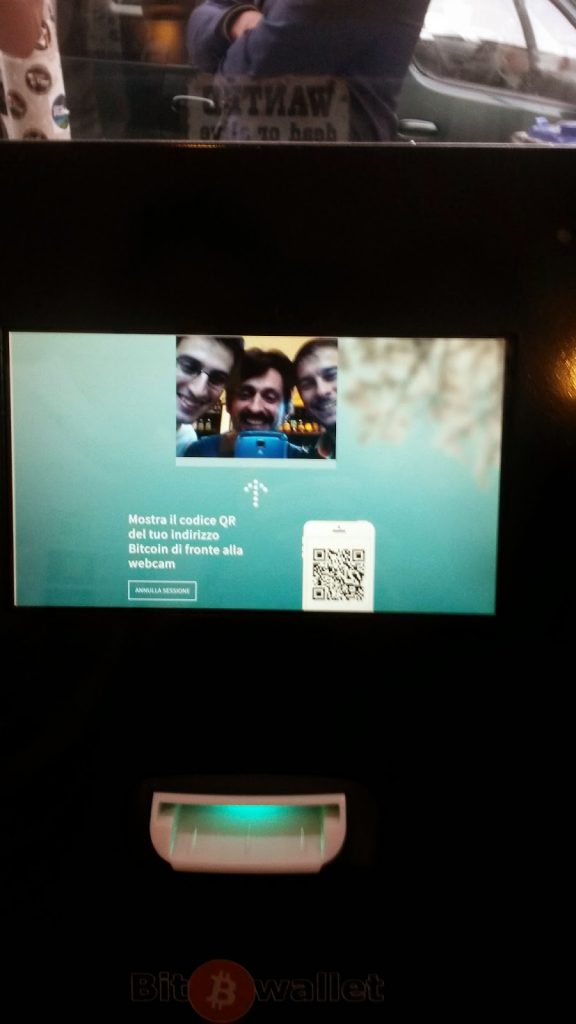
At the event, Bit-Wallet also unveiled the country’s first domestically produced bitcoin ATM.
Baroncini Turricchia characterized the remainder of the day’s events, stating:

Risk and opportunity were clearly disclosed in a neutral way. In the second part, [a representative moderated a] discussion between politicians, institutions and business, and [many questions were asked by these participants].

The events come in the wake of the Central Bank of Italy’s May warning that domestic investors should avoid buying, investing in or using bitcoin as a currency due to price volatility and the lack of consumer protection laws to protect consumers.

Proliferating bitcoin
A second, non-affiliated event, organized by digital payment advocacy group CashlessWay, is set to take place on 26th June. Speakers will include bitcoin banking provider Robocoin CEO Jordan Kelly and parliament member Sergio Boccadutri, who presented a proposal for regulating bitcoin under existing Italian law in January.

Robocoin indicated it is looking forward to the event as a way to help educate an influential government about the nascent technology, stating:

“Italy is full of cultural tastemakers and has a rich history in banking and finance. These all support Robocoin’s goal of helping proliferate bitcoin.”

For more information on the 11th June event, visit Coin Capital’s website.

Open your free digital wallet here to store your cryptocurrencies in a safe place.
Satoshi

Japan’s ruling party says won’t regulate bitcoin for now

A man walks past a building where Mt. Gox, a digital marketplace operator, is housed in Tokyo February 25, 2014. REUTERS/Toru Hanai
A man walks past a building where Mt. Gox, a
digital marketplace operator, is housed in Tokyo February 25, 2014.
Japan’s leading Liberal Democratic Party said it decided against regulating bitcoin for the time being, after the collapse of Tokyo-based bitcoin exchange Mt.Gox prompted them to consider more scrutiny of the virtual currency.
Mt.Gox, once the world’s biggest bitcoin exchange, filed for bankruptcy in February after saying hackers stole 750,000 bitcoins belonging to its customers.
Basically, we concluded that we will, for now, avoid a move towards legal regulation,” Takuya Hirai, an LDP lawmaker who leads the party’s internet media division, said on Thursday, adding that a final decision would be made after hearing more opinions on the subject
The use of electronic currencies has drawn the attention of governments around the world who are unsure whether, and how, to regulate them. U.S. agencies ranging from the New York bank regulator to the Commodity Futures Trading Commission have also been looking into possible regulation.
A task force of U.S. state regulators is also working on the first bitcoin rulebook, hoping to protect users of virtual currency from fraud without smothering the fledgling technology.

Open your free digital wallet here to store your cryptocurrencies in a safe place.
Satoshi
Schermata 2014 06 17 alle 18.22.47

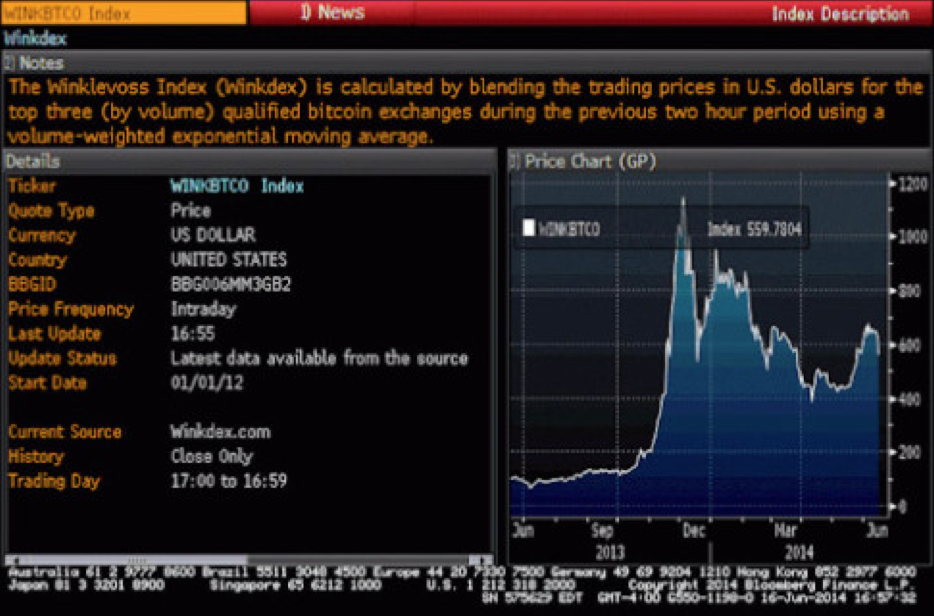
WinkDex price gets added to Bloomberg

(newsBTC) Ah, the WinkDex. It’s the brain child of both Cameron and Tyler Winklevoss, two of the bitcoin community’s most prominent entities.
This simple but effective bitcoin price composite is the official
price measure of the Winklevoss’ bitcoin ETF, currently awaiting
regulatory approval by the United States Securities and Exchange
Commission.

And according to a post made on the Winklevoss Capital website,
the price data is now available on Bloomberg in a move some suggest may
further legitimize the digital currency in the eyes of traditional
financiers.
“We are honored to be working with Bloomberg to bring a blended
bitcoin price index to their wide-reaching investor community,” the post
read, adding that some new features (of which include an API) will be
unveiled in the weeks upcoming.

According to the announcement, the ticker for the WinkDex is very apt: WINKBTCO.

The Bloomberg terminal is a professional service used by financial
professionals. Each license to the service costs upwards of $20,000 per year.

For more information on the WinkDex, visit their official website.

Open your free digital wallet here to store your cryptocurrencies in a safe place.
Satoshi

Bitcoin, Dogecoin, and the Blockchain

The prevalent idea of modern day cryptographic currencies originated when Bitcoin launched in 2009. With Bitcoin, for the first time in history, the world had access to a completely decentralized medium of exchange. This medium of exchange reliably transfers value from one entity to another in a hostile, trust less environment by solving a problem that previously necessitated centralized entities, such as financial banks, to arbiter value exchanges. The main role of the centralized entity was to assure the recipient that the money has been taken from the sender, and given to the recipient, and the sender could no longer spend the same money (i.e., double spend it). The problem of double spending can be modeled under an abstract Byzantine Generals’ Problem that focuses on achieving majority consensus in a decentralized network.
The Byzantine Generals’ Problem is a topic that deserves its own blog post. For now, let’s just remember that the problem of double spending was thought impossible to solve in a decentralized manner before Bitcoin solved it. This solution was implemented in what is now called the Blockchain.

What is the Blockchain?

In simple terms, the Blockchain is a book of accounts that is divided into batches of transactions, or blocks, which are naturally a collection of transactions. Bitcoin uses a number of technologies that came before it, including decentralized file sharing (see: BitTorrent), Public Key Cryptography, and Proof of Work Hashing (see: Hashcash). Bitcoin introduced a new technology: the Blockchain. Most subsequent cryptographic currencies, such as Dogecoin, use the same technology with minor changes (e.g., a different Proof of Work hashing algorithm).
The Blockchain facilitates reliable transfer of units of account (later on referred to as values) between certain cryptographically valid entities. In Bitcoin, the total units of account that will ever exist is 2.1 Quadrillion Satoshis, or 21 Million Bitcoin. In Dogecoin, this is 100 Billion Dogecoin until March 2015, and 5 Billion additional Dogecoin annually after that. Dogecoin and Bitcoin consist of two separate networks of peer-to-peer nodes. Each Bitcoin or Dogecoin portefeuille tries to keep its local copy of the book of accounts up-to-date.
In order to make use of the power of the Blockchain and its fast, decentralized, low-fee transactions, one must understand what constitutes a transaction:
A transaction is simply a cryptographically verifiable instruction from the sender to transfer value the sender owns to one or more valid recipients. The sender(s), and receiver(s), have cryptographically verifiable identities, known as addresses (see: Public Key Cryptography).
In the Blockchain, here’s what a (simplified) transaction looks like:


{
    "txid": <a unique transaction identifier>
    "inputs": <an array of inputs>
    "outputs": <an array of outputs>
    "tx_hex": <transaction content as a hexcode string>

    "blockhash": <a unique block identifier this transaction belongs to>
    "time": <the time this transaction's block was processed>
    "confirmations": <number of blocks that confirmed this transaction>
}

The very basic parts to understand in the above snippet are: a transaction has inputs, and outputs. The inputs are specifications of which values to transfer from the sender’s address(es), and the outputs are specifications of how much of the total input value each recipient’s address(es) receives. Inputs in this transaction were outputs in a previous transaction, with the exception of when the network generates new coins.
New coins are generated by the Dogecoin network as rewards for miners for solving a block (example), i.e., miners work hard to find the correct hash for a batch of transactions, also known as a block (see: Hashcash, Proof of Work). If the total input values are higher than the total output values, the difference is paid to miners of the block as a transaction fee. Total input value is never less than the total output value in a single transaction.
When a miner finds a new block, they confirm all the transactions contained within it as valid. However, a block does not exist on its own — it is linked to blocks previously solved in a chain of blocks all the way to the Genesis Block. The Genesis Block was created when Bitcoin or Dogecoin networks were created (see: Dogecoin Genesis Block). Therefore, where a block is solved, and appended to a chain of previously found blocks, it confirms the transactions within it, as well as the transactions in all the previous blocks in its chain. Hence the name: Blockchain.
So, what is the Blockchain? In very concise terms, it is a chain of blocks!

Open your free digital wallet here to store your cryptocurrencies in a safe place.

Satoshi
3553542429

Tel Aviv to get first Bitcoin ATM in Middle East

The new machine will allow users to buy and sell their bitcoin at all hours of the day and night without going through bureaucracy.

(Haaretz) The first Bitcoin automatic teller machine in the Middle East will be
launched in Tel Aviv on Wednesday. Bitcoin is a peer-to-peer virtual
currency that allows for transactions between users without any third
party or middle man.

The
“cash-out capable Bitcoin vending machine,” made by American company
Robocoin, has several security features built in to prevent theft and
fraud that are compliant with anti-money laundering regulations,
according to a press release.

“The
launch of the first Bitcoin ATM in the Middle East will allow any
person with no previous knowledge of bitcoin and how it works to easily
buy and sell bitcoin 24/7 bypassing the bureaucracy of the banks,”
Bitbox CEO Nimrod Gruber said. Bitbox the company bringing the first
Bitcoin ATM in Israel.

Until now, all transactions had to either go through a bank or through private trading, which lacked credibility.

According
to Gruber, many people are looking for an easy way to sell or buy their
bitcoin for local currency, and this ATM will allow them to do so.

Foreign
workers, for example, can buy bitcoins in shekels and have their
families withdraw cash in local currency at a bitcoin ATM in their
country.

The launch takes place Wednesday night at the TOWN-HOUSE TLV hotel, 32 Yavne St. at the corner of Rothschild Blvd.

Open your free digital wallet here to store your cryptocurrencies in a safe place.

Satoshi
cointelegraph.com

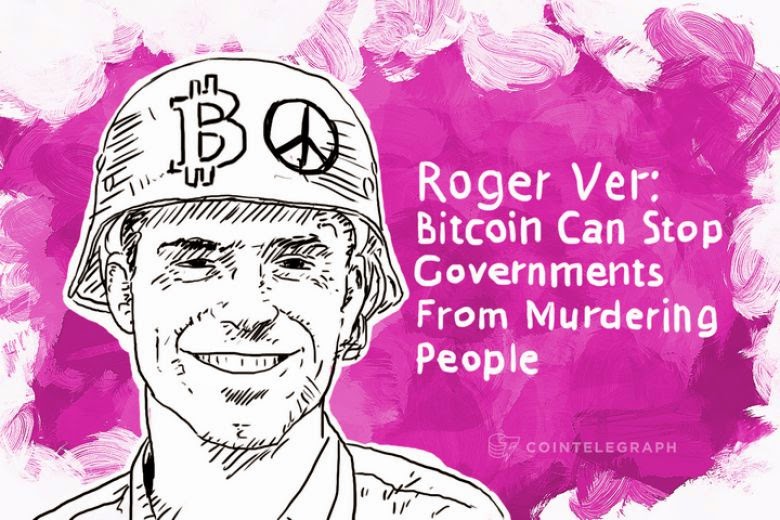
Why Bitcoin is important for the world: Bitcoin can stop governments from murdering people

(CoinTelegraph) Bitcoin evangelist, libertarian and millionaire Roger Ver thinks that
Bitcoin’s limited growth can stop governments from raging wars across
the world. 
Ver gave a speech at Coin Congress in
Singapore back in May entitled “Why Bitcoin is Important for the World.”
It was a sort of quick introduction into the world of Bitcoin, until
Ver used the last few minutes in his speech to “rant about what has
[him] most excited about how Bitcoin is going to change the world for
the better.” 
Ver, who runs what was one of the first mainstream sites to take bitcoin payments, MemoryDealers, said that fiat currency was to blame for Governments’ (like his own United States) penchant for raging wars overseas. 
Ver
said that “Not only do they control [fiat], they can print as much of
it as they want at any time. . . I see the United States Government
printing money like crazy and then they use that money to buy all sorts
of tanks and bombs and airplanes and murder people all over the world. .
. all that is being paid for by printing money.” 
“With
Bitcoin,” Ver continued “because there is a limited supply, that sort
of thing can’t happen.” Ver hopes that Bitcoin’s inability to be printed
at will, will prevent governments from using printed money to fund
warfare. 
Ver sees a world that uses Bitcoin as one that is “much safer” for every individual on the planet. 
Bitcoin’s
possible effect on world peace is something we won’t know until if and
when it obtains true widespread adoption. But it is true that Bitcoin
can’t be printed out of thin air due to a limited supply. If a
government used it as legal tender then they would have to find a
different way to fund any war.

Open your free digital wallet here to store your cryptocurrencies in a safe place.
Satoshi
stallman dollar two

Which celebrities are getting into Bitcoin?

(TheCoinFront) Here in the Bitcoin world, we’ve built up our own celebrities. Figures like Andreas Antonopolous, Erik Voorhees, Stefan Molyneux, Brock Pierce, Charlie Shrem, and Gavin Andressen should, for better or worse, be familiar names to all Bitcoin aficionados.
But
there are many celebrities in the outside world as well who have begun
embracing Bitcoin and cryptocurrency. Here are just a few of them:
Ashton Kutcher

Kutcher may be best known for playing
simple-minded characters like Kelso from That 70’s Show or Jesse from
Dude Where’s My Car, but in reality he’s anything but.Through his fund, A-Grade Investments, he’s invested in companies like
BitPay, which allows merchants to accept Bitcoin payments. He’s also
invested in Skype, Airbnb, and Foursquare, among others.

Snoop Dogg

Snoop Dogg is an active internet user, with a
presence on Twitter with tens of thousands of tweets, and a Reddit
account with hundreds of thousands of karma points. In fact, on Reddit
he has even been made the moderator of the subreddit /r/trees, devoted
to, what else, pot.Last December, Snoop posted a tweet saying his new album
would be “available in bitcoin and delivered in a drone”. Coinbase
noticed the tweet and responded that “we could make the Bitcoin part a
reality for you.” While Snoop said he wanted “to make it happen,” it
never materialized.

Richard Sherman

Sherman, the cornerback for the Seattle Seahawks
football team, has an online store on his website. At the beginning of
January, he posted the following on his Facebook page:”For all you techies out there, I’m now accepting Bitcoins at my online
store http://store.richardsherman25.com. I hear it’s the currency of the
future.”

Peter Thiel

Peter Thiel might not be a celebrity in the same light as the above people, but he’s a major player in the world nonetheless.The cofounder of Paypal has been a believer in the decentralization of
money for much longer than Bitcoin has been around, and has openly
admitted he thinks Bitcoin has the power to change the world.

Richard Branson

The well-known billionaire head of Virgin Inc
began accepting Bitcoin as payment for his Virgin Galactic service, a
space tourism company.He has also invested a significant amount of his personal wealth in
Bitcoin, which makes him one of the more high profile Bitcoin holders.

Open your free digital wallet here to store your cryptocurrencies in a safe place.

Satoshi
Arthur Chapman 3

Seller seeks $2 Million in Bitcoin for real Yukon gold mine

yukon gold mine

(CoinDesk) The unnamed parent company of a Yukon, Canada, gold mine is now for
sale on high-end bitcoin-only marketplace BitPremier for an asking price
of $2 million in BTC.

The listing indicates that the more than 3,000 BTC
price tag includes the gold mine itself and all its associated assets,
including $1 million worth of actual mining equipment, the rights to one
mining property and the lease agreement to another mining lot.
The ad suggests that the purchase could be a profitable one for the buyer as well, stating:

“Any new buyer could recoup their initial investment in as little as two mining seasons.”

The
listing indicates that the company earns $1m annually in sales and has
the potential to produce 3,000 to 4,000 ounces of gold per year.
In
a bid to encourage more novice bidders, the current owner further said
he is willing to stay on to manage the property for up to five years to
ensure the operation runs smoothly.

Record-setting sale

The listing is just one of the many high-end items that have been listed on BitPremier’s website since it launched in May 2013, but if completed, it would be the largest facilitated by the e-commerce company to date.
The most expensive purchase on the platform was completed in March, when a villa in Bali, Indonesia sold for $500,000 in what was believed to be the single largest bitcoin purchase ever.
If completed, the $2m gold mine sale would surpass this figure, potentially setting two new records in the process.

Bitcoin meets gold

Notable
for its size, the gold mine listing is also indicative of how bitcoin
has become more widely accepted in the precious metals community.
Earlier this year, Bitcoin Bullion launched a gold-to-BTC exchange, while financial personality Peter Schiff announced in May that his gold and silver outlet Euro Pacific Precious Metals would begin accepting bitcoin due to market demand.
For more on how bitcoin bullion dealers are looking to expand their services into new and potentially lucrative markets, read our most recent report.

Open your free digital wallet here to store your cryptocurrencies in a safe place.
Satoshi
bitcoin2 1

Bitcoin’s real value lies in the disruption it promises

The cryptocurrency has been grabbing attention for its scope to revolutionise our financial system. About time, we took a broader view of it.
bitcoin matrix
Bitcoin has been the focus of media and regulators globally, for the simple fact that its decentralised nature and disruptive impact upon the financial infrastructure of the world brings tremendous changes to established conventions. Power is shifted away from financial institutions and distributed across a vast network of peers that acts as a consensus engine.
This democratises the very nature of the financial system, reducing the power of the oligopolies that control the financial system. However, the true potential of Bitcoin lies not in the ability to disrupt the financial ecosystem, but that of the Bitcoin protocol.
Bitcoin is more than just an encrypted digital payment method. Bitcoin is based around a public ledger system – the blockchain — which uses cryptography to validate transactions. Bitcoin users control access to their Bitcoin wallets through a system of public and private keys. As such, Bitcoin is an open source peer-to-peer (P2P) channel that doesn’t compromise privacy and security.
Also Read: What is Bitcoin?
Payment applications of Bitcoin have been evaluated in-depth, remittances, micropayments, and donations being among the financial transactions focussed upon. The Bitcoin protocol conceptually disrupts systems reliant on networks of intermediaries and agents for validation and trust. Two sectors subject to this are asset transferrals and contracts. Practically any system requiring validated transactions and using intermediaries to vet them are vulnerable to this.
Asset transferrals
The Bitcoin protocol, or any conceptually similar protocol,  potentially simplify asset transfers. Most asset transfers require significant energy to execute. This is because of due diligence and compliance requirements, as well as vetting and validation by various parties. Purchasing cars, boats or houses from individual sellers often requires intermediaries performing due diligence and maintaining compliance with legal requirements.
A blockchain alters this by qualifying how Bitcoins or equivalent digital tokens represent tangible assets. Bitcoin entrepreneurs at firms like Colored Coin are developing methods using Bitcoin fractions to symbolise physical objects. This digital fraction can then publicly identify and denote asset ownership, optionally including records of past ownership, transactions and other relevant data.
For example, if purchasing real estate, new owners could verify renovation(s), prior ownership and inspections by reference to the blockchain. If buying a user vehicle, owners could refer to the blockchain for insurance details and other relevant data assigned to it. Ownership could be transferred and titles validated on-site. This would have repercussions for industries reliant on networks of intermediaries to facilitate and validate transactions.
Blockchain approaches create efficient and simple mechanism enabling administrative simplicity and elegant functionality — allowing direct asset transfers without using brokers, lawyers, notaries or other intermediaries to vet, validate and verify transactions. The details of the transaction are locked into the blockchain and available to the public for review at their discretion.
Contract implementation
Bitcoin protocols impact the structuring and implementation of contracts, bringing greater economic efficiency and legal transparency to otherwise opaque practices in specific markets. Lawyers draft contracts on a case-by-case basis, with significant energy devoted to the process: negotiation, development and enforcement.
Contract-based markets often lack transparency and maintain a level of opacity, with a power inequality problem between contract holders and signers, reducing market efficiency and potentially creating distribution and justice problems in such markets. Traditional contracts are replaced by software code instead, which executes when triggered by specific conditions.
For example, options could be developed to execute trades over the blockchain at a specified time or in reaction to financial markets reaching specific conditions.
One benefit is reducing legal fees, as these contracts could be standardised and distributed as open source templates. Financial markets would become transparent, as regulators and analysts could access the blockchain, without forcing the disclosure of specific positions.
Ventures like Ethereum are developing these capabilities today. Ethereum is in the process of developing a network serving as a registry and escrow. This network will execute contract conditions automatically, if and when they fulfill a rule set.
Rather than forking Bitcoin in an attempt to tailor it towards specific industries or applications, Ethereum is designed as a separate and alternative cryptocurrency network that resolves issues with Bitcoin’s scalability and efficiency. Ethereum contracts are  modelled as autonomous agents simulated by the blockchain. Each contract has an internal script, with scripting code activated when a transaction occurs.
Proof of Existence has created a similar system to certify and validate documents. Using the blockchain, it provides online, distributed proof for documents secured using a cryptographic digest of the file, but not the file or information itself. This is time-stamped and certifies the existence of the document in a public ledger, using a decentralised certification based on the Bitcoin network.
Property and contracts are just some areas that the P2P nature of the Bitcoin protocol will affect. Achieving wider adoption requires Bitcoin and its advocates to address significant questions and concerns regarding trust, ease-of-use and functionality. However, the Bitcoin community is showing remarkable adaptability, with many working to ameliorate problems and educate the public.

There will be significant innovation and development centred around the Bitcoin ecosystem in the years to come. Much of this will initially revolve around payments, investments and financial systems. Its real value, though, lies in the decentralisation and disruption it promises.

Open your free digital wallet here to store your cryptocurrencies in a safe place.
Satoshi
1297565813985 ORIGINAL

Canada is second most popular country for bitcoin investment

Canada is the second most popular destination for capital investment in bitcoin companies, a Montreal think-tank says.

(TorontoSun) Some $10.5 million of venture capital has been invested in bitcoin in
Canada, putting us behind the U.S. and just ahead of China, the
Montreal Economic Institute says.

Bitcoin, digital currency created in 2009, allows people to make transactions anonymously without going through a central bank.
But the currency’s association with money laundering and its lack of
government regulation puts its growth and development at risk in Canada,
the think-tank warned.
“In order for it to develop its potential and be adopted by a growing
number of users, clear rules are required, along with some kind of
governmental acceptance,” study author David Descoteaux said in a
statement.
Descoteaux said Canada should create legislation to facilitate interaction between Canadian banks and bitcoin companies.
Banks are wary of offering services to bitcoin companies for fear of running afoul of money laundering laws, he said.
For example, Cointrader, which launched the first bitcoin ATM in
Montreal, alleges the Bank of Montreal shut down its account and those
of other businesses that trade in bitcoin.
These kinds of stories send companies — which may be on the forefront
of currency innovation — elsewhere to set up shop, the think-tank said.
Germany, for example, has bitcoin legislation and tax policy.
“These clear rules, as well as a tax treatment that allows bitcoin to
be used as a currency, explain why the digital currency is popular in
Germany and why this country was one of the first bitcoin hubs,”
Descoteaux said.
“Canada has so far been quite welcoming to bitcoin, and in clarifying
its own regulatory framework, it should ensure that it remains so.”

Open your free digital wallet here to store your cryptocurrencies in a safe place.

Satoshi