
The First Bitcoin Transaction: A Pivotal Moment in Cryptocurrency History and its Impact on the World Today
A revolutionary digital asset, Bitcoin has captured the attention of the world since its creation in 2009. One particularly noteworthy moment in its journey is the first ever Bitcoin transaction. On January 12, 2009, the creator of Bitcoin, Satoshi Nakamoto, sent a transaction to computer scientist and cryptographer, Hal Finney. This transaction marked the beginning of Bitcoin’s journey from being a digital asset with no real-world value to the widely accepted and valuable cryptocurrency it is today.
The Beginnings of Bitcoin Adoption
Hal Finney, the recipient of the first Bitcoin transaction from Satoshi Nakamoto, was an early Bitcoin enthusiast and developer. He was one of the first people to understand the potential of digital currency and was an active contributor to the development and testing of the Bitcoin software. He was an early adopter of the technology and supported the growth of the network. He was also the first person to run a bitcoin client on his computer and famously tweeted “Running bitcoin” on January 11th, 2009.
He was a pioneer in the field and was one of the first people to understand the potential of Bitcoin. He was also an active member of the cypherpunk community and was involved in the development and testing of the Bitcoin software.
In addition, Hal Finney’s tweet “running bitcoin” on January 11, 2009, is considered as one of the first public demonstrations of the software and it was a significant moment in the early days of Bitcoin. His tweet is considered as the first recorded evidence of the successful running of the software and the first recorded instance of Bitcoin mining.
Before this transaction, Bitcoin was used primarily as a digital asset, with no real-world value. Satoshi’s transaction to Hal marked the first time Bitcoin was used to transfer funds, and it marked a significant milestone in the cryptocurrency industry. It demonstrated the potential of Bitcoin as a medium of exchange and sparked the interest of many other early adopters. Hal Finney’s early involvement and support were essential in laying the foundation for the cryptocurrency’s success. He was a vocal advocate for Bitcoin and helped to promote its growth and adoption.
The Growth and Evolution of Bitcoin
The first-ever Bitcoin purchase was made by a man named Laszlo Hanyecz on May 22, 2010, who bought two pizzas for 10,000 BTC. This transaction is now celebrated annually as ‘Bitcoin Pizza Day‘ by Bitcoin enthusiasts worldwide.
Since then, Bitcoin has grown in popularity, with millions of people around the world now using it as a means of exchange and store of value. The cryptocurrency industry has evolved significantly over the last decade and continues to grow at an unprecedented rate. The value of Bitcoin has gone from being worth a few cents to reaching an all-time high of over $60,000 per coin. It has also sparked the creation of thousands of other digital currencies, known as altcoins.
The growth of Bitcoin is still far from over. It has become a household name and has attracted the attention of investors, businesses, and governments worldwide. Bitcoin has also played a crucial role in the development of blockchain technology, which has the potential to revolutionise various industries.
Conclusion
Bitcoin’s journey so far has been nothing short of remarkable. From the first transaction sent by Satoshi Nakamoto to Hal Finney, to the widespread acceptance and adoption of the digital currency, Bitcoin has come a long way. The significance of that first transaction cannot be overstated; it was the start of a journey that has led to the creation of a new asset class and a new way of thinking about money.
The first Bitcoin transaction was a pivotal moment in the history of cryptocurrency. Hal Finney, the recipient of the first transaction, was one of the first people to understand the potential of Bitcoin.
Open your free digital wallet here to store your cryptocurrencies in a safe place.
Understanding the Basics of Zero-Knowledge Proofs (ZKPs) Before Examining zk-STARKs and zk-SNARKs
Ethereum now has privacy thanks to zero-knowledge proof technologies, specifically zk-STARKs. But before we can assess zk-STARKs, it is important to define a zero-knowledge proof (ZKP).
Understanding the Basics of Zero-Knowledge Proofs (ZKPs)
A ZKP is a cryptographic technique that enables a prover to confirm another person’s assertion without disclosing any supporting data. zk-STARKs and zk-SNARKs are two of the most compelling zero-knowledge technologies available today, standing for zero-knowledge succinct non-interactive argument of knowledge and zero-knowledge scalable transparent argument of knowledge, respectively. These technologies allow one party to demonstrate their knowledge to another without actually revealing the knowledge, making them both scaling technologies, as they can enable faster proof verification, and privacy-enhancing technologies, as they reduce the amount of information shared between users.
zk-STARKs, specifically, enable users to communicate validated data or carry out computations with a third party without the other party knowing the data or results of the analysis. They are an advancement over zk-SNARKs because of their reduced algorithmic complexity, making them easier for even crypto experts to find mistakes in. These types of knowledge testing tools are primarily used to build highly private and secure systems that are decentralized and can only be accessed under specific, difficult-to-obtain conditions, such as those found in cryptocurrencies. These systems not only secure the network but also protect and anonymize users.
Comparing zk-SNARKs and zk-STARKs
There are a few main differences between zk-SNARKs and zk-STARKs. Firstly, zk-SNARKs require a reliable configuration phase, while zk-STARKs create verifiable computing systems without trust using publicly verifiable randomness. Secondly, zk-STARKs are more scalable in terms of speed and computational size when compared to zk-SNARKs. And thirdly, zk-SNARKs are vulnerable to attack by quantum computers, while zk-STARKs are currently immune. However, it is important to note that STARKs have larger proof sizes than SNARKs, meaning they take longer to verify and require more gas. In addition, the STARKs developer community is smaller and has less documentation compared to SNARKs.
Support from the Developer Community
Despite these differences, both the SNARKs and STARKs communities have support from developers. The Ethereum Foundation, in particular, has shown support for Starkware, a company using STARKs, by awarding them a $12 million grant. While documentation for STARKs is currently less comprehensive than that for SNARKs, the technical community has recently created more resources for those interested in the technology.
Open your free digital wallet here to store your cryptocurrencies in a safe place.
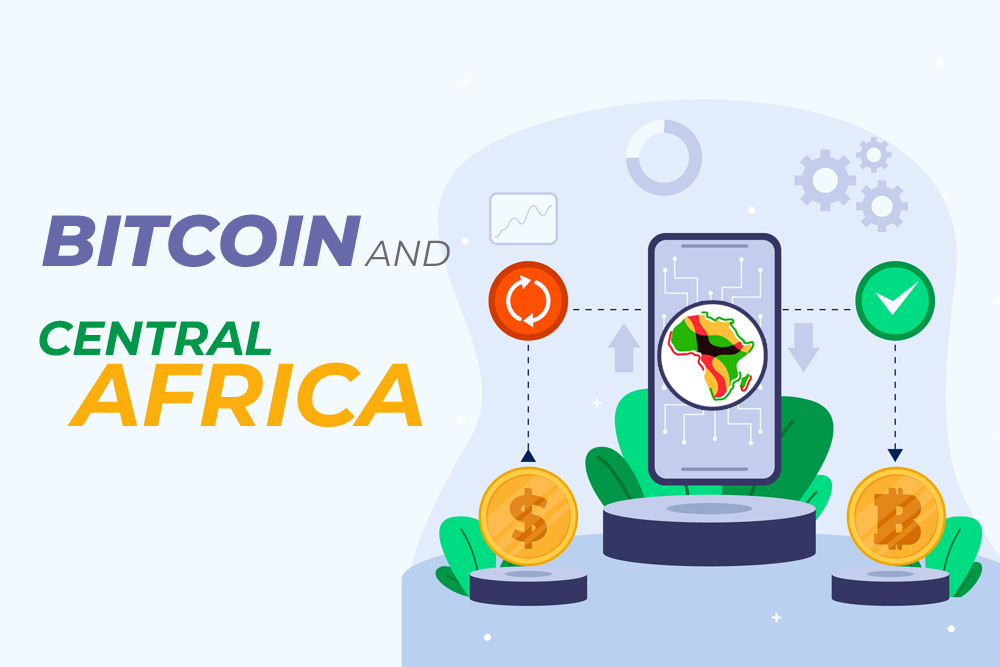
Central Africa Embraces Bitcoin and Cryptocurrency Adoption for Economic and Political Stability
Bitcoin, the world’s first decentralized digital currency, has seen growing adoption in Central Africa in recent years. This trend is driven by a number of factors, including the region’s high inflation rates, political instability, and lack of access to traditional banking services.
One of the main reasons for the adoption of Bitcoin in Central Africa is the high inflation rates that many countries in the region face. Inflation erodes the purchasing power of a currency, making it difficult for people to save and plan for the future. By using Bitcoin, which is not subject to inflation, individuals and businesses in Central Africa can protect their wealth and preserve its value over time.
Political instability is another factor driving the adoption of Bitcoin in Central Africa. Many countries in the region have a history of coups, civil wars, and political unrest, which can lead to the confiscation of assets and bank accounts. By using Bitcoin, which is decentralized and not controlled by any government or institution, individuals and businesses in Central Africa can protect their assets from seizure and avoid the risks associated with political instability.
In addition to high inflation and political instability, many people in Central Africa lack access to traditional banking services. In some rural areas, there are no banks or financial institutions, making it difficult for individuals and businesses to access credit, save money, and make payments. By using Bitcoin, which can be easily accessed and used with a smartphone and internet connection, people in Central Africa can enjoy many of the same benefits of traditional banking without the need for physical infrastructure.
The adoption of Bitcoin in Central Africa is also supported by a growing ecosystem of businesses and services that accept the cryptocurrency. This includes merchants who accept Bitcoin for goods and services, as well as exchanges and wallet providers that facilitate the buying and selling of Bitcoin. This ecosystem is helping to drive the adoption of Bitcoin and is making it easier for people in Central Africa to use the cryptocurrency in their daily lives.
In addition to the factors mentioned above, there are several other reasons why Bitcoin is gaining popularity in Central Africa. The increasing use of mobile phones and internet access in the region has made it easier for people to use Bitcoin and other digital currencies. The growing awareness of the benefits of Bitcoin, such as its decentralized nature, low transaction fees, and fast transaction times, has also contributed to its increasing popularity in the region. The growing adoption of Bitcoin in other parts of the world has also played a role in its acceptance in Central Africa.
Furthermore, the Central African Republic has recently unveiled its own cryptocurrency, Sango Coin, which will be the second cryptocurrency, after Bitcoin, to be recognized as legal tender in the country. The President of the Central African Republic has voiced support for blockchain, cryptocurrencies, and Bitcoin, further demonstrating the increasing interest and involvement in the cryptocurrency space in the region.
Overall, the adoption of Bitcoin in Central Africa is driven by a combination of economic, political, and technological factors. As the ecosystem of businesses and services that accept Bitcoin continues to grow, it is likely that the adoption of the cryptocurrency will continue to increase in Central Africa.
Open your free digital wallet here to store your cryptocurrencies in a safe place.
Cryptocurrency and the Future of Business
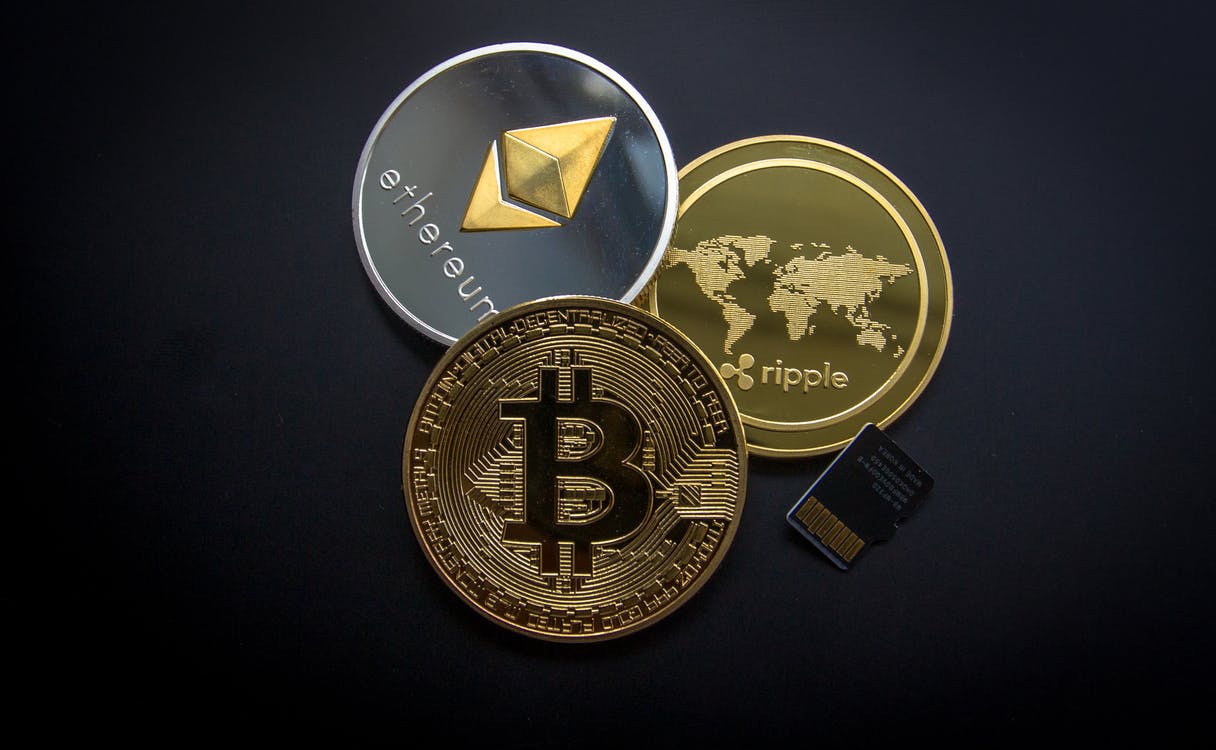
Cryptocurrency and the Future of Business
Cryptocurrency users are still a small minority. The total number of users was at 106 million as of January 2021. That sounds like a lot, but when you consider a global population that is nearing 8 billion, you can see that it is just a tiny fraction of people using crypto.
Whether you are in crypto or not, it is going to have an increasing effect on business. You can see Bitcoin mining operations selling shares on stock exchanges, large businesses looking into uses for crypto coins, and more people taking an interest in buying and using cryptocurrency.
At the current trend, crypto coins are becoming more common every year. If it holds, it might not be a matter of if people start using different cryptocurrencies, it could just be a question of when.
Crypto for International Transactions
In the digital age, businesses are now connected internationally like they never before. Beyond the large multinationals, it is increasingly becoming common for smaller businesses to have significant international connections. This is not only true as it concerns deals with other companies, but businesses now have employees or contractors they work with from around the world.
Using cryptocurrency as a medium of exchange for international transactions could solve a lot of problems for these businesses. First, cryptocurrency could ease the burden of having to convert currency for several different countries. Beyond that, it could also make transactions faster, cheaper and more convenient by cutting out the traditional middlemen that would typically be in the middle of these transactions.
Adoption by Mainstream Institutions
One of the factors that have held back many cryptocurrency markets is the lack of support from mainstream institutions. Banks wouldn’t let you make transactions with crypto exchanges, and it was hard to find businesses that would allow you to use your cryptocurrency. This is changing rapidly.
Beyond the ability of investors to use an ultra fast trading app to make trades, we now see a range of big institutional investors buying cryptocurrency. Along with that, some of the world’s largest financial businesses are starting to work with crypto. As an example, PayPal started offering a range of cryptocurrency services earlier this year. You also have major credit card companies that are starting to work with crypto on a limited level.
Crypto as a Real Store of Value
One of the main claims of many crypto skeptics is that the coins have no inherent value. This is true in a sense. The value of most crypto coins is solely based on the perception of people in the market. While that might be true, you could make the same argument for most fiat currencies. The value is based on the fact that people will accept it in exchange for goods and services.
Crypto has an advantage over many fiat currencies: the fact that many crypto coins have a limited supply. As inflation acts on fiat currencies, crypto could grow in popularity as a hedge. In the future, many investors will hold crypto in the way that they hold gold as a protection against inflation.
Tokens as Business Equity
Raising or distributing equity usually means creating conventional shares of the business. While this could be a way to raise money or provide value to employees, it does come with a range of hurdles. One way to get around many of these hurdles would be to create crypto coins that represent shares in the company.
Instead of jumping through all of the regulatory hoops to issue shares, the business could give people crypto coins as equity. Instead of holding an IPO, the business could do an ICO as a way to raise capital from investors.
Crypto for Crowdfunding
With the rise in crowdfunding platforms, the ability to raise money is easier than it ever has been. These platforms not only make it easy to raise money from the public, but they also offer a level of transparency that is popular among those looking to donate or invest. With that said, these platforms often take a significant portion of the funds in fees.
Using a blockchain wallet for crowdfunding could be a way to get the transparency of a crowdfunding platform while avoiding the fees. This would allow those looking to raise funds to do so off a platform, but with the blockchain ledger, potential donors or investors could still see the donations coming in.
Crypto is a field that is always evolving. As businesses see the benefits and new applications become available, it will become more common. With that said, the markets are unpredictable. The only thing that we can be sure of is that there will be ups and downs along the way.
Open your free digital wallet here to store your cryptocurrencies in a safe place.
What Early Mining Patterns Tell Us About The Motives Of Bitcoin’s Inventor
The debate about Bitcoin’s inventor, known as Satoshi Nakamoto but otherwise shrouded in mystery, has raged for years. As Bitcoin continues to rise in value, this unknown inventor is presumed to have become a very rich individual indeed. When Satoshi invented Bitcoin, was he driven to profit, mining and hoarding early Bitcoin aiming to accumulate great wealth?
In 2013 first Sergio Demian Lerner presented his research on the early mining patterns Satoshi is presumed to have taken, it revealed around 1 million BTC (now worth around $10bn) hoarded by the creator. For many who see Bitcoin as an anti-establishment currency with an equalizing power, to attribute such vast wealth to Bitcoin’s creator is anathema, undermining the main narrative around Bitcoin and Nakamoto’s original motives. If Nakamoto is as driven by capitalist economics as the nearest banker, is Bitcoin fundamentally different from traditional currencies after all?
Nakamoto’s defenders argued that these 1 million missing Bitcoin were simply forgotten by early miners, and the inventor himself had no such hoard. Indeed, even researching these Bitcoin was taboo. Yet Lerner was unsatisfied with this answer. That’s why he has spent the last seven years unravelling the mining techniques used to unearth these early Bitcoin. What these techniques reveal is that Satoshi (if that is who mined them, Lerner refers to this individual as “Patoshi” to emphasize that we can’t truly know) seems to have been protecting the security of the network rather than pursuing profit after all. The reputation of Bitcoin, and its mysterious inventor, remains intact.
Early Mining Techniques
In order to learn more about the missing Bitcoin – and the individual who mined them – Lerner decided to remine the first 18,000 Bitcoin blocks to see what it revealed. He assumed that these blocks would have been mined with software that was similar, if not identical, to that which came with the first Bitcoin release. This public code was how early miners set about Bitcoins first blocks. The “Patoshi” pattern of how these Bitcoin were mined could ultimately reveal something about the motives of Bitcoin’s inventor, assuming Nakamoto and Patoshi are one and the same.
Through remining these early blocks, Lerner came to a startling discovery. Patoshi’s software was in fact nothing like the software being used by other early Bitcoin miners. Was this Nakamoto giving himself a leg up in the early gold rush of Bitcoin mining? The difference in the mining patterns of the public software and Patoshi’s processes became the keystone of Lerner’s research. Two theories stood out. Firstly, that Patoshi was using an early version of today’s pooled mining processes by combining multiple CPUs. The second theory – seemingly borne out in Lerner’s research – is that Patoshi was multi-threading.
Patoshi’s Multi-Threading
Multi-threading is a hashing technique using intensive computer processing to sweep for multiple nonces (the cryptographic element that Bitcoin miners are searching for) at once, rather than on an individual basis. By rescanning the early blocks, Lerner was able to assess which nonces Patoshi discovered, thus revealing the patterns by which Bitcoin’s inventor was mining blocks. Ultimately, Lerner has demonstrated that Patoshi/Nakamoto was generally finding higher-value nonces thanks to the multi-threading technique, and not because they had superior processing power, but because they had a better process for using their CPU.
Ideology Before Profit
Lerner’s meticulous analysis of the early mining patterns attributed to Bitcoin’s founder reveal that each time Patoshi mined a new block, his miner was turned off for a short interval. If Nakamoto was driven by profit, this is contradictory behaviour as it gives the rest of the community an opportunity to unearth new blocks. Lerner posits that Nakamoto wanted to see fair competition amongst early miners, and distribute Bitcoin equally at the start of the network.
At the same time, Patoshi’s multi-threading would have allowed them to uncover new blocks when they were not being mined by other early users, thus enabling the network to continue ticking over. These patterns have led Lerner to argue forcefully that the security of the network – and not profit – was Nakamoto’s motivation for their early mining patterns.
Still Unknown
It remains an assumption that Patoshi and Nakamoto are one and the same, and the identity of this individual is still unknown. But Lerner’s research strongly indicates that profit was not an early motivator of the Patoshi pattern.
Kristin Herman is a tech enthusiast and a project manager at Essayroo.com and Boomessays.com online writing services. When she takes a break from the screen she likes to curl up with a good book, albeit one about cryptotrends and digital landscapes!
Open your free digital wallet here to store your cryptocurrencies in a safe place.

HolyTransaction Successfully Completes Cardano’s Shelley Upgrade
Sending and receiving ADA with Cardano‘s Byron and Shelley-era addresses is available on HolyTransaction now.
Open your free digital wallet here to store your cryptocurrencies in a safe place.
Bitcoin Cash: HolyTransaction shares its position about the fork
Tomorrow is August 1st, the long-awaited date for the Bitcoin-blockchain upgrade. That’s why you are asking us: what’s about HolyTransaction and Bitcoin Cash?
This upgrade, in fact, will cause a hard fork and so the creation of a new chain (and so a new digital currency) called Bitcoin Cash. This will:
- Increase the block size to 8 MB;
- Remove SegWit, a code change that might activate on the bitcoin blockchain by the end of August.
HolyTransaction and Bitcoin Cash
So, our users are asking if HolyTransaction will support Bitcoin Cash within the multicurrency wallet.
HolyTransaction, in fact, would like to announce that should UAHF choose to increase the Bitcoin block size on August 1st, our customer platform will not support the new blockchain or coin on that date.
Due to technical complexities, time and quality assurance needed to implement a second bitcoin ruleset and blockchain we will not support it.
We currently consider Bitcoin Cash as another cryptocurrency, though Bitcoin Cash’s transaction history would be the same as bitcoin’s .
HolyTransaction supports UASF
A few days ago, we shared a blog post in support of UASF or User Activated Soft Fork.
It is a system for the activation of a soft fork that might occur on a specified time enforced by full nodes, a concept that is also called “economic majority”.
In the past years, a UASF was successfully developed to activate the P2SH soft fork (BIP16).
Instead, currently, the UASF is combined with the so-called SegWit activation in the BIP148 proposal.
Click here to read more about UASF.
We know that some users are curious to see what happens with Bitcoin Cash, but we are currently not supporting this altcoin.
Let’s see what happen and happy trading!
Open your free digital wallet here to store your cryptocurrencies in a safe place.

Bitcoin Price Analysis and SegWit
While Bitcoin price is experiencing a new growth after the almost 50% drop from its all-time high, a few analysts of the crypto market suggest that bitcoin price at $4000 is in the air.
And this moment seems to come sooner than expected.
“When added to the professed agreement for major players to work together on the Bitcoin scaling issue starting September – if it becomes a reality, the price could see between $4,000 and $5,000 before the year ends,” said an expert to Cointelegraph.
2017 has been a good year for bitcoin price, as it traded at about $950 back in January and it reached its new all-time high a few months ago in June with a value of $3011: this means that bitcoin price grew of more than 3000% in a six-months period.
Compared to the all-time high we quoted above, the current price decrease is maybe due to the uncertainty around the upcoming SegWit activation that will take place on August 1st, 2017.
For those who are unfamiliar with this, SegWit is a new upgrade to the Bitcoin blockchain that will increase the block size to support more transactions and allow a faster confirmation for transactions.
At the moment, the blockchain supports up to 2000 transactions per block in 10 minutes and SegWit will double this capacity to 4000 transactions.
Also, Segwit2x will increase the size of each block from 1MB to 2MB.
SegWit will be implemented on August 1s, while it is not sure yet if Segwit2x will be implemented too.
That said, the real reason of uncertainty is caused by the hard fork needed to implement SegWit.
This might create two different chains in a similar way to what happened to Ethereum in 2016 with the DAO and Ethereum Classic.
Not a problem for the Bitcoin price
According to many experts in the industry, while this event might create panic sell and uncertainty within the community, will not be a real problem in the next future.
Kumar Gaurav of Cashaa explained to Cointelegraph:
“When looking at 2017 so far, it still has been a good year for Bitcoin, starting just below 1000$ and now standing just below $2,000. Whether and to which extent this overall trend will continue will be seen more clearly after some crucial dates such as 1st August. If 80% of the Bitcoin community adopts the updates all should be fine. It seems most likely this will be reached, as the current signaling of intended support is at 87.8 percent, an increase from 83.28 percent in May. Comparable to when in May, following the New York agreement on SegWit2x, Bitcoin reached an all-time high of $2,160, it can reach new all-time highs after a successful activation as Bitcoin will be more attractive again and bring users of other cryptocurrencies back to Bitcoin.”
Bitcoin-based ICOs
Another reason that might be influenced the price is the growing number of Bitcoin-based ICOs or Initial Coin Offerings.
ICOs managers might have cashed out during those days and this drove the prices because a huge amount of bitcoin appeared on the market.
Open your free digital wallet here to store your cryptocurrencies in a safe place.
Buy Bitcoin Sign appeared at Congress
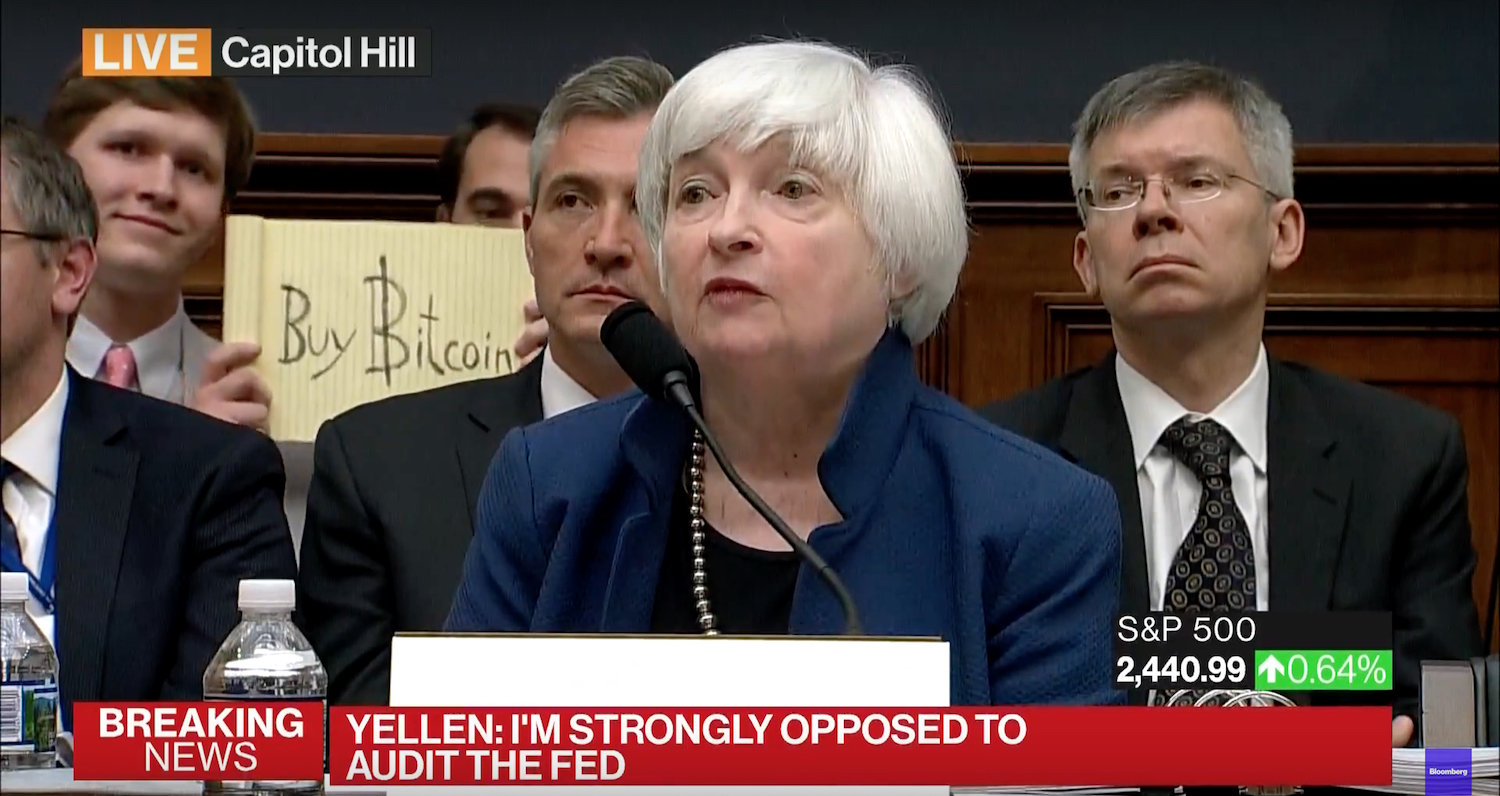
When Federal Reserve chair Janet Yellen testified at the Congress today, one attendee showed a buy bitcoin sign.
Yellen appeared before the House Financial Services Committee to talk about the state of the US economy and field questions from committee members. As chief of the US central bank, Yellen also spoke about a recent semi-annual report delivered to Congress by the Fed.
As chief of the US central bank, Yellen also talked about a recent semi-annual report delivered to Congress by the Fed.
While Yellen was expressing her willingness to raise interest rates amidst a healthier economic climate (following years of near-zero rates instituted in the wake of the 2008 financial crisis), there was one attendee who captured media coverage because he held up a buy bitcoin sign behind Yellen.
A screenshot of the event was tweeted by CNBC Steve Kopack, and later shared by other people who have been watching Yellen’s testimony.

The identity of the man who held up the buy bitcoin sign is not clear yet.
Yet in a follow-up tweet, Wall Street Journal national economics correspondent Nick Timiraos reported that the individual, along with another, had left the room “after a staffer made some instruction to them.” Video published by Bloomberg shows the two individuals being spoken to by a staffer.
Yellen, who told in 2014 that the Fed “doesn’t have the authority to supervise or regulate bitcoin in any way” – remarked that she believes that the blockchain is an “important technology”.
Thanks to her work, the Fed decided to publish some of its internal researchers into the distributed ledger tech, releasing its first report on the topic back in December.
Open your free digital wallet here to store your cryptocurrencies in a safe place.

Bic Camera: new merchants accept Bitcoin in Japan
A new electronics retailer decided to start accepting bitcoin in Japan as one of the available payment methods in all its shops within the country.
It is Bic Camera that began to accept bitcoin at several shops back in April, and that is now it is looking to expand this payment after seeing huge levels of demand from its customers.
The retailer is taking payments in the digital currency thanks to a partnership with the domestic bitcoin exchange called bitFlyer, so they can convert bitcoin into yen right after the acceptance.
Bic Camera sells a wide range of products, including cameras, computers and home appliances like fridges and washing machines.
News that Bic Camera is accepting bitcoin at more locations came after the Japanese government’s new regulations around digital currencies and the exchange services. Among those, for example, there is a legal definition for bitcoin as a kind of payment instrument and the decision to eliminate bitcoin taxation.
Also, this could be one reason why we might aspect a new growth in the bitcoin price in the next days.
Read more about Bitcoin in Japan here.
Open your free digital wallet here to store your cryptocurrencies in a safe place.