
Ethereum’s Dencun Deployment: Revolutionizing Scalability and Efficiency
Introduction: Embracing a New Chapter in Ethereum’s Evolution
Ethereum’s blockchain technology has taken a significant stride forward with the deployment of the Dencun upgrade on the Goerli testnet. This pivotal development is a testament to Ethereum’s commitment to evolving and addressing the growing demands for scalability and efficiency in the blockchain sphere.
Dencun, marked by the introduction of Ephemeral Data Blobs and EIP-4844 or “proto-danksharding”, aims to revolutionize the way Ethereum handles transactions. This upgrade promises to significantly reduce Layer 2 transaction fees, a move that will enhance Ethereum’s utility and attractiveness to a broader user base, including developers and end-users.
Overcoming Challenges: The Goerli Testnet as a Proving Ground
The deployment journey on the Goerli testnet was not without its challenges. Initial issues with validators’ synchronization posed a significant hurdle. However, the effective resolution of these issues underscored the robustness of Ethereum’s infrastructure and the dedication of its development community to ensuring a stable and reliable network.
Adopting a phased approach, Ethereum is meticulously deploying Dencun across different testnets, starting with Goerli, followed by Sepolia and Holesky. This careful rollout is crucial for identifying and addressing potential issues, thereby safeguarding the network’s stability and security ahead of the mainnet launch.
Preparing for the Mainnet Launch: Setting the Stage for Widespread Adoption
With the successful deployment on the Goerli testnet, the focus now shifts to the upcoming implementations on other testnets and the much-anticipated mainnet release in Q1 2024. This final step will mark a significant milestone in Ethereum’s journey towards a more scalable and efficient blockchain network.
The introduction of Ephemeral Data Blobs is set to alleviate the persistent issue of high transaction costs on Ethereum. By enabling Ethereum nodes to temporarily store and access off-chain data, the Dencun upgrade aims to streamline transaction processing and reduce network congestion. Post-Dencun, Ethereum is expected to become more accessible and efficient for both existing and new users. This upgrade will likely attract more decentralized applications (dApps) and Layer 2 solutions, fostering innovation and growth within the Ethereum ecosystem.
Ethereum’s Relentless Pursuit of Innovation and Growth
The Dencun upgrade on the Goerli testnet is a clear indicator of Ethereum’s relentless pursuit of technological excellence. By continuously innovating and adapting to the ever-evolving blockchain landscape, Ethereum reaffirms its position as a leading blockchain platform committed to scalability, efficiency, and inclusivity.
Open your free digital wallet here to store your cryptocurrencies in a safe place.

Próspera’s Bitcoin Revolution: A New Financial Era in Honduras
Revolutionizing Finance: Próspera’s Bold Bitcoin Move
In a groundbreaking financial development, Próspera, a special economic zone on Roatan Island in Honduras, has embraced a revolutionary approach by officially adopting Bitcoin (BTC) as its unit of account. This landmark decision, directed by Jorge Colindres, the acting manager and tax commissioner of Próspera, signifies a momentous advancement in the region’s financial landscape.
At the heart of Próspera’s adoption of Bitcoin lies a commitment to financial independence. This initiative allows individuals and businesses within the zone to transact and manage their financial affairs using their preferred currency. This move, however, is not without its challenges. The implementation of the “Final BTC Tax Payment Procedure” is currently facing obstacles due to technological constraints and external regulatory issues.
Global Context: Comparing with El Salvador
Próspera’s strategy echoes El Salvador’s earlier decision to make Bitcoin a legal tender in September 2021. El Salvador’s bold step, despite its difficulties, underscores an emerging trend where regions view cryptocurrencies as a means to foster economic empowerment and innovation.
The Advantages of Cryptocurrency Integration
The Próspera Special Economic Zone in Honduras has made a significant move by officially adopting Bitcoin (BTC) as its unit of account for valuing goods and services. This initiative, led by Jorge Colindres, the manager and tax commissioner of Próspera Zone for Employment and Economic Development (ZEDE), represents a commitment to financial and monetary freedom in the region. It allows businesses and individuals the flexibility to transact and manage finances in their preferred currency.
While this new development enables the use of Bitcoin for internal accounting, there are currently challenges in fully implementing the “Final BTC Tax Payment Procedure” due to technological and external regulatory limitations. Consequently, tax liabilities must still be reported in either US dollars or Honduran lempira until these issues are resolved. Entities wishing to adopt Bitcoin for accounting must notify the Próspera tax commission and reference an approved cryptocurrency exchange, like Coinbase or Kraken, within 30 days of the relevant tax period.
Próspera ZEDE has shown a progressive stance towards cryptocurrencies since its establishment in May 2020, aligning with El Salvador’s earlier decision to declare Bitcoin as legal tender. However, the Central Bank of Honduras does not guarantee cryptocurrency transactions, placing the responsibility and risk on the individuals involved.
The adoption of Bitcoin within Próspera is a notable step in the global cryptocurrency landscape, signaling the zone’s role as a pioneer in this field. This move is observed with great interest worldwide, as it may have significant long-term implications for economic systems and financial freedoms
Future Prospects and Global Implications
As Próspera and El Salvador trailblaze in cryptocurrency adoption, the world watches keenly to understand the long-term effects on their economies and financial systems. Their experiences could be a precursor for other regions contemplating similar approaches, possibly signaling a new chapter in global finance.
The journey of Próspera in adopting Bitcoin, along with its broader implications, reflects an evolving trend towards exploring alternative economic systems and embracing financial freedoms. This bold experiment in the global financial arena may offer valuable insights and lessons for other areas considering comparable pathways.
Open your free digital wallet here to store your cryptocurrencies in a safe place.
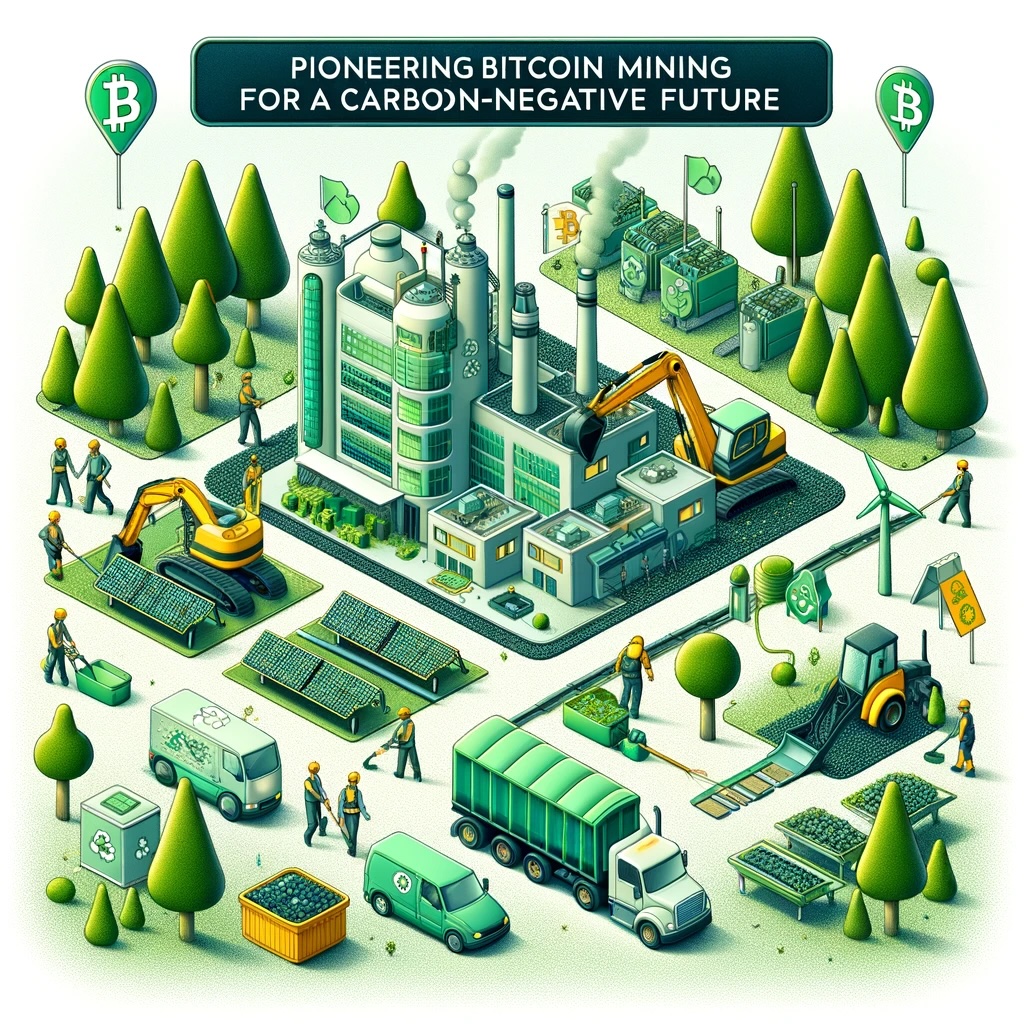
Pioneering Bitcoin Mining for a Carbon-Negative Future
In a groundbreaking report, self-proclaimed philanthropist Daniel Batten has unveiled a compelling vision for Bitcoin to emerge as a zero-emission network. Through the strategic utilization of carbon-negative energy sources, Batten contends that Bitcoin mining can not only offset its carbon footprint but also make a positive contribution to environmental preservation.
The Methane Capture Revolution
At the heart of Batten’s proposal lies a visionary concept: the combustion of stranded methane gas to power Bitcoin mining. This innovative approach has already gained traction worldwide, representing a crucial strategy in mitigating climate change. According to Batten’s comprehensive study, this process has the potential to slash the network’s emissions by a remarkable 63%.Currently, a mere 1.57% of the Bitcoin network relies on carbon-negative sources. Despite this modest figure, it exerts a significant -4.2% impact on the overall carbon intensity of the Bitcoin network. This seemingly small fraction holds the key to transforming the network into a carbon-negative powerhouse.
Exemplary Implementations
Batten’s research draws on a wealth of data from various flare gas Bitcoin miners, including industry leaders like Crusoe Energy in Colorado, Jai Energy in Wyoming, and Arthur Mining in Brazil. Additionally, the study highlights the commendable efforts of miners who are harnessing waste gases from animal farms, as seen in operations in Slovakia.
Enterprising Northern Irish farmer Owen has emerged as a trailblazer in the quest for sustainable Bitcoin mining. Teaming up with Scilling Digital Mining, Owen has harnessed biogas emitted from farm waste, redirecting it from the atmosphere towards the lucrative process of Bitcoin mining. This innovative approach not only aligns with principles of environmental stewardship but also holds the promise of newfound revenue streams for farmersMark Morton, the astute Managing Director at Scilling, envisions Ireland’s farming communities as the vanguard of this transformative technology. By capturing waste gas from agricultural activities, Ireland has the potential to make substantial reductions in its agricultural emissions. Moreover, this initiative could unlock a new source of income for farmers, providing a boost to the agricultural sector and setting the stage for a greener future.
Batten’s Call to Arms
Batten, once a philanthropist and venture capitalist, has now channeled his energies towards environmental advocacy, making Bitcoin mining his “most important mission.” In a recent presentation, he underscored the critical role of methane capture in the fight against climate change, positioning Bitcoin mining as a powerful agent of change.Batten’s research and advocacy serve as a stark reminder of the urgency in addressing climate change. As the world grapples with the repercussions of global warming and environmental degradation, innovative solutions like methane capture in Bitcoin mining offer a beacon of hope for a sustainable future.
Conclusion: A New Frontier in Bitcoin Mining
Daniel Batten’s report paints a compelling picture of Bitcoin mining as a carbon-negative endeavor with the potential to revolutionize the industry. Through the strategic harnessing of stranded methane gas, Bitcoin miners can emerge as unsung heroes in the fight against climate change. As pioneers like Owen and forward-thinking companies like Scilling lead the charge, we stand on the precipice of a paradigm shift – where Bitcoin mining evolves from an energy-intensive process into a powerful force for environmental preservation. It is a testament to the indomitable spirit of human ingenuity in the face of one of the greatest challenges of our time.
Open your free digital wallet here to store your cryptocurrencies in a safe place.
Understanding the Environmental Impact of Bitcoin Mining: KPMG’s Insights
Understanding Responsible Investing and ESG Criteria
KPMG, the renowned Big-4 consulting giant, has recently released a comprehensive 12-page report delving into the environmental impact of Bitcoin mining. The report sheds light on the crucial role of Environmental, Social, and Corporate Governance (ESG) criteria in responsible investing, with a particular focus on the environmental sustainability of production activities.
The report starts by acknowledging that Bitcoin is now recognized as a mature asset class, but it remains widely misunderstood despite its growing adoption. The objective of the report is to assess the actual environmental, social, and governance impact of Bitcoin mining, aiming to debunk existing misconceptions and provide a nuanced perspective.
Comparing Bitcoin Mining Emissions to Other Industries
While the report highlights some high-impact use cases of Bitcoin that have demonstrated value for users and society, KPMG’s primary focus is on the environmental aspects of mining. In this regard, KPMG emphasizes that Bitcoin mining’s emissions are relatively low when compared to various other human activities. Notably, Bitcoin mining emits only 67 MtCO2e per year, which is significantly less than gold mining’s emissions at 100 MtCO2e. Even more staggering is the comparison to emissions from tourism (4,500 MtCO2e) and the fashion industry (2,100 MtCO2e). KPMG aptly points out that deforestation alone contributes over 1,000 MtCO2e, making it evident that the focus should be on larger emissions sources rather than singling out Bitcoin mining’s relatively modest impact.
To further mitigate the environmental impact of Bitcoin mining, KPMG suggests several strategies that can be adopted by the industry. One of the most effective measures is to embrace renewable energy sources, such as wind and solar power. Texas, for instance, has successfully attracted many miners by offering an abundance of renewable energy options, which now accounts for 59% of the US’s total mining activities.
Additionally, Bitcoin mining can play a crucial role in balancing power grids, particularly by reducing energy consumption during peak times. This approach benefits renewable energy producers and contributes to a more sustainable energy ecosystem.
Responsible Practices and Energy Efficiency
Miners can also implement energy-saving practices during times of energy scarcity, a measure that some miners have already been adopting. By being more efficient in energy usage, miners can reduce their environmental footprint and contribute to more responsible mining practices.
Another innovative idea suggested by KPMG involves recycling the waste heat produced during the mining process. This waste heat, if harnessed properly, can serve as a valuable resource, replacing the need for additional energy consumption to generate the same amount of heat through other means. For miners in colder regions, this approach could even lead to cost savings by reducing their heating expenses.
A Call for Sustainable Growth in Bitcoin Mining
KPMG emphasizes the competitive nature of the Bitcoin mining industry, where miners are driven to streamline their operations and manage production costs effectively. Electricity constitutes the largest ongoing input cost for mining operations, prompting miners to seek the lowest-cost sources of electricity, often tied to underutilized hydro, wind, or solar power.
In conclusion, KPMG’s latest report on the environmental impact of Bitcoin mining provides valuable insights into the misconceptions surrounding this technology. While acknowledging the significance of ESG criteria in responsible investing, the report highlights that Bitcoin mining’s emissions are relatively minimal when compared to other industries. To further reduce the environmental impact, KPMG suggests embracing renewable energy sources, balancing power grids, implementing energy-saving measures, and recycling waste heat. These strategies not only contribute to a more sustainable mining ecosystem but also align with the growing focus on environmentally friendly investing. As the Bitcoin mining industry continues to evolve, a continued commitment to responsible practices will be essential in creating a more sustainable and environmentally conscious future.
Open your free digital wallet here to store your cryptocurrencies in a safe place.

Monero Community Defends Privacy in the Face of Mordinals’ Scrutiny
The Monero community, renowned for its unwavering commitment to privacy and security, has recently found itself under scrutiny from a group of critics known as Mordinals. These critics have voiced concerns about the alleged misuse of Monero’s privacy features for illicit activities, sparking a heated debate within the cryptocurrency community. Despite the criticisms, the Monero community remains resolute in their stance, emphasizing privacy as an essential human right and defending the integrity of Monero as a decentralized, censorship-resistant digital currency. As the controversy deepens, the clash between privacy advocates and those demanding increased transparency raises important questions about the role of privacy in the digital age.
Privacy as a Cornerstone of Monero
Monero, often hailed as the leading privacy-centric cryptocurrency, has garnered a dedicated following due to its robust focus on user anonymity. Through the use of advanced cryptographic techniques such as ring signatures, confidential transactions, and stealth addresses, Monero ensures that transactional details, including sender, recipient, and transaction amount, remain shielded from prying eyes. Critics argue that this privacy-centric approach facilitates illicit activities, but the Monero community vehemently rejects these claims. They contend that privacy is not synonymous with criminal intent, but rather an inherent right that should be safeguarded to protect individuals’ financial information from indiscriminate surveillance or exploitation.
Monero’s Community Responds to Mordinals’ Concerns
The Monero community has risen to the challenge of addressing the accusations put forth by the Mordinals. Supporters of the cryptocurrency assert that privacy is a frequently misunderstood concept, often wrongly associated with illicit deeds. They stress that privacy is a multifaceted notion that extends beyond the realm of cryptocurrencies, manifesting in various aspects of daily life, including communication, finance, and personal affairs.
In response to the concerns raised by the Mordinals, Monero advocates maintain that the same privacy features that enable illicit use also empower law-abiding individuals. They highlight how Monero’s privacy protections can benefit marginalized communities, political dissidents, journalists, and others who rely on confidential financial transactions to protect their safety and well-being.
Moreover, the Monero community underlines that the transparency of blockchain technology allows for the detection of illicit activities when necessary. Law enforcement agencies have developed sophisticated tools to analyze blockchain data and identify patterns that indicate potential criminal behavior. Monero’s privacy features do not render it impervious to investigation; instead, they provide a crucial layer of protection for users’ financial privacy by default.
Preserving Financial Privacy as a Fundamental Right
As explained before, for the Monero community, financial privacy is a fundamental human right that should not be compromised. They argue that in an increasingly digitized world, individuals must have control over their financial data and be able to decide who has access to it. With the proliferation of data breaches, identity theft, and intrusive surveillance, the need for robust privacy protections has become more apparent than ever.
The Monero community firmly believe that privacy encourages free expression, fosters innovation, and ensures individuals’ autonomy over their personal finances. By preserving financial privacy, they contend, Monero and other privacy-centric cryptocurrencies enable financial inclusivity and empower individuals to reclaim control over their economic lives. While the debate surrounding privacy and cryptocurrencies rages on, the Monero community remains steadfast in its commitment to privacy as a fundamental right. They strive to preserve the integrity of Monero and promote a future where individuals can transact securely and privately.The clash between privacy advocates and those calling for increased transparency raises crucial questions about the balance between privacy and regulation in the digital age. While it is important to address concerns regarding potential illicit activities, it is equally important to recognise the broader implications of eroding privacy rights.
Conclusion
In conclusion, the Monero community remains unwavering in their defense of privacy amidst scrutiny from the Mordinals. They assert that privacy is not only compatible with legitimate financial transactions but is essential for individual autonomy and the protection of personal information. As discussions surrounding privacy and cryptocurrencies evolve, finding common ground between privacy advocates and regulatory concerns will be vital in shaping a future where both financial integrity and personal freedom are respected. The Monero community stands at the forefront of this conversation, advocating for privacy as a cornerstone of digital currencies and emphasizing the importance of preserving privacy rights in the digital age.
Open your free digital wallet here to store your cryptocurrencies in a safe place.
The Shanghai Upgrade: Enhancing Ethereum’s Performance and Preparing for the Future
Ethereum has come a long way since its inception in 2015. The blockchain platform has gone through several upgrades to improve its performance, security, and scalability. The latest upgrade, known as the Shanghai upgrade, is expected to further enhance the network’s capabilities and pave the way for the much-awaited Ethereum 2.0.
The Shanghai upgrade is named after the Ethereum community’s conference held in Shanghai in 2019. The upgrade is also referred to as the “London Hard Fork” since it introduce several new features and improvements that require a hard fork. A hard fork is a significant change to the protocol that is not backward compatible with older versions. This means that all nodes and users need to upgrade to the latest version of the software to continue using the Ethereum network.
Reducing Transaction Fees with EIP-1559
One of the primary objectives of the Shanghai upgrade is to reduce transaction fees on the Ethereum network. Ethereum’s transaction fees have been a major concern for users and developers, especially during periods of high network congestion. The upgrade introduce a new fee structure that make it cheaper to transact on the network. Instead of the current gas limit, which sets a maximum fee for each block, the Shanghai upgrade introduce a new mechanism called “EIP-1559,” which allow users to bid on transaction fees. This make it easier to estimate the transaction fees, and it is expected to reduce the average cost of transactions.
Delaying the Difficulty Bomb and Optimizing Gas Costs
Another significant improvement introduced by the Shanghai upgrade is the “Difficulty Bomb Delay.” The difficulty bomb is a feature in Ethereum’s protocol that increases the difficulty of mining over time, making it more challenging to mine new blocks. This is done to encourage miners to switch to the new Proof of Stake (PoS) consensus mechanism that be introduced in Ethereum 2.0. However, the difficulty bomb also makes it more challenging to mine blocks on the current Ethereum network, which can slow down transaction processing times. The Shanghai upgrade delay the difficulty bomb for another 12 months, giving the Ethereum community more time to transition to PoS.
The Shanghai upgrade also introduce several new Ethereum Improvement Proposals (EIPs) that further enhance the network’s functionality. These include EIP-3198, which reduce the amount of data stored on the blockchain by compressing transaction receipts. This reduce the size of the blockchain, making it easier to synchronize nodes and improve network performance. EIP-3529 is another proposal that optimize the gas cost of certain operations on the Ethereum network, making it more efficient and cost-effective.
Paving the Way for Ethereum 2.0 with PoS and Reduced Block Rewards
The Shanghai upgrade is also expected to pave the way for Ethereum 2.0, which is a significant upgrade that introduce several new features and improvements to the network. Ethereum 2.0 transition from the current Proof of Work (PoW) consensus mechanism to PoS, which is more energy-efficient and secure. PoS also enable the network to process more transactions per second, making it more scalable. The Shanghai upgrade introduce some of the necessary changes to prepare the network for PoS, such as reducing the block rewards for miners.
In conclusion, the Shanghai upgrade is an essential step towards improving the Ethereum network’s performance, security, and scalability. The upgrade introduce several new features and improvements that make it easier and cheaper to transact on the network. It also delay the difficulty bomb and pave the way for Ethereum 2.0, which is expected to take the network to the next level. As with any major upgrade, there is always some risk involved, and users are advised to take the necessary precautions to ensure their funds are safe. Nevertheless, the Shanghai upgrade is a significant milestone for the Ethereum community and a testament to the network’s resilience and innovation.
Open your free digital wallet here to store your cryptocurrencies in a safe place.

Flared Methane as a Sustainable Power Source for Cryptocurrency Mining
In recent years, the cryptocurrency mining industry has experienced tremendous growth. With the rise of Bitcoin and other digital currencies, mining has become a popular way to earn a profit by using specialized hardware and software to solve complex mathematical equations.
The Potential of Flared Methane in the Mining Industry
One area of potential growth in this industry is the use of renewable energy sources to power mining operations. As concerns about climate change continue to rise, many miners are looking for ways to reduce their carbon footprint and increase sustainability.
One type of renewable energy that has caught the attention of miners is flared methane. Flared methane is a byproduct of oil drilling, and it is often burned off because it is considered a waste product. However, this gas can be harnessed and used to generate electricity, which can then be used to power mining operations.
Companies Leading the Way in Flared Methane Mining
Several companies have already begun exploring the potential of flared methane as a power source for mining. For example, Upstream Data, a Canadian company, has developed a mobile mining rig that can be powered by flared methane. This rig is designed to be easily transportable and can be deployed to remote locations to take advantage of flared methane sources.
Another company, Crusoe Energy Systems, has developed a system that captures flared methane and converts it into electricity. This electricity is then used to power mining rigs that are located on-site. Crusoe’s system has already been deployed in several locations in the United States, and the company has plans to expand its operations in the coming years.
Overcoming Challenges in the Use of Flared Methane
The potential of using flared methane to power mining operations is significant. According to a report by the World Economic Forum, flared methane could provide enough energy to power up to 8,000 mining rigs. This would not only reduce the environmental impact of mining but could also provide a significant economic opportunity for the oil and gas industry.
However, there are also some challenges associated with using flared methane as a power source. One of the biggest challenges is the variability of methane flaring. Flaring rates can change rapidly, making it difficult to ensure a consistent supply of power. This can result in downtime for mining operations, which can be costly for miners.
Another challenge is the logistics of transporting and storing the gas. Flared methane is often located in remote areas, which can make it difficult and expensive to transport. Additionally, storing the gas can be challenging, as it requires specialized equipment and safety protocols.
Despite these challenges, the potential of using flared methane to power mining operations is significant. As the cryptocurrency mining industry continues to grow, the demand for renewable energy sources will only increase. Flared methane has the potential to not only provide a sustainable energy source for mining but could also provide economic benefits for the oil and gas industry.
The Future of Flared Methane as a Sustainable Power Source
As the industry continues to develop, it is likely that we will see more companies exploring the potential of flared methane as a power source for mining. With the right technology and infrastructure in place, this could be a game-changer for the industry, providing a sustainable and cost-effective solution for powering mining operations.
In conclusion, the use of renewable energy sources is becoming increasingly important in the cryptocurrency mining industry. Flared methane is one such source that has the potential to provide a sustainable and cost-effective solution for powering mining operations. While there are challenges associated with using this gas, the potential benefits are significant, and it is likely that we will see more companies exploring this option in the coming years.
Open your free digital wallet here to store your cryptocurrencies in a safe place.

Azimut’s €40 Million Investment in Alps Blockchain Signals Growing Interest in Blockchain Technology
Azimut Invests €40M in Alps Blockchain: A Sign of Growing Blockchain Interest
Azimut, an asset management company based in Italy, has recently announced a major investment of €40 million in Alps Blockchain, a company focused on blockchain technology. The investment by Azimut represents a growing interest in the potential of blockchain technology to revolutionise various industries.
Blockchain technology is the core tech behind cryptocurrencies, the most popular of which are Bitcoin and Ethereum. Yet, blockchain technology’s potential applications go far beyond cryptocurrency. Blockchain technology can be used to build safe and tamper-proof systems for a variety of purposes, including supply chain management, voting systems, and secure data storage.One industry that blockchain technology has already impacted is the mining industry. Mining is the process by which new coins or tokens are created on a blockchain network. Miners are responsible for verifying transactions and adding them to the blockchain, and they receive a reward in the form of new coins or tokens. The mining process is crucial for the security and integrity of the blockchain network.
Addressing Energy Consumption in Blockchain Mining
However, mining can also be a resource-intensive process that requires significant computational power and energy consumption. Bitcoin, the largest cryptocurrency by market cap, has been estimated to consume more energy than entire countries like Argentina and the Netherlands, which has raised environmental concerns.There are attempts underway to make mining more environmentally friendly. Some mining corporations are looking into using renewable energy sources like solar and wind to power their operations. Furthermore, several cryptocurrencies, like as Ethereum, are going to switch to a different consensus process that will use far less energy than mining.
Aside from concerns about energy usage, blockchain technology has the potential to improve data privacy and security. Since more personal and sensitive data is shared online, secure and private data storage has become an urgent problem. Blockchain technology, by providing a decentralized and tamper-proof mechanism for data storage and sharing, may provide a potential solution to this problem. Data can be encrypted and kept on several nodes in the network using blockchain, making it practically impossible for hackers to access or change.
Blockchain Tech and its Applications
This has important implications for industries such as healthcare, where the privacy and security of patient data is critical. Blockchain-based solutions can enable secure sharing of medical records and other sensitive information among healthcare providers while maintaining patient privacy. In addition to healthcare, blockchain technology has the potential to transform various industries. The supply chain management industry is one area that has already seen significant interest in blockchain technology. Blockchain can be used to create a secure and transparent supply chain network, enabling businesses to track products from the point of origin to the end customer. This can increase efficiency and reduce costs, while also providing consumers with more transparency and trust in the supply chain.
Another potential application of blockchain technology is in voting systems. With concerns around the security and integrity of voting systems, blockchain technology offers a potential solution by providing a tamper-proof and transparent system for recording and verifying votes. This could increase trust in the electoral process and ensure the accuracy of election results.
Exploring the Future of Blockchain: Innovative Use Cases and Emerging Trends
Overall, the investment by Azimut in Alps Blockchain indicates the growing interest in blockchain technology and its potential applications. As more companies and institutions begin to explore the potential of blockchain technology, it is likely that we will see more innovative applications and use cases emerge. Blockchain technology has the potential to transform various industries, and its benefits outweigh the potential risks and challenges.
Yet, there are still obstacles that must be overcome before blockchain technology can realize its full potential. One issue that needs to be addressed is energy use, and the industry is already moving toward more sustainable alternatives. Another issue is the industry’s lack of standards and regulation, which can lead to uncertainty for firms and investors.Despite these challenges, the potential of blockchain technology is too great to ignore. The investment by Azimut in Alps Blockchain is just one example of the growing interest in the technology, and we can expect to see more investments and developments in the future. As the technology continues to evolve and mature, it has the potential to disrupt industries and create new opportunities for innovation and growth.
In conclusion, the investment by Azimut in Alps Blockchain represents a significant development in the blockchain industry. While blockchain technology has already had a significant impact on various industries, its potential applications are still being explored. The challenges of energy consumption and lack of standardisation and regulation need to be addressed, but the potential benefits of blockchain technology in data privacy, supply chain management, and voting systems make it a promising technology for the future. As more companies and institutions begin to invest in and explore the potential of blockchain technology, we can expect to see more innovative applications and use cases emerge in the coming years.
Open your free digital wallet here to store your cryptocurrencies in a safe place.

Nigeria’s eNaira Struggles for Adoption Amidst Cash Shortages and Limited Infrastructure
The adoption of national digital currencies has the potential to transform the financial landscape and create a more equitable financial system. Yet, as demonstrated with the eNaira in Nigeria, adoption can be slow due to a lack of infrastructure and knowledge.
Lack of infrastructure to support the ecosystem
The insufficient infrastructure to support the eNaira is one of the key reasons for its sluggish acceptance in Nigeria. Users must have a smartphone and internet connectivity to use the digital money, which can be difficult in a country where only 25 to 40 million people own a smartphone. This is worsened by the absence of reliable internet connectivity, particularly in rural regions. To achieve widespread use of digital currencies, there must be a concerted push to expand internet connectivity and smartphone usage, particularly in disadvantaged areas.
Barriers to Adoption
In addition to technical issues, there is a major dearth of education in Nigeria on the benefits of digital currencies. Many individuals are still wary of digital currencies’ security and trustworthiness, and there is a widespread lack of understanding about how they work. Governments and institutions must invest in education initiatives to raise knowledge about the benefits of digital currencies and how to successfully use them.
Another barrier to adoption is the absence of transaction options and retailers ready to take digital currency. Despite efforts by the Central Bank of Nigeria to encourage banks to promote the use of eNaira, merchant acceptance remains low. This limits digital currencies’ utility, particularly for ordinary retail transactions. Governments and organizations must collaborate to encourage merchant adoption by providing incentives like as cheaper transaction fees or tax advantages.
Furthermore, Nigeria is currently experiencing acute cash shortages, which has resulted in riots and protests across the country. While the eNaira has the potential to be a solution to the issue, its low adoption and infrastructure challenges have limited its utility. Governments and organizations must move quickly to address these concerns and make digital currencies widely available as a cash substitute.
Digitalization
As the world grows more digital, the advantages of national digital currencies cannot be overlooked. Digital currencies provide several benefits, such as speedier transactions, improved security, and lower expenses. They can also help people gain financial inclusion, especially those who are underserved by traditional banking institutions.
But, in order for digital currencies to become a viable alternative to cash, governments and institutions must take meaningful actions to overcome adoption barriers. This involves infrastructure investments, education efforts, and incentives for merchant adoption. Furthermore, there must be a concerted effort to resolve public concerns about security and reliability, as well as to create public trust in digital currencies
The Central Bank of Nigeria’s attempts to promote the eNaira have been well-intentioned, but more has to be done to remove the barriers to acceptance. This includes collaborating with mobile network providers to promote internet access and smartphone penetration, collaborating with retailers to incentivize eNaira use, and investing in public awareness education programs.
Another possibility is to use blockchain technology to develop a decentralized digital currency. Because blockchain technology is known for its security features, this could help alleviate concerns about security and reliability. Furthermore, because it does not require a centralized body to oversee its use, a decentralized digital currency may be more accessible and inclusive than a centralized one.
Final thoughts
To conclude, while the adoption of national digital currencies such as the eNaira has been delayed in Nigeria, the potential benefits cannot be overlooked. Adoption problems must be solved immediately to ensure that digital currencies can deliver on their promise of building a more egalitarian financial system. To promote the use of digital currencies, governments and organizations must collaborate to invest in infrastructure, education, and incentives. This will necessitate considerable effort and collaboration on the part of several parties, including regulators, financial institutions, mobile network carriers, and merchants.
As the world moves toward a more digital economy, we must embrace the promise of digital currencies to establish a more inclusive financial system. The difficulties encountered in Nigeria’s adoption of the eNaira show the necessity for a concerted effort to overcome the infrastructure and education issues that can stymie adoption. Governments and institutions can collaborate to create an environment that supports the widespread adoption of digital currencies, resulting in a more inclusive and accessible financial system for all.
Open your free digital wallet here to store your cryptocurrencies in a safe place.

Square Enix to Launch Gamified Art Collecting Experience on Polygon Network
Square Enix, the Japanese video game publisher behind iconic titles like Final Fantasy and Tomb Raider, has announced a collaboration with Polygon, a major Ethereum-based blockchain platform, to create an NFT art project. The collaboration will investigate the convergence of blockchain technology, gaming, and digital art, showcasing the potential for novel applications in the fast growing blockchain ecosystem.
The cooperation will result in the creation of one-of-a-kind NFTs based on original artwork from Square Enix’s games, which will be minted on the Polygon blockchain. Polygon was selected as a partner because of its scalability and cheap transaction fees, making it a perfect platform for producing and trading NFTs.
Non-fungible tokens, or NFTs, are one-of-a-kind digital assets that may be bought and sold on a blockchain. They can represent several types of digital content, such as artwork, music, and video games. As a means of proving ownership and authenticity in the digital realm, NFTs are gaining popularity as a new way for artists and producers to commercialise their work.
The collaboration between Square Enix and Polygon is not the first of its kind; other gaming firms and blockchain platforms have also investigated the convergence of gaming and NFTs. The relationship is noteworthy, though, because of Square Enix’s standing in the game business, with the company having a vast and committed fanbase worldwide.
In addition to investigating the possibilities of NFTs, the collaboration will explore the usage of blockchain technology in gaming. Blockchain technology has the potential to revolutionize the gaming business by enabling new types of games such as decentralized gaming and player-owned economies.
Square Enix and Polygon’s collaboration demonstrates the growing interest in blockchain technology among established firms and industries. We should expect more collaborations between traditional firms and blockchain startups as the promise of blockchain technology becomes more publicly recognized.
One of the primary advantages of blockchain technology is its ability to increase transaction trust and transparency. This is especially significant in the gaming sector, where concerns like fraud, cheating, and ownership and authenticity disputes are widespread. Blockchain technology allows for the creation of a tamper-proof and transparent record of all transactions, which makes it easier to assure fair and equal gameplay.
The collaboration between Square Enix and Polygon is also significant in terms of the potential for NFTs to establish new revenue streams for artists and creators. NFTs give a new opportunity for creators to monetise their work and establish an audience by producing unique digital assets that can be bought and traded on a blockchain.
The usage of NFTs in gaming is still in its early stages, but it has the potential to transform the industry by allowing players to interact with games in new ways and producers to monetize their work. The collaboration between Square Enix and Polygon is just one example of the numerous use cases that are emerging in the blockchain ecosystem.
We should expect more cooperation between established organizations and blockchain startups, as well as more new use cases for blockchain technology, as blockchain technology evolves and matures. The collaboration between Square Enix and Polygon is an exciting step in this quickly expanding field, and it will be interesting to see how the initiative evolves and what new prospects it generates for the gaming business and digital art.
Open your free digital wallet here to store your cryptocurrencies in a safe place.