Category Archive: bitcoin

Bitcoin’s Monthly Recap of April 2015

Welcome to HolyTransaction’s fourth monthly recap for the year 2015. This past month of April has tested the Bitcoin community’s resolve; during that time, the bitcoin price fell from a high of $244.24 to a low of $231, according to Bitcoin exchange Bitstamp.
Rand Paul is the First Presidential Candidate to Accept Bitcoin Donations


United States Senator Rand Paul announced that he would accept Bitcoin donations to fund his 2016 presidential bid. Paul believes that his use of bitcoins and his progressive stance on technology will win over the younger generation in the presidential election. Rand Paul and his supporters believe that the government should have a more hands-off approach to money, and Bitcoin promotes just that. Federal campaigns are allowed to accept Bitcoin donations thanks to an FEC decision released earlier.


Bitcoin Summit to Be Held on Richard Branson’s Private Island


Bitcoin supporter and founder of the Virgin Galactic corporation, Richard Branson, has been associated with a new Bitcoin Summit that average Bitcoin users are considering high-brow. Back in February, Bruce Fenton, the current executive director of the Bitcoin Foundation, hosted something called the Satoshi Roundtable on a Caribbean island. Though this Bitcoin Summit uses Richard Branson’s island, the event is hosted by a company, not him. The Summit will take place on Necker Island and will feature lots of people.


Ross Ulbricht Denied Retrial Despite New Charges Against Corrupt Agents


In March, Ross Ulbricht was convicted of running the underground marketplace Silk Road in court. However, weeks after his trial, new charges against agents instrumental in bringing down Ross Ulbricht and the Silk Road came to light. Two federal agents stole money from the investigation, and evidence in that case even supports the theory that the FBI illegally hacked the location of the Silk Road servers. Despite the obvious corruption and potential for subterfuge in the investigation, the sentence from before still stands.


Bitcoin Core Development Funding Moves from Bitcoin Foundation to MIT


Since the hectic reshuffling of the Bitcoin Foundation and its functions, the responsibility of Bitcoin core development funding has passed to the MIT Media Lab. The MIT Media Lab supports various other open source projects in the crypto and tech space. Gavin Andresen, Wladimir Van Der Laan and Cory Fields will now take salaries from the MIT Media Lab. Andresen explained how Bitcoin development will remain un-controlled: “The Bitcoin Foundation was never the center of development; the Bitcoin core open-source software project has been the center, and like most open-source software projects, the developers who work on Bitcoin core are supported in many different ways. Some work for companies that want to see Bitcoin succeed, some for nonprofits, and many are self-funded and self-motivated.”


Bitcoin is Value Added Tax (VAT) Exempt in Spain


The General Directorate of Taxes in Spain has responded to a request for clarification regarding virtual currencies. In their decision, the DGT stated that virtual currencies work as a means of payment and can be labeled as a financial service, and not subject to a VAT. Other countries in Europe have also taken similar stances on the taxation of Bitcoin. Bitcoin startups in these countries are using the clarified regulations to move forward in innovation.

Open your free digital wallet here to store your cryptocurrencies in a safe place.
Satoshi
NetkiPartnerHT3

HolyTransaction partners with Netki for human-readable address

Wallet addresses are one of the most aggressive barriers to the mass adoption of digital currency. Trying to explain these lengthy, case sensitive, intimidating strings of numbers and letters to the uninitiated is a daunting task. Much of the general population values simplicity over function, and in this regard wallet addresses seem scary and overly complex.

It is with this in mind that we are very excited to announce our partnership with Netki!
Netki makes digital money approachable and intuitive for new and veteran users alike, by transforming long and unwieldy Bitcoin addresses into human-readable wallet names. Additionally, your Netki name separates your identity from public blockchain data, providing you multiple layers of privacy, as well as multiple validations to keep you secure.
When paired with your existing HolyTransaction account, Netki will allow you to use one single Name for all of your wallet addresses. This means that you will be able to send multiple currencies, all to one domain name-like address! As of this writing Changetip is integrated with Netki. Storing your funds, tipping online, building/implementing blockchain applications, and buying, selling, and accepting your desired currency, have all just become as simple as remembering a single name, when used with supported vendors!
Your account will be automatically updated as soon as it’s ready, and the integration will be seamless from your perspective. Once implemented, your wallet name will correspond to your HT username.
Bitcoin, Litecoin, and Dogecoin will be the first coins supported, with more of your favorites coming soon after.
Netki’s solution utilizes both the decentralized Namecoin blockchain at its core and distributed DNSSEC at its edges. This combination allows users to have both control and ownership of the blockchain, while still maintaining their financial privacy. This architecture allows users to easily share their Wallet Name with anyone without having to publish it to the world via a public ledger.
Together, HolyTransaction and Netki aim to transform cumbersome wallet addresses into one shareable, easy to remember name, that will be usable by all your digital currencies. We look forward to working together to continue making the bitcoin experience both friendly and intuitive for all.

Open your free digital wallet here to store your cryptocurrencies in a safe place.

Satoshi

Bitcoin’s Monthly Recap of March 2015


Welcome to HolyTransaction’s third monthly recap for the year 2015. This past month of March has been a real eye opener for the Bitcoin community; during that time, the bitcoin price fell from a high of $258.34 to a low of $244.24, according to Bitcoin exchange Bitstamp.


Third US Marshals Service Silk Road Bitcoin Auction Completed
https://www.coindesk.com/third-usms-bitcoin-auction-bidder-interest/


Compared with the previous two US Marshals Service auctions of Silk Road bitcoins, the number of participants was lower. However, at 14 bidders placing 34 bids during the auction, the participation is markedly higher than the second Silk Road Bitcoin auction which saw a low of 11 bidders. These USMS auctions have been ongoing since before Ross Ulbricht’s trial because of a deal struck in January of 2014 between the courts and Ulbricht and Ulbricht’s lawyer. At the time of the auction, the block of 50,000 BTC was worth roughly $13.4 million USD. The first auction was won by noted venture capitalist Tim Draper while the second auction was won by SecondMarket, the offerers of the new $GBTC Bitcoin investment fund. There remains one last auction of Ross Ulbricht’s bitcoins, seized during the Silk Road trial, for a block of 44,000 bitcoins. The final auction date has not been set.


Bitcoin Investment Trust Bitcoin “ETF” Shares Trading On OTC Market Before Winklevoss’s
https://www.nasdaq.com/article/the-first-bitcoin-etf-offers-easy-way-to-profit-from-virtual-currency-gbtc-cm450589#/ixzz3VcocZkx0


The Bitcoin Investment Trust, created by SecondMarket, has received approval from the Financial Industry Regulatory Authority to launch a Bitcoin fund and sell shares on the OTC market. Though Silbert has since moved on to the Digital Currency Group, his influence is still felt. Notably, the GBTC Bitcoin fund isn’t technically an ETF but it has launched ahead of the Winklevoss Bitcoin Trust ETF, which was gunning to be the first but is still mired in the regulatory approval process. The current price of a GBTC share, however, is well, over the market price of bitcoin. For accredited investors, there is now a new safe way to bet on Bitcoin volatility.


T-Mobile Accepts Bitcoin in Poland and Even Offers 20% Bonus
https://bitcoinist.com/t-mobile-poland-discount-bitcoin-purchases/


T-Mobile in Poland has started to embrace Bitcoin like no other large telecom service provider before. Polish users of the T-Mobile cell network can now top off their accounts using bitcoin, which is accepted online, and receive a 20% bonus: Talk about incentive! In Poland, T-Mobile is one of the largest mobile phone operators with well over 15 million customers in the European country. The bonus and bitcoin acceptance comes from a partnership with Warsaw-based payments company, InPay. T-Mobile is currently testing out a 3 month trial. The Polish Bitcoin community is strong, as evidenced by this deal. Internationally, there have been Bitcoin for mobile minute credits and/or code conversion websites for years; however, the acceptance of Bitcoin by a major provider in a major country is a major milestone.


Dark Net Marketplace Evolution Admins Disappear with $12 million USD in Bitcoin
https://www.theguardian.com/technology/2015/mar/18/bitcoin-deep-web-evolution-exit-scam-12-million-dollars


Following the arrest of Ross Ulbricht in October of 2013, Evolution was one of many underground marketplaces to spring up on the infamous darknet. In fact, another underground marketplace called Sheep Marketplace also saw its owner disappear with user funds. Users and law enforcement alike have started to look for the thieves that have perpetrated the latest “Bitcoin exit scam.” The Bitcoin price fell on the news of the marketplace disappearing and hasn’t recovered since.


In the standard budget proceedings this year, Chancellor George Osborne released the government’s research on digital currency to date. The United Kingdom has taken an admirable approach to regulating but not stifling Bitcoin and digital currency innovation within the historical world financial capital of London. Future legislation from the UK will include measures to protect and support digital currencies and their related business development. Many Bitcoin companies in the UK stepped up to teach the government about digital currency when the “call for information” was released months ago.


Two Federal Agents Arrested, Charged With Stealing Bitcoins and Blackmailing During Silk Road Investigation
https://www.usatoday.com/story/news/2015/03/30/federal-agents-charged-with-stealing-bitcoin-from-silk-road-case/70672058/


Two former federal agents, Carl Force of the DEA and Shaun Bridges of the Secret Service, have been charged with counts of money laundering, wire fraud, theft, and conflict of interest. Agent Force is charged with blackmailing nearly a million dollars worth of bitcoin from Ross Ulbricht, who was recently convicted of running the Silk Road underground marketplace that only used bitcoins. Force also worked at Bitcoin exchange CoinMKT as their supposed anti-money laundering and compliance officer. The evidence and charges against agents directly involved in the takedown of Silk Road did not appear in Ulbricht’s trial because they were sealed at the time. Bridges, on the other hand, allegedly stole nearly $800,000 worth of bitcoins from the government after the bitcoins were seized from Silk Road servers. These newest revelations have undoubtedly shaken things up for those following the Silk Road Bitcoin story with interest.

Open your free digital wallet here to store your cryptocurrencies in a safe place.

Satoshi
6 bitcoin myths debunked 01

6 (More) Bitcoin Myths Debunked

We’ve all heard them before.
As a groundbreaking innovation, bitcoin naturally attracts skeptics just as strongly as it attracts supporters, and the technical and theoretical complexity of the digital currency can cause a considerable amount of confusion with those who are not ‘in the know’.
The result is that critics of bitcoin oftentimes fall back on one or two euphemisms to express why they think it will never succeed – simplified statements like “bitcoin is a ponzi scheme” that highlight often misunderstood characteristics of the digital currency but rarely fully address the situation.
One of the first articles published on CoinDesk was dedicated to debunking these “bitcoin myths“, and because they still pervade the industry, we’re revisiting the topic.
Here are six (more) bitcoin myths, debunked.

1. It’s just a speculative investment opportunity

Many people first hear about bitcoin in the context of its price. Whether it was the bubble of late 2013 or the recent dip below $300, a good chunk of the general public thinks of bitcoin only in terms of how volatile the price is and how good (or bad) of an investment it could be.
The truth is, of course, that bitcoin goes far beyond its classification as a commodity. The decentralized peer-to-peer payment network made possible by bitcoin is only one example of how bitcoin is breaking down doors. If the price of bitcoin were theoretically to stay the same forever, it would still have utility in many other areas other than as a speculative investment.

2. The blockchain is the real breakthrough and bitcoins are unnecessary

It’s true – the blockchain is arguably the real genius of Satoshi Nakamoto’s invention. The distributed ledger and trustless security of the blockchain is what gives bitcoin its magic, but oftentimes when people first realize this, they discount bitcoin as just one use case of the blockchain.
In reality, mining is the bread-and-butter of the bitcoin protocol, and without miners there would be no blockchain. Consequently, miners need to be rewarded for their work, otherwise they would have no incentive to contribute their time and computing power to maintain the blockchain. As its native reward token, bitcoin is essential to the functionality of the blockchain.

3. The government could/will shut it down

While governments around the world may still be figuring out how to approach digital currencies, many misinformed people fall into the trap of thinking that, like almost anything else we’re used to, bitcoin could be shut down by governments if one or more of them hoped to do so.
Yes, governments have the power to make it very difficult for their citizens to use bitcoin andsome form of government regulation is inevitable as bitcoin matures. Even so, because of its infrastructure, it would take considerable time, money and energy for any government to pose a serious threat to the global bitcoin network, if they even could at all.

4. You can’t buy anything practical with bitcoin

Perhaps as a follow up to myth number one, a lot of people are surprised to hear that bitcoin is more than a speculative investment and that it can actually be used to pay for everyday goods and services.


In addition to the retailers above, PayPal has announced partnerships with bitcoin companies and Microsoft recently began accepting bitcoin for a host of digital content like games and videos. Add in the countless small businesses that accept bitcoin either online or in their brick-and-mortar locations, and it’s safe to say there are options when it comes to spending your bitcoin.

5. There are no advantages of bitcoin over cash or credit cards

Once people realize that bitcoin can, indeed, be used to buy real things, they may not see what the digital currency has to offer that their incumbent payment methods like cash and credit cards don’t. Luckily it doesn’t take long to debunk this myth.
Some of bitcoin’s most obvious benefits are its low transaction fees. Typically, transacting bitcoin saves merchants 1-3% compared to transacting credit cards, and when compared to services like Western Union, bitcoin is clearly superior – especially for sending money abroad.

6. The only people who would ever use bitcoin are tech nerds and criminals

Some of the earliest adapters of bitcoin may be techies and dark market shoppers, but the same could arguably be said about the Internet – and look who uses that now. Regardless of how esoteric the bitcoin community may be right now (and it’s pretty esoteric), adoption takes time.
As entrepreneurs in the space continue to build consumer-friendly apps with bitcoin and awareness of the digital currency spreads, a more diverse crowd will come to use it in their everyday lives. There’s also another important demographic that many forget about: the millions of unbanked people throughout the developing world who rely on mobile phones as their computer, bank and communication device all in one.
Whether it’s any of the above myths or perhaps one of the 10 we previously debunked, bitcoin is ripe with misunderstanding. For bitcoin to reach its full potential, this knowledge gap needs to be bridged so that the myths and misinformation come to an end.

Open your free digital wallet here to store your cryptocurrencies in a safe place.
Satoshi

Bitcoin’s Monthly Recap of February 2015


Welcome to HolyTransaction’s February monthly recap for the year 2015. During this past month of February, the bitcoin price fell from a low of $226.93 to a high of $258.34, according to Bitstamp.


Payment Processor Stripe Lets Its Businesses Accept Bitcoin Simply


Starting a few weeks ago, the popular online payment processor Stripe ended its Bitcoin beta and rolled out the ability to accept bitcoin to any of its business customers. International businesses that use Stripe include Facebook, Lyft, and Kickstarter. Any of these companies could now start accepting Bitcoin with just a few lines of code. Stripe processes Bitcoin payments for a cost of .5% and uses Coinbase to facilitate the fiat settlement. Bitcoin’s reach expands by thousands of merchants and Stripe, which has also backed other cryptocurrencies in the budding industry, shows just how serious it is about Bitcoin and the power of the blockchain.


Dread Pirate Roberts Unmasked: Ross Ulbricht Convicted On All Charges


After hearing days of testimony from both sides, the jury in the historic Silk Road trial found Ross Ulbricht guilty on all charges. The jury found the government’s evidence that Ross Ulbricht was operating Silk Road under the pseudonym ‘Dread Pirate Roberts’ since day one. Ulbricht’s defense, led by lawyer Joshua Dratel, rested his entire defense on suggesting that Ross Ulbricht may have founded Silk Road but he had long ago left it to a successor, who then came back around to frame Ulbricht. The chat logs from the laptop that was taken from Ulbricht’s hands at a public library where he was using it may have been forged, the defense alleged. The jury was not convinced, and Ulbricht is now behind bars pending sentencing later this year.


CNN’s Morgan Spurlock Of Super Size Me Finds The Inside Scoop On Bitcoin


Morgan Spurlock, of Super Size me fame, has done it again with an episode in his CNN show Inside Man. He spearheads an entire episode dedicated to the new e-currency known as Bitcoin. The episode follows Spurlock as he survived on only Bitcoin for a week. That means that he only lived on things that he could spend bitcoins on, and learned a lot about it in the process. He lived his week in New York where he was able to talk bitcoin with Bitcoiners from the New York Bitcoin Center. The episode went a long way in introducing Bitcoin to a largely uneducated populace and a different demographic.


Dell Starts Accepting Bitcoin In United Kingdom and Canada


Ousting Newegg and TigerDirect, Dell is now the largest electronic retailer that accepts bitcoin internationally. Earlier in February, Dell announced that it was happy with its US bitcoin pilot and was not extending bitcoin acceptance to Canada and the United Kingdom. The international company emphasized that businesses and customers are using bitcoin to purchase just about everything that Dell has to offer. Dell has even processed as much as $50,000 worth of bitcoin for a single item purchase, a large server system. Dell uses Coinbase as a third party payment processor to accept bitcoin. In Dell’s words: “This form of payment is clearly resonating with consumer, small and medium businesses.”


Ledger Hardware Bitcoin Wallet Startup Raises 1.3 Million Euro Seed Round


French hardware Bitcoin wallet maker Ledger recently announced the closing of a 1.3 million euro seed round led by French VC fund XAnge Private Equity. Other investors such as Hi-Pay and Pascal Gauthier, CEO of Bitcoin stealth startup Challenger Deep. Ledger’s first hardware wallet offering, the Nano Wallet, was released at the end of 2014 and was quite popular. Ledger was created by a fortuitous meeting of minds at the French la Maison du Bitcoin, the first “Bitcoin embassy” in Europe. To date, Ledger has already sold thousands of Nano wallets in several dozen countries. Future plans for the bitcoin wallet include NFC and Bluetooth LE capabilities. The startup has also announced plans to move to America with the new funding and participate in some accelerators.


Privacy Centric Cryptocurrency Dash Unveils InstantX Transactions


The new version of the Dash Core wallet, v.0.11.1, will include InstantX. InstantX adds on top of existing Dashsend and MasterNode anonymity features that will have the industry standard 6 confirmations in an average of 1.25 minutes. Dash is different from Bitcoin because it uses the X11 hashing algorithm instead of the SHA-256 algorithm, which makes it much more ASIC resistant. Upon the successful implementation of the InstantX feature, the Dash price experienced a notable rise in value at the exchanges. The Dash development team has promised future updates and new features, some that have been seen on Bitcoin’s wish list and some that have not.

Open your free digital wallet here to store your cryptocurrencies in a safe place.

Satoshi

Bitcoin’s Monthly Recap of January 2015

Welcome to HolyTransaction’s first monthly recap for the year 2015. This past month of January has been a great opener for the Bitcoin community; during that time, the bitcoin price fell from a high of $321 to a low of $226.93, according to Bitstamp.
 
Bitcoin Exchange Bitstamp Loses 12% of Bitcoins in Security Breach
Early in January, the world was again shocked by another high-profile Bitcoin theft from a high-volume Bitcoin exchange. Bitstamp, the exchange in question, halted trading on 1/4/15 after telling customers “we have reason to believe that one of Bitstamp’s operational wallets was compromised on January 4th, 2015.” The Bitcoin exchange avoided their booth at the Bitcoin World at CES 2015 and worked to fix and migrate their exchange while trading, withdrawals, and deposits were halted for several days. Bitstamp has since returned and offered zero trading fees for a limited time as a form of apology. Many attribute the fallen Bitcoin price to the high-profile Bitcoin exchange theft.
 
Coinbase Raises $75 Million USD in Series C Funding Round
Coinbase recently announced the closing of its $75 million USD Series C funding round that Bitcoin users around the world have been expecting since late last year. The Bitcoin service has currently raised $106 million USD to date. Round participants included DFJ Growth, USAA, the NYSE, and more. In a good sign for the company’s investor confidence, previous investors such as Andreessen Horowitz, Union Square Ventures, and Ribbit Capital also joined in the round. Besides Coinbase, other Bitcoin companies have started off the year strong with millions of dollars in funding for Bitcoin 1.0 and Bitcoin 2.0 applications and technologies thus far in the year.
 
Coinbase Launches Lunar: Supposedly the First Regulated American Bitcoin Exchange
Coinbase has just announced its Bitcoin exchange, called Lunar, which industry experts have been suspecting to be in the works for months now. Coinbase seems to have been drawn out to release its Bitcoin exchange by the announcement of the Gemini Bitcoin exchange by the Winklevoss twins. Lunar currently only supports roughly half of American states; additionally, Coinbase has taken some criticism for claiming to the “first” and “regulated” in this space. The California Department of Business Oversight (DBO) has told Bitcoin media sources: “The California Department of Business Oversight has not decided whether to regulate virtual currency transactions, or the businesses that arrange such transactions, under the state’s Money Transmission Act. California consumers should be aware Coinbase Exchange is not regulated or licensed by the state.”
 
Reddit Decides to Ditch RedditNotes and Cryptocurrency Engineer
Former BitPay employee Ryan Charles has been recently let go by Reddit amid internal company strife and change of direction. The former-CEO of Reddit, Yishan, was apparently the one that was pushing for a Reddit cryptocurrency, popularly dubbed Redditnotes. Unfortunately, we won’t be seeing anything from Reddit anytime soon, and Ryan Charles won’t be involved. Charles has already started planning his next move in the Bitcoin sphere, where he believes that Bitcoin 1.0 opportunities are still widely available and largely unexplored.
 
Ross Ulbricht Stands Trial for Alleged Role as Dread Pirate Roberts on Deep Web Market Silk Road
Ross Ulbricht and the Silk Road trial started this past month in a monumental case for both privacy and Bitcoin. The government is presenting evidence that Ross Ulbricht is none other than the Dread Pirate Robert (DPR) that ran the Silk Road for the entirety of its existence. Ulbricht’s defense lawyer, Dratel, tried to make it clear to jurors that digital evidence could be planted, fabricated, distorted, moved, or “manipulated.” Even has Silk Road 1.0’s trial is just finishing, Silk Road 2.0’s legal consequences are also unfolding. Meanwhile, Silk Road 3.0 and over a dozen copycat Deep web marketplaces continue to thrive.

Open your free digital wallet here to store your cryptocurrencies in a safe place.

Satoshi
bitcoin in russia

Russia reconsidering Bitcoin?

(CryptoCoinsNews) Could Bitcoin make it back into Russia? The latest news is that the draft law is in need of major revision as the Russian Ministry of Economic Development has not approved the draft in its current form. This is certainly not because of the desire to enhance freedom and liberty for Russian citizens, but because it may hurt Russian corporations ability to attract new business. The “quasi-money” designation includes things like gift cards and certificates that businesses use to bring in new customers. Banks, major retailers, and telecom companies would take a huge hit, and with the national GDP/economy is already having a terrible year, this bill does more harm than good overall.
“The proposed draft regulation act doesn’t solve any tasks assigned, but only serves to create legal barriers to the implementation of marketing programs of businesses and business development in general,” according to the Ministry of Economic Development.”
The issue with nation-states attacking Bitcoin out of defense of their currency is a complicated one. Many nations are in debt due to their debt-based fiat currency/central banking system. The current inherently flawed system is designed to leave nations indebted. Bitcoin and it’s potential growth leave open a way to build new businesses, generate new revenue streams by attracting investors, and ways for future taxation to help alleviate the nation’s indebtedness. Russia’s previous hard stance against Bitcoin was taken before many of their current economic issues and sanctions manifested.
Russia’s economic situation may continue to spiral downward, as they may soon suffer from restriction of access to the global financial system. In particular to the payment system SWIFT (Society for Worldwide Interbank Financial Telecommunication, which supplies secure messaging services and interface software to wholesale financial entities. An international banking computer partnership). Some critics say the government should pay more attention to financial innovations instead of trying to ban them.
Does this mean Bitcoin is in the clear? Not exactly. The bill most likely will be revised, but it may just benefit Russian corporations, but still restrict Russians ability to use electronic currency. The ban may just work around gift cards and bonus cards and remain for digital currency. The nature of the extent of the revisions remains unclear. What do you think Russia will do with Bitcoin?

Open your free digital wallet here to store your cryptocurrencies in a safe place.

Satoshi

Could Bitcoin be a replacement for Gold?
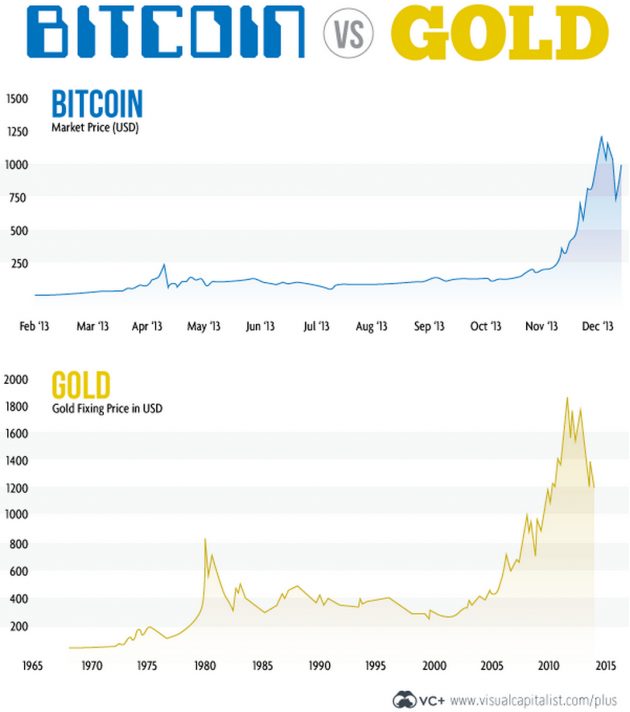
(CoinDesk) Gold has been used as a store of value for eons, thanks to its beauty and almost magical ability to never tarnish. Furthermore, despite radical shifts in human values over the past 100 years, its worth still has not diminished – even soaring to over $1,000 an ounce in recent times.
Now, though, there is a new, digital challenger on the scene that, when its price chart is compared with that of gold, bears some striking similarities
It’s no wonder, then, that companies like Netagio now allow people to trade bitcoin for precious metals like gold – it is a sign that investors want the ability to trade BTC seamlessly with other investment vehicles.
In a sense, bitcoin could be considered an upgrade from gold. Some even consider it as gold with transformational, information-like properties.

bitcoin vs gold

Digital gold with a twist

George Gilder, author of the forthcoming book Bitcoin and Gold: The Information Theory of Money, is impressed with bitcoin and has developed a well-thought argument for bitcoin as a sort of “next-generation gold”.
That’s because bitcoin builds upon the properties of gold and has spawned an information-based variation, he said.
Gilder told CoinDesk:

“Satoshi [Nakamoto] was right with bitcoin. That’s what amazes me. Satoshi arrived at a foundation for the value of bitcoin that’s valid.”
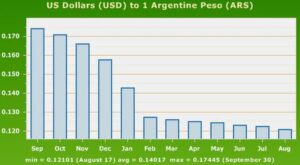
Gilder sees economic uncertainty as advantageous to bitcoin, a fact evidenced by the increasing interest in bitcoin observed in Argentina and other countries hampered by volatile fiat currencies.

argentine peso decline

The decline of the Argentine peso versus the US dollar from 2013 to 2014. Source: exchange-rates.org

As an example, Gilder believes that increased government control of money, such as capital controls or quantitative easing, means more uneasiness in terms of economic sentiment.
The more money [governments] print, the more uncertain the people become,” said Gilder. “Bitcoin is based on the understanding that the money supply doesn’t really matter.
Adrian Ash, the head of research at BullionVault, a gold storage company, pointed out:

Digital gold currencies have been tried and failed many times in the last 20 years. They came to nothing thanks both to state resistance, but also to lack of adoption.

However, it’s safe to say that bitcoin has progressed further than its failed predecessors. That may be, though, because previous electronic money alternatives like E-gold were backed by gold, and not by cryptographic keys. As a result, bitcoin might be the first to offer a substantial alternative that would appeal to gold enthusiasts.

Role as a currency

Another characteristic of bitcoin that makes it seem like an upgrade over gold is its protocol that allows value to be moved quickly around the globe. Regardless of how supportive gold enthusiasts are of their favorite store of value, there’s no denying it has limited appeal to mainstream consumers.
Bitcoin adoption by the average person remains a hurdle to overcome to ensure success, but the digital currency’s combination of novel innovations might allow it to complement existing methods of exchange.
“[The] chicken-and-egg situation [of adoption] might be resolved by bitcoin’s most exciting aspect – zero-cost exchange of value,” said Ash.
Along with adoption as a means of exchange, bitcoin could become a very useful currency, commodity and recording mechanism via its block chain. According to Gilder, the problem of velocity, or how much people spend a thing of value, is what will ultimately make bitcoin a success. Or a failure.
Gilder said:

“Velocity is what determines value. Not just printing money. Satoshi [Nakamoto] has an absolute 21 million bitcoin limit. Bitcoin is determined by velocity, by turnover rate governed by the people holding the coins.”

Bitcoin might be an iteration of gold – a 2.0 version. People can hold stores of it, as well as spend it – a property that gold cannot compete with.
“It’s important to note that gold isn’t used as currency anywhere today,” said Ash.
Given that even Ash concedes this point, bitcoin’s long-term success may lie in adoption. In other words, whether bitcoin is able to triumph and replace gold will lie with its peer-to-peer network, and just how large this base of bitcoin believers becomes in the years ahead.

Bitcoin believers

It’s hard to tell how many bitcoin users there really are. New bitcoin products and services are seemingly announced every day, and Mary Meeker’s presentation of bitcoin’s growth via the use of a chart showing the number of wallets in use (see below) shows there is traction.
While wallet use is growing, it’s not a one-to-one correlation – or even if many of the newly created wallets actually have bitcoin in them. It does show increased awareness overall, however.
Source: CoinDesk

Source: CoinDesk

However, it can be argued that gold investors will have to see the promise of bitcoin over the precious metal not only as a store of value, but also as a spending and transactional innovation.
The rise of consumer services continues, and energy focused on that particular sector of the bitcoin economy is notable.
For instance, in Canada, there are a number of options for people to buy or sell bitcoin. Not only do residents of Canada have access to an established exchange for the Canadian dollar, there are storefronts and even bitcoin ATMs available in most major cities.
Access to bitcoin for gold investors is the best way to prove the value of bitcoin to this subset of the market, and this is especially true in the US market.
In a poll conducted by Harris Interactive in December 2013, when bitcoin prices were at their all-time pinnacle, the majority of people still didn’t even know what bitcoin was. And, likely because of this, they indicated that they would much rather invest in gold over bitcoin.
Harris poll question: Would you rather invest in gold or bitcoin? Source: CoinDesk

Harris poll question: Would you rather invest in gold or bitcoin? Source: CoinDesk

The key to bitcoin as a new form of gold is to improve upon the precious metal. And that means making the most of its transport and currency capabilities.
For this to happen, an increase in awareness is needed  – and some proponents of gold already understand this fact.
Companies like the UK’s GoldMoney have been offering bitcoin as a storage option along with gold for some time. Furthermore. investment broker and author Peter Schiff, while making waves about his insistence that bitcoin could become worthless, is still nevertheless accepting it at his company, SchiffGold – a fact that should make gold investors take the digital currency a little more seriously.

Open your free digital wallet here to store your cryptocurrencies in a safe place.

Satoshi

The bitcoin industry in Australia!

Bitcoin adoption in Australia and New Zealand is increasing rapidly. Outpacing most of the Asian countries, the local startups and bitcoin merchants in Australia are trying hard to increase the bitcoin adoption in Oceania and help the local merchants to adopt bitcoin.
Currently, the major Australian exchanges have an estimated sum of 40,000 active local users and because of these exchanges, (including BTC markets, btradeaustralia, bitxoin and getbitcoin), there are more than 190 businesses accepting bitcoin in Australia. Although there aren’t as many “popular” or “famous” startups in Australia, the rapid growth of bitcoin exchanges and bitcoin merchants is helping the bitcoin industry thrive in Australia.
“The Bitcoin Association of Australia estimates that the Australian share of this market capital is approximately 2%. This means that the market capitalization for Australia is approximately $120 million.”

Open your free digital wallet here to store your cryptocurrencies in a safe place.

Satoshi
Coles 630x250

Why Timothy Coles is selling his $2 Million Gold Mine for Bitcoin


Timothy Coles is the man behind the profitable gold mine in the Yukon
city of Dawson currently for sale for just over 3,200 BTC on luxury
marketplace BitPremier.


With more than 30 years of experience in the gold mining industry,
Coles brings a unique perspective to digital currency and the concepts
that underly the technology. He sees bitcoin as a one-of-a-kind type of
asset.


Coles told CoinDesk that he first learned about bitcoin while
wintering in the Philippines. Casual research grew into more active
investigation, leading to discussions about how bitcoin might fit into
plans to sell off his gold interests in the Yukon.


With the mine now for sale on the luxury exchange, Coles is optimistic about bitcoin’s prospects, saying:


“I believe bitcoin has nowhere to go but up. In the long run, it’s just going to get stronger and stronger and stronger.”


He added that although he currently owns no bitcoin, he sees a future
in it should the BitPremier sale succeed. While he has no active plans
to invest were he to enter the market, Coles expressed an openness to
invest in the broader bitcoin industry, including the mining sector.


The mine is currently on sale for $2m and reportedly generates $1m in annual revenue.


Bitcoin vs gold


When discussing the similarities and differences between gold and
bitcoin, Coles cited the fact that the prices in digital currency
markets are set by supply and demand.


By comparison, gold is subject to geopolitical pressures that have,
in his eyes, made it a less attractive option over the years:


“The people that have the bitcoin are the ones that can
drive the price up, or drive it down, depending on what ups. Whereas
gold, the people that have the gold are really at the mercy of
politicians, financial institutions, London fixes that we really know
nothing about. People that have gold really have no control over the
direction that goes.”


He went on to suggest that these influences could one day take a toll
on bitcoin. However, he said that the decentralized nature of digital
currency technology makes it “less susceptible to manipulation compared
to gold”.


Coles added that the price of bitcoin
went too high too quickly, resulting in an equally swift correction. In
the months since – which has seen a raft of both positive and negative
news for bitcoin – the price, he said, has risen on the merits of its
strength rather than pure hype or speculation.


Bitcoin needs education


One of the key problem areas of bitcoin, Coles said, is a lack of
education among the broader public. This is due to the novel
characteristics of bitcoin that make it not quite a currency, commodity
or property. Instead, it lies somewhere in the middle.


As a result, Coles reckoned, bitcoin’s success – and its price –
hinges on whether or not more people learn about how it works, how they
can acquire it and, most importantly, how they can use it.


He explained:


“I believe that bitcoin needs some advertising the world
over to learn more about what it’s all about. Nine out of 10 people I
talk to have heard of bitcoin, but they don’t know about it, they don’t
understand and they don’t want to because it’s out of their realm of
understanding.”


Pointing back to the topic of political impact on bitcoin, having an
environment in which more people understand how to use digital currency –
and do so – could enable the bitcoin market to operate without
manipulative influence from the outside.


More gold plans ahead


While citing problems in the global gold market, Coles said that
after the sale of his mining interest in the Yukon he’d stay on the
lookout for new opportunities. Issues aside, he said that he makes a
“good living” in the gold market, joking that the industry was “spoiled”
in 2012 and 2013, when gold prices surged above $1,700 an ounce.


He explained:


“I would still always keep my eyes open for opportunities in gold mining. It’s something that’s in your blood.”


As outlined in the BitPremier advertisement, Coles is offering to
help provide logistical and managerial support to a potential owner. The
sale actually has two components: Canyon Creek, a developed, three-mile
property with drilling and exploration already conducted on the plot,
and an existing lease in the Bonanza Creek region.


Coles explained the real prize in the sale are his interests on Bonanza Creek,
a waterway in the Yukon made famous for the abundance of gold
discovered in the region. He suggested they are the heart of something
that offers “big potential” to interested investors.


Open your free digital wallet here to store your cryptocurrencies in a safe place.

Satoshi