The great unknown Bitcoin killer app

Open your free digital wallet here to store your cryptocurrencies in a safe place.
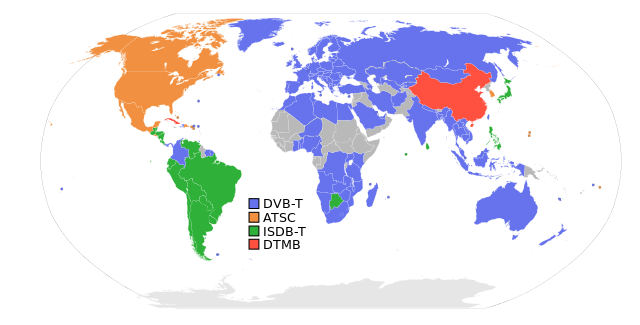
Kryptoradio: Connect to the bitcoin network from anywhere – even without the Internet!
What is Kryptoradio?
- transmits bitcoin transactions, blocks, and currency exchange data,
- does all this in real-time,
- uses terrestrial television (DVB-T) transmitters around the world.
- Bitcoins in the air, literally speaking.

Why?

- creating unprecedented devices and applications,
- making the bitcoin network more resistant to attacks,
- promoting bitcoin as a viable payment platform, and of course
- because they can!
“Alternative blockchain transports are critical to the success and survivability of the Bitcoin system.”
Bitcoin core developer – Greg Maxwell
What happens next?

2014 and last for 2 months. The broadcast area covers 95% of Finnish population, approximately 5 million
people. More information in the press release.
including maintenance costs is about € 2000 per month (VAT included). They are currently looking for partners to that stage.
technologically or by the number of users. If someone has ideas how to collect funds for this project, please contact us!
How to contribute
without compensation. However, in this case the compensation is the radio broadcast.
Open your free digital wallet here to store your cryptocurrencies in a safe place.
Cryptocurrency: Fundraising Evolved
Open your free digital wallet here to store your cryptocurrencies in a safe place.
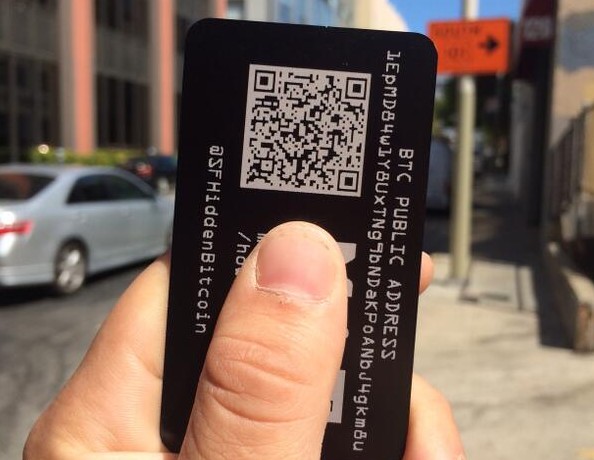
Someone is giving away Bitcoin in San Francisco
 |
| Image: CoinDesk |
You don’t pay $10m for a house without making a few enemies #Bitcoinpic.twitter.com/WSN2snj3XQ
— SF Hidden Bitcoin (@sfhiddenbitcoin) July 3, 2014
1KeKnYh4hX6LR12AHetbQVjknXdti8TusZ #bitcoin right here – you can virtually poke it.#hiddenbitcoin #hiddencash pic.twitter.com/WqcukMmcmm
— SF Hidden Bitcoin (@sfhiddenbitcoin) July 4, 2014
Open your free digital wallet here to store your cryptocurrencies in a safe place.
Nick Szabo (Bitcoin founder Satoshi Nakamoto?) Breaks his Silence with a Tweet
to bitcoin, the person who coined the term smart contracts in 1993, and
believed by many to be Satoshi himself, published a one line blog post
today which simply contained a link to his twitter account.
2013, almost seven months ago, leaving many to wonder whether he would
ever post again. The seven months silence seems to have followed
increasing attention on Nick Szabo after numerous suggestions that he might be Satoshi.
In April 2014, researches from Aston University’s Centre for Forensic
Linguistics claimed that forensic analysis of Bitcoin’s White Paper
suggests that Nick Szabo was the author of the paper.
that he is Satoshi and many argue that it is highly unlikely that he is
the author of the white paper. Nick seems to have been focused on
bitgold, writing a blog post about bitgold two months after Satoshi
announced bitcoin.
pictures of him, no verifiable details of his age, location, profession
or education. Previously, in a Wikipedia article, it was claimed that he
was a law professor at George Washington University, but reporters claim
that after contacting the University they found no record of a person
named Nick Szabo ever being a professor at that university, although
there was one record of a person having studied at that university under
that name. The name therefore might be a pseudonym, a pen name.
Nick Szabo Highlights the Dangers of Centralized Currencies
retweet of a statement by Proton Mail complaining that their PayPal
account had been frozen, blocking access to $275,000 of funds. In a
statement in their blog Proton Mail details what happened:
details, he questioned whether ProtonMail is legal and if we have government approval to encrypt emails.”
Paypal froze $215K in encrypted email startup, @ProtonMail‘s account over “government approval to encrypt emails”? https://t.co/VoqpHSTrEE
— lilia (@liliakai) July 1, 2014
intermediaries as emphasized by both Nick Szabo in his blog post and
Satoshi in his announcement on bitcointalk. We need to trust that our
accounts will not be blocked, our funds will not be tampered, our
government will not arbitrarily take funds, or that our banks will not
bankrupt our country as they did in Greece and Cyprus.
need no such trust. There is no authority that can block our private
keys to interact with our public keys, so accessing our wealth and using
it in whatever way we alone see fit.
Open your free digital wallet here to store your cryptocurrencies in a safe place.
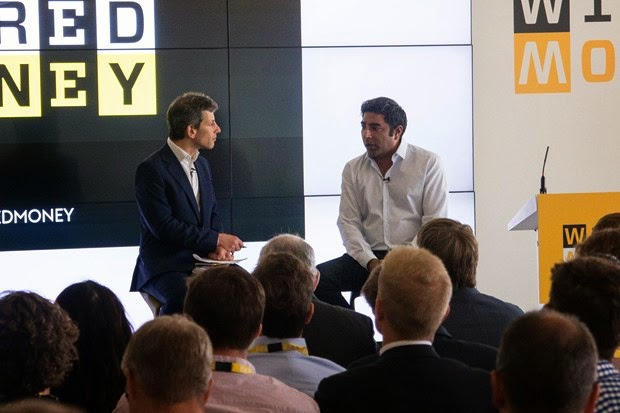
Shakil Khan: cryptocurrencies are here, embrace them
already disrupting payments and won’t be stopped, serial investor
Shakil Khan told the audience at Wired Money 2014. So get on board
with change.
much-misunderstood, unstable currency, to a more mature offering
that is finding its place in ecommerce and investor portfolios. So
rather than focus on regulation, which will only delay the
inevitable, the financial sector needs to focus on supervision and
take on the opportunities cryptocurrencies provide.
David Rowan, has invested in Spotify and YPlan, and advised teen
founder of Summly Nick D’Aloisio. But it was in 2012, when he first
heard about a payment company attempting to tackle the Bitcoin
ecosystem, that the cryptocurrency crossed his path. In the
following years, he found himself becoming a point-of-contact for
investors, suddenly intrigued by a currency that went from $10-25
per Bitcoin in 2012 to $260 in 2013.
entrepreneurs asking who is this company Mt Gox? Not because I was
the smartest person, but because there was a different wave of
people who weren’t publicly talking about Bitcoin. Morgan Stanley
was phoning me not because we had a relationship, but because
people were calling them and asking advice, and they were coming to
me.”
BitPay. That’s a lot of hard cash for a currency that dips and
peaks dramatically according to government opinion — for instance
when the FBI referred to it as a currency, Bitcoin became stronger;
when China restricted exchanges and warned it would keep an eye on
the currency, its value tumbled.
average consumer to participate in this — it’s the same as
stocks,” said Khan. We in the tech industry are more than familiar
with Bitcoin, beyond the Silk Road headlines, and those in the
financial sector have followed suit. But it is not yet something
that is impacting the average banking customer. “Right now, it’s
something that’s not for the faint hearted, just like stock trading
where people make 3 percent gains one day, and 25 percent losses
the day after.”
made in the cryptocurrency ecosystem — and this is because, as
Khan reiterated onstage, there is a “fundamental problem with
payments”.
three seconds. But if I want to pay someone 200 kroner online it’ll
cost be $32 and might take four days for the payment to arrive.
That makes zero sense, and cryptocurrencies solve this
problem.”
result of this, says Khan.
Andreessen Horowitz, Fred Wilson and Redpoint. This is a sector
everyone knows is going to get disrupted, and they need to be part
of that journey. Companies like Bit Pay were very early, now we
have ecommerce companies starting accepting Bitocin. Amazon has its
own plans on virtual currency.
then we had email. We’ve seen this over and over, and if you have
passion and an appetite for risk, why wouldn’t you? I don’t want to
turn around and five years say why wasn’t I part of this.”
evidenced by the stories being published by Khan’s own site
Coindesk, which are picked up by the likes of the Wall Street
Journal and Dow Jones. “Over the last 12 months it’s
much less of Silk Road, and more of Visa setting up a group looking
into cryptocurrencies and Western Union or Ebay looking into
Bitcoin.”
Bitcoin, Khan points out that the US $100 note is the chosen
currency of the criminal world — it’s what they’ll find in raids,
and its what the CIA drops in bales of cash into Afghanistan.
“They’re not sending smartphones, they were sending US dollars.”
Recently, the US government sold off the 30,000 Bitcoin it seized
during the Silk Road shutdown. Khan points, “I don’t remember the
US government selling cocaine seized from raids, so you can’t say
it’s illegal and shouldn’t be allowed.”
you don’t understand something, you get fearful of it.”
there is something attractive here for investors — Khan says the
coins, currently priced at $650 each, went for above that
value.
not broken. “I’m guessing there are laser printers out there
devaluing that money quicker than the paper can be printed,” Khan
said.
Open your free digital wallet here to store your cryptocurrencies in a safe place.
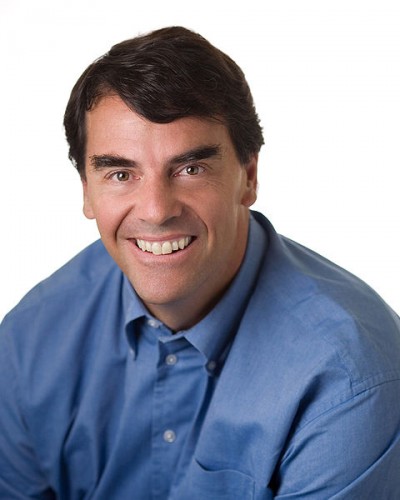
Tim Draper, venture capitalist, wins government Bitcoin auction
(OnBitcoin) Tim Draper,
a Silicon Valley venture capitalist, was the sole winner of the US
Marshal Bitcoin auction. Mr. Draper purchased all 30,000 BTC, outbidding
many other participants in the auction such as Barry Silbert’s
SecondMarket.
Draper is an investor in Vaurum, an exchange platform for financial institutions.

In a statement,
Vaurum founder Avish Bhama said that Draper’s new bitcoins will be used
to provide liquidity to emerging markets through Vaurum.
“Bitcoin frees people from trying to operate in a modern market
economy with weak currencies. With the help of Vaurum and this newly
purchased bitcoin, we expect to be able to create new services that can
provide liquidity and confidence to markets that have been hamstrung by
weak currencies,” said Draper. “Of course, no one is totally secure in
holding their own country’s currency. We want to enable people to hold
and trade bitcoin to secure themselves against weakening currencies.”
Open your free digital wallet here to store your cryptocurrencies in a safe place.

Education to consider for the Bitcoin user
(CoinTelegraph) This month, the number of educational institutions welcoming students who wish to pay using digital currency has increased substantially. This comes as no surprise, however, since the current academic year just ended, registration is opening up for the fall semester.
The King’s College, NYC, US
One of the leading institutions in the United States – The King’s College announced that it will be welcoming students who want to pay using Bitcoin.
The King’s College is a Christian liberal arts college founded in 1938 by Percy Crawford, located in Lower Manhattan, New York.
Now with help of New York’s Coin.co it becomes the first accredited
college in the US to accept digital currency. Dr. Gregory Alan
Thornbury, President of The King’s College stated:
“The King’s College seeks to transform society by preparing students
for careers in which they help to shape and eventually to lead strategic
public and private institutions. Allowing Bitcoin to be used to pay for
a King’s education decreases our costs while simultaneously allowing
our students to be a part of this exciting new technology.”
Team Treehouse
On Thursday June 12, a famous US-based online education provider – Team Treehouse – officially announced that it will be accepting Bitcoin via Coinbase as one of a payment options. The company’s press release stated:
“As one of the fastest growing payment methods, Bitcoin will give
more people across the world the opportunity to learn with Treehouse.”
Treehouse is a place for people who want to learn how to coup with HTML or CSS, make iPhone apps, start their own business.
University of Nicosia, Cyprus
Once again we mention the University of Nicosia,
which was the first to accept Bitcoin for payment of tuition and other
fees. Dr. Christos Vlachos, Chief Financial Officer for University of Nicosia stated:
“Digital currency will create more efficient services and will serve
as a mechanism for spreading financial services to under-banked regions
of the world. In this light, we consider it appropriate that we
implement digital currency as a method of payment across all our
institutions in all cities and countries of our operations.”
Anyone who wants to advance their education here will probably find a
an area of interest they’re looking for – University of Nicosia offer
schools of business, education, humanity, social science, law,
engineering and arts.
A big advantage of the University of Nicosia is that it is accepting
Bitcoin throughout their whole University network, including affiliated
institutions in London, Cyprus, Greece, Romania and others.
University of Cumbria, UK
In the beginning of the year, the University of Cumbria in the United Kingdom also announced that it will accept Bitcoin for the payment of fees. The founder and director of IFLAS, Professor Jem Bendell, stated:
“We believe in learning by doing, and so to help inform our courses
on complementary currencies, we are trialling the acceptance of them.
The internal discussions about currency and payment innovation and the
practical implications for different departments have been insightful.”
The acceptance of Bitcoin is limited to the two programs only – Certificate of Achievement in Sustainable Exchange and Postgraduate Certificate in Sustainable Leadership. Both courses are already in progress as a trial though it shouldn’t be the last one as “the university will learn from this trial and develop its awareness of innovations in complementary currencies and payment technology.”
Language centers
Additionally, there are also various private languages studios all over the world happy to accept digital currency.
A2Z School of English could be the first English as a Second Language (ESL) school in the world to accept digital currency. The announcement that it will adopt Bitcoin as a payment method was published back on November 5, 2013. A2Z School of English was founded in 2006 by James and Luciene Taylor and today has locations in Manchester, London and Dublin, offering various English language classes. BairesClases accept Bitcoin for Spanish classes. You can have face to face lessons in Buenos Aires Argentina or classes over the Internet for students anywhere in the World for anyone from beginner to advanced. Ru-SprachStudio.ch offer Russian courses in Zürich or Zug, Switzerland for Bitcoin. Customers may choose one-on-one private lessons or lessons in groups of 3-4 people. Their teaching approach also uses modern methods to develop your ability to communicate in the Russian language. Cinta Bahasa in Bali, Indonesia, offers Indonesian Language courses to foreigners and they also accept Bitcoin. They have schools in Ubud, Sanur, Kuta, and Canggu, Bali to teach students the language they will need to feel comfortable travelling around in Indonesia. Educational institutions are a major driver in the world’s progress. By embracing cryptocurrencies, these schools and universities are demonstrating their willingness to prepare students for a world with cryptocurrencies and a better future.
Open your free digital wallet here to store your cryptocurrencies in a safe place.
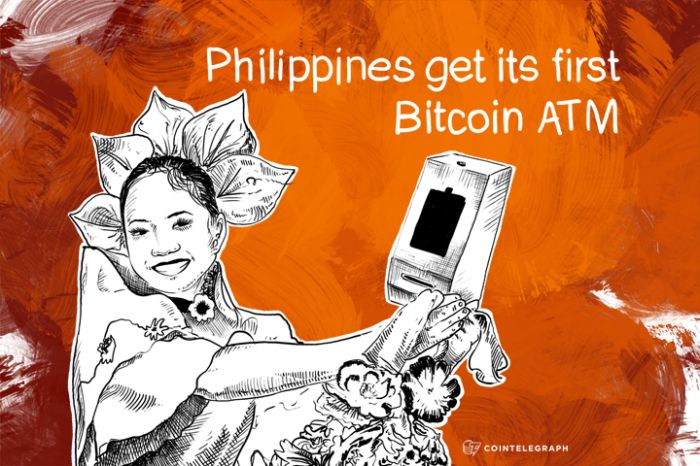
Philippines get its first Bitcoin ATM

(CoinTelegraph) The Philippines welcomes its first Bitcoin ATM. Brought by Satoshi Citadel Industries and Bitmarket.ph,
the machine will be ordered from Skyhook and will cost $US 999. ATMs
are no longer exciting news, yet this one is a lot smaller in size and
it will speak to the success of Bitcoins on a global scale. The ATM will
appeal to a wealth of people and cultures with money to trade and
transactions to process.
A better understanding of Project Skyhook
What is Skyhook? Skyhook is an open-source Bitcoin ATM.
Selling Bitcoins was once difficult, and many people were tired of
depending on exchanges and centralized banks to buy Bitcoins. Skyhook
changed everything. The company developed a tiny and secure machine
everyone can use to exchange Bitcoins.
It comes with a hefty security mounting plate and a password-on-boot
options. It someone steals it, you have nothing to worry as your
Bitcoins will be safe. The ATM accepts Australian, US, and Canadian
dollars, as well as Argentinean Pesos, Yuan, Euros, and numerous other
currencies.
Easy to set up, Skyhook comes with a detailed guide you should use to
get started. Buyers will require a Wi-Fi or wired internet connection, a
power cable, and Bitcoins to sell. The touch-screen graphical interface
of Skyhook will ease your job to buy Bitcoins and make use of the QR code for wallet address recognition.
Skyhook sets Bitcoin prices automatically using major exchanges.
Afterwards, it adds a minimum price protection so that you can get paid
for using Bitcoins. The ATM machine is excellent for vendors,
storefronts, bars, meet-ups, and merchants. Set your rate and start
trading.
Bitcoin, a global phenomenon now available in compact size in the Philippines
Unlike the other two popular Bitcoin machines, Lamassu and Robocoin,
Skyhook is a lot smaller, and of course, less expensive. Owned by a
Filipino company known as Bitmarket.ph, locals will finally be able to
trade Bitcoins with Philippine pesos and not have to worry about
exchange rates. To use Bitmarket.ph all you have to do is activate and
access your account. Next, type your transaction’s details (details of
the buyer and item for sale). Enter your selling price and exchange it
in Bitcoins immediately.
Generate a QR code and use the code to share it with clients.
Bitmarket additionally offers cash settlements where you can convert
Bitcoins into Philippine pesos daily. Bitcoins provide fast, real time
transactions to customers. Trading Bitcoins keeps people away from
chargebacks, bank fees, and commissions. Unlike other forms of exchange,
Bitcoins provide transparency where you can track each one of your
transactions in real time. Vendors accepting Bitcoins are essentially
adding value to their business by gaining a competitive advantage as a
first adopter and cutting costs.
Now that the Philippines is finally welcoming its first Bitcoin ATM,
people will “dispense Bitcoins for Pesos on the spot in a matter of
seconds at competitive and fair rates.”
Open your free digital wallet here to store your cryptocurrencies in a safe place.
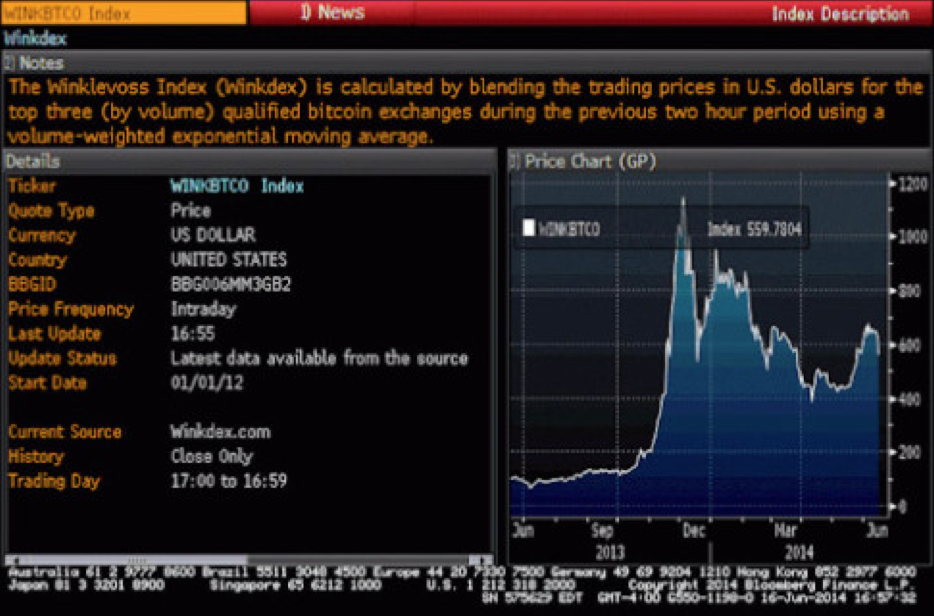
WinkDex price gets added to Bloomberg
This simple but effective bitcoin price composite is the official
price measure of the Winklevoss’ bitcoin ETF, currently awaiting
regulatory approval by the United States Securities and Exchange
Commission.
And according to a post made on the Winklevoss Capital website,
the price data is now available on Bloomberg in a move some suggest may
further legitimize the digital currency in the eyes of traditional
financiers.
“We are honored to be working with Bloomberg to bring a blended
bitcoin price index to their wide-reaching investor community,” the post
read, adding that some new features (of which include an API) will be
unveiled in the weeks upcoming.
According to the announcement, the ticker for the WinkDex is very apt: WINKBTCO.
The Bloomberg terminal is a professional service used by financial
professionals. Each license to the service costs upwards of $20,000 per year.
For more information on the WinkDex, visit their official website.
Open your free digital wallet here to store your cryptocurrencies in a safe place.