
Category Archive: Articles

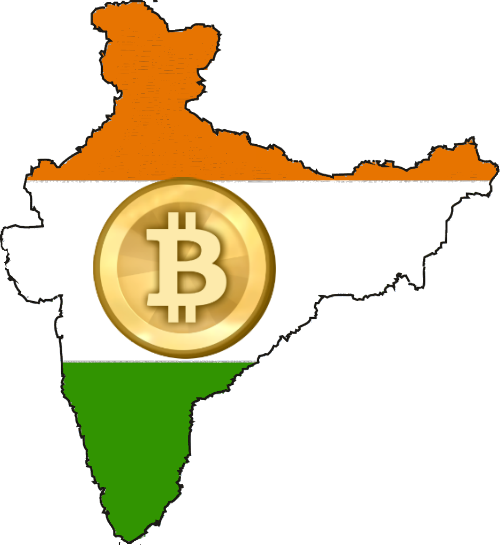
Bitcoin can stabilise volatile market in India

(TimesOfIndia) At a time when the country has suffered devaluation of rupee against
dollar, inflation and fuel price volatility in exchange market, two
students of Fellow Programme in Management (FPM) at Indian Institute of
Management, Indore (IIM-I) have rekindled hopes to address the problems
through introduction of ‘Bit Coin’ currency system.

Bitcoin is
a crypto currency which currently has market capitalisation of $8.1
billion. The recognition is mainly because of its introduction during
financial crisis, when trust on government and policy makers was low. It
is an alternative to card networks and money transfer system.

Khadija Vakeel and Nitya Saxena of IIM-I in their study found out that
at a time, when the country is struggling to achieve a respectable
position on matters of financial inclusion, Bit Coin can be a game
changer.

Bitcoin can also lead to a new industry and challenge
for IT youths and can address the problem of brain drain. While
Singapore is pro bit coin, China stands against it. India is yet to take
a side. Users having Bit Coin can enter into virtual goods and services
exchange. The study states that inflation is simply a rise in prices
over a period of time, which is generally the result of the devaluation
of currency.

This is a function of supply and demand. Given the
fact that the supply of bit coins is fixed at a certain amount, unlike
fiat money, the only way for inflation to get out of control is for
demand to disappear.

Open your free digital wallet here to store your cryptocurrencies in a safe place.

Satoshi
etukuva1

Estonia bank to study benefits of integrating Bitcoin technology

etukuva[1]

(CoinDesk) Estonia-based bank LHV has announced a new project that will explore
the legal framework and potential uses of bitcoin’s block chain
technology in banking so it might develop bank services for bitcoin and
other digital currencies.
“We are interested in the technological
side of digital currencies as we hope it could make bank services more
simple and efficient,” Priit Rum, head of communications at LHV, told
CoinDesk.
The project manager will examine all digital currencies, not limiting itself to bitcoin.
For
now, the bank won’t engage in trading bitcoin, Rum said, but more
likely, could develop its payments system using block chain technology.
The company claims to be the first bank in the world to implement such a program, stating:

“We
have been aware of crypto currencies for some time now […] we decided
last month that establishing a side project to explore the block chain
technology and analyse possibilities of cryptocurrencies would be a good
opportunity to stay with the innovation.”

Regulatory uncertainty remains

While the news of this action by a major bank is perhaps encouraging, in Estonia, bitcoin is tangled in regulatory uncertainty.
Earlier this year, the country’s central bank issued a warning
against bitcoin and digital currencies calling it a Ponzi scheme,
saying “virtual currency schemes are an innovation that [deserve] some
caution”, but that it would continue to monitor their development.
Shortly after, local bitcoin trading site BTC.ee put a halt on trades, coming under pressure from Estonian authorities who challenged the site’s compliance with the Money Laundering and Terrorist Financing Prevention Act.
Said Rum:

“LHV
is a regulated bank and we take all the regulations and guidelines very
seriously […] For us, all the questions about ‘know your customer’ and
concerns of money laundering have to be dealt with before we can really
develop new bank services using new technology.”

Local enthusiasm grows

Estonians have been enthusiastic about bitcoin for some time, despite the regulatory difficulties the domestic ecosystem faces.
The
country’s capital Talinn had a successful week-long bitcoin showcase
last month, during which bitcoin advocates came together to educate
those new to the digital currency and boost its popularity.
For more on the latest developments in the eastern European economy, read our most recent report.

Open your free digital wallet here to store your cryptocurrencies in a safe place.

Satoshi

How a 15-Year-old’s $1,000 Bitcoin investment led to startup success

finman, entreprenuer
Erik Finman
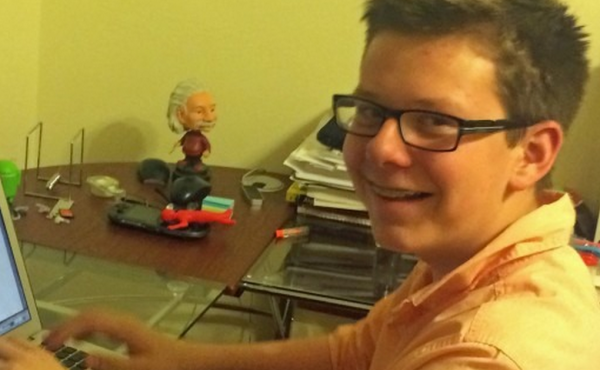
(CoinDesk) A well-timed investment of $1,000 in bitcoin has earned a 15-year-old
Idaho entrepreneur more than $100,000 and allowed him to found his own
education startup.
Erik Finman took $1,000 he received as a gift
from his grandmother and invested it in bitcoin back in 2012, according
to a report by Mashable. After holding his BTC for one year, Finman sold his bitcoins for $100,000.
Finman ultimately decided to reinvest his earnings into Botangle.com,
an online video tutoring service that “allows students and tutors
access to a diverse array of resources that just do not exist in a
normal classroom setting”, according to its official website.
Notably, Finman pays his employees in bitcoin. He told Mashable that he enjoys “sharing the wealth of bitcoin”, saying:

“I have no doubt it will be huger [sic] than anyone can imagine right now. Bitcoin is like the Internet in the ’90s.”

Early bitcoin supporter

During a question-and-answer session that he took part in last month on the Entrepreneur subreddit, Finman explained how he first came to learn about bitcoin, writing:

“I
owe a lot to my older brother. He told me about bitcoins and help[ed]
me get set up with 0.2 bitcoins that he gave me. And my grandmother just
out of the blue gave me a $1,000 check for Easter.”

He
continued by saying that he accrued more bitcoins “so I can trump my
brother in how many bitcoins he had”, adding that he first learned about
bitcoin in 2010.
Luckily for Finman, he sold his stash of bitcoins when the price hovered around $1,200 per bitcoin.
Though
entrepreneurs may not be able to replicate Finman’s success, they can
learn from those who have entered the industry through more conventional
in-roads. For more on how today’s bitcoin startups are making gains
despite the tribulations of an emerging market, read our most recent report.

Open your free digital wallet here to store your cryptocurrencies in a safe place.

Satoshi
Screen Shot 2014 06 11 at 17.58.40

Google joins Yahoo in offering Bitcoin prices

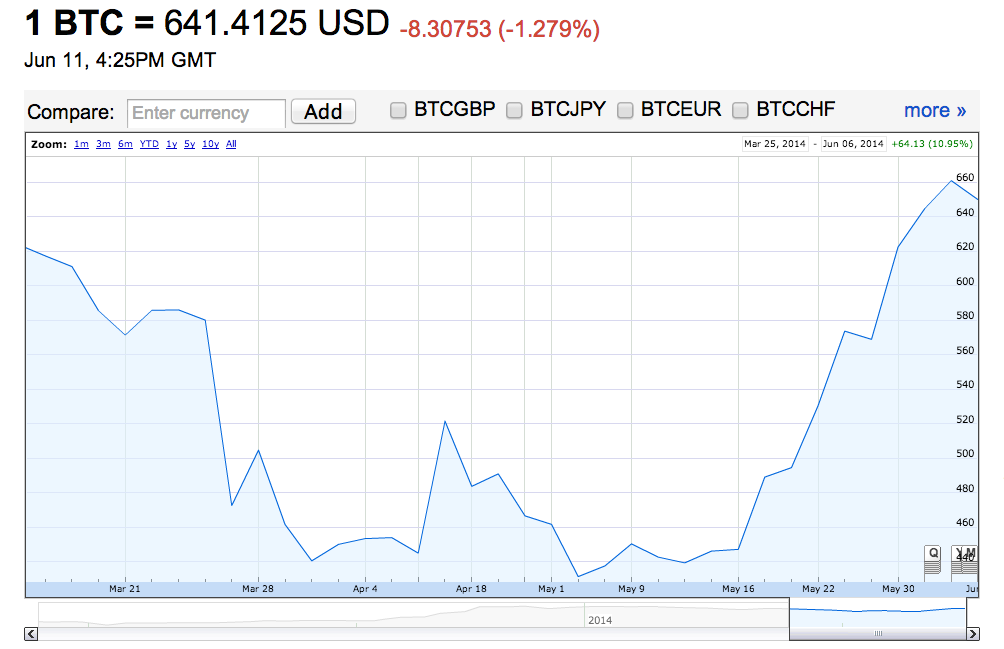
(CoinDesk) Google Finance has launched a bitcoin price tracker, offering market
information across several major fiat currencies as well as access to
breaking news in the digital currency world.
Users can access prices in BTC/USD markets, as well as prices in pound sterling, yen, euro, renminbi, Australian dollar and Canadian dollar markets.
The tool also enables review of historical prices dating back to June 2013.
google
The
Google Finance bitcoin tool enables quick BTC-to-fiat conversions as
well, allowing for calculations across dozens of currencies such as the
Yemeni rial and the Bangladeshi taka.
The move comes hot on the heels of the Yahoo! Finance bitcoin price listing. In addition, Bloomberg opted to add bitcoin prices to its terminals in late April.
CoinDesk reached out to Google for comment on the decision, but did not receive an immediate response.

Simple design

The layout in Google Finance is simple, allowing for easy navigation without many bells and whistles.
google
Users can list multiple fiat currencies against the price of bitcoin, and the tool’s news tracker pegs the timing of news releases with the fluctuations in the market.
The tool bears many similarities to Yahoo! Finance’s tool,
though it utilizes different layout schemes for graphs and news
tickers. However, Yahoo! Finance does not offer bitcoin price
conversions to other currencies.

Open your free digital wallet here to store your cryptocurrencies in a safe place.

Satoshi
3553542429

Tel Aviv to get first Bitcoin ATM in Middle East

The new machine will allow users to buy and sell their bitcoin at all hours of the day and night without going through bureaucracy.

(Haaretz) The first Bitcoin automatic teller machine in the Middle East will be
launched in Tel Aviv on Wednesday. Bitcoin is a peer-to-peer virtual
currency that allows for transactions between users without any third
party or middle man.

The
“cash-out capable Bitcoin vending machine,” made by American company
Robocoin, has several security features built in to prevent theft and
fraud that are compliant with anti-money laundering regulations,
according to a press release.

“The
launch of the first Bitcoin ATM in the Middle East will allow any
person with no previous knowledge of bitcoin and how it works to easily
buy and sell bitcoin 24/7 bypassing the bureaucracy of the banks,”
Bitbox CEO Nimrod Gruber said. Bitbox the company bringing the first
Bitcoin ATM in Israel.

Until now, all transactions had to either go through a bank or through private trading, which lacked credibility.

According
to Gruber, many people are looking for an easy way to sell or buy their
bitcoin for local currency, and this ATM will allow them to do so.

Foreign
workers, for example, can buy bitcoins in shekels and have their
families withdraw cash in local currency at a bitcoin ATM in their
country.

The launch takes place Wednesday night at the TOWN-HOUSE TLV hotel, 32 Yavne St. at the corner of Rothschild Blvd.

Open your free digital wallet here to store your cryptocurrencies in a safe place.

Satoshi
shutterstock 97676123 300x185

First Bitcoin hearings at the Italian Parliament tomorrow

Tomorrow, in the Aldo Moro meeting room of the Italian Parliament there will be a consultation on the open source Bitcoin protocol. The technical aspects will be introduced by:
  • Sebastiano Scrofina – CEO and Co-Founder at Dropis
  • Guido Baroncini Turricchia – CoinCapital’s Partner
  • Francesco Vatalaro – Università Di Tor Vergata
  • Massimo Bernaschi – CNR
  • Ferdinando Ametrano – Banca IMI – Università Bicocca
  • Roberto Tudini – Studio Tudini&Tudini
In the second part there will be a round table that will allow for the comparison of ideas and the points of view of different stakeholder. The event is organized by the On. Quintarelli and CoinCapital, bringing the Bitcoin inside the walls of the Italian Parliament allowing to highlight the risks and the opportunities.
Offering to the parliament a first overview and a neutral basis to start an aware and balanced discussion.

Open your free digital wallet here to store your cryptocurrencies in a safe place.

Satoshi

Malaysian retail giant i-Pmart will hold 100% of its Bitcoin Payments

(CoinDesk) Another e-commerce giant has joined the bitcoin world, with major
Malaysian online mobile phone and electronic parts retailer i-Pmart
adding it to the list of accepted payment methods last week.
CEO
and founder Mart Tang also said the company will hold onto the bitcoins
it earns and watch the price rise, rather than convert them into local
fiat currency.
Although based in Malaysia, the company ships
worldwide from outlets in its home country, plus China and the US. The
bitcoin option was introduced first to the Malaysian site only, though
international customers may still use that version.
All other i-Pmart sites worldwide will start accepting about 20 days from now, as soon as the integration process is complete.

Low-key launch

What’s most surprising about i-Pmart’s
decision is the lack of fanfare with which bitcoin was added to the
list of options. Rather than publicizing it, or even celebrating the
announcement with its 730,000+ fans
on Facebook, the company added the bare-bones line “We accept bitcoin”
and an icon into its long list of existing payment options.
ipmart options
i-Pmart
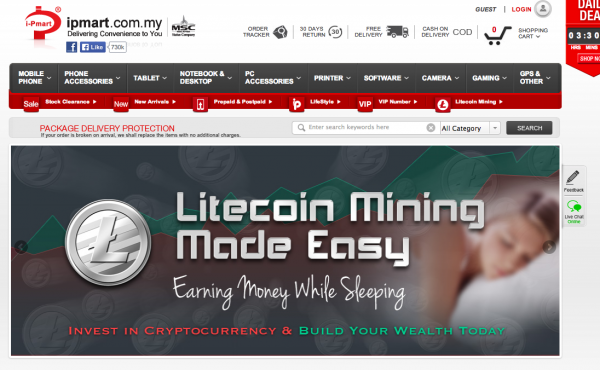
is also a big seller of litecoin mining equipment, selling GPU-based
rigs both to advanced users to self-assemble with the ‘Savvy Pack’, and a ‘Newbie Pack’ for beginners that includes the option to have i-Pmart assemble, host and even operate the hardware for them.
Despite this, however, the company is not adding litecoin as a payment option yet.

Bitcoin fan

CEO
Tang said his interest in bitcoin came from being an IT entrepreneur
always searching the Internet for the latest tech information and
gadgets.
Shortly after absorbing everything he could about bitcoin
and other digital currencies, he began hearing about merchants in other
countries accepting bitcoin and studied how to become a digital
currency miner himself.
“This gives me more insight into bitcoins and others types of coin on how it works and benefits from it,” he said.

“That’s
how I have started to think if I have customers who want to use bitcoin
to purchase my products online which gives convenience of various types
of payment choice especially those who do not prefer to pay using their
credit card, cash or other mode of payment.”

He then
sat down with his web development team to discuss how to integrate
bitcoin as a mode of payment in the business portal www.ipmart.com
globally.

“[I’m] looking forward to the new world of
virtual payment choice, which I believe can be the future of global
virtual currency that people might embrace, especially the Gen Y.”
“I
am holding the bitcoin. Because having a very big confidence the price
of bitcoin is not the rates of today USD 650, should be higher than this
price very soon.”

Company background

The i-Pmart Group of Companies was founded in 2001, and has focused mainly on the international market since 2005. It has ‘MSC status’ in Malaysia, meaning it is part of the country’s ‘Multimedia Super Corridor’ initiative designed to promote Malaysia as a regional center for world-class technology businesses.
The
group now consists of domestic and internationally-focused retail
sites, plus arms specializing in management, development, and logistics.

Open your free digital wallet here to store your cryptocurrencies in a safe place.

Satoshi
cointelegraph.com

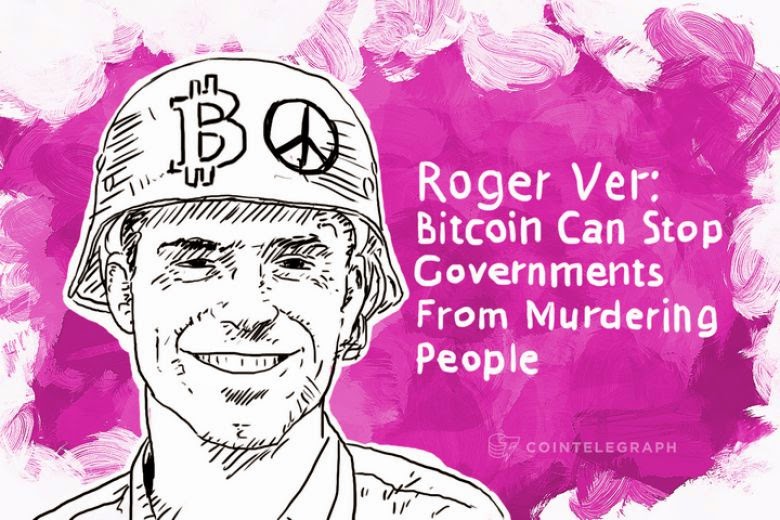
Why Bitcoin is important for the world: Bitcoin can stop governments from murdering people

(CoinTelegraph) Bitcoin evangelist, libertarian and millionaire Roger Ver thinks that
Bitcoin’s limited growth can stop governments from raging wars across
the world. 
Ver gave a speech at Coin Congress in
Singapore back in May entitled “Why Bitcoin is Important for the World.”
It was a sort of quick introduction into the world of Bitcoin, until
Ver used the last few minutes in his speech to “rant about what has
[him] most excited about how Bitcoin is going to change the world for
the better.” 
Ver, who runs what was one of the first mainstream sites to take bitcoin payments, MemoryDealers, said that fiat currency was to blame for Governments’ (like his own United States) penchant for raging wars overseas. 
Ver
said that “Not only do they control [fiat], they can print as much of
it as they want at any time. . . I see the United States Government
printing money like crazy and then they use that money to buy all sorts
of tanks and bombs and airplanes and murder people all over the world. .
. all that is being paid for by printing money.” 
“With
Bitcoin,” Ver continued “because there is a limited supply, that sort
of thing can’t happen.” Ver hopes that Bitcoin’s inability to be printed
at will, will prevent governments from using printed money to fund
warfare. 
Ver sees a world that uses Bitcoin as one that is “much safer” for every individual on the planet. 
Bitcoin’s
possible effect on world peace is something we won’t know until if and
when it obtains true widespread adoption. But it is true that Bitcoin
can’t be printed out of thin air due to a limited supply. If a
government used it as legal tender then they would have to find a
different way to fund any war.

Open your free digital wallet here to store your cryptocurrencies in a safe place.

Satoshi
stallman dollar two

Which celebrities are getting into Bitcoin?

(TheCoinFront) Here in the Bitcoin world, we’ve built up our own celebrities. Figures like Andreas Antonopolous, Erik Voorhees, Stefan Molyneux, Brock Pierce, Charlie Shrem, and Gavin Andressen should, for better or worse, be familiar names to all Bitcoin aficionados.
But
there are many celebrities in the outside world as well who have begun
embracing Bitcoin and cryptocurrency. Here are just a few of them:

Ashton Kutcher

Kutcher may be best known for playing
simple-minded characters like Kelso from That 70’s Show or Jesse from
Dude Where’s My Car, but in reality he’s anything but.Through his fund, A-Grade Investments, he’s invested in companies like
BitPay, which allows merchants to accept Bitcoin payments. He’s also
invested in Skype, Airbnb, and Foursquare, among others.

Snoop Dogg

Snoop Dogg is an active internet user, with a
presence on Twitter with tens of thousands of tweets, and a Reddit
account with hundreds of thousands of karma points. In fact, on Reddit
he has even been made the moderator of the subreddit /r/trees, devoted
to, what else, pot.Last December, Snoop posted a tweet saying his new album
would be “available in bitcoin and delivered in a drone”. Coinbase
noticed the tweet and responded that “we could make the Bitcoin part a
reality for you.” While Snoop said he wanted “to make it happen,” it
never materialized.

Richard Sherman

Sherman, the cornerback for the Seattle Seahawks
football team, has an online store on his website. At the beginning of
January, he posted the following on his Facebook page:”For all you techies out there, I’m now accepting Bitcoins at my online
store http://store.richardsherman25.com. I hear it’s the currency of the
future.”

Peter Thiel

Peter Thiel might not be a celebrity in the same light as the above people, but he’s a major player in the world nonetheless.The cofounder of Paypal has been a believer in the decentralization of
money for much longer than Bitcoin has been around, and has openly
admitted he thinks Bitcoin has the power to change the world.

Richard Branson

The well-known billionaire head of Virgin Inc
began accepting Bitcoin as payment for his Virgin Galactic service, a
space tourism company.He has also invested a significant amount of his personal wealth in
Bitcoin, which makes him one of the more high profile Bitcoin holders.

Open your free digital wallet here to store your cryptocurrencies in a safe place.

Satoshi

Remittance Relief: Bitcoin can act as more than just a payment transfer system.

“[Bitcoin] produces a market that’s international, that everyone has access to, regardless of race, religion, creed…” – Amir Taaki

(BitcoinMagazine) There is a lot of talk recently of the power Bitcoin has in changing
the remittance market.  A remittance is a transfer of wealth from one
person to another, mostly amongst the world’s poor. Zach Ramsay of
Canadian-based CoinCulture calls remittances “peer2peer for the poor2poor.” It’s an astute observation.

It should be stated that this wealth transfer – remittance market – is cited as vital, critical, and an economic lifeline for
those receiving the money.  The demand does not just exist, it is
desperately needed. Currently, remittances account for the second
largest amount of wealth transfer from the ‘West’ to the underdeveloped
world, second to International Aid.
I don’t want to go into the background and frustration with the
current remittance system. It will surely take up pages and pages and
come out in the form of an anti-banking and anti-Western-imposed
“development” rant.  The fact of the matter is: fees that are applied to
money that cannot be made in x country, that then needs to be made in y country and sent back to x country for x population to survive should be lower.  And now, with bitcoin, they are.  Moving forward is all that matters now.
It is said that remittance fees are as high as they are because of
compliance and regulation requirements. Perhaps we can also attribute
some costs to the high risk involved in operating in sub-Saharan
countries.  However, the sheer fact of the matter is the current monopoly and lack of competition in the market for cross-border payments is also a reason for the high fees.
The highest costs occur when transferring money to and between sub-Saharan African countries.  Let’s take the East African nation of Uganda as an example. Fees on money transfers into Uganda range from 10% to as high as 40%.
How does Bitcoin fit in here? Well, for those who are not up-to-speed
on the technology, Bitcoin enables instant transfer of monetary value
over the internet in any amount, to anyone, anywhere in the world, at
any time.  This peer-to-peer transfer of wealth saves time and money;
MoneyGram and Western Union take on average 2 days to get money to the
receiver and require a high percentage of that money as payment for this
service.
Ronald, a student in Kampala, Uganda, is a great example
of the opportunity bitcoin presents in changing the expensive and truly
outdated remittance market.  Ronald receives money from his U.S.-based
family to live on while he studies.  One day, his U.-S.-based family
decides to experiment with bitcoin.  His family types out instructions
to Ronald via a Facebook message and Ronald follows them, downloading
the required software to accept the bitcoin transfer, and the money
arrives in his bitcoin account (a “wallet.”)
Now, Ronald must find a buyer for his bitcoin.  He goes into
Kampala’s city centre and meets with a buyer, who gives him Ugandan
Shillings in return for the bitcoin.  The process is quicker than
Western Union and MoneyGram, and costs significantly less (the mining
fee paid by his family back home.) It works! Watch the video here.
Bankers and Western Union/MoneyGram dislike this reality. Bitcoin is
competition.  It pushes them out of their cozy position, causing them to
rethink their entire existence as a business.  But it is a reality.
Bitcoin is working.  Perhaps the demand isn’t fully there yet across
all countries.  But it will be.  And it will replace these archaic money
transfer businesses and processes.
andreas
Antonopoulos telling it like it is.
The reality is that, despite us constantly using the continent in
reference to the underdeveloped world, Africa is very advanced when it
comes to transferring money online.  Fellow Bitcoin Magazine
contributor, Brian Cohen,
says,  “more people have access to mobile phones than working toilets.”
Parts of the continent simply skipped past the rest of the world and
went straight to using their phonesfor low-cost banking. Over 1/3 of
Kenyans can now buy and sell virtual currencies by using a bitcoin
wallet called Kipochi within their robust money transfer system, M-Pesa. To date,approximately 14.5 million Kenyans and 5 million Tanzanians have signed up for the service. #SorrynotsorryCGAP


Bitcoin can act as more than just a payment transfer system.  It can
also hold value.  Uganda “loves to take money from the poor.”  The
country’s current inflation rate is 6-7%; if Ronald’s money isn’t used
or put to work in a vehicle that earns as much as that, his money is
disappearing.  Furthermore, if Ronald allows his money to sit in a basic
bank account, it will be “gone in 5 months” due to the high fees
associated with banking.  Bitcoin can be used as a store of value.
However, it must be noted that it could also potentially lose money for
Ronald… but it’s not guaranteed to lose money and there are no fees
associated with holding it.


Furthermore, bitcoin also acts as a way for families to send small
amounts of money to each other.  Never before in the history of the
world have we been able to send tiny amounts of money to each other over
the internet! Now, Ronald’s family can send him $10 dollars if they
want.  Or money for a meal.  It really is incredible.
A lot of our energy is also going to the talk of the need for regulation with bitcoin businesses.  Andrew Brown of Earthport notes
that, after regulation and compliance costs are implemented on the
bitcoin platform, no “apparent advantage [for bitcoin] will be left.”
The goal here is not to make Bit-Western Unions, where the
cost-savings of the technology cannot be realized. The goal here is to
empower and educate people so they can help themselves and each other.
With Ronald’s example, we can see that this is already happening.
We have all the tools at our disposal. People can educate themselves
anywhere and at any time using the Internet.  The world is shifting into
enlightenment and we are finally evolving out of these old institutions
and laggy systems.  The key to this shift is empowering individuals via
access to information and technology.  We will create and sustain this
shift by keeping power diffused and decentralized. The answer is not to
build remittance businesses on top of bitcoin, but, if anything, to
build information businesses that can explain and teach people all
around the world on exactly how to tap into this technology and use it
for their benefit.
M-Pesa started out of modest beginnings, and now Kenya operates at a
more sophisticated level of money transfer than countries like Canada
and the United States. Perhaps it’s time for us to catch up and join
East Africa and learn from some of the trails they are blazing with this
technology.
Not so dark a continent after all, eh?
Image from Nolte Lourens @ shutterstock

Open your free digital wallet here to store your cryptocurrencies in a safe place.

Satoshi