Bitcoin Gifts for Christmas? Here some ideas
Are you ready for Christmas? Do you want to buy some Bitcoin gifts for you friends and parents?
When Christmas is approaching, every year begins the race for the perfect gift, but unfortunately presents get harder to think. The choice narrows every year, especially if you make a gift to the same people every year.
After the usual shower gel, socks and hats, this year you can give (and maybe even receive) some original Bitcoin gifts. Also, if you don’t like to go out for shopping and deal with the Christmas chaos, you can buy these gifts directly from your home.
Here you can find a wide range of gifts you can make using bitcoin or other digital currencies.
- OpenBaazar: this Bitcoin marketplace allows you to buy several kinds of gifts, including pc games, pins, t-shirts and more. Your order will be shipped to your home address, but shipment costs are quite expensive.
- Thanks to Purse, you now buy everything you need from Amazon but using Bitcoin.
- For coffee lovers, you can decide to visit Bitcoin Coffee Store that delivers everywhere in the world.
That said, if you really want to give your friends and parents an original gift, what about a Bitcoin wallet?
I mean, our wallet is free, of course, and you can open one on HolyTransaction, deposit the amount you want give your friends and family as a present, so they will also learn how to use bitcoin.
You just have to visit our website here, create an account, deposit the bitcoin amount you decide and give these original Bitcoin gifts to your friends.
Maybe you can print out the wallet access key and place it in a beautiful colored envelope under the Christmas tree.
Your lucky recipient will receive a unique, original and useful gift, so he will be aware of the bitcoin world and increase his fintech skills while he spents his new money.
Also, this will also be a good way to spread the use and understanding of bitcoin.
What are you waiting for? Open a new free wallet on HolyTransaction.com.
Open your free digital wallet here to store your cryptocurrencies in a safe place.

Black Friday Bitcoin: Happy Shopping!
Bitcoin Black Friday
Today Europe and America celebrate the well-known Black Friday, a special day when you can buy everything you need at a special price.
But we, in the Bitcoin World, want to celebrate our Black Friday Bitcoin, so let’s read this article and happy shopping with digital currencies.
As you might know, thanks to Purse.io you can buy from Amazon in Bitcoin. And today you can make very big deals, as Amazon partecipates to the Black Friday with special discounts.
Another good online shop where you can exploit the Black Friday Bitcoin is Bitcoin Black Friday. Here you can buy softwares, services, art, gifts, apparel and more.
Online you can find a lots of oddest places where you can use bitcoin, expecially today.
OpenBaazar and Black Friday Bitcoin
A few months ago I wrote an article about a new shopping platform called OpenBazaar where you can buy everything you are looking for with Bitcoin.
Here you can read a step-by-step guide to understand how to do shopping with this tool.
HolyTransaction Wallet Service
Of course, if you want to start using Bitcoin to do some shopping you need a web wallet where you can store your own digital currencies.
HolyTransaction is a multicurrency wallet where you can store not only Bitcoin, but also Ether, Dash, Dogecoin, Litecoin, Peercoin, Tether and all the most important cryptocurrencies in the world.
Each digital currency has its own address, but all of them has a unique access. So you need to remember just one username and password to login.
To open you wallet, you just need an email address. No other data required, so high privacy provided.
It is easy and it works right from our website, without any software downloads required.
Click here to open your HolyTransaction wallet for free.
Open your free digital wallet here to store your cryptocurrencies in a safe place.
Uganda Bitcoin Regulation
A UN organization related to criminal justice problems published today a few details about a new meeting on bitcoin and digital currencies with the aim of a Uganda Bitcoin Regulation.
Organized in Kampala on 7th July, the meeting was supported by the United Nations African Institute for the Prevention of Crime and the Treatment of Offenders (UNAFRI), the Bank of Uganda and the University of Birmingham Law School.
Dr. Maureen Mapp of the University of Birmingham Law School who partecipated at the event, explained to CoinDesk that the main goal of that event was establishing a basis for a Uganda bitcoin regulation.
Uganda will be one of the first African countries to regulate bitcoin.
Also, Mapp said the effort grew out of a digital currency research project realized with the Commonwealth Secretariat that showed her how Ugandan public officials didn’t know anything about the benefits and risks of the use of virtual currencies.
“I was inspired to engage with policy makers and regulators in order to investigate whether states could develop policies and regulation that encourage innovation while protecting the private rights and interests of users of virtual currencies.”
The goal, she explained, was building awareness and creating a good basis for future discussions.
Thanks to the Ugandan central bank and UNAFRI, Mapp began to contact a few stakeholders in Uganda to put together what became the meeting held in Kampala.
Among the outcomes of the meeting is a think tank dedicated to the “technological, policy, pluralist, ethical and legal issues” about digital currencies, with the organizations and representatives who attended the July meeting.
Those involved also developed a draft for future discussions between private and public stakeholders, which was published earlier this month by UNAFRI.
Next steps will include the creation of a second meeting, set to take place on the same date in 2017.
“The legal and regulatory environment is moving towards embracing the technology so as to harness its benefits and to promote innovation,” she explained.
Source: Coindesk.com
Open your free digital wallet here to store your cryptocurrencies in a safe place.

Sweden Digital Currency: a new Bitcoin?
Today I want to talk about the new Sweden Digital Currency project.
Sweden’s central bank, in fact, is considering the possibility of issuing its own national virtual currency, but the technology behind it is yet to be revealed.
According to an article published today by The Financial Times, Riksbank wants to create the new virtual currency because of a strong decline in domestic cash use. In fact, according to a report, the amount of notes in circulation has declined 40% since 2009.
Sweden Digital Currency and other solutions
Deputy governor Cecilia Skingsley commented that the central bank wants to test various technologies. Although she did not mention blockchain drectly, the Financial Times explained that the distributed ledger might be one of the options the Sweden bank could consider.
“We need to do the homework because it’s not an option for the public sector to stay on the sidelines and see the private sector cut off access to central bank money for individuals.”
Skingsley said that the digital currency could be issued together with banknotes and coins, but the Riksbank do not want to encourage illegal activity.
Tomorrow Skingsley will give a speech and he might explain more details about the Sweden Digital Currency project.
With this announcement, Sweden will become the latest country to have its own central bank considering to issue a new digital currency, an idea that for the greatest part of nations meant doing several reseatches related to blockchain-based cryptocurrencies.
During the latest few months, the Bank of England has started to discuss and test issuing its own digital currency using the blockchain; and the People’s Bank of China is investigating the idea too.
Open your free digital wallet here to store your cryptocurrencies in a safe place.

Switzerland Bitcoin Regulation will arrive next year
Switzerland Bitcoin Regulation might arrive next year.
Recently its national railway service “have jumped on the bitcoin bandwagon”, as explained by Coindesk, so now it’s time for Switzerland to start regulating fintech and digital currency.
A few days after the Swiss railway-related announcement, as SBB decided to sell bitcoin through its network of ticket kiosks – the Federal Department of Finance (FDF) announced its plans to regulate fintech with the goal of introducing a new regulation next year.
Key elements include plans for a new kind of license geared specifically toward fintech companies and a so-called regulatory “sandbox” for experimental firms. Under the proposed regime, the Financial Market Supervisory Authority would become the primary regulator of fintech firms working in Switzerland.
In a press release, the FDF explained that it will guide more researches about bitcoin and other digital currencies and it will study the distributed ledger broader applications .
The company explained:
“The FDF should conduct additional clarifications in cooperation with the interested authorities on reducing further barriers to market entry for fintech firms, also those outside financial market law (e.g. legal treatment of virtual currencies and assets).”
During a recent speech, Ueli Maurer, Swiss Finance Minister, commented that the proposed Switzerland Bitcoin regulation would help to attract more brands – even if the nation positive attitude has already attracted the attention of several blockchain-related startups to make their home in the country.
“We assume that with the steps we have prepared and the commitment we have to the overall financial services industry we can provide a solution that puts us among the top (countries) in the world that regulate this,” he explained.
Read more here about the Switzerland involvement in the fintech sector.

Open your free digital wallet here to store your cryptocurrencies in a safe place.
PaymeaBit: a Bitcoin Social Network
PayMeaBit is a new Bitcoin social network where you can publish your contents (videos, photos, charts, infographics and more) and earn bit, or a small fraction of Bitcoin.
As Bitcoin has 8 decimals, it allows microtransactions that are very useful when you want to buy or leave a tip online, this is the reason why we call it the Internet of Money.
So, Paymeabit is a “value Network”, a platform where contents – such as a comments, a photos, a videos or blog posts – can earn value in bitcoin. Paymeabit enables this by allowing every like to have a value in bits – which are fractions of bitcoin worth less than a cent. This makes it easy for content creators and all the users to monetize their content with bitcoin nanotransactions.
To use PayMeaBit (now it is a beta version) follow this guide.
Bitcoin Social Network: a guide to use PayMeaBit
- Go to the PayMeaBit website
- Scroll down the page and click on “Join PayMeaBit”
- Sign in with Google, Facebook, Twitter or with your e-mail
- You are in!
As you can see, the sign in process is very simple and the platform is user-friendly.
Now you should publish somenthing to start earning some bits.
- After the “Log in” you will find the “Create” Button on the right top of the page
- Click on Create and go to “Post”
- Then you can create your post. You can now add a URL, write your article or add an image.
- Now you can start to monetize your content.
- Share your post on your social networks such as Twitter, Facebook and more to allow your friends to leave a bit.
You can also create a premium post and/or a group where you share your problems or questions with the community.
This is very simple, isn’t this?
Open your free digital wallet here to store your cryptocurrencies in a safe place.
Russian Party accepts Bitcoin
Today reports explain that a minor political Russian party accepts bitcoin donations.
The center-right party created back in 2009 called the Party of Growth, in fact, will accept donations in the cryptocurrency.
This news originally appeared on Interfax and TASS, two magazines about Russia and that cover remarks from Boris Titov, the head of the Party of Growth and advisor to Russian President Putin for business-related issues.
Why the Russian Party accepts Bitcoin
According to these magazines, Titov explained that the party need funds from new sources, including crowdfunding and bitcoin – but only from people with verified identity, he continued.
In fact, the party wants to promote the acceptance of the digital currency within its own country.
To do so, the party will also create a legislation that will be able to simplify the technology adoption and development in Russia.
“Russia can take advantage of the difficult economic situation that has developed today for us to become a very profitable country open to blockchain.”
Currently the party of Growth doesn’t hold any seats in the Duma, but it has two representatives in Russia’s regional legislatures.
Open your free digital wallet here to store your cryptocurrencies in a safe place.

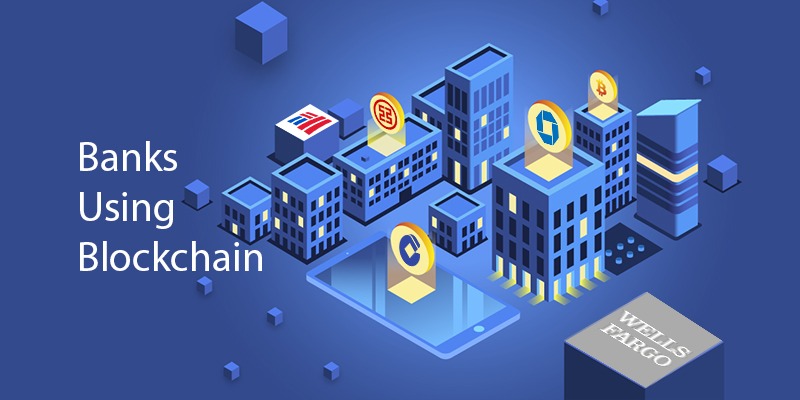
BNP Paribas Blockchain: banks love the distributed ledger
BNP Paribas Blockchain: a partnership with SmartAngels
Growing interest in Blockchain
Universal Digital Currencies Wallet 
Open your free digital wallet here to store your cryptocurrencies in a safe place.
Dutch Central Bank Tests Bitcoin Blockchain
Dutch Central Bank test number one
Also, they sent each other several coins, testing the process.
DNB Second test
“The second DNBcoin prototype takes the other extreme of bitcoin by jumping to the year 2140, the year when the last fraction of the 21 million bitcoins will be issued,” said Berndsen.
For this second test, the team mined all of the DNBcoins in advance, beginning with a block reward of 1 billion of DNBcoins.
“In doing so we were able to generate 3 billion DNBcoins in 30 seconds. In addition, we observed that after all DNBcoins had been generated, blocks could still be mined and added to the blockchain. The reward was reduced to zero but transaction fees were still collected by the miner who finds the next block.”
Blockchain central bank adoption
Central banks are increasing their interest in the blockchain.
Recently, in fact, we talked about several central banks who studied, tested and adopted the blockchain.
For example, you may be interested in the news related to the Central Bank of Canada that revealed its new digital currency called Cadcoin.
Universal Wallet
Open your free digital wallet here to store your cryptocurrencies in a safe place.

Bitcoin price rise again thanks to the Brexit
Brexit and Bitcoin price rise
5 reasons why Bitcoin price rise
Universal Wallet
Open your free digital wallet here to store your cryptocurrencies in a safe place.