Category Archive: Regulation

Bitcoin Regulation Update – 03/07/14

(BitcoinMagazine) This
week saw the outing (or not) of Satoshi Nakamoto, Bitcoin’s alleged
inventor, who is said to have abruptly disappeared from the online
forums he was known to frequent in Bitcoin’s early days. Though the man
alleged to be Nakamoto, who was living under a different name in the
United States, denied involvement with Bitcoin, Newsweek, the
publication that broke the story, stands behind their work. The early
response from the online Bitcoin community could best be described as a
low grade form of moral outrage, combined with a dash of horror. What
seems to have upset Bitcoiners most is the fact that a media outlet was
able to identify and publicly name a person who clearly was not
interested in being identified, using little more than public
information and basic detective work. To the extent that the majority of
crypto enthusiasts value privacy, if not anonymity, the Satoshi
Nakamoto affair does not bode well.
Canada-based Bitcoin exchange Vault of Satoshi announced via Facebook on Thursday that it would discontinue
support for US customers due to an “increasingly hostile” regulatory
environment. The exchange, which connects users with others looking to
trade crypto currencies for fiat currencies, claimed to be facing
considerable difficulties complying with FinCEN’s anti-money laundering
rules, not the least of which was FinCEN’s policy disallowing the filing
of paper reports by money service businesses and the seeming
incompatibility of the online reporting system with foreign businesses.
The decision to abandon the US market entirely seems to be a fairly
drastic response to US law, which could rightly be described as overly
complicated. Vault of Satoshi is neither the first nor the only non-US
based company to face US regulatory requirements, so it isn’t clear why
it seems to be having unusual difficulty in this area.  The company’s
Bitcoin to US dollar volume on Friday stood at 280 coins as of 5:00 PM
CST, compared to 314 for Bitcoin to Canadian dollars. Under the new
policy, US traders will be unable to deposit or withdraw cash from the
exchange, but will be permitted to trade coins.
Yet another exchange, this time Canadian company Flexcoin, informed customers this week that it is insolvent
as the result of a hack induced theft and would have no choice but to
cease operations. The exchange lost an estimated $500,000 worth of coins
in its hot wallet, but a spokesman said that customer coins in cold
storage would be returned to their owners.  Flexcoin referred to its
terms of service, reminding its customers that they agreed not to hold
Flexcoin liable for theft, while informing everyone else that they were
out of luck. The operative verbiage states that “Flexcoin is not
responsible for insuring any bitcoins stored in the Flexcoin system.”
Whether this will be sufficient to ward off civil liability remains to
be seen.
Her Majesty’s Revenue and Customs service in the United Kingdom has reportedly dropped
a plan to apply value added taxes to mined bitcoins and Bitcoin
exchange transactions. However, the treasury maintained in a brief
delivered to British lawmakers that the 20% VAT still applies to goods
and services purchased with bitcoins, just the same as it would if those
same goods and services were purchased with Pounds. After a careful
review, HM Treasury was more likely to have discovered the near
impossibility of taxing Bitcoin at the point of exchange or the point of
creation, than to have determined that it falls outside the scope of
transactions subject to the tax.  Merchants, on the other hand, are
already accustomed to collecting VAT and equipped with the
infrastructure both to report it and to comply with the audit
requirements of the British government. The UK has developed a
reputation in the Bitcoin community of late for being comparatively
friendly to crypto currency from a regulatory standpoint and more
accessible than US regulators.
Vietnam’s Communist government has officially banned
all Bitcoin transactions. The Vietnamese central bank announced the
policy, citing Bitcoin’s alleged role in promoting money laundering and
other criminal activity. The bank did not specify how the ban would be
enforced or what the penalties for non-compliance would be. The
Vietnamese government maintains restrictive capital controls (ostensibly
to protect the Dong against speculators), that Bitcoin could be used to
subvert. Few exchanges offer the ability to convert from Bitcoin to the
Vietnamese Dong.  However, other currencies, such as the US dollar, are
in common use on Vietnam’s streets, especially in urban centers.
Japan has announced
that it will not attempt to regulate Bitcoin transactions carried out
within its borders on the grounds that bitcoins are not considered a
currency. However, Japanese banks will be prohibited from buying or
selling bitcoins. The Japanese government also clarified that it intends
to treat Bitcoin as a commodity and subject it to the applicable
taxation regime. Japan is the home of Mt. Gox, the collapsed Bitcoin
exchange which is currently the subject of a bankruptcy filing in that
country, along with at least one criminal probe and numerous civil
suits.
Open your free digital wallet here to store your cryptocurrencies in a safe place.

Satoshi
bitcoin bars nyc

Lawsky says New York will adapt money transfer rules for Bitcoin


(Bloomberg) New York state will adapt existing rules on money transmission to license digital currency firms, financial services Superintendent Benjamin Lawsky said in remarks prepared for a conference in Washington today.

We do not have to throw out all of our existing rules for money transmitters or banks, which have generally served consumers well when vigorously enforced,” Lawsky said in a statement delivered to a New America Foundation forum on Bitcoin. “Indeed, certain aspects of virtual currency could dovetail with existing regulations.

New York will “likely have to proceed with issuing some form of specially tailored BitLicense that adapts those rules to the world of virtual currency,” Lawsky said.

The Treasury Department’s Financial Crimes Enforcement Network said in March that virtual currency businesses may be regulated as money transmitters. Since states license such companies, the decision set off a scramble by states to decide how to treat the embryonic industry.

Open your free digital wallet here to store your cryptocurrencies in a safe place.

Satoshi

Reserve Bank of India closely examining digital currencies

(The Hindu) A number of countries around the world are taking a close look at the use of bitcoin and other digital currencies, and India is no exception. It is being reported that the country’s government on Tuesday said that the Reserve Bank of India (commonly known as RBI) is taking a close look at both the legal and security elements of digital currencies.

“The RBI is presently examining the issues associated with the usage, holding and trading of virtual currencies, including bitcoins, under the extant legal and regulatory framework of the country, including foreign exchange and payment systems laws and regulations,” said P. Chidambaram, Finance Minister.

seal reserve bank indiaThis isn’t the RBI’s first run-in with digital currencies, though. Late last year (Christmas Eve, in fact), it was reported that the RBI issued a public advisory on bitcoin, warning citizens if its potential pitfalls. “No regulatory approvals, registration or authorization has been obtained by entities concerned for carrying on such activities. As such, they may pose several risks to their users,” said Chidambaram.
Open your free digital wallet here to store your cryptocurrencies in a safe place.

Satoshi

French authority forces Bitcoin exchanges to register

(BitcoinExaminer) Every Bitcoin exchange currently operating in France must now be registered with the local authorities and ask for a license in order to legally function in the country. The news was announced by the French Prudential Supervisory Authority (ACPR).


The institution, which is responsible for the regulation of the French banks, has issued a statement clarifying the status of Bitcoin and related exchanges in the country. Besides revealing several concerns and leaving warnings for the users, the ACPR also states that anyone operating an exchange in France must mandatorily have a license.


lACP_b
The move means that every exchange will have to become a provider of payment services
under the authority’s supervision. So all cryptocurrency transactions
that involve exchanges must go through a registered provider, whether we
are talking about a credit institution, payment institution or an
electronic money institution, Coindesk reports.


The ACPR used the same statement to
remind the public that Bitcoin has its hazards. “Risk of fraud and money
laundering and terrorist financing” are just some of the dangers set
forth by the French authority, which also recalled that the European
Banking Authority (EBA) has already issued other public warnings about
digital currencies.


Despite the consequences for the
exchanges, the statement doesn’t force the individual users living in
France to adapt to any changes.

Open your free digital wallet here to store your cryptocurrencies in a safe place.

Satoshi
WashingtonDC

Washington considers digital currencies are included in the definition of “money”

(BitcoinExaminer) The state of Washington, in the United States, has declared that digital currencies are included in the definition of “money”, within the state’s Uniform Money Services Act (UMSA).

The new definition can be consulted at the Department of Financial Institutions’ (DFI) website, where the state’s authority provides information to money transmitters and currency exchangers.

The virtual page reads that “virtual
currency, also known as digital currency or cryptocurrency, is a medium
of exchange not authorized or adopted by a government. There are many
different digital currencies being used over the internet, the most
commonly known being Bitcoin. In Washington, digital currency is included in the definition of ‘money’  in the Uniform Money Services Act”.

According to the legislature of
Washington state, “money means a medium of exchange that is authorized
or adopted by the United States or a foreign government or other
recognized medium of exchange. ‘Money’ includes a monetary unit of
account established by an intergovernmental organization or by agreement
between two or more governments”. Nevertheless, the state considers
that digital currencies can be part of this definition.

Washington’s recent alteration to the status of Bitcoin and other virtual coins was quite discreet, but a Redditor shared the information on the platform.

The department’s website also adds that
“companies wishing to transmit money for Washington residents in a
digital currency form can contact the DFI for a determination whether licensure under the UMSA is required. If it is, a license is required before the company can engage in the activity”.

The decision made by the Department of Financial Institutions opens a precedent that will surely affect how the financial authorities, courts and judges across the state (and maybe even out of it) look at cases that include Bitcoin or other digital currencies.

Open your free digital wallet here to store your cryptocurrencies in a safe place.

Satoshi

Canada and Israel take a different approach to Bitcoin

(SiliconAngle) Bitcoin gained a lot of momentum in 2013, as many people
experimented with it for the first time. It’s not surprising that 2014
also started with a bang for Bitcoin, when its value hit close
to $1,000. Some online shops have started accepting the cryptocurrency
as a form of payment, online sites use it so people can send donations,
and the Chicago Sun-Times has begun experimenting with it to raise funds for the Taproot Foundation.

Though the digital currency is clearly gaining traction,
many governments aren’t too keen about accepting it as a legal tender
just yet. Both India and China
have both warned against Bitcoin in recent weeks, resulting in some
significant fluctuation of its value. But even though there’s been some
strong opposition in these countries, it seems that most others are open
to the possibility of Bitcoin becoming a legal currency in the future.
Two countries are currently keeping an eye on Bitcoin,
monitoring what others are doing about it before coming up with a plat
as to how to approach the cryptocurrency.
Canada’s stand on Bitcoin
In a statement this weekend, Canada’s finance department
clarified that only Canadian bank notes and coins are considered as
legal tender. It doesn’t consider Bitcoin as a legal tender, but that
doesn’t mean that the Canadian government doesn’t see its potential,
reports The Verge.
For now, Canadians can use Bitcoin to pay for online goods,
but not for paying taxes, and businesses will not be required to accept
it as a form of payment.
“Smaller, stand-alone payment systems for which there are
many substitutes — like Bitcoin — should generally require much less
intensive oversight and regulation because they pose much less risk to
the Canadian financial system as a whole,” said Bank of Canada
spokesperson Alexandre Deslongchamps.
Israel’s Wait and See approach
Israel is taking the same stand as Canada, waiting to see
how it all unfolds, but this policy may change in the near future.
 Currently, some financial institutions in Israel are already engaged in
Bitcoin transactions, but regulators haven’t said a thing about it yet,
reports CoinDesk.
The problem with this scenario is that it could attract
that wrong kind of attention. Bitcoin could be used to dodge tax
payments and can even be useful for money laundering, but regulators
feel like they don’t currently need to take a stand regarding any form
of digital currency, since they are still trying to figure out what the
rest of the world will do with it.
“People who want to get their hands on bitcoin will always
succeed, and it would be a pity if it were to occur in the shadows and
not under the supervision of the banking system,” Attorney Shiri Shaham,
who specializes in banking law, stated.

Open your free digital wallet here to store your cryptocurrencies in a safe place.

Satoshi

US senator demands regulatory clarification on digital currencies

(CoinDesk) US Senator Tom Carper yesterday called on the Commodity Futures Trading Commission (CFTC) to clarify its position on digital currencies.
Carper is a Delaware Democrat and he currently heads up the Homeland Security and Governmental Affairs Committee.
It should be noted that Delaware is home to many credit card companies
in the US, thanks to business-friendly regulations that have attracted
numerous financial institutions to the state.
According to Bloomberg,
Carper’s staff are already working on a report on digital currencies,
scheduled for release sometime in the spring. Carper’s email to the CFTC
was a response to an earlier letter from former CFTC chair Gary
Gensler. He, in turn, was responding to an inquiry on digital currencies
filed by Senator Tom Coburn of Oklahoma.

The tone of Carper’s email is
interesting: “Given that we read about a new venture in the digital
currency space nearly every day, it is important that our government
agencies respond appropriately and in a timely manner with thoughtful
policy and oversight.”

“Those willing to take risks and play by the rules should have the opportunity to thrive without the fog of uncertainty.”

It appears that Carper isn’t looking for a clampdown on digital currencies – he merely wants to eliminate any ambiguities.

Open your free digital wallet here to store your cryptocurrencies in a safe place.

Satoshi

People’s Bank of China doesn’t intend to “suppress or discriminate against Bitcoin”

00080286e07514406df734
(BitcoinExaminer) China’s central bank addressed Bitcoin in a press conference
headed by the chief of its financial survey and statistics department.
Sheng Song Cheng transmitted the official stance given by the Chinese
authorities: “we don’t want to suppress or discriminate against Bitcoin, we are simply saying it is not a currency”.
The decision revealed during the
conference held this Wednesday (15) is being welcomed by the Bitcoin
community as a positive development in China’s apparent war against
digital money. The meeting was focused on the country’s 2013 financial
statistics, but Bitcoin popped up as the journalists started asking
questions about it.

“We took a look at Bitcoin and it
doesn’t have the characteristics of a currency. As far as I know, the
vast majority of countries does not recognize Bitcoin as a currency”,
Sheng Song Cheng answered.
Before confirming cryptocurrency’s
status in China as a “virtual good”, he also added that the “People’s
Bank and the relevant departments will continue to focus on Bitcoin and its associated risks,
strengthen the monitoring and analysis and guide the public to
establish a correct concept of money and investment philosophy”.
The authorities’ posture regarding
cryptocurrency falls under Sheng Song Cheng’s public opinion about
Bitcoin. Recently, he wrote an article
saying that “it would be difficult to see how Bitcoin could ever be
considered a currency in the future”. The English edition of the
newspaper Global Times even quoted Sheng as the author of a powerful
sentence: “Bitcoin is merely a utopia for technology supremacists and
absolute liberalists”.
Still, according to the opinion of some
Bitcoiners, this means that China is legitimizing Bitcoin, despite the
country’s successive warnings about the high risks of dealing with
the digital coin. For now, the authorities aren’t banning Bitcoin –
neither do they plan to do it -, only tightening the regulation and keeping an eye on the users and exchanges.
Coincidence or not, the price of Bitcoin in China has registered a slight improvement on BtcChina in the last few hours, surpassing the ¥5,000 mark.

Open your free digital wallet here to store your cryptocurrencies in a safe place.

Satoshi
730px Haruhiko Kuroda   World Economic Forum Annual Meeting Davos 2010

Governor says Bank of Japan is “very interested” in cryptocurrency

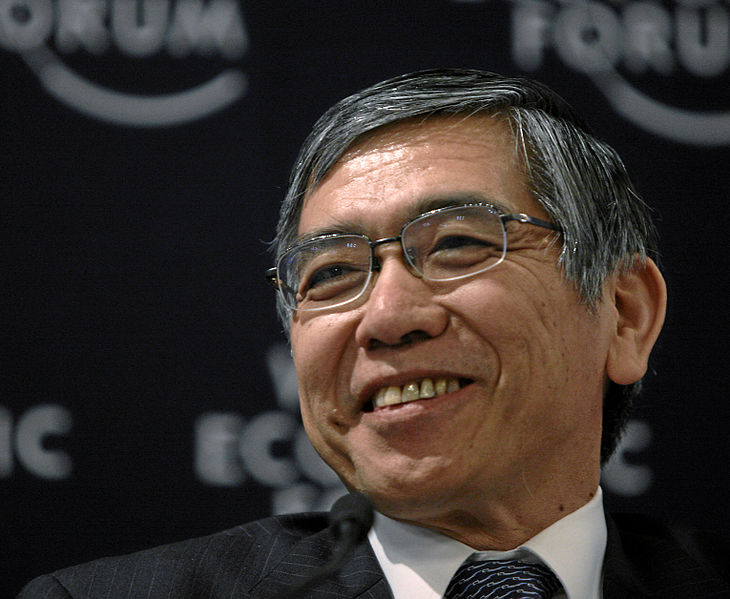
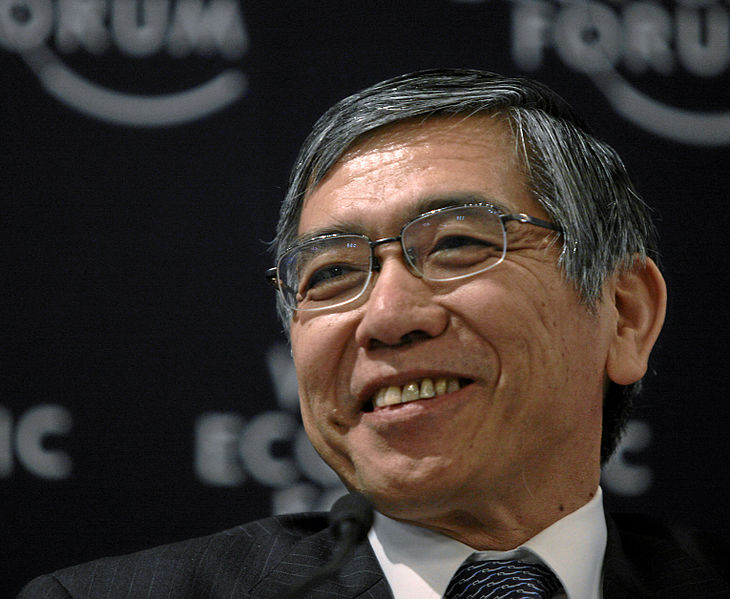
Haruhiko Kuroda Davos 2010(BitcoinExaminer) The governor of the Bank of Japan recently said that the institution is “very interested” in Bitcoin. Haruhiko Kuroda talked about cryptocurrency during a news conference, according to the site Jiji Press.

Compared to traditional ways of money transfer and existing electronic money, Bitcoin has both similar and different aspects”, Kuroda said about the digital coin that is currently being studied by the central bank’s Institute of Monetary and Economic Studies.
The interest might be there, but Kuroda – ranked by Forbes as the 39th most powerful person in the world -, also said the Bank of Japan doesn’t plan to take any action regarding Bitcoin in a near future.Despite the fact that the Bank of Japan is known as a conservative institution, Haruhiko Kuroda is known for supporting a looser monetary policy in the country. Back in February, the former president of the Asian Development Bank, said that “there is plenty of room for monetary easing” in Japan.

Open your free digital wallet here to store your cryptocurrencies in a safe place.

Satoshi
US Senate hearing bitcoin testimony 600x370

A deep dive into the regulatory requirements for Bitcoin companies

(OnBitcoin) Marco Santori is a senior associate at New York-based Nesenoff & Miltenberg, LLP,
and very familiar with the nuances of Bitcoin regulation. In a
presentation at the Inside Bitcoins conference in Las Vegas, Mr. Santori
provided a thorough overview of money transmission regulation on the
federal and state levels.

Money services businesses (MSBs) are regulated by FinCEN, whose goal is to prevent money laundering.

MSBs are required to register with FinCEN on a federal level. While
it’s a free, online process to register, there are an assortment of
requirements, such as:

  • Collect, verify, record report customer information
  • Check identities against watch lists (terrorists, criminal, enemies of the state)
  • Deny service for some customers
  • Sometimes secretly report transaction activitiy to fincen and continue servicing the customer
  • Undergo yearly audits

Bitcoins Political Donations

In March 2013 FinCEN published regulatory guidance surrounding
Bitcoin. While this guidance left some confused, the overall takeaway
was that Bitcoin is not inherently illegal and Bitcoin companies are
fine to operate as long as they comply with applicable laws.

Santori provided examples of businesses that would be under the veil of regulation:

  • Hosted wallets that permit exporting private keys
  • Paper wallets
  • Exchange digital currency for government currency
  • Exchange one digital currency for another
  • Mine digital currency and convert to government currency
  • Accept value from person A and give to person B
  • Accept value from person A and give to person A at another time or place

While it’s easy to register on the federal level, it’s another story
on the state level. There are 48 states that provide licenses for money
transmission. The states regulate money transmitters separately from the
federal government. So, for a company to operate in the United States,
they need to separately attain 48 licenses, which is a timely and costly
endeavor.

While it’s more complex to apply for licenses in 48 states, the scope
of regulation appears to be slightly less cumbersome. The states have
not adopted all of FinCEN’s categories of money transmitter.
Specifically, only these two categories are relevant:

  • Accept value from person A and give to person B
  • Accept value from person A and give to person A at another time or place

Given the ambiguity and cost of regulation, what should a startup do?

Circle Internet Financial, a company formed by serial entrepreneur
Jeremy Allaire, publicly stated that they will be seeking licenses in
all states and raised $9 million in venture capital to fund that
initiative.

However, there are a plethora of startups that don’t have the funds
or capabilities to attain licenses. Here are some other options.

First, a company could send a “no action” or “request for ruling”
letter, which explains the nature of the business and why it should not
require a license. Drafting this letter can be costly due to legal fees
but can also result in certainty if authorities respond.

There are also avoidance strategies. You can incorporate overseas and
geofilter IP addresses to block US customers. By documenting this
process and having appropriate policies in place, a company can protect
themselves from regulatory backlash if some US customers get through.
For example, a company should check if the customer registers a US bank
account, makes transfers to US accounts or subsequently accesses the
company’s service from US IP addresses.

Santori said that most companies restructure their companies to
either fit into an exception in the regulation. Exceptions include:

  • Providing network services to a money transmitter
  • White label exchange
  • Physically transporting value that substitutes for currency
  • Operating a settlement business between MSBs
  • Performing payment processing services

If a company wants to get a state license, how long does it take to
get approved? For a regular business, just a few weeks. But for a
Bitcoin business, it’s not clear.

Open your free digital wallet here to store your cryptocurrencies in a safe place.

Satoshi