
Siemens Blockchain to work with Microgrids
An American startup has started a new partnership to help the Siemens Blockchain project, as the company wants to develop a peer-to-peer energy transfer program based on the Ethereum Blockchain.
Siemens Blockchain Project with LO3
To do so, LO3 will work together with tech giant Siemens to help its new TransActive Grid project, which allows users to sell their own power to other microgrid stakeholders.
In a press release published today, Siemens said they will provide the startup with its microgrid control technology.
Recently, we need to remember, LO3 was awarded as a patent for its decentralized energy transfer project by the US Patent and Trademark Office.
Thanks to this collaboration, LO3 will work together with Siemens’ Next47 Unit, opened earlier this year.
Siemens indicated that this project created between the two companies will be able to have future impacts on its own global client base.
In fact, Siemens is one of Germany’s biggest companies, and also one of Europe’s largest engineering businesses.
CEO for Siemens’ Energy Management Division, Ralf Christian, explained:
“We’re convinced that our microgrid control and automation solutions, in combination with the blockchain technology of our partner LO3 Energy, will provide additional value for our customers whether on the utilities side or on the prosumer side.”
Siemens and LO3 will test blockchain-powered microgrids in New York and other worldwide locations, as the two companies explained today.
Open your free digital wallet here to store your cryptocurrencies in a safe place.

Unicef Blockchain Startup: new details
Today we talk about the new Unicef Blockchain Startup.
The United Nations Children’s Fund (UNICEF), in fact, decided to invest in a South African startup related to the blockchain.
In February UNICEF revealed that its decision to fund projects focused on the distributed ledger thanks a new innovation fund created in 2015.
At the time, UNICEF explained it was interested in investing in the areas of digital identity and remittances, but later UNICEF decided to hire a person on blockchain.
Right now, the association is starting to fund companies in areas that support its mission to promote child and family welfare.
UNICEF invested in several startups, including 9Needs, which uses the blockchain to develop identity features for children’s education.
9Needs will receive about $100,000 in investment, which will be used to scale the platform already developed by the startup.
Chris Fabian of UNICEF’s Office of Innovation Ventures explained that the organization decided to fund 9Needs as it promotes social progress.
“The sense of the company we got of the company, in talks with them, they seem like a really cohesive group of people using a sophisticated technology to solve a pressing set of problems.”
Read more about UNICEF Blockchain Startup Investment by clicking here.
Open your free digital wallet here to store your cryptocurrencies in a safe place.

OCBC Blockchain: new tests on the ledger
In this article we will talk about the new OCBC Blockchain tests.
One of the major banks in Singapore, in fact, decided to test a distributed ledger payment service, with the goal to develop new commercial products created thanks to this revolutionary techonolgy.
OCBC started to use the ledger to send money between its operations in Singapore and Malaysia, as well as do transactions with the Bank of Singapore, one of its own private financial group.
To do so, the bank explained it worked with the BCS Information Services, a local financial brand that helped to do the OCBC Blockchain tests.
This is only the latest test in the Asia’s banking sector. Read more news about the blockchain tests and researches made in Asia previously this year.
OCBC senio vice president, Praveen Raina explained to Coindesk:
“We hope this will be a catalyst for more banks to adopt the blockchain technology so that, together, we can achieve efficiency and cost effectiveness while delivering more high-value financial services to our consumers.”
The bank announced its news on its official website, but currently the details of this announcement appear to have been removed.
Stay tuned for the next updates related to the blockchain and follow HolyTransaction on Facebook.
Open your free digital wallet here to store your cryptocurrencies in a safe place.

Deutsche Bank Blockchain: report and results
According to a new Deutsche Bank Blockchain report three out of four capital markets participants believe that distributed ledger will be used by everyone and everywhere in the world by the end of 2022.
Conducted by Deutsche Bank, this report about the blockchain wanted to explore why financial institutional, investors, banks, financial sponsors and broker-dealers are working or studying the distributed ledger and how they want to implement it into their business strategy.
The survey includes 200 market participants, and 87% believes it is likely to have an impact on securities services.
However, 75% of partecipants think that distributed technologies will be widely used within the next 3 or 6 years; and the report authors believe that this is a surprising degree of certainty about the blockchain.
Deutsche Bank’s head of Custody and Clearing, Deborah Thompson, explained in the report:
“Respondents were clearly positive about the potential impact of blockchain — almost all participants saw it as either moderately or completely disruptive to existing business models — and an overwhelming majority believe it will be actively used within the next six years.”
Also, the greatest part of report respondents think that the technology will help firms to reduce costs; and almost half (48%) said they believe that the blockchain could solve systems failures.
Earlier this year, Deutsche Bank has already demonstrated how it is interested in the blockchain. Click here to read more about Deutsche Bank Blockchain research and tests.

Open your free digital wallet here to store your cryptocurrencies in a safe place.

World Economic Forum Blockchain led by Estonia
The World Economic Forum Blockchain created a new working group focused on the distributed ledger with the Estonian President.
This so-called “Global Futures Council on Blockchain Technology” will be met for the first time during an event held in Dubai later this week. According to the World Economic Forum Blockchain the group will be focused on the development of governance models related to the distributed ledger.
Toomas Hendrik Ilves, president of Estonia for 10 years, will co-chair together with Jamie Smith, chief communications and marketing officer for bitcoin mining and blockchain services firm BitFury and a former official in the Obama White House.
Members of the group are: Ma Jun (chief economist for the People’s Bank of China’s research outfit) and Claire Sunderland Hay (head of the Bank of England’s fintech startup accelerator).
The group also include representatives from bitcoin-related startups such as BitPesa, Everledger, Ripple and Chain; and institutions such as Barclay’s and Deutsche Bank.
Here you can read the full list of the “World Economic Forum Blockchain” members.
“The distributed ledger or blockchain system of preserving data integrity and security is one of the most promising new technologies to emerge in the past decade. Its full potential is only now beginning to be realized. This Council will play a leading role exploring how blockchain can be used to improve security on the internet.”
The WEF counducted an internal research about the blockchain since 2015 and this new working group is part of a broader network of Global Agenda Councils, focused on problems such as climate change, AI and cybersecurity.

Open your free digital wallet here to store your cryptocurrencies in a safe place.

Thailand Bank tests Blockchain with IBM
Thailand bank tests blockchain to certify official documents. To do so, it is is working with the IBM company.
According to Reuters magazine, in fact, Kasikornbank wants to cut costs related to record keeping.
The bank is one of the most important in Thailand and it is looking to create a document certification service by next year.
Also, Kasikornbank is talking with other Thai banks with the goal of establishing new collaborations that could involve a few members of the national financial system. According to the current plan, other banks together with Kasikornbank could use the blockchain network to certify documents.
In a press release published back in April, Kasikornbank revealed its decision to study and test new technologies, including machine learning and the distributed ledger.
At the time, the Thai bank explained that blockchain is “a technology that offers other benefits, e.g., reducing costs and increasing cross-border settlement efficiency that can be verified”.
This news also represented a turn within the Thai country, as two years ago the specter of a bitcoin ban in Thailandia led to problems for the local exchange activity.
After that, Thailand decided not to ban digital currencies, but published a warning to its citizens about their use.

Open your free digital wallet here to store your cryptocurrencies in a safe place.

Switzerland Bitcoin Regulation will arrive next year
Switzerland Bitcoin Regulation might arrive next year.
Recently its national railway service “have jumped on the bitcoin bandwagon”, as explained by Coindesk, so now it’s time for Switzerland to start regulating fintech and digital currency.
A few days after the Swiss railway-related announcement, as SBB decided to sell bitcoin through its network of ticket kiosks – the Federal Department of Finance (FDF) announced its plans to regulate fintech with the goal of introducing a new regulation next year.
Key elements include plans for a new kind of license geared specifically toward fintech companies and a so-called regulatory “sandbox” for experimental firms. Under the proposed regime, the Financial Market Supervisory Authority would become the primary regulator of fintech firms working in Switzerland.
In a press release, the FDF explained that it will guide more researches about bitcoin and other digital currencies and it will study the distributed ledger broader applications .
The company explained:
“The FDF should conduct additional clarifications in cooperation with the interested authorities on reducing further barriers to market entry for fintech firms, also those outside financial market law (e.g. legal treatment of virtual currencies and assets).”
During a recent speech, Ueli Maurer, Swiss Finance Minister, commented that the proposed Switzerland Bitcoin regulation would help to attract more brands – even if the nation positive attitude has already attracted the attention of several blockchain-related startups to make their home in the country.
“We assume that with the steps we have prepared and the commitment we have to the overall financial services industry we can provide a solution that puts us among the top (countries) in the world that regulate this,” he explained.
Read more here about the Switzerland involvement in the fintech sector.

Open your free digital wallet here to store your cryptocurrencies in a safe place.
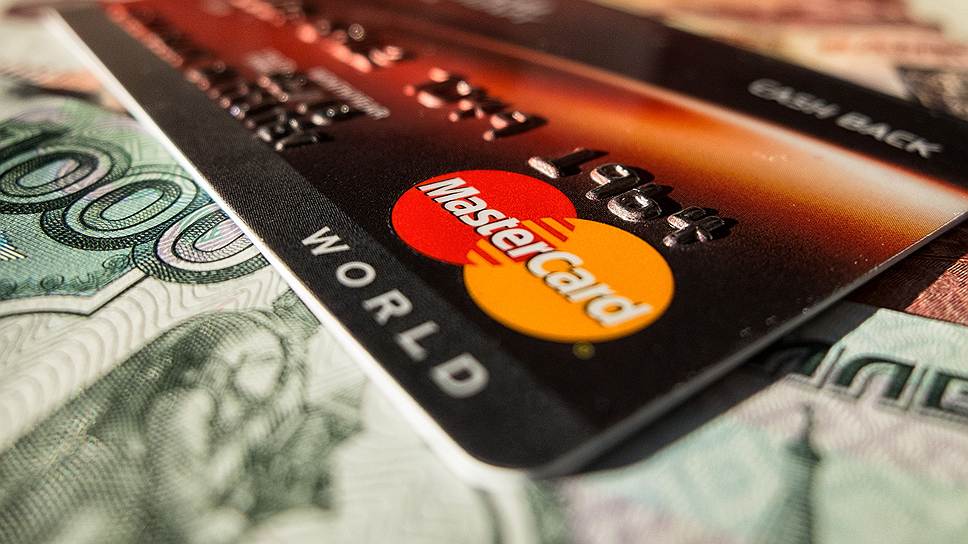
MasterCard Releases Blockchain API
MasterCard releases Blockchain API, an experiment to work on an emerging technology such as the distributed ledger.
So Visa won’t be the only credit card company to work on the blockchain.
But while Visa is releasing a B2B blockchain, MasterCard releases blockchain API with more collaborative objectives.
The MasterCard website now contains 3 APIs connected to its internal blockchain platform, including offerings based on smart contracts and payment settlement. Those APIs were created by MasterCard Labs, the innovation program of the credit card giant.
MasterCard blockchain lead Justin Pinkham explained that the company created the API platform in October to stoke interest among banks and merchants.
Pinkham explained to CoinDesk magazine:
“This is part of our initiative to publish experimental APIs from Mastercard Labs and give developers the chance to work on emerging technologies that haven’t yet been commercialized by us.”
Also, Pinkham explained that MasterCard company is continuing to work on technology use cases and it is looking for new partnerships that can be useful for the MasterCard’s business.
“We believe that there is a role of blockchain in the future of commerce. This future needs to be developed in partnership with banks, merchants and industry participants,” Pinkham commented.
This news is one of the most important for MasterCard company, who used to criticize bitcoin in the past.
But if MasterCard releases Blockchain API, this means that it is beginning to push some of the work done by its tech lab.
According to Pinkham it won’t be the last, as he said that the company is creating a new foundation for blockchain tech that will be focused on the distributed ledger use cases including inter-bank payments, trade finance, digital identity and also the exchange of know-your-customer information.
This work was possible also thanks to the new partnership between MasterCard and startups through its Start Path Global program, as well as 30 more blockchain-related patents that Pinkham explained the company submitted.

Open your free digital wallet here to store your cryptocurrencies in a safe place.
OverStock Blockchain Stock to open soon
Overstock Blockchain Stock will begin its work in December.
Patrick Byrne, CEO at Overstock, revealed this news today at Money2020, explaining how investors will be able to partecipate to the shares release, as well as the key dates involved in this process.
The initial sale will done as a rights offering, so interested investors will have to hold Overstock stock within 7th November in order to be eligible to receive shares on 10th November.
Then, on 15th November, a subscription period will open, when investors will be able to decide whether they want to take part to the offering.
During his speech, Byrne explained:
“Given our T+3 settlement, you will be a record holder by 10th November… If all goes well, it could be trading by 15th December.”
The announcement comes just a few days after Overstock cryptocurrency group general manager Judd Bagley revealed an upcoming news during a panel session on capital markets. In fact, Byrne suggested that news would be announced in August when he returned to a leadership role at the Overstock company.
Also, Byrne said he believes that the distributed ledger could be a more disruptive force than the Internet.
“My allegiance is not to bitcoin, but the blockchain. Three years ago, I realized the blockchain was going to disrupt a lot of things in our civilization,” he explained to the Money2020 attendees.
At the end of his speech, Byrne also discusses the various technology and business partnerships that allowed Overstock company to create to the forthcoming blockchain stock offer.
You can read more details about the Overstock Blockchain by reading here.
Source: Coindesk

Open your free digital wallet here to store your cryptocurrencies in a safe place.
IBM Blockchain to solve delivery issues
Singapore startup FreshTurf is working on a IBM Blockchain project to develop a network for solving issues related to delivery and storage lockers.
According to a press release, the two companies wants to create a network to track delivery shipments and storage lockers through the blockchain with the objective of providing a faster and safer service to the customers.
This way, in fact, users will be able to track their packages more easily thanks to a distributed ledger platform.
This is not the first project for the IBM’s BlueMix garage, a wordwide network of innovators that provides a hub for startups and companies to test and study the blockchain.
The BlueMix is a part of IBM blockchain broader strategy for fintech applications.
The two companies commented in a press release that their goal is providing a system for clients to check the status of their packages in real time.
“Not only can the application of blockchain technology help provide visibility across the fulfilment chain, allowing users to track their parcel and delivery status from the convenience of their phone, it can help stakeholders to conduct shipping transactions in a highly secure and trusted environment.”
This distributed system, currently in development, works through the IBM blockchain.
It is not still clear if the companies will sell the technology for commercial use.
IBM Blockchain and Australian Postal Service
Blockchain has been used for several use cases, including package delivery.
In fact, Australian Postal Service released a report explaining how they could use the distributed ledger to track packages movements. Read more about Australian Postal Service new project by clicking here.
Also, US Postal Service discussed its idea to create a new digital currency called PostCoin.
And this is not the first time IBM works on a blockchain-related project. Read more news about the IBM Blockchain here.
Open your free digital wallet here to store your cryptocurrencies in a safe place.