
Ernst and Young Bitcoin accepted in Switzerland
Ernst and Young Bitcoin: the Swiss branch of global professional services firm will accept the cryptocurrency-kind of payment next year.
Starting in January, Ernst and Young Switzerland will allow bitcoin for invoice payments, as the company explained in a new press release.
Switzerland, Ernst and Young Bitcoin: a profitable relationship
The Swiss firm will also open a new BTM (or Bitcoin ATM) at its office in Zurich, as well as a wallet option for its employees.
This Ernst and Young project is part of the bigger cultural experiment on bitcoin and the distributed ledger conducted in Switzerland.
Late last month, in fact, Swiss railway service announced that it will sell bitcoin on its nationwide network of ticket kiosks; also the Swiss town called Zug will accept Bitcoin for public services payments, as its major explained back in May.
According to Ernst and Young, this launch fits perfectly with this experimental context created in the Swiss country.
Switzerland’s CEO, Marcel Stalder, commented that the company wants its employees to know digital currencies and the blockchain. This project is to provide ways to access a hands-on education, he said.
Stalder explained:
“We don’t only want to talk about digitalization, but also actively drive this process together with our employees and our clients. It is important to us that everybody gets on board and prepares themselves for the revolution set to take place in the business world through blockchains, smart contracts and digital currencies.”
Ernst and Young is just one of the “Big Four” accounting firms involved in the blockchain sector at the moment.
Recently, the company also decided to open a blockchain-related contest for startups with the goal of “exploring how blockchain technology can tackle challenges in digital rights management and energy trading.”
Learn more about Switzerland and Ernst and Young involvemet in the bitcoin field, by clicking on the links above.
Open your free digital wallet here to store your cryptocurrencies in a safe place.

Senegal cryptocurrency for the underbanked
Senegal Cryptocurrency may become the first of its kind, as it will be based on its national fiat currency.
A few days ago, Senegal introduced eCFA, a new virtual currency which is currently in development.
This cryptocurrency was born thanks to a collaboration with Banque Regionale de Marches (BRM) and eCurrency Mint Limited.
BRM bank, financial institution specializing in capital markets and the implementation of custom banking solutions, is working on the development and integration of this cryptocurrency, and the Senegal government will serve as a legal tender.
Senegal Cryptocurrency for the underbanked
Similar to the objective of Norway’s bank DNB, Senegal wants to secure itself a significant market share of Africa’s underbanked and underserved people, who cannot find access to financial platforms and networks to manage their cross-border transactions.
Also, the development and launch of Senegal Cryptocurrency eCFA is leaded by the West African Economic and Monetary Union (WAEMU), which suggests that eCFA will be available for all the African countries, including Benin, Burkina Faso, Cote d’Ivoire, etc.
Unfortunately, both BRM and eCurrency Mint Limited didn’t release any technical information and background on their new Senegal cryptocurrency.
In fact, it is still unknown if the digital currency will be based on a permissioned ledger or on a decentralized blockchain network.
In both cases this news is very important as it is another step closer to the digital currencies adoption worldwide.
Read here more about Senegal and African involvement in digital currencies.
Open your free digital wallet here to store your cryptocurrencies in a safe place.
Uganda Bitcoin Regulation
A UN organization related to criminal justice problems published today a few details about a new meeting on bitcoin and digital currencies with the aim of a Uganda Bitcoin Regulation.
Organized in Kampala on 7th July, the meeting was supported by the United Nations African Institute for the Prevention of Crime and the Treatment of Offenders (UNAFRI), the Bank of Uganda and the University of Birmingham Law School.
Dr. Maureen Mapp of the University of Birmingham Law School who partecipated at the event, explained to CoinDesk that the main goal of that event was establishing a basis for a Uganda bitcoin regulation.
Uganda will be one of the first African countries to regulate bitcoin.
Also, Mapp said the effort grew out of a digital currency research project realized with the Commonwealth Secretariat that showed her how Ugandan public officials didn’t know anything about the benefits and risks of the use of virtual currencies.
“I was inspired to engage with policy makers and regulators in order to investigate whether states could develop policies and regulation that encourage innovation while protecting the private rights and interests of users of virtual currencies.”
The goal, she explained, was building awareness and creating a good basis for future discussions.
Thanks to the Ugandan central bank and UNAFRI, Mapp began to contact a few stakeholders in Uganda to put together what became the meeting held in Kampala.
Among the outcomes of the meeting is a think tank dedicated to the “technological, policy, pluralist, ethical and legal issues” about digital currencies, with the organizations and representatives who attended the July meeting.
Those involved also developed a draft for future discussions between private and public stakeholders, which was published earlier this month by UNAFRI.
Next steps will include the creation of a second meeting, set to take place on the same date in 2017.
“The legal and regulatory environment is moving towards embracing the technology so as to harness its benefits and to promote innovation,” she explained.
Source: Coindesk.com
Open your free digital wallet here to store your cryptocurrencies in a safe place.

Siemens Blockchain to work with Microgrids
An American startup has started a new partnership to help the Siemens Blockchain project, as the company wants to develop a peer-to-peer energy transfer program based on the Ethereum Blockchain.
Siemens Blockchain Project with LO3
To do so, LO3 will work together with tech giant Siemens to help its new TransActive Grid project, which allows users to sell their own power to other microgrid stakeholders.
In a press release published today, Siemens said they will provide the startup with its microgrid control technology.
Recently, we need to remember, LO3 was awarded as a patent for its decentralized energy transfer project by the US Patent and Trademark Office.
Thanks to this collaboration, LO3 will work together with Siemens’ Next47 Unit, opened earlier this year.
Siemens indicated that this project created between the two companies will be able to have future impacts on its own global client base.
In fact, Siemens is one of Germany’s biggest companies, and also one of Europe’s largest engineering businesses.
CEO for Siemens’ Energy Management Division, Ralf Christian, explained:
“We’re convinced that our microgrid control and automation solutions, in combination with the blockchain technology of our partner LO3 Energy, will provide additional value for our customers whether on the utilities side or on the prosumer side.”
Siemens and LO3 will test blockchain-powered microgrids in New York and other worldwide locations, as the two companies explained today.
Open your free digital wallet here to store your cryptocurrencies in a safe place.
Bitcoin Price trades at $750, $900 in India
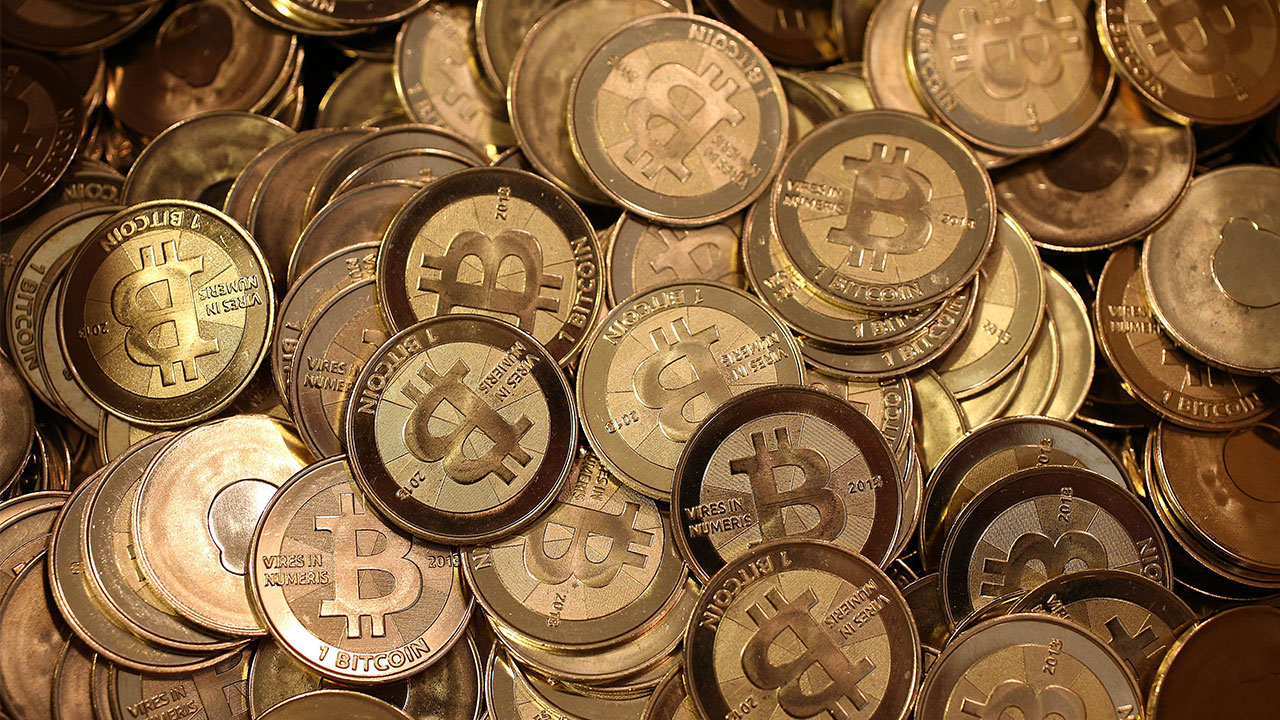
The bitcoin price is currently trading at $750, its highest level in five months.
At the moment, bitcoin price rose by about 2%, and by $50 since this Monday.
Recently we said that the election of the 45th U.S.A. President Donald Trump might be one of the reasons behindthis bitcoin Price growth.
Earlier this week the bitcoin price grow of about $30 in just one hour, and now bitcoin is approaching the 2016 high it reached in June, when the price was at $764.
At that time, bitcoin price was growing mainly due to the halving event, as experts explained that it has a key role in the growth of demand, as it reduces the block reward by 50%.
Conversely, this time the bitcoin price growth is not attributable to a single cause.
Recently, bitcoin has been enjoying bullish feelings among its avid traders, and there are a few signs that its recent ascent might have been drived by foreign market forces.
For example, India has recently experienced a ban on certain denominations of banknotes, a development that local bitcoin companies claim has supported business, though public data platforms (including LocalBitcoins) explain the effects are not so clear.
In fact, on the Indian exchange Unocoin, one bitcoin traded for 61,688 India rupees, or more than $900, an event that boosts claims of strong local demand.
Another reason why the price is growing could be the devaluation of China’s yuan, as it is falling down this week.
Open your free digital wallet here to store your cryptocurrencies in a safe place.

Sweden Digital Currency: a new Bitcoin?
Today I want to talk about the new Sweden Digital Currency project.
Sweden’s central bank, in fact, is considering the possibility of issuing its own national virtual currency, but the technology behind it is yet to be revealed.
According to an article published today by The Financial Times, Riksbank wants to create the new virtual currency because of a strong decline in domestic cash use. In fact, according to a report, the amount of notes in circulation has declined 40% since 2009.
Sweden Digital Currency and other solutions
Deputy governor Cecilia Skingsley commented that the central bank wants to test various technologies. Although she did not mention blockchain drectly, the Financial Times explained that the distributed ledger might be one of the options the Sweden bank could consider.
“We need to do the homework because it’s not an option for the public sector to stay on the sidelines and see the private sector cut off access to central bank money for individuals.”
Skingsley said that the digital currency could be issued together with banknotes and coins, but the Riksbank do not want to encourage illegal activity.
Tomorrow Skingsley will give a speech and he might explain more details about the Sweden Digital Currency project.
With this announcement, Sweden will become the latest country to have its own central bank considering to issue a new digital currency, an idea that for the greatest part of nations meant doing several reseatches related to blockchain-based cryptocurrencies.
During the latest few months, the Bank of England has started to discuss and test issuing its own digital currency using the blockchain; and the People’s Bank of China is investigating the idea too.
Open your free digital wallet here to store your cryptocurrencies in a safe place.

Unicef Blockchain Startup: new details
Today we talk about the new Unicef Blockchain Startup.
The United Nations Children’s Fund (UNICEF), in fact, decided to invest in a South African startup related to the blockchain.
In February UNICEF revealed that its decision to fund projects focused on the distributed ledger thanks a new innovation fund created in 2015.
At the time, UNICEF explained it was interested in investing in the areas of digital identity and remittances, but later UNICEF decided to hire a person on blockchain.
Right now, the association is starting to fund companies in areas that support its mission to promote child and family welfare.
UNICEF invested in several startups, including 9Needs, which uses the blockchain to develop identity features for children’s education.
9Needs will receive about $100,000 in investment, which will be used to scale the platform already developed by the startup.
Chris Fabian of UNICEF’s Office of Innovation Ventures explained that the organization decided to fund 9Needs as it promotes social progress.
“The sense of the company we got of the company, in talks with them, they seem like a really cohesive group of people using a sophisticated technology to solve a pressing set of problems.”
Read more about UNICEF Blockchain Startup Investment by clicking here.
Open your free digital wallet here to store your cryptocurrencies in a safe place.

OCBC Blockchain: new tests on the ledger
In this article we will talk about the new OCBC Blockchain tests.
One of the major banks in Singapore, in fact, decided to test a distributed ledger payment service, with the goal to develop new commercial products created thanks to this revolutionary techonolgy.
OCBC started to use the ledger to send money between its operations in Singapore and Malaysia, as well as do transactions with the Bank of Singapore, one of its own private financial group.
To do so, the bank explained it worked with the BCS Information Services, a local financial brand that helped to do the OCBC Blockchain tests.
This is only the latest test in the Asia’s banking sector. Read more news about the blockchain tests and researches made in Asia previously this year.
OCBC senio vice president, Praveen Raina explained to Coindesk:
“We hope this will be a catalyst for more banks to adopt the blockchain technology so that, together, we can achieve efficiency and cost effectiveness while delivering more high-value financial services to our consumers.”
The bank announced its news on its official website, but currently the details of this announcement appear to have been removed.
Stay tuned for the next updates related to the blockchain and follow HolyTransaction on Facebook.
Open your free digital wallet here to store your cryptocurrencies in a safe place.
Deutsche Bank Blockchain: report and results
According to a new Deutsche Bank Blockchain report three out of four capital markets participants believe that distributed ledger will be used by everyone and everywhere in the world by the end of 2022.
Conducted by Deutsche Bank, this report about the blockchain wanted to explore why financial institutional, investors, banks, financial sponsors and broker-dealers are working or studying the distributed ledger and how they want to implement it into their business strategy.
The survey includes 200 market participants, and 87% believes it is likely to have an impact on securities services.
However, 75% of partecipants think that distributed technologies will be widely used within the next 3 or 6 years; and the report authors believe that this is a surprising degree of certainty about the blockchain.
Deutsche Bank’s head of Custody and Clearing, Deborah Thompson, explained in the report:
“Respondents were clearly positive about the potential impact of blockchain — almost all participants saw it as either moderately or completely disruptive to existing business models — and an overwhelming majority believe it will be actively used within the next six years.”
Also, the greatest part of report respondents think that the technology will help firms to reduce costs; and almost half (48%) said they believe that the blockchain could solve systems failures.
Earlier this year, Deutsche Bank has already demonstrated how it is interested in the blockchain. Click here to read more about Deutsche Bank Blockchain research and tests.

Open your free digital wallet here to store your cryptocurrencies in a safe place.

World Economic Forum Blockchain led by Estonia
The World Economic Forum Blockchain created a new working group focused on the distributed ledger with the Estonian President.
This so-called “Global Futures Council on Blockchain Technology” will be met for the first time during an event held in Dubai later this week. According to the World Economic Forum Blockchain the group will be focused on the development of governance models related to the distributed ledger.
Toomas Hendrik Ilves, president of Estonia for 10 years, will co-chair together with Jamie Smith, chief communications and marketing officer for bitcoin mining and blockchain services firm BitFury and a former official in the Obama White House.
Members of the group are: Ma Jun (chief economist for the People’s Bank of China’s research outfit) and Claire Sunderland Hay (head of the Bank of England’s fintech startup accelerator).
The group also include representatives from bitcoin-related startups such as BitPesa, Everledger, Ripple and Chain; and institutions such as Barclay’s and Deutsche Bank.
Here you can read the full list of the “World Economic Forum Blockchain” members.
“The distributed ledger or blockchain system of preserving data integrity and security is one of the most promising new technologies to emerge in the past decade. Its full potential is only now beginning to be realized. This Council will play a leading role exploring how blockchain can be used to improve security on the internet.”
The WEF counducted an internal research about the blockchain since 2015 and this new working group is part of a broader network of Global Agenda Councils, focused on problems such as climate change, AI and cybersecurity.

Open your free digital wallet here to store your cryptocurrencies in a safe place.