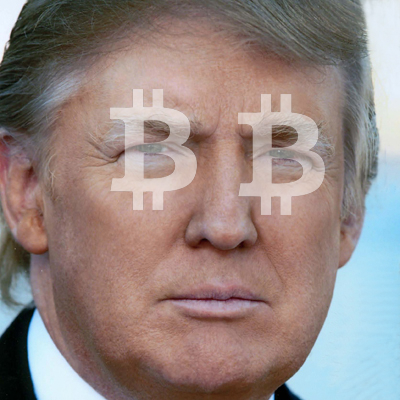
Bitcoin Price rose because of Trump
 After reaching a value of $1,840, Bitcoin price is currently stable around $1,820 while I’m writing this article.
The recent growth of the Bitcoin price seems to be affected by President Trump administration and the economic uncertainty of the US.
Or, at least, this is a theory shared on Cointelegraph.
From the first day of his presidency, Trump indirectly influenced bitcoin price through his dubious politics.
Also, Bloomberg reported that the major American stock indexes experienced their worst performance in eight months while the richest billionaires lost $35 billion because of the Trump’s turmoil.
For example, Amazon’s Jeff Bezos and Facebook’s Mark Zuckerberg lost almost $4 bln due to the Dow Jones Industrial Average drop of more than 370 points.
Evercore ISI Executive Dennis DeBusschere explained to Bloomberg:
“What has been setting in over the course of the day is that political uncertainty is something that’s likely going to be with us for a significant amount of time. We may be looking at a higher volatility backdrop with a trending lower market for the next couple of months.”
So, during this period of financial uncertainty, investors decided to protect their wealth by investing in bitcoin and gold.
Gold gained around 1.9% and Bitcoin price recorded a 7% growth, almost reaching its current all-time high price of $1,868.
This way, bitcoin seems to become a safe-heaven, with a growing number of investors.
As explained by Cointelegraph, a $10,000 investment in gold back in 2010 would have led to a loss of $20, while a $10,000 investment in Bitcoin would have led to a net gain of $200 mln.
So, investors started to trust Bitcoin, that is considered similar to digital gold, in order to avoid market instability and economic uncertainty.
The US market will struggle to recover during the next few weeks, so Bitcoin price is likely to maintain its upward trend and potentially it will set a new all-time high.
The rise in bitcoin demand within the US is clear and recently the US Bitcoin exchange market passed the Japanese one for the first time in 2017, at least for their trading volume.
Open your free digital wallet here to store your cryptocurrencies in a safe place.

Bitcoin Regulation might be pushed by Apple and PayPal
When the digital currency industry has Apple and PayPal as competitors, those two firms might be the reason for a Bitcoin regulation in the US.
Apple and PayPal joined a group together with Google, Amazon and Intuit in Washington in order to push for more reforms related to the financial system innovation. As we know, in fact, a core subject on their agenda is the creation of a federal money transmission license that would supplant the current state-by-state regime.
Also, last month Financial Innovation Now (FIN), the group that represents these five companies, sent a letter to the Senate Banking Committee proposing new recommendations that ask for the creation of a national money transmission requirement that would be managed by the Treasury Department.
“Consumer protection is a critical part of payments regulation, but it makes no sense for different states to regulate digital money differently from one state to another,” they explained.
The executive director of FIN, Brian Peters, said to CoinDesk the group is taking the money transmission problem very seriously and is looking for a legislative solution.
“This is a top priority for us. We’re proactive pushing for it and we are serious about legislating this.”
Bitcoin regulation benefits
FIN argues that it has no interest in supporting Bitcoin regulation or its industry, but it knows that the development of a transmitter issue is a common benefit.
“None of our priorities really actually delve into bitcoin or the other cryptocurrencies specifically. However, a lot of what we are pushing for does connect to the work many in that community are doing. The main reason we are pursuing it is because our companies have encountered a significant amount of friction and delay in the state-by-state money transmission licensing process. It’s the delay and the friction that’s really a hindrance to the ability to deliver products and services to the market in a way that is consistent with the pace of innovation in the modern economy.”
In addition to the costs to comply regulations, there are a few issues in states where government hasn’t still decide whether digital currencies should be considered as money or be exempted from regulation itself.
A federal licensing system would allow digital currency- related companies to elude state regimes and this could have an exponential growth effect on Bitcoin industry, as explained by the director of research at Coin Center, Peter Van Valkenburgh.
“For people in the US who want to build a business using these technologies, by far the biggest impediment they face is state-by-state transmission regulations. There’s pretty much no question about that. Anything that [FIN] is going to ask for – assuming it’s in line with a federal money transmission license – is exactly what our industry needs.”
So, having a federal option would provide a few benefits related, for example, to the cut of compliance costs for companies and new startups.
“For startups, it’s the biggest thing,” he said. “Right now, you can’t start your business unless you have millions to spend on compliance. And to get venture capital financing, you need to convince your venture capitalists that it’s OK that the majority of their funding is going to lawyers.”
While there have been a lot of efforts with the aim of creating a federal money transmission framework, they have fallen due to a lack of money, leadership, political clout, etc.
But, FIN shouldn’t face these problems, commented Carol Van Cleef, a digital currency attorney with BakerHostetler in Washington.
“I have long said that we’ll get a national money transmitter license when these companies come together. They’re the ones that have the resources necessary to launch the kind of legislative campaign that’s essential to get this through Congress. This kind of initiative requires money and lots of it, solid executive branch and congressional relationships and experience working legislative issues.”
Open your free digital wallet here to store your cryptocurrencies in a safe place.
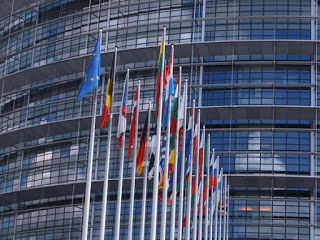
Bitcoin regulation in Europe: “it’s too early”

During a recent event held by the European Parliament, members talked about new technologies including the Blockchain and Ethereum and Bitcoin Regulation.
According to them, the European Parliament will have to regulate and monitor the new tech but “it’s too early to intervene at this stage, because we as legislators don’t yet see sufficiently clearly to know what the main issues are going to be – so in order to not to stifle innovation, we don’t want it to be now.””, said MEP Jakob von Weizsäcker.
So, the EU wants just to monitor blockchain and smart contracts in order to allow developers doing their job.
Also, MEP Eva Kaili from Greece explained that regulation is necessary to protect citizens, but EU doesn’t want to suffocate innovations.
“[In] 2008 when the crisis started in the European Union, especially in my country [Greece], people lost trust in banks and in the politicians. I woundn’t blame them because we didn’t protect them and the reaction was that some young people that we don’t really know discover this technology that actually makes unnecessary to have banks, politicians and intermediaries. So the potential is there, but it is still under progress”.
Also, she continues by saying the following:
“Blockchain is not just bitcoin and bitcoin is not just blockckhain. We need to understand how to protect citizens because if we help them trust this technology, they will actually start to using it. I do believe that banks will outsource a lot of their services,” she said.
Bitcoin regulation to regain trust by citizens
“We’ll have to educate citizens on how to use it […] Hopefully, [bitcoin regulation] will come and we’re going to try to protect the technology and not to stop it. I know that usually politicians and banks don’t want to change and they want to keep control, but I think this technology is unstoppable and we have to give control back to the citizens and maybe this way we can regain some trust,” Kaili argues.
Watch the full conference video here.
Open your free digital wallet here to store your cryptocurrencies in a safe place.
Litecoin Segwit has been finally approved
Litecoin Segwit has been finally implemented, so this long-debate to change to change the digital currency network can be said to be closed now.
Originally intended to improve the bitcoin blockchain, Segwit – or Segregated Witness – had to solve the so-called block size debate, but it has been used on the lesser known litecoin chain, with some in the community that believes that it will help to finally have a quick implementation on the bitcoin network too.
Litecoin Segwit: how does it work?
Segregated Witness, in fact, is a new system that will allow litecoin to improve its block size, by modifying how transaction data is stored by the blockchain itself.
The change was first locked-in two weeks ago, when the proposal reached the 75% threshold level.
Then, the community had to wait two more weeks (8,064 blocks) to ensure that the upgrade approval was consistent.
After that, yesterday (on May 10th) the change was officially activated at block 1201536.
What does it mean?
Litecoin users can now start using a new kind of network, and there has been at least one transaction so far.
Anyway, several supporters are thrilled about the new techs that can now be created on the Segwit-supported network.
For example, the Lightning Network could boost litecoin transactions by million times; thanks to Segwit it can now be used to move real money.
Developer Loshan T explained to CoinDesk:
“I think today will be a great day for pushing more awesome tech into Litecoin. With SegWit activated on litecoin’s mainnet, I cannot wait until we deploy confidential transactions, Lightning Networks, MAST and Schnorr signatures.”
Unfortunately, these projects are early stage right now, but developers from the Lightning Labs seem thinking that it is too early to talk about sending money over an experimental network, so they plan to continue to develop the chain.
The future is unwritten
It not so clear where the Segwit activation will lead to or what role Litecoin will have in the next future.
Loshan explained that some in the community are skeptical about litecoin needs of the Lightning Network tech because litecoin blocks are not full yet, but they would like to have trustless cross-chain transactions between bitcoin and litecoin as a potential Lightning use case; and developer believes could be a benefit for both the digital currencies.
Anyway, at the moment, the Litecoin blockchain seems to work properly, without any issue, even after the Segwit activation.
Open your free digital wallet here to store your cryptocurrencies in a safe place.

Bitcoin in Russia: regulation will take place in 2019
Russia’s Ministry of Communications (Minkomsvyaz) has revealed it is looking for legalizing Bitcoin in Russia and the blockchain technology by 2019.
The local news agency called TASS talks about a document about the Russia’s Digital Economy of the Russian Federation project, which lays out a timeframe for creating and passing the blockchain regulation.
The document quoted the following:
“bringing into effect regulatory acts governing the possible use of technology for decentralized registers and legal certificates.”
Back in March, prime minister Dmitry Medvedev instructed Minkomsvyaz and its counterpart Ministry of Economic Growth (Minekonomrazvitie) to “study to what extent Blockchain would be applicable to our system of government.”
During the last year, Bitcoin in Russia has solidified from a rhetoric point of view also because the Russian Central Bank decided not to ban digital currencies including Bitcoin and this news was useful to calm businesses and users’ after a few years of uncertainty when Russia stated it would ban cryptocurrencies within the country.
Then, back in April, 2017, Russia announced it would recognize Bitcoin by 2018, but monitoring each transaction.
Read more about Bitcoin in Russia here.
Open your free digital wallet here to store your cryptocurrencies in a safe place.
Oracle Blockchain to improve delivery pipelines
A new Oracle blockchain – related project suggests that the database giant wants to use the distributed ledger in order to improve its internal workflows.
On April 27th, the US Patent and Trademark Office (USPTO) published an application titled “Managing Highly Scaling Continuous Delivery Pipelines”.
First filed in September, 2016, this application explains the use of a “pipeline blockchain” to be used as distributed information points for product delivery processes.
The only inventor quoted on the application is Duncan Mills, a software architect for Oracle.
As detailed in the application, this project is focused on exploiting the distributed ledger ability to provide transparency in order to keep data related to each employee who is contributing to a specific work process.
This would include how they work and what their next tasks; everything happens in real time.
“By its nature, the pipeline blockchain approach provides a self-correcting mechanism for recording and reconciling the state of a pipeline after a system failure. For example, if the record store becomes unavailable, pipelines can continue to process in a fail-safe mode using peer-to-peer reconciliation of the pipeline blockchain, thus maintaining the state of the transactions for the duration of the outage.”
Oracle Blockchain security
Oracle blockchain pipeline’s concept has security system too.
For example, one project may deal with sensitive or private info.
According to the application you can read above, the use of this Oracle blockchain pipeline could allow a user to see what task he/she needs to complete “without having to return control to a central dispatcher”, potentially making their devices vulnerable to external influences.
“This is particularly important where the worker is not in a position to check back with a central dispatcher because of security constraints,” the application states.
The use of the blockchain to facilitate the secure exchange of information is anidea that Oracle has already explained in the past, including in an article wrote last year by Subramanian Iyer, or one of the firm’s senior directors.
“Clearly, blockchain has the ability to increase secure data exchange in other industries as well. It also has the ability to make that data transfer simpler and easier between entities,” he commented.
Open your free digital wallet here to store your cryptocurrencies in a safe place.
Price tripled in 1 year: why you should hold bitcoin
Bitcoin price is nearing its all-time high price of $1,277, maybe because of the impressive growth within the Japanese bitcoin industry. Read here why you should hold bitcoin.
Experts argue that bitcoin price will increase consistently in the mid-term if Japan and the US sustain their growth and if small markets such as India will decide for a massive change related to bitcoin regulation.
Bitcoin price drove by India and Japan
India has always been considered the more important Bitcoin markets because of its poor banking system.
Right now, in fact, 40% of India population can be defined as “underbanked“.
The greatest part of people in India cannot rely on banks and financial institutions to manage their funds.
Recently, the demonetization of 500 and 1,000 bank notes decided by the Indian government led to a national financial crisis, as banks and ATMs ran out of cash to dispense, so Indian citizens cannot obtain cash for their daily basic needs.
Also, PwC explained that 233 mln Indians didn’t have any access to bank accounts since October of 2015 and 43% of adults in India made no deposits or withdrawals in any banks or financial institutions.
Bitcoin hold: why?
Bitcoin exchanges in India – such as Zebpay and Unocoin – began to see a huge growth in their user base and trading volumes.
One key factor that would allow the Indian Bitcoin industry to grow at a rapid rate similar to China, South Korea and Japan is the legalization of Bitcoin.
Bitcoin regulation in India should arrive this summer, according to recent press releases.
This way millions of new users would emerge, and Bitcoin price will rise in the mid-term.
That’s why you should hold bitcoin and store them in a safe place.
Open your bitcoin wallet here on the HolyTransaction multicurrency wallet. You can store more than 10 digital currency within the same account, so it is very easy to manage.
Open your free digital wallet here to store your cryptocurrencies in a safe place.
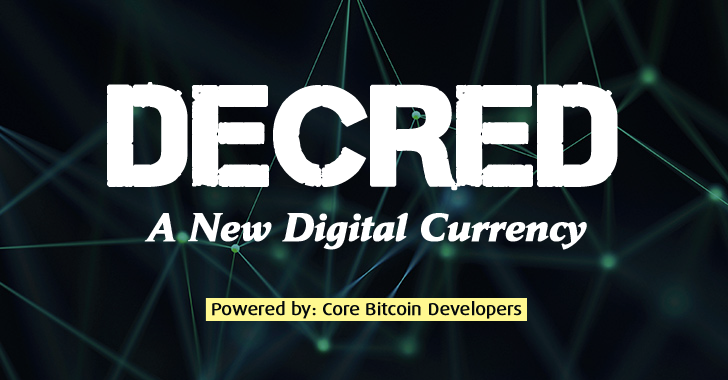
Decred 1.0. claims to have a decentralized governance
Decred, a creation of Bitcoin developers, rolls out decentralized governance, claiming a first in blockchain technology.
Decred is a cryptocurrency project and platform built from the ground up to leverage the will of its constituents to drive change. This approach eliminates the conflicts that arise when powerful entities attempt to assert control over a cryptocurrency.
Tomorrow, April 25, 2017 marks the release of Decred v1.0. This historic release puts Decred stakeholders in charge of shaping the future of Decred through direct community consensus voting.
For the first time in the history of cryptocurrencies, governing control moves away from centralized authorities, such as developers and miners, and is given to the community of stakeholders. Decentralization struggles without decentralized governance; this is especially true when it comes to a rapidly growing global currency.
Most cryptocurrencies distinguish themselves by how they secure the transactions on their network.
For example, Bitcoin is famous for using a proof-of-work algorithm that rewards miners for finding solutions to a cryptographic hash puzzle. Other cryptocurrency projects rely on proof-of-stake algorithms that reward users who hold the currency in a “staking” wallet with interest on the balances they carry.
Both approaches have strengths and limitations; Decred takes advantage of the best of both worlds with a hybrid proof-of-work and proof-of-stake consensus system. This allows the platform to strike a balance between benefits to both miners and stakeholders, giving rise to a more robust notion of consensus.
The 1.0 release of Decred will include the first community vote on two important issues.
After 75% or more of miners and stakeholders have updated to 1.0, Decred stakeholders will be able to vote on one consensus change and one signaling vote. Due to the rapidly growing popularity of Decred, the number of stakeholders buying vote tickets has increased dramatically, leading to large oscillations in the ticket price.
This is a good example of an unanticipated condition which needs to be resolved though community consensus. A new ticket price algorithm will aim to ease the large oscillations in ticket price and lead to better ticket price discovery while still maintaining the target ticket pool size.
A consensus change of this magnitude is very difficult to achieve in more traditional cryptocurrencies and requires the voluntary acceptance of the code by miners that may or may not have their own agendas. If it passes, the new ticket price algorithm will activate seamlessly for everyone with no further intervention. The second vote will allow stakeholders to signal support for Lightning Network development.
The Lightning Network is a payment layer that makes it economical and fast to process payments, especially small payments, like buying a cup of coffee without having to pay a large transaction fee to process the transaction. If this signaling vote passes, the developers will begin work on integrating Lightning Network on the Decred blockchain. Once development is complete and tested, a future consensus vote can be taken to automatically activate the Lightning Network code.
The recent 2017 roadmap highlights some of the other massive innovations that the team hopes to put up for a vote throughout the year. In addition, a new improvement proposal system will be put in place soon to allow for the community to contribute directly to the agenda.
The release of Decred 1.0 is a watershed moment in the cryptocurrency movement. This digital currency finally does what has never been done before, putting the power of change in the hands of the very people that care about it most. Decred is celebrating version 1.0.0 release with a puzzle challenge.
The ‘Autonomy Puzzle’ challenge features an initial prize of 500 decred (DCR) to the first solver, equivalent to approximately USD 7,500 at the time of this release. However, players will be working against the clock, as the prize will be reduced every 24 hours. The puzzle difficulty level has been rated ‘easy to medium’, as Decred is aiming to include participants of all skill levels.
Decred Wallet
We recently added Decred among the available digital currencies you can store on the HolyTransaction multicurrency wallet.
We define it as “multicurrency” because you can store more than 10 different cryptocurrencies within the same account and login details.
Open your Decred Wallet here and store it right next to your own Bitcoin, Ethereum and more.
Open your free digital wallet here to store your cryptocurrencies in a safe place.

Nasdaq Blockchain: new investments in more startups
Nasdaq Blockchain – related venture initiatives include new investment in distributed ledger based startups.
Today Nasdaq Ventures announced it has decided to invest in startups and companies that work with blockchains and/or artificial intelligence, next-generation data analysis and machine learning.
Nasdaq Blockchain budget is $10m to be awarded to deserving startups that are focused on both seed-stage and late-stage placements.
This Nasdaq Blockchain effort is a natural extension of the firm’s work in the blockchain field.
Back in 2015, Nasdaq started a partnership with Chain, an enterprise-grade blockchain infrastructure that enables organizations to build better financial services from the ground up.
This effort saw the two companies develop a distributed ledger market focused on pre-IPO offerings.
President and CEO of Nasdaq, Adena Friedman, explained in a statement:
“With the launch of our new venture investment program, we are reinforcing our focus on driving growth and innovation by evaluating, distributing, licensing and integrating disruptive technologies for the long-term benefit of our global clients.”
Nasdaq has been testing the blockchain even in other areas.
In fact, back in February 2016, Nasdaq announced its blockchain tests on e-voting prototypes with Estonia’s sole securities exchange.
Also, in January, Nasdaq published a report arguing that the distributed ledger is also useful beyond transaction settlement.
Read more about Nasdaq Blockchain – related projects by clicking here.
Open your free digital wallet here to store your cryptocurrencies in a safe place.
Bitcoin users growth: read the University of Cambridge’s research about cryptocurrencies
According to a recent research conducted by the University of Cambridge, bitcoin users number has increased by four times in five years.
The research explains that bitcoin active wallets surged from 8.2 mln in 2013 to nearly 35 mln in 2016, suggesting that the number of active wallets ranges from 7.5% to 30.9% of the total number.
The Global Cryptocurrency Benchmarking Study by the Cambridge Centre for Alternative Finance at the University of Cambridge suggested an estimated number of unique active bitcoin users wallets to be grown from between 0.6 mln and 2.6 mln in 2013 to currently between 5.8 mln and 11.5 mln in 2017.
This study – led by Dr. Garrick Hileman & Michel Rauchs – is the first of its kind to examine the growing global cryptocurrency industry and its exchanges, wallets, payments and mining platforms.
The research, in fact, is not only focused on bitcoin users, but also on cryptocurrencies in general.
“81% of wallet providers are based in North America and Europe, but only 61% of wallet users are based in these two regions,” the study which collected non-public data from nearly 150 companies and individuals states. “Almost half of all wallet providers are located in the United States and the United Kingdom. If we break down origin by world region, Europe is leading with 42% of wallet providers, followed by North America with 39% and Asia Pacific with 19%.”
North American wallet providers think that the current regulation is good and 57% of European and 2% of Asian-Pacific wallet services seem to be satisfied with the existent regulation.
Exchanges have to gain more popularity yet as only two of the 51 exchanges included in the research can provide a decentralized platform: 40% of North American wallet platforms said that the existing regulation is excessive and too strict – a point of view shared by 14% of European companies.
Another focus of this study is the innovative and rapidly changing of the cryptocurrency economy that is becoming more fluid in a few countries.
It says the line between exchanges and wallets is more and more “blurred” and several other digital currencies after Bitcoin are now supported by a growing environment as they are able to be used in a wide range of use cases.
Also, it argues that security-related problems and the lack of clarity about digital currencies regulation will continue to be prevalent in the next future.
Open your free digital wallet here to store your cryptocurrencies in a safe place.