
Twenty mind-bending secrets about Bitcoin
(BitcoinMagazine) This article will introduce some of bitcoin’s Mind-Bending amazing
abilities only few people know. As you read this list, remember your
favorite so can impress your friends with your new
incredible bitcoin knowledge.
1. Fun with programmable money
- Bitcoin wallets are like personal debit cards that you can create
and assign yourself to store your bitcoin. Some new wallet versions can
be programmed with bizarre abilities. - You can program features like GPS coordinates on your phone that make the money unavailable off if your kid leaves the city.
- You can also create “treasure hunts” where coins will suddenly be
released for you to use if you find yourself in the right place at the
right time. - You may also release money by calendar dates – gifting bitcoin
money that can’t be used until their 18th birthday or Christmas. Or set
up a will that releases amounts in intervals long after your death. - Huge potential for ideas not yet imagined.
2. First purchase with bitcoin
- Bitcoin’s price wasn’t established by a committee, government, or special council.
- Florida resident Laszo Hanyez may go down in history for buying the
most expensive pizza ever recorded. He also makes history for making the
first significant purchase using bitcoin. - His 10,000 bitcoins used in June of 2010 bought two Papa John’s Pizzas worth about $30 at that time.
- Today’s equivalent price is about $5 million.
- For the first 18 months they were worthless. The pizza purchase was
the event that set the price of bitcoin at about a third of one penny
each. - Within weeks, they were being bought and sold for 8 cents, representing a price increase of over 1,000%.
3. Bitcoins to billions
- In 2013 the price of a single bitcoin went from $13 to over $1,000 for an increase over 7,000%.
- At that rate, the owner of one bitcoin today would be a millionaire in two years.
- And would become a billionaire only 18 months after that.
4. Bitcoin is not alone
- Thousands of other digital currencies have since been created once bitcoin became popular.
- Litecoin, Peercoin, Dogecoin and many more can be purchased on various online exchanges.
- Thousands of people buy altcoins, hoping the bitcoin lighting strikes twice.
5. World’s fastest supercomputer
- The current computing power protecting the Bitcoin network is over
6,000 times more powerful than the top 500 supercomputers of the world
combined. And still growing faster. - Computer power is measured in “petaflops”. One petaflop is equal to one thousand trillion calculations per second.
- Top 500 supercomputers combined can calculate 250 petaflops. (Indicated by the arrow on the graph below).
- By comparison, the bitcoin network can calculate 883,000 petaflops.
- It is roughly the equivalent in scale between eight sticks of butter verses the largest 15,000 pound African Elephant.
6. The amazing bitcoin wallet
- Before you buy bitcoin you can create your own personal bitcoin wallet before you fund it.
- The number of possible wallet IDs that can be created are roughly the same amount as atoms on the earth.
- You can create as many as you want. They are free.
- New wallets can be secured with two or more passwords.
- You can also print your wallet to make a “Paper Wallet” that allows you to store your bitcoin off-line.
7. Spend bitcoin with smart phones for everyone
- The $25 smartphone is on the way.
- It is estimated that in 2014 there will be more cellphones than people on earth.
- Many poor countries just skipped land-line telephones and went straight to cellphones.
- Where they don’t have electricity, they charge them daily using solar panels.
- Most developing countries do not have access to banking – but the bank can come to them with bitcoin and a smartphone.
- Sending digital cash has already proven to lift entire villages out of poverty.
- This opens up their entire world from which to buy and sell items rather than just a few neighbors with cash on hand.
8. Magic the Gathering and bitcoin
- The first big online bitcoin exchange was Mt. Gox. It got its start and name by trading playing cards for “Magic The Gathering Online EXchange.
- They once accounted for over 80% of all Bitcoin trades.
- They started trading bitcoins when they were worth less than a dollar.
- Unsurprisingly, when the world found out that bitcoins were worth a
lot more than playing cards, the tiny company was overwhelmed. - More than half of all first generation Bitcoin exchanges have closed down.
- Now big finance companies are creating their own exchanges in the US that are regulated and insured.
9. Say goodbye to “Bitcoin” and hello to “Bits”
- Currently, one full bitcoin is divisible down to eight decimal places.
- The Bitcoin community has started referring the the sixth decimal point from a full bitcoin where they will be called “bits.”
- Bits are part of bitcoins as pennies are to a dollar – except it would take a million of them to buy a full bitcoin.
- Calling them “nano-dimes” sounded dumb.
- Today one hundred dollars migh buy you .2 bitcoins. Or it can buy
you 200,000 bits. It’s the same amount, but which one makes you feel
richer? - At some point, we might be able to sing that song (commonly played with hand- drums). “Shave and a haircut.. 2 BITS”
10. Spy Vs Spy. Your bank in a microdot
- Future Bitcoin billionaires can include their entire banking Bitcoin
fortune – in a dot the size of a period. When you have access to any
computer or phone with Internet connection you can simply type in your
account number and password as needed. - Your account is all stored and available to you on the public ledger
available anywhere in the world with an Internet connection.
11. Forget money laundering. Your activity is recorded
- Every transaction is tracked the Bitcoin public ledger, recorded and
shared around the world. The ledger cannot be changed and it’s
continually reconciled, verified and protected by bitcoin’s world-wide
network. - Every time a bitcoin trades hands, a trail of digital breadcrumbs follows it forever.
- You may or may not allow people to know your personal wallet
information, so your bitcoin account is as secret as you want it to be. - Once bitcoin passes through widely known wallet addresses, it may be
traceable by super-secret organizations that may, or may not, rhyme
with Em- essay. - Relax, if you aren’t doing any really, really bad – it’s probably
not worth the trouble for anybody to track your every spend. Not one
bit.
12. Gambling once accounted for most transactions
- The web gambling site “Satoshidice” once accounted for about half of bitcoin transactions.
- Due to murky gambling laws in various jurisdictions, gaming on Satoshidice is currently not allowed from US-based IP addresses.
- Provably Fair (http://provablyfair.org/)
is a website that has risen to act as an independent probability odds
checker for people to validate the odds of customer bets being
mathematically fair for the computers running the gaming systems. - Many online casinos are having their computer programs independently and voluntarily certified.
- Today bitcoin use is spread over several industries in addition to gambling.
13. Watch people trade in their paper money
- The website Fiat Leak shows a world map which allows you to see which country is exchanging their native currency for bitcoin in real-time.
- The larger the coin floating up – the bigger the dollar amount.
- The amounts all accumulate over a 10 minute period, which is the
point that the ledger is reconciled and copied throughout the world for
verification. - Once you go digital, you don’t go back.
- Ask the tape recorder.
14. It might become currency for poorly run countries
- Total value of bitcoin measured in US Dollars has surpassed 100 national currencies out of 160.
- Some are
beginning to ask if it is possible to one day to scrap some smaller
national currencies that continue to fail – and use bitcoin instead.
15. Bitcoin may be more important than the internet
- Several hundred million dollars are projected to be invested into Bitcoin startups by large corporations in 2014.
- Comparisons of importance are made by experts and scientists daily,
who often talk about the importance of how this will change the world
and often compare it with the invention of the Internet itself. - Marc Andreessen, who invented Mosaic, the first web browser, is one of many technical professionals who talk about Bitcoin and
reminds him of how he and his friends changed the Internet and World
Wide Web back in 1993 when it was still considered a techie geek
technology. As a reference point, most of the US was using the internet regularly just seven years later.
16. Watch bitcoin network grow
- See the time-lapse representation of the bitcoin network build out as it assembles and grows together around the world.
- It’s not much different than watching the progress of the early internet grow.
17. Robbing money may become obsolete
- New digital wallets will require at least two signatures (passwords) or more to use.
- This might include government’s robbery of its own citizens as many countries help themselves to one’s banking funds when they want.
- One can require as many signature passwords as you like. Go nuts and
require 51 signatures… Imagine the Senate being compelled to reach
majority before spending your taxes locked in a public wallet.
18. It can stop identity theft
- As making payments with bitcoin is the equivalent of cash, there is no banking information required from a retailer.
- The hacker attack at Target, Neiman Marcus, and Michael’s (among a
host of others) that stole users banking credit card information
wouldn’t have happened if they had only accepted bitcoin payment. - Paying in bitcoin is not a promise to pay. It’s payment in full.
19. No permission required
- Over half of the world have no banking account. They can’t get
access to regular loans, credit or checking account. They can’t get
permission from the creditors. - Bitcoin doesn’t require a bank account or credit report, and you
don’t have to be of legal age for contracts. And they can buy and sell
in a world-wide market for once. They didn’t need permission from the
courts. - One doesn’t need to be a citizen, or have identification or forms to fill out to own it. It requires no government permission.
- You are your own bank. No permission required.
20. Bitcoin the currency is only the beginning
- The Bitcoin network and ledger has features that can also function
as a way to store records of ownership, titles, copyrights and
trademarks, home and car titles. - It can replace the function of a notary public.
- All records are shared and distributed in a central location shared
by the entire world copied on thousands of millions of computers. - As the Internet did to the publishing industry, Bitcoin could
similarly disrupt several other fields or even render them obsolete. - Anybody’s job it is to move funds from one account to another may
need to learn a job as those functions can now be programmed, automated
and transparent. - Bitcoin 2.0 technologies and new start-up companies have already begun.
This list is only the start. Look into the amazing bitcoin and report
back your own found mind-benders in the comments section. Then play
bitcoin trivia with your friends – they may not believe you.
Open your free digital wallet here to store your cryptocurrencies in a safe place.
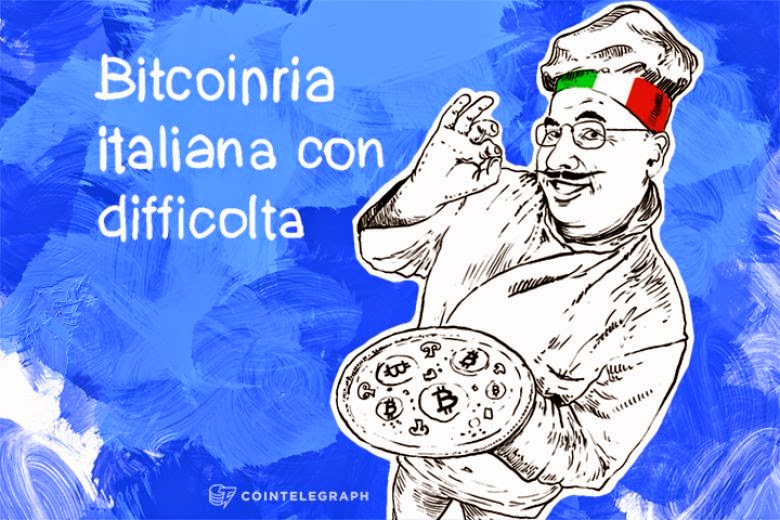
The difficulty of getting Bitcoin to catch on in Italy
first Bitcoin ATM was a Lamassu machine, installed in Udine,
a northeastern city nestled between the Alps and the Adriatic
Sea.
down the stuffed gnocchi.
anyone who needs help using the machine (it’s located in the hall of his family’s business).
He’s even had the interface translated into the local Friulian language, as
well as Italian.
his next step at this point is to install more machines around the country.
though.
Legal Obstacles
regarding Bitcoin, forcing him to operate in a grey area with which many
Bitcoin entrepreneurs are familiar.
pool of attorneys and legal experts advise him on what he could and could not
do. Italy,
they told him, does not regulate Bitcoin itself, nor are there any
know-your-customer regulations, but any transactions above 999.99 EUR need to
be reported.
“The use of electronic
currency is restricted to banks and electronic money institutions — that is,
private legal entities duly authorized and registered by the Central Bank of Italy.
Aside from these developments, Italy
does not regulate Bitcoin use by private individuals, and currently the
implementation of initiatives concerning the use of electronic currencies lies
with the EU.”
technology.
“Banca d’Italia is
studying the [Bitcoin] phenomenon, and perhaps — if they were fast — in 10-20
years we could have a law on it.”
local perception is something else entirely, Dordolo said.
“In Italy, we are at the beginning of
Bitcoin’s spreading among the population. There is an interesting Bitcoin
community [in Italy],
but it is still very hard to explain to Italian people the real value that
Bitcoin creates in the economy and the job opportunities it creates.This is because of
misinformation by the national media that actually regard it as a scam or worst
as associated with criminal deeds.Even the local Bitcoin
Foundation is not as active as it should be, so whatever can move this
situation is welcome.”
Open your free digital wallet here to store your cryptocurrencies in a safe place.
Satellite TV operator Dish Network to accept bitcoins!
Satellite TV operator Dish Network said it would accept bitcoin payments from customers from the third quarter, joining companies such as Overstock.com Inc and Zynga Inc in accepting the digital currency.
Dish said it selected Coinbase as the payment processor for bitcoin transactions with customers who choose to pay their bills online with the bitcoin wallet of their choice. Bitcoin is a digital currency that is not backed by any government or central bank and is bought and sold on a peer-to-peer network independent of central control.
In March, it launched its Instant Exchange feature, which will be used by Dish to convert bitcoins to U.S. dollars. Dish’s third quarter starts on July 1. While bitcoins may not be an alternative to established currencies, they can cut the cost of moving money around.
“We always want to deliver choice and convenience for our customers and that includes the method they use to pay their bills,” Bernie Han, Dish’s executive vice president and chief operating officer, said in a statement. “Bitcoin is becoming a preferred way for some people to transact and we want to accommodate those individuals.”
PricewaterhouseCoopers estimates that credit card companies charge around 3 percent in transaction fees and PayPal’s commission can go as high as 4 percent. The same transactions via bitcoin is likely to be free.
Open your free digital wallet here to store your cryptocurrencies in a safe place.
Andreessen sees bitcoin as the ‘big breakthrough’
Marc Andreessen, the tech entrepreneur who rose to fame as one of the founders of Netscape, takes the latter view, going as far as to say that in 20 years we will be talking about bitcoin the way we now talk about the Internet.
Andreessen argues that it has the potential to actually be a safer form of ecommerce than the credit card-based system that is currently in place.
Open your free digital wallet here to store your cryptocurrencies in a safe place.
Top 5 national altcoins available today!
of the gate and make an impression on the world. However, some digital
currencies are not intended to be used across the globe. Instead, they
are implemented within a country’s economy in order to help boost the
nation’s finances.
the concept of bitcoin, and use it locally. In most cases, national
coins are not allowed to be used outside of the country, as their is
fear that the value of such coins will fall. This alternative to using
money keeps the government separate from cash, all the while putting
power in the hands of the people.
National Altcoins
5. Swiftcoin
most national altcoins, swiftcoin can not be mined off of a
computer. Instead, swiftcoins are purchased with cash or bitcoin. They
can also be earned by selling goods and services using Oswift.com.
Uruguay, and allows locals to set up accounts, as well as buy and sell
digital coins like bitcoin and swiftcoin for cash or precious metals.
4. Isracoin
is already one of the world’s most successful national altcoins. The
digital currency allowed for public mining on March 26th, and was
airdropped to citizens on May 6th.
four phase process to get more people on board with the digital
currency. This well thought out plan will help circulate and introduce
locals to a new way of spending money.
that can also be found in bitcoin, such as low interest on deposits and
low cost transaction fees. With Isracoin, the goal is to disrupt the
current banking system of Israel.
3. Spaincoin
is ideal for Spaniards as it allows them to break free from the
shackles of the government. It was launched on March 12th, just a few
days before Isracoin.
to have its own national digital currency, with a population of over 46
million people. Spain’s economy has been in a rough spot for the past
couple of years, and with Spaincoin, there is a good chance that there
will be brighter days for the country.
of the coin will get 100 SPA each, and then the next 50,000 people will
get 50 SPA each. This will allow for a more balanced distribution.
2. Scotcoin
only allow people a chance to establish a new financial structure, but
also helps Scots gain independence from Britain and the pound.
The new coin works as a plan B to keep order in the economy in case
there is a major collapse with its already existing system.
“This
is a one-shot opportunity for Scotland to truly become an international
powerhouse if we can take back the power of our monetary issuance as
credit, as opposed to issued debt with interest from privately owned and
operated banking interests and cartels.”
1. Auroracoin
is based in Iceland, and was sent as a way to save the country’s
economy. The virtual coin is based on litecoin, and was devised
by Baldur Friggjar Odinsson.
real identity, similar to bitcoin creator Satoshi Nakamoto, the coin is a
saving grace to the people of Iceland.
potential of getting the people of Iceland out of what seems like an
endless financial rut. Success can’t truly be determined until
Auroracoin has ample time to make an impact on Iceland.
the coin a big success, citizens are going to have to be patient and not
run off selling their coins for cash at the first chance they get.
world’s economical crisis has put a large cloud over finance, but
digital coins hope to correct this issue. The planet has changed to
where everything is digital. So the obvious solution to correct the
economy could be to make money go digital as well. Whether national
altcoins or bitcoin, crypto currencies are a potential solution that the
world shouldn’t ignore.
Open your free digital wallet here to store your cryptocurrencies in a safe place.
Top 5 businesses that accept Litecoin payments
(CoinReport) Litecoin is the second most valued digital currency on the market, only being bested by bitcoin. However, litecoin is not just a knock-off to the world’s first digital coin. It was intended by its developers to improve on the structure set forth by bitcoin.
The main two differences that separates litecoin from bitcoin:
1) Litecoin processes a block every two and a half minutes, while bitcoin processes a block every 10 minutes.
2) Litecoin will total 84 million coins, unlike bitcoin’s cap of 21 million.
The digital currency continues to catch individuals and business owners by storm, as more businesses are accepting it as a form of payment. CoinReport has compiled a list of the Top 5 businesses that have begun implementing Litecoin into their finances.
Top 5 businesses that welcome Litecoin payments
5. Ellenet
“Crypto currencies are the future, it’s plainly obvious and people need to understand that Bitcoin and other coins are not going away. Without sounding terse, you can’t stop progress.”
digital payments, it hopes to grow even larger. In addition, Ellenet works with digital mining company Petabit Pty. Ltd,
who works on mining both litecoins and bitcoins. The partnership with Petabit will allow Ellenet to get into more digital currency-based ventures.
4. Sean’s Outpost
3. eGifter
2. KnCMiner
“You will find the Litecoin payment method option when you complete an order through the checkout on our website.”
1. Benz and Beamer
“GoCoin makes it extremely easy for us to accommodate new customers looking to
pay with bitcoin and other emerging digital currencies like litecoin.
Their platform secures the coin exchange for cash within minutes,
creating a real win/win for my dealership and my customers.”
Open your free digital wallet here to store your cryptocurrencies in a safe place.

Building a Bitcoin Economy: how to stimulate adoption
evangelist? Want to learn how to start your mission into the world of
fiat economics? Having preached the good word of Satoshi to laymen of
all kinds, I’ve made my mark and learned a lot about promoting crypto
adoption. Before you begin your journey, take a moment to read and learn
about the science of Bitcoin evangelism.
things: intellectual capital (to code the software and design the
systems that make everything work) and financial capital (to pay for
hardware, commercial space, legal fees, and intellectual capital if it
is lacking). Adoption is probably the only field of the crypto industry
that requires cultural or social capital, at least at the grassroots
level. But what does that mean in practice?
connections you already have. In my case, that was a network of notable
Vancouver Meet Up groups, and a job as a venue promoter. At first you
won’t have existing merchants to refer to as references, so you’re going
to need to find people who really trust you. Plenty of free solutions
to accept exist, and once they realize the advantages of cryptocurrency,
they’re likely to stick with it.
superiority of accepting payments via Bitcoin is meaningless if nobody
is spending their bitcoins. Even if Bitcoiners prefer to spend
fiat–maybe because the price is on an upswing–just bringing their
business to the adopting merchant provides the necessary incentive, and
there are a number of ways you can do that.
come in handy. If you’re not a member of your local cryptocurrency Meet
Up, already, become one, or start your own group if none exists.
Community pages at Facebook and Google Plus will also help. Since all of
the businesses I signed up were event venues like coffee shops,
restaurants and bars, I was able to bring them business directly by
holding Meet Ups at their locations. Even for non-venue businesses,
though, a community allows you to connect producers to consumers and get
the word out.
more businesses on board, and that network should grow. In addition to
the natural benefits of cryptocurrency, you now can now promise
additional benefits in the form of direct customers–look for businesses
likely to be open minded, like those already hosting Meet Ups or listed
on websites like GroupOn or LivinSocial. Each new adopter you post to
social media will bring more Bitcoiners into the fold, which in turn
increases the amount of business (and incentive) you can provide.
you can bring more customers indirectly via publicity than you can
directly. You should probably have a couple local reporter contacts, by
now. New crypto Meet Ups and splinter groups will form, and inevitably
the majority of events and merchant connections will be initiated by
people other than yourself. This is natural in community building, and
even moreso in a community based on techno-libertarian roots–don’t be
discouraged.
marketing power to promote those working together for the cause. If you
maintain an honest, non-profit-focused campaign, you will become the
face of this new community; forward media inquiries where appropriate,
and engage positively with the mainstream media. Soon you’ll be ready to
take Bitcoin adoption to the next level.
Open your free digital wallet here to store your cryptocurrencies in a safe place.