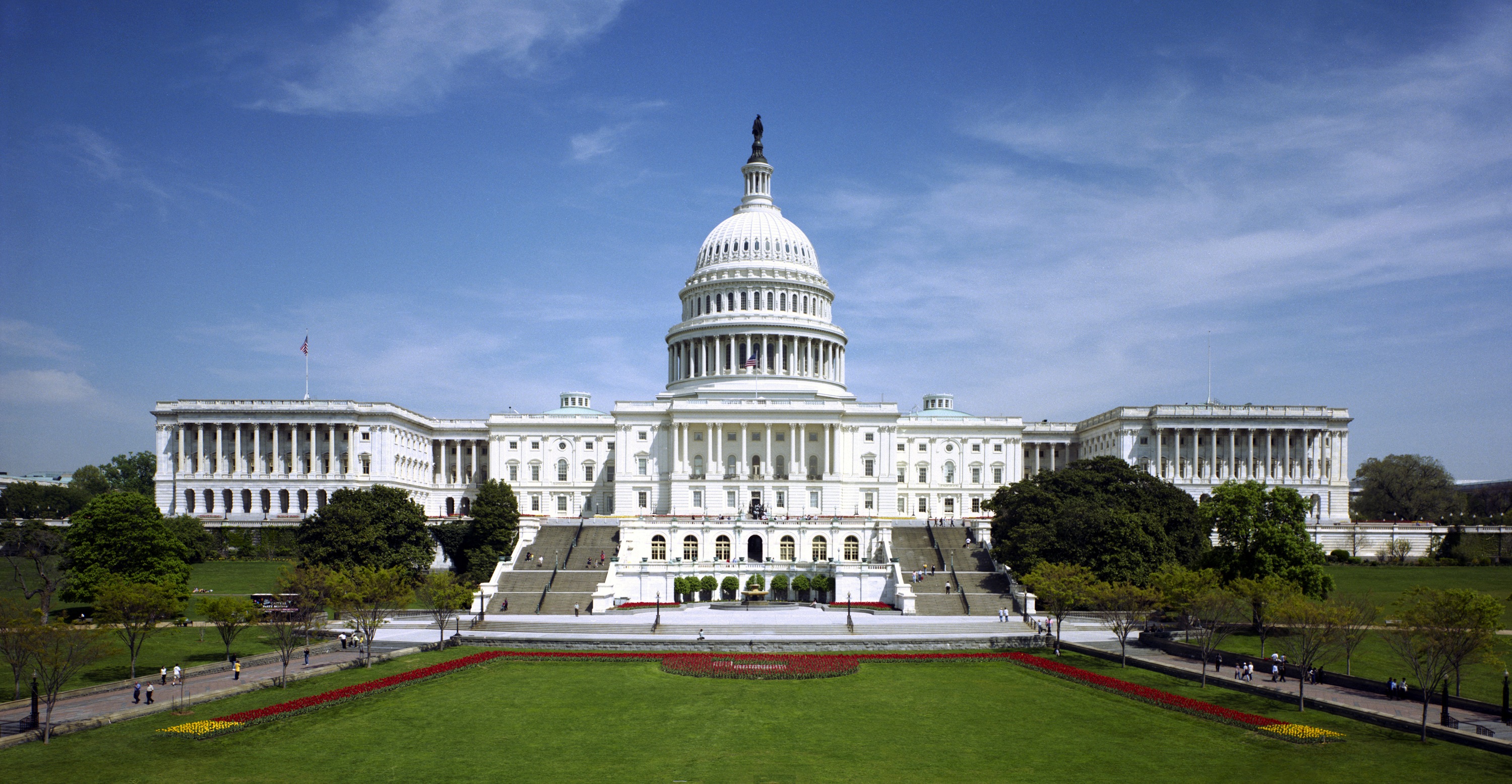
Washington considers digital currencies are included in the definition of “money”
currency, also known as digital currency or cryptocurrency, is a medium
of exchange not authorized or adopted by a government. There are many
different digital currencies being used over the internet, the most
commonly known being Bitcoin. In Washington, digital currency is included in the definition of ‘money’ in the Uniform Money Services Act”.
Washington state, “money means a medium of exchange that is authorized
or adopted by the United States or a foreign government or other
recognized medium of exchange. ‘Money’ includes a monetary unit of
account established by an intergovernmental organization or by agreement
between two or more governments”. Nevertheless, the state considers
that digital currencies can be part of this definition.
 The department’s website also adds that
“companies wishing to transmit money for Washington residents in a
digital currency form can contact the DFI for a determination whether licensure under the UMSA is required. If it is, a license is required before the company can engage in the activity”.
Open your free digital wallet here to store your cryptocurrencies in a safe place.
Canada and Israel take a different approach to Bitcoin
(SiliconAngle) Bitcoin gained a lot of momentum in 2013, as many people
experimented with it for the first time. It’s not surprising that 2014
also started with a bang for Bitcoin, when its value hit close
to $1,000. Some online shops have started accepting the cryptocurrency
as a form of payment, online sites use it so people can send donations,
and the Chicago Sun-Times has begun experimenting with it to raise funds for the Taproot Foundation.
many governments aren’t too keen about accepting it as a legal tender
just yet. Both India and China
have both warned against Bitcoin in recent weeks, resulting in some
significant fluctuation of its value. But even though there’s been some
strong opposition in these countries, it seems that most others are open
to the possibility of Bitcoin becoming a legal currency in the future.
monitoring what others are doing about it before coming up with a plat
as to how to approach the cryptocurrency.
clarified that only Canadian bank notes and coins are considered as
legal tender. It doesn’t consider Bitcoin as a legal tender, but that
doesn’t mean that the Canadian government doesn’t see its potential,
reports The Verge.
but not for paying taxes, and businesses will not be required to accept
it as a form of payment.
many substitutes — like Bitcoin — should generally require much less
intensive oversight and regulation because they pose much less risk to
the Canadian financial system as a whole,” said Bank of Canada
spokesperson Alexandre Deslongchamps.
how it all unfolds, but this policy may change in the near future.
Currently, some financial institutions in Israel are already engaged in
Bitcoin transactions, but regulators haven’t said a thing about it yet,
reports CoinDesk.
that wrong kind of attention. Bitcoin could be used to dodge tax
payments and can even be useful for money laundering, but regulators
feel like they don’t currently need to take a stand regarding any form
of digital currency, since they are still trying to figure out what the
rest of the world will do with it.
succeed, and it would be a pity if it were to occur in the shadows and
not under the supervision of the banking system,” Attorney Shiri Shaham,
who specializes in banking law, stated.
Open your free digital wallet here to store your cryptocurrencies in a safe place.
US senator demands regulatory clarification on digital currencies
(CoinDesk) US Senator Tom Carper yesterday called on the Commodity Futures Trading Commission (CFTC) to clarify its position on digital currencies.
Carper is a Delaware Democrat and he currently heads up the Homeland Security and Governmental Affairs Committee.
It should be noted that Delaware is home to many credit card companies
in the US, thanks to business-friendly regulations that have attracted
numerous financial institutions to the state.
According to Bloomberg,
Carper’s staff are already working on a report on digital currencies,
scheduled for release sometime in the spring. Carper’s email to the CFTC
was a response to an earlier letter from former CFTC chair Gary
Gensler. He, in turn, was responding to an inquiry on digital currencies
filed by Senator Tom Coburn of Oklahoma.
The tone of Carper’s email is
interesting: “Given that we read about a new venture in the digital
currency space nearly every day, it is important that our government
agencies respond appropriately and in a timely manner with thoughtful
policy and oversight.”
“Those willing to take risks and play by the rules should have the opportunity to thrive without the fog of uncertainty.”
It appears that Carper isn’t looking for a clampdown on digital currencies – he merely wants to eliminate any ambiguities.
Open your free digital wallet here to store your cryptocurrencies in a safe place.

People’s Bank of China doesn’t intend to “suppress or discriminate against Bitcoin”

headed by the chief of its financial survey and statistics department.
Sheng Song Cheng transmitted the official stance given by the Chinese
authorities: “we don’t want to suppress or discriminate against Bitcoin, we are simply saying it is not a currency”.
conference held this Wednesday (15) is being welcomed by the Bitcoin
community as a positive development in China’s apparent war against
digital money. The meeting was focused on the country’s 2013 financial
statistics, but Bitcoin popped up as the journalists started asking
questions about it.
doesn’t have the characteristics of a currency. As far as I know, the
vast majority of countries does not recognize Bitcoin as a currency”,
Sheng Song Cheng answered.
status in China as a “virtual good”, he also added that the “People’s
Bank and the relevant departments will continue to focus on Bitcoin and its associated risks,
strengthen the monitoring and analysis and guide the public to
establish a correct concept of money and investment philosophy”.
cryptocurrency falls under Sheng Song Cheng’s public opinion about
Bitcoin. Recently, he wrote an article
saying that “it would be difficult to see how Bitcoin could ever be
considered a currency in the future”. The English edition of the
newspaper Global Times even quoted Sheng as the author of a powerful
sentence: “Bitcoin is merely a utopia for technology supremacists and
absolute liberalists”.
Bitcoiners, this means that China is legitimizing Bitcoin, despite the
country’s successive warnings about the high risks of dealing with
the digital coin. For now, the authorities aren’t banning Bitcoin –
neither do they plan to do it -, only tightening the regulation and keeping an eye on the users and exchanges.
Open your free digital wallet here to store your cryptocurrencies in a safe place.
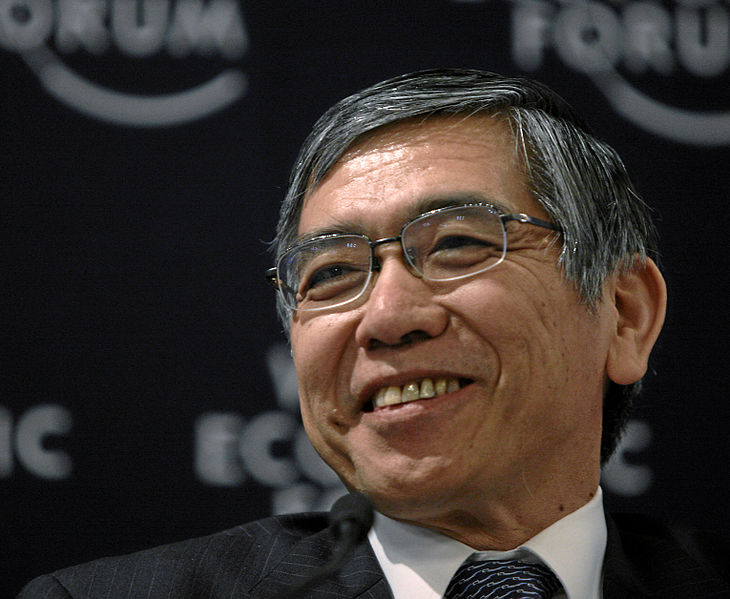
Governor says Bank of Japan is “very interested” in cryptocurrency
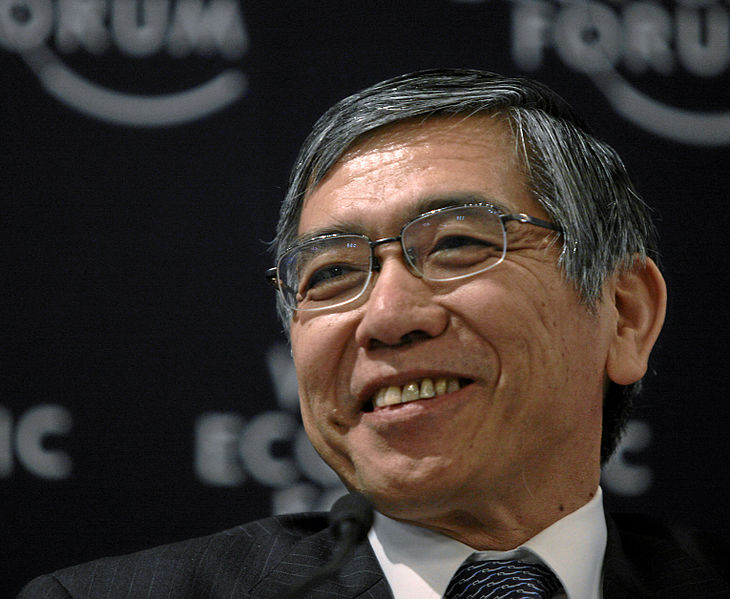 (BitcoinExaminer) The governor of the Bank of Japan recently said that the institution is “very interested” in Bitcoin. Haruhiko Kuroda talked about cryptocurrency during a news conference, according to the site Jiji Press.
Open your free digital wallet here to store your cryptocurrencies in a safe place.
A deep dive into the regulatory requirements for Bitcoin companies
(OnBitcoin) Marco Santori is a senior associate at New York-based Nesenoff & Miltenberg, LLP,
and very familiar with the nuances of Bitcoin regulation. In a
presentation at the Inside Bitcoins conference in Las Vegas, Mr. Santori
provided a thorough overview of money transmission regulation on the
federal and state levels.
Money services businesses (MSBs) are regulated by FinCEN, whose goal is to prevent money laundering.
MSBs are required to register with FinCEN on a federal level. While
it’s a free, online process to register, there are an assortment of
requirements, such as:
- Collect, verify, record report customer information
- Check identities against watch lists (terrorists, criminal, enemies of the state)
- Deny service for some customers
- Sometimes secretly report transaction activitiy to fincen and continue servicing the customer
- Undergo yearly audits


In March 2013 FinCEN published regulatory guidance surrounding
Bitcoin. While this guidance left some confused, the overall takeaway
was that Bitcoin is not inherently illegal and Bitcoin companies are
fine to operate as long as they comply with applicable laws.
Santori provided examples of businesses that would be under the veil of regulation:
- Hosted wallets that permit exporting private keys
- Paper wallets
- Exchange digital currency for government currency
- Exchange one digital currency for another
- Mine digital currency and convert to government currency
- Accept value from person A and give to person B
- Accept value from person A and give to person A at another time or place
While it’s easy to register on the federal level, it’s another story
on the state level. There are 48 states that provide licenses for money
transmission. The states regulate money transmitters separately from the
federal government. So, for a company to operate in the United States,
they need to separately attain 48 licenses, which is a timely and costly
endeavor.
While it’s more complex to apply for licenses in 48 states, the scope
of regulation appears to be slightly less cumbersome. The states have
not adopted all of FinCEN’s categories of money transmitter.
Specifically, only these two categories are relevant:
- Accept value from person A and give to person B
- Accept value from person A and give to person A at another time or place
Given the ambiguity and cost of regulation, what should a startup do?
Circle Internet Financial, a company formed by serial entrepreneur
Jeremy Allaire, publicly stated that they will be seeking licenses in
all states and raised $9 million in venture capital to fund that
initiative.
However, there are a plethora of startups that don’t have the funds
or capabilities to attain licenses. Here are some other options.
First, a company could send a “no action” or “request for ruling”
letter, which explains the nature of the business and why it should not
require a license. Drafting this letter can be costly due to legal fees
but can also result in certainty if authorities respond.
There are also avoidance strategies. You can incorporate overseas and
geofilter IP addresses to block US customers. By documenting this
process and having appropriate policies in place, a company can protect
themselves from regulatory backlash if some US customers get through.
For example, a company should check if the customer registers a US bank
account, makes transfers to US accounts or subsequently accesses the
company’s service from US IP addresses.
Santori said that most companies restructure their companies to
either fit into an exception in the regulation. Exceptions include:
- Providing network services to a money transmitter
- White label exchange
- Physically transporting value that substitutes for currency
- Operating a settlement business between MSBs
- Performing payment processing services
If a company wants to get a state license, how long does it take to
get approved? For a regular business, just a few weeks. But for a
Bitcoin business, it’s not clear.
Open your free digital wallet here to store your cryptocurrencies in a safe place.
BTC China in discussion with regulators over Bitcoin recognition
(CoinDesk) The world’s busiest bitcoin exchange, BTC China, has been in talks with regulators to approve bitcoin as an official currency, according to Bloomberg Businessweek.
While there have been some ‘lower-level’ discussions, the company has not yet had any success arranging high-level meetings, said BTC China CEO, Bobby Lee.
This isn’t surprising, given the reluctance of governments worldwide to make official statements about the currency’s legal status.
To grant official approval would likely cause a spike in activity, with many fearing activity on such a grand scale could undermine one of government’s key economic powers: overseeing fiat currencies. This hasn’t stopped a recent flurry of interest from high-level government officials, as bitcoin’s value soars too high to ignore. At the time of writing, the bitcoin price on BTC China was 6,267 CNY, or $1,027. Mt. Gox’s price was $1,050, and it was around $990 on the Coindesk BPI. The upper echelons of government feature many opinions on bitcoin, including some that have shifted over the years. Senator Chuck Schumer, who in 2011 described bitcoin as “an online form of money laundering,” and called for a crackdown, recently tweeted that the cryptocurrency had “significant potential”. Deputy governor of China’s People’s Bank, Yi Gang, hinted at a personal (unofficial) approval of bitcoin exchanges and people’s ability to trade in and out of digital currencies, but also said it would be impossible for the central bank to recognise bitcoin “in the near future”.
BTC China has taken Gang’s comments on board, and Lee has continued to hold discussions with local regulators. He has also answered questions about how bitcoin should be regulated, remaining optimistic about the long-term, describing bitcoin’s current status as:
“Not on the black list and not on the white list. It’s in the grey area.”
In the bitcoin universe, anything short of a call for blacklisting can be taken as progress. But while its “grey area” status allows exchanges and payment processors to function reasonably well at the moment, many think some form of recognition and subsequent regulation is necessary for bitcoin to gain widespread acceptance.
Open your free digital wallet here to store your cryptocurrencies in a safe place.

British Island wants to make physical Bitcoins with UK Royal Mint deal
(CoinDesk) A tiny island in the English Channel, Alderney, wants to mint physical bitcoins as part of a larger campaign to become one of the world’s first financial services centers devoted to digital currency.
The Financial Times reported
that Alderney, just three miles long with a population of 1,900, wants
to become known as an international center for bitcoin transactions.
Intended to be fully compliant with anti money-laundering and other
financial regulations, it would offer merchant payment services,
exchanges, and a bitcoin storage vault of some kind.
The physical
bitcoins, like other such tokens, would be collectors’ items rather than
circulated, and would likely have a gold content (apparently around
£500 worth) to further their appeal and allow them to retain value
should bitcoin’s price crash.

They would also serve as promotional
tokens for the more ‘serious’ bitcoin payment and exchange services.
Alderney’s
coins would hopefully be minted in a collaboration with the UK’s Royal
Mint as part of a commemorative collection. Rather than having a private
key sealed inside, like the popular Casascius physical bitcoins
and their contemporaries, the Alderney bitcoins would be exchangeable
for the more useful digital kind by its holder paying a visit to the
island. They would not be official legal tender otherwise.
Production
would be overseen by an independent company, who would also take the
hit if bitcoin’s value vanished. The same company would also hold the
coins’ keys in an escrow service. If the deal goes ahead, The Royal Mint
would handle orders and take some of the money from sales.
With current bitcoin values hovering around $1,100 on CoinDesk’s BPI
(over $1,200 on Mt. Gox) and seeming to jump higher with each passing
day, more daring segments of the financial world are sensing an
opportunity to create a whole new industry. The high values, including
not only bitcoin’s but those of other digital currencies
as well, are wrenching the concept out of the hands of tech-savvy
entrepreneurs and delivering it to people more accustomed to
billion-dollar movements.
Bitcoin and digital currencies, despite
occasional murmurings and investigations by authorities, still have no
legal recognition as currencies in any major jurisdiction. No
legislation has been tabled specifically for digital currencies, though
exchanges and payment processors generally fall under the same
know-your-customer (KYC) and anti-money laundering (AML) regulations as other ‘money transmitters’.
The
Channel Islands, just off the coast of France, are ‘Crown Dependencies’
and not officially part of the UK. This special legal status has
traditionally made them a hub for offshore financial services, with most
of the activity happening on larger Guernsey and Jersey.
Alderney falls under the jurisdiction of the Bailiwick of Guernsey
but has been looking for ways to gain more financial independence from
its neighbors. The island has long produced stamps and minted its own
coins, called the Alderney pound, pegged 1:1 to UK pound sterling. The
coins are produced in denominations of £1, £2 and £5 in ordinary
cupro-nickel as well as gold and silver versions, and are also aimed
primarily at collectors.
Open your free digital wallet here to store your cryptocurrencies in a safe place.

Bitcoin in the UK: HMRC suggests bitcoins are ‘taxable vouchers’
As Tom Gullen described on his blog, Her Majesty’s Revenue & Customs (HMRC) seems to be classifying bitcoins as vouchers, which means VAT would be due on any sales. A 20% mark-up on bitcoin prices would make UK exchanges untenable. In addition to Gullen’s statement, an independent source told us that HMRC had given them the same classification. We also spoke to Dr Tom Robinson of the UK-based bitcoin exchange BitPrice and consulting firm Blockchain Consulting, who recently attended the Financial Innovators Summit at 10 Downing Street. At the time, it was said that he “left the meeting feeling largely optimistic”. However, his subsequent communications yielded the following statement from HMRC: “Our Policy teams’ view is that these are not currency. It is our view that the provision of bitcoins is the sale of vouchers. These arelikely to be ‘single purpose’ vouchers.”

Robinson said: “This is obviously an entirely inappropriate classification for
bitcoin: they aren’t issued by anyone, they don’t have a ‘face value’
and they can be redeemed for a wide range of goods and services.”
Robinson also posted to reddit, saying: “We do now have a commitment from the Treasury that they will seriously consider how bitcoin might achieve official recognition in the UK. In doing this the government is seeking input from bitcoin businesses.” Any businesses that want to submit a comment should do so through this link. HMRC told CoinDesk that “There is a VAT exemption for currency transactions but the currency in question must be legal tender. We will of course listen to arguments for alternative VAT treatments under existing VAT law.”
Open your free digital wallet here to store your cryptocurrencies in a safe place.
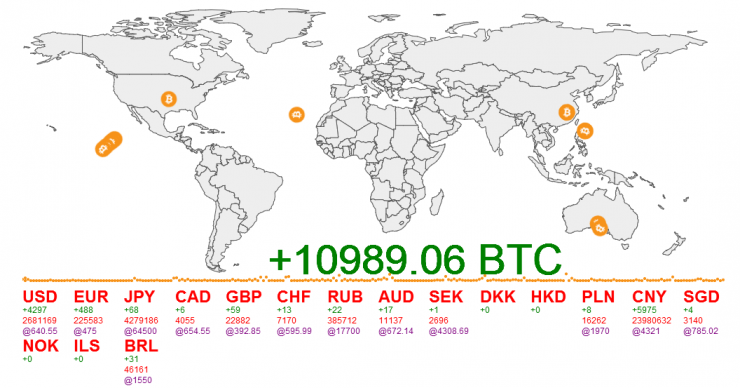
Korea announces favorable tax policy for Bitcoin
The bitcoin community in Korea is small, but growing, and it seems that governments around the world are taking the US Senate’s recent hearings as a signal to begin determining at least temporary policies regarding our favorite cryptocurrency.
Posted in Korea’s Bitcoin Community on Facebook is a statement from Korea’s National Tax Service stating that Koreans will not be taxed for capital gains on bitcoin for the time being.
While this is clearly good news for the few long-time miners in Korea as well as speculators that have experienced a windfall in the past month, it is important to remember that this is not a good long-term position toward bitcoin. Essentially, the Korean government is taking the stance that bitcoin investments are not real.
Currently, bitcoiners are happier to be left alone by the governments of the world and such a policy supports this in the long term. But if we hope to see bitcoin rise to a more commonly-accepted and competitive currency, we will need governments to recognize that BTC does, in fact, bear value and follow “safe and sane” regulatory procedures. While this is not the time to hold the argument over how much and what kind of regulation would be appropriate and positive, I think that most bitcoiners will agree that we don’t want it to be seen as monopoly money forever. Near-universal recognition and respect is needed.
Open your free digital wallet here to store your cryptocurrencies in a safe place.